To safely manage anxiety, start by consulting your healthcare provider to check for any health conditions that could worsen with cold therapy. Set your ice bath temperature between 50°F and 59°F and limit sessions to 15-20 minutes to prevent hypothermia or tissue damage. Monitor your body’s responses closely and use proper equipment, like temperature-controlled devices, to guarantee safety. Keep these precautions in mind—more helpful tips follow for safer cold therapy practices.
What Are the Risks of Using Ice Baths for Anxiety?
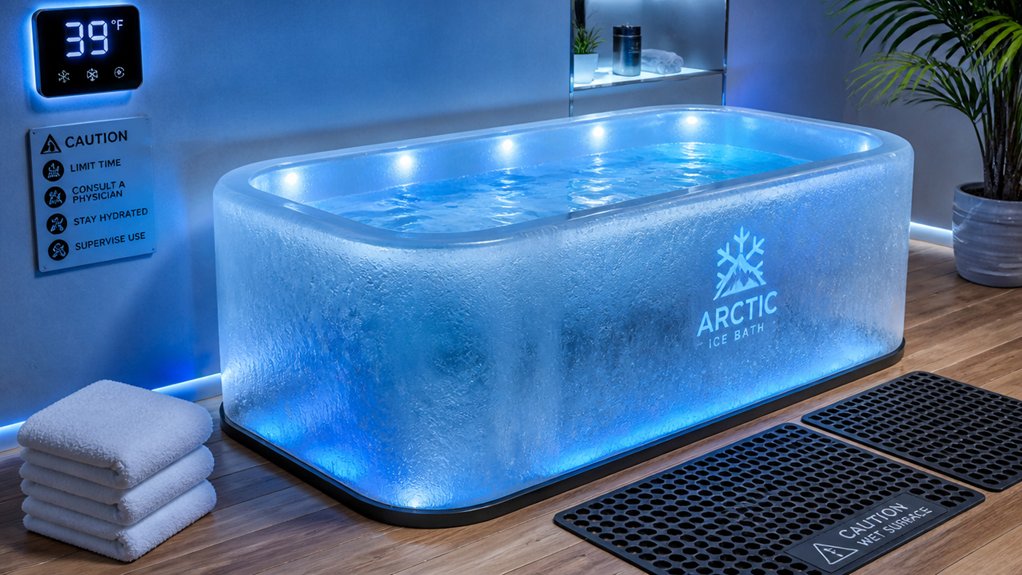
Have you ever wondered if ice baths are safe for managing anxiety? While some believe cold exposure might help, it can pose risks for your physical and mental health.
The sudden cold shock response from ice baths can cause rapid heart rate and increased blood pressure, which may worsen anxiety symptoms or trigger panic attacks. Extended exposure can lead to hypothermia or circulatory stress, especially if you have cardiovascular conditions often linked with anxiety disorders.
The intense discomfort and physical stress might heighten panic or dread, making anxiety worse, not better. To stay safe, always consult healthcare providers before trying ice baths, particularly if you have existing medical or mental health concerns.
Additionally, using appropriate chiller models and cooling capacity can help maintain a safe plunge temperature and prevent overcooling. Use ice baths cautiously, limiting exposure and monitoring your body’s reactions closely.
How to Determine Safe Temperatures and Duration for Cold Therapy?
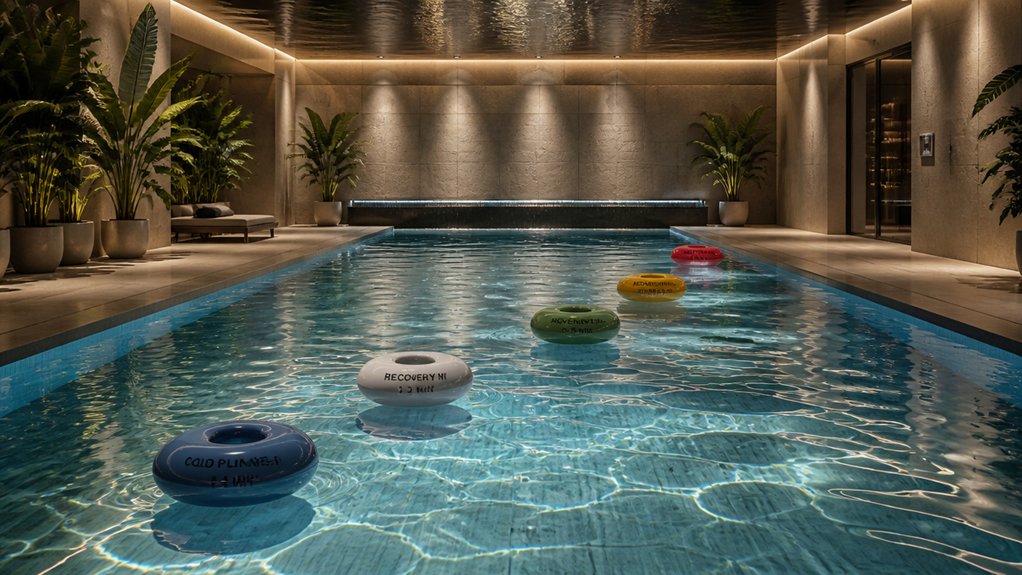
Determining the right temperatures and duration for cold therapy is essential to guarantee safety and effectiveness. Staying within safe temperatures, typically between 50°F to 59°F (10°C to 15°C), helps reduce stress and supports mental health during anxiety treatments. Using a temperature control system, such as built-in chillers or external devices, can assist in maintaining consistent and safe temperatures throughout your session. Keep sessions brief—no longer than 15–20 minutes—to prevent tissue damage, frostbite, or nerve injury. Always wrap cold packs or ice in a cloth to avoid cold burns. Allow at least 45 minutes between sessions to let the skin warm up. If you have circulatory issues or sensory impairments, consult a mental health professional to identify safe temperatures and durations tailored to your physical health. Clear coping strategies and therapy appointments can improve outcomes while maintaining safety during cold therapy.
Why Should You Talk to Your Healthcare Provider Before Trying Ice Baths?
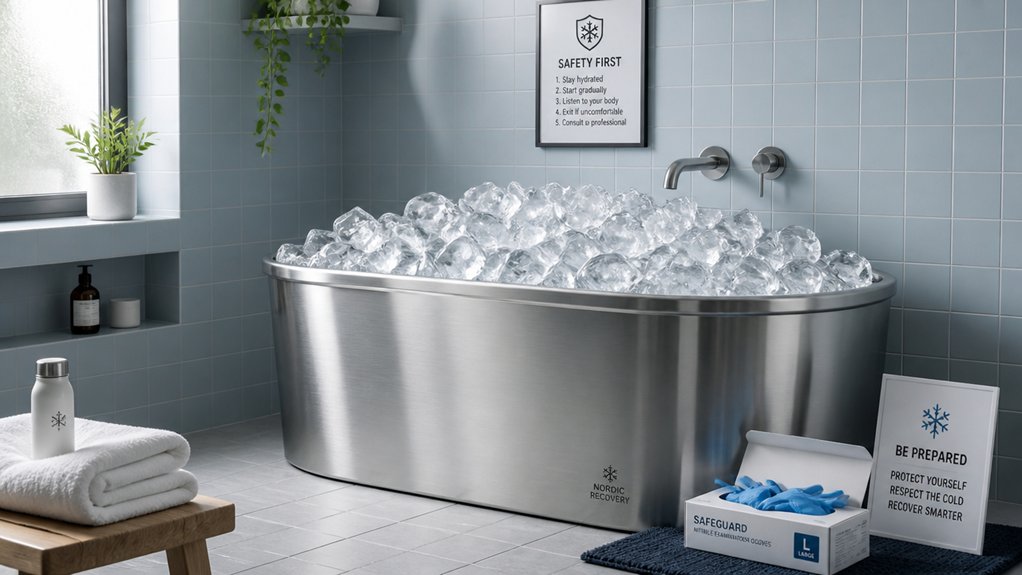
Trying ice baths without proper guidance can pose significant health risks, especially for those managing anxiety disorders. Because anxiety symptoms often include physical symptoms like rapid heart rate and increased blood pressure, sudden physical stress from cold exposure could worsen your mental health or trigger panic attacks. A thorough understanding of temperature control techniques can help mitigate these risks and ensure a safer experience. Consulting a healthcare provider is essential to assess underlying physical conditions that may contraindicate ice baths, such as cardiovascular or respiratory issues. A professional can help determine if this extreme cold therapy is safe for your anxiety disorder or suggest safer stress management and relaxation techniques. Talking to your healthcare provider guarantees proper monitoring for adverse reactions and helps integrate such practices into your ongoing mental health treatment plan, promoting safety and well-being.
Frequently Asked Questions
What Helps to Calm Anxiety?
You can calm anxiety by practicing deep breathing, engaging in regular exercise, using CBT techniques, limiting caffeine and alcohol, and practicing mindfulness or relaxation techniques, which help manage stress, reframe negative thoughts, and promote a sense of calm.
What Are Safety Behaviors for Anxiety?
Safety behaviors for anxiety are actions you take to avoid or reduce distress, like avoiding certain situations, seeking reassurance, checking symptoms, or carrying safe objects. While they offer temporary relief, overusing them can hinder your progress.
What Is the 3 3 3 Rule for Anxiety?
The 3-3-3 rule helps you manage anxiety by focusing your attention on your environment—naming 3 things you see, hear, and feel. This simple tactic activates calm, redirects your thoughts, and helps you regain control during panic or anxiety.
What Should People With Anxiety Avoid?
You should avoid alcohol, recreational drugs, caffeine, and nicotine, as these can worsen your anxiety symptoms. Also, skip long-term benzodiazepine use without your doctor’s guidance, and maintain regular meals and sleep patterns to help manage your anxiety effectively.