To recover faster from cycling, use cold therapy within 60 minutes after intense rides. Cold water immersion at 10-15°C for 10-15 minutes is most effective, while cold showers or contrast therapy can be convenient alternatives. Always guarantee safety by limiting exposure times and monitoring your body. Avoid cold therapy after strength or high-intensity interval sessions. Keep exploring to discover more tips for safe and effective cold recovery methods.
How Cold Therapy Speeds Up Recovery for Cyclists
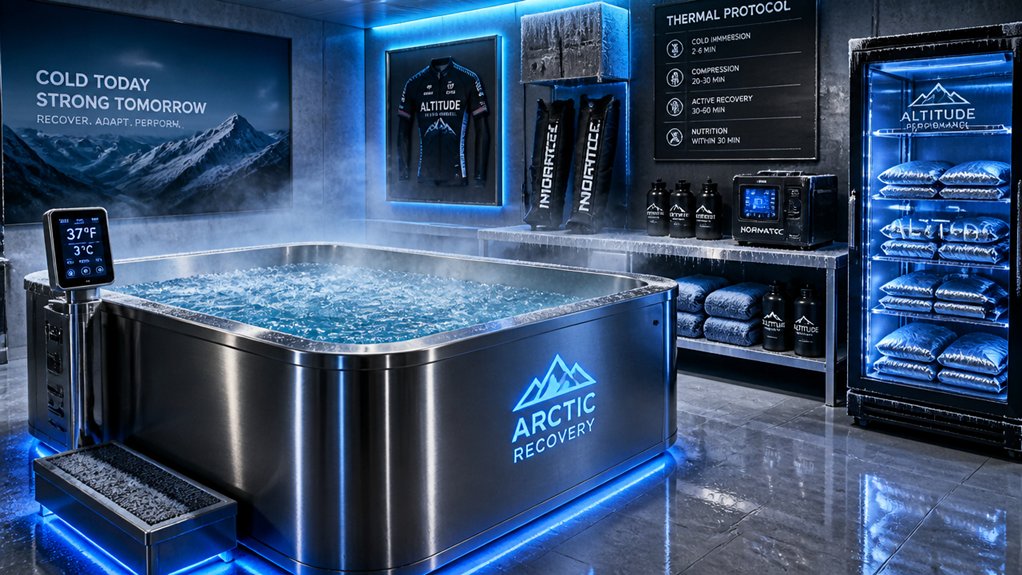
Cold therapy accelerates recovery for cyclists by directly reducing inflammation and muscle soreness. When you take an ice bath or immerse yourself in cold water, blood vessels constrict, which helps limit inflammation and swelling. This process can reduce muscle soreness that may last up to 96 hours after a tough ride, making recovery matters more manageable. Using a high-quality ice bath chiller ensures consistent, precise plunge temperatures for optimal recovery benefits. Cold water immersion at 10-15°C (50-59°F), ideally within 60 minutes post-cycling, optimizes these benefits. The numbing effect decreases pain and discomfort, allowing you to recover faster. After cold exposure, rewarming causes blood vessels to dilate, improving circulation and helping flush out waste products. Plus, cold therapy releases norepinephrine, boosting mood and mental alertness, supporting both physical and mental recovery.
Which Cold Therapy Method Is Best for Your Cycling Recovery?
Choosing the right cold therapy depends on your recovery goals, timing, and what’s most convenient for you.
Cold water immersion offers the most effective recovery but requires more setup, while cold showers are easy and accessible for quick relief. Contrast therapy and cryotherapy can boost circulation and speed up healing, but they may not suit every cyclist’s needs or budget.
Effectiveness and Timing
To maximize your cycling recovery, consider both the effectiveness and timing of cold therapy methods. Cold water immersion at 10-15°C for 10-15 minutes offers the best results, reducing inflammation and soreness through hydrostatic pressure and uniform cooling. Cold showers (≤15.5°C for 2-3 minutes) are easier but less effective. Contrast therapy—alternating heat and cold within 60 minutes—boosts circulation, speeding up recovery. Avoid applying cold therapy immediately after strength or high-intensity workouts, as it can blunt adaptations. To make the most of your efforts, time your cold therapy within 60 minutes post-exercise. Here’s a quick comparison:
| Method | Timing | Benefits |
|---|---|---|
| Cold Water Immersion | ASAP, within 60 mins | Reduces soreness, inflammation |
| Cold Showers | Post-ride, ASAP | Convenient but less effective |
| Contrast Therapy | Within 60 mins | Enhances circulation |
Additionally, choosing your cold therapy method based on high-powered chillers can ensure rapid cooling, especially if you prefer at-home sessions that effectively maintain low temperatures.
Accessibility and Convenience
When considering the best recovery method, accessibility and convenience play vital roles in your ability to follow through with cold therapy routines. Cold showers are the most accessible and beginner-friendly option, offering inflammation reduction and soreness relief with minimal setup. They’re easy to incorporate into daily routines but lack the uniform cooling and pressure benefits of cold water immersion, which requires specialized tubs or facilities. Using cold plunge water treatment liquids can enhance water quality and safety, making cold immersion more effective and hygienic. Contrast water therapy balances accessibility and effectiveness by alternating hot and cold water in common showers, enhancing recovery without extra equipment. Dedicated cold therapy systems like Polar Recovery provide consistent temperature control and convenience but may involve a higher investment. Ice packs and chemical packs are handy for local issues but don’t deliver systemic benefits, making them less ideal for full-limb recovery.
When and Why You Should Use Cold Plunge or Ice Baths After Cycling
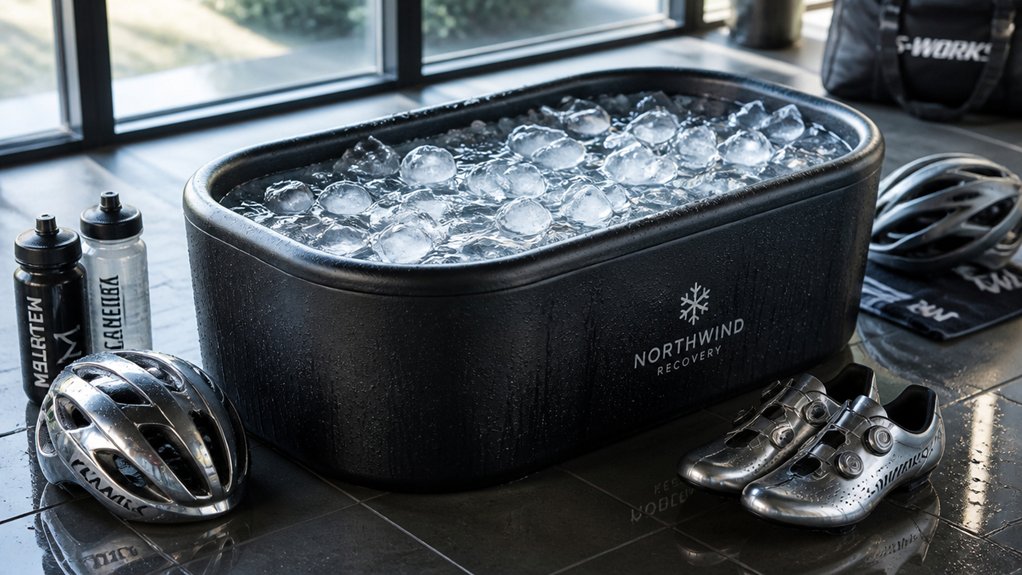
Using a cold plunge or ice bath within an hour after cycling can greatly reduce inflammation and muscle soreness, helping you recover faster.
It’s especially beneficial after high-intensity rides, but you should be cautious if you have cold sensitivity or cardiovascular issues. Knowing the right timing and understanding the benefits and risks will guarantee you use cold therapy effectively without hindering your recovery.
Optimal Timing for Use
Ever wonder the best moment to incorporate cold therapy into your cycling recovery routine? The ideal time is within an hour after intense or hard cycling sessions. Using a cold plunge or ice baths promptly helps restrict blood flow, effectively reducing inflammation and muscle soreness.
Keeping the water between 10-15°C (50-59°F) for 10-15 minutes maximizes benefits, especially for recovery and delayed-onset muscle soreness (DOMS). Avoid cold therapy immediately after strength or high-intensity interval workouts, as it may hinder muscle adaptation if applied too soon.
During multi-day events or tough training blocks, cold therapy can help ease fatigue and speed recovery.
- Use cold plunge or ice baths shortly after effort
- Maintain water temperature within 10-15°C (50-59°F)
- Limit session duration to prevent shock
- Selecting a suitable cold plunge tub with appropriate size and insulation can enhance the effectiveness and comfort of your recovery routine
Benefits for Inflammation
After intense cycling, cold plunge or ice baths at 10-15°C (50-59°F) can effectively reduce inflammation by constricting blood vessels and limiting the spread of inflammatory cells.
Cold therapy helps decrease inflammation and muscle soreness, speeding up recovery and minimizing delayed-onset muscle soreness (DOMS). Cold-water immersion numbs nerve endings, reducing pain signaling, and making you more comfortable after tough rides.
Rewarming afterward promotes blood flow, flushing metabolic waste products accumulated during cycling and aiding tissue repair. Using cold therapy after hot-weather rides or multi-day events can lessen cardiovascular stress and improve recovery within 24-48 hours.
Keep in mind, cold therapy isn’t suited immediately after strength training, as inflammation supports muscle adaptation, but it’s highly beneficial following cycling workouts.
Additionally, choosing a water sanitizer suited for cold plunge tubs can help maintain bacteria-free water, ensuring safe and effective cold therapy sessions (water sanitation).
Precautions and Risks
While cold therapy offers significant benefits for reducing inflammation and soreness, it’s important to use it appropriately to avoid potential risks. Cold plunge or ice baths, maintained at 10-15°C (50-59°F), should be limited to within 60 minutes post-hard cycling to support recovery.
Prolonged exposure longer than 15 minutes or water below 10°C (50°F) increases the risk of frostbite, nerve damage, or excessive muscle cooling that could hinder muscle adaptation. Cyclists with cardiovascular issues, Raynaud’s syndrome, or open skin wounds should consult a healthcare provider before using ice baths.
- Avoid cold therapy immediately after strength training or high-intensity intervals, as it can blunt inflammation necessary for muscle adaptation.
- Use cold therapy only for acute recovery needs or during multi-day events.
- Be cautious of risks like frostbite, nerve damage, and cardiovascular strain.
- Understanding the measurement parameters of blood oxygen monitors can help ensure accurate monitoring during and after cold immersion sessions.
How to Use Cold Water Immersion Safely
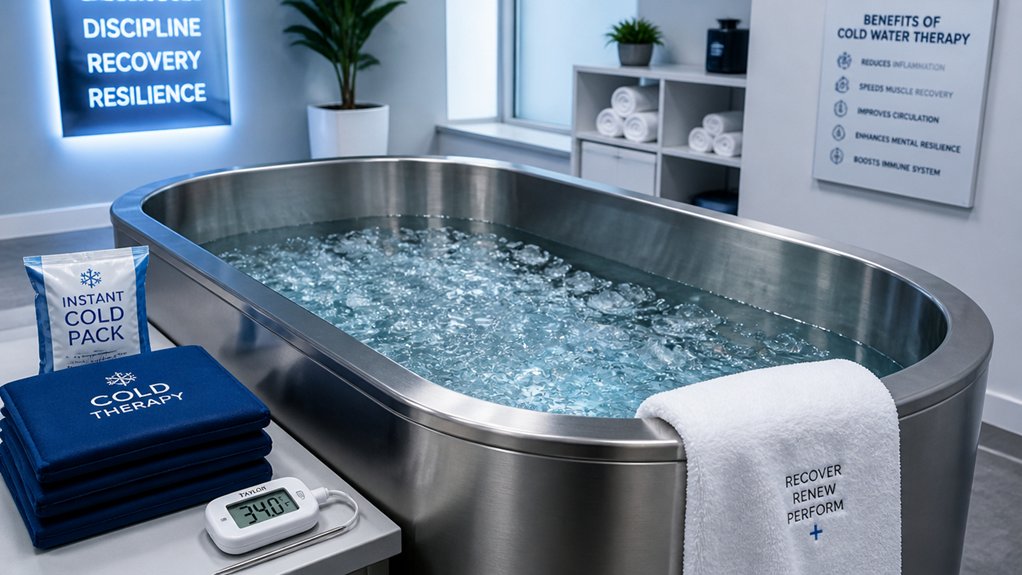
To use cold water immersion safely, you should start by ensuring the water temperature is between 10-15°C (50-59°F), and limit your session to 10-15 minutes. Cold immersion helps reduce inflammation and muscle soreness, promoting recovery after intense rides.
Begin with shorter durations if you’re new to cold exposure, gradually increasing as your body adapts. Avoid water below 10°C to prevent frostbite, nerve damage, or impaired recovery.
During the session, submerge your legs or entire lower body in the water, making sure the temperature remains consistent. Cold water causes blood vessels to constrict, so prioritize timely rewarming afterward to aid circulation and waste removal.
Always listen to your body during cold immersion, and consult a healthcare provider if you have cardiovascular issues or cold intolerance. Ensuring the temperature control features are precise and reliable can help maintain safe water temperatures throughout your session.
Why Contrast Therapy Can Accelerate Your Cycling Recovery
Contrast therapy accelerates your cycling recovery by actively improving circulation and reducing muscle soreness. Alternating heat and cold triggers a vascular pump effect—heat causes vasodilation, increasing blood flow, while cold induces vasoconstriction, reducing inflammation.
This cycle enhances tissue oxygenation and speeds removal of metabolic waste, leading to faster recovery. Applying contrast therapy within 60 minutes post-workout maximizes these benefits, helping you bounce back quicker. It’s especially effective during high-volume training or multi-day events.
Finishing with cold phases reduces inflammation and soreness, making it ideal for rapid recovery. This method not only alleviates muscle discomfort but also promotes better performance during subsequent rides, ensuring you’re always ready to hit the pedals with renewed strength. One key factor is the temperature therapy features of percussion massagers, which can quickly switch between heat and cold for optimal recovery sessions.
Common Mistakes to Avoid With Cold Therapy
Cold therapy can be highly effective for recovery, but it’s essential to use it correctly to avoid counterproductive effects. To prevent impairing recovery, avoid cold water colder than 50°F (10°C), as overcooling muscles can hinder healing.
Limit cold therapy sessions to 10-15 minutes—beginners should start at around 5 minutes—to reduce shock and nerve damage. Be cautious with cold plunges, especially shortly after intense workouts, because applying cold too soon can blunt muscle growth and adaptation.
Also, avoid cold therapy close to bedtime, since rewarming may raise body temperature and disrupt sleep. Remember, excessive use of cold therapy after every ride can be counterproductive—use it selectively to support proper recovery and avoid impairing your progress.
Final Tips for Incorporating Cold Therapy Into Your Routine
Incorporating cold therapy into your routine effectively requires timing and moderation. Use cold therapy within 60 minutes after a hard cycling session, starting with 30 seconds and increasing to 2-3 minutes at 10-15.5°C (50-60°F) to optimize inflammation reduction and reduce soreness.
Limit cold plunges to 10-15 minutes to avoid frostbite and impaired muscle recovery. Avoid cold therapy immediately after strength training to preserve necessary inflammation for muscle growth.
Incorporate cold showers or plunges for 2-5 minutes post-ride, alongside good nutrition and hydration, to lessen delayed-onset muscle soreness and boost mental sharpness. Reserve intense cold exposure for days with performance demands or multi-day events, and always consider individual health needs when integrating cold therapy into your cycling routine.
Frequently Asked Questions
Can Cold Therapy Help Prevent Muscle Soreness Before Cycling?
Cold therapy isn’t proven to prevent muscle soreness before cycling. It might help reduce inflammation afterward, but combining proper warm-up, stretching, and hydration are more effective in preparing your muscles and preventing soreness.
How Often Should I Apply Cold Therapy After Rides?
You should apply cold therapy within the first 24 hours after your ride, ideally 15-20 minutes sessions multiple times daily, to reduce inflammation and muscle soreness; avoid excessive use to prevent skin irritation or cold burns.
Is Cold Therapy Suitable for All Types of Cycling Injuries?
Cold therapy is suitable for many cycling injuries, especially acute ones like sprains or strains. However, you should consult a healthcare professional for injuries involving swelling, bruising, or chronic pain to confirm it’s appropriate for your specific situation.
Can Cold Therapy Be Combined With Other Recovery Techniques?
Yes, you can combine cold therapy with other recovery techniques like compression, elevation, stretching, or gentle massage. Integrating these methods can enhance healing, reduce inflammation, and speed up your recovery process after cycling injuries.
What Are the Signs of Overusing Cold Therapy?
You might notice increased pain, numbness, skin discoloration, or tingling if you overuse cold therapy. If symptoms worsen or last longer than expected, stop immediately and consult a healthcare professional to prevent further injury.