Ice baths boost your mental performance by triggering brain chemistry changes that improve mood, focus, and resilience. They activate stress-adaptation pathways, releasing feel-good neurotransmitters like endorphins, dopamine, and norepinephrine, which sharpen your alertness and boost motivation. Cold exposure also lowers stress hormones like cortisol and engages your nervous system to promote calmness and mental clarity. Keep exploring to discover proven techniques that maximize these benefits and keep you safe.
How Cold Water Immersion Boosts Brain Chemistry and Mood
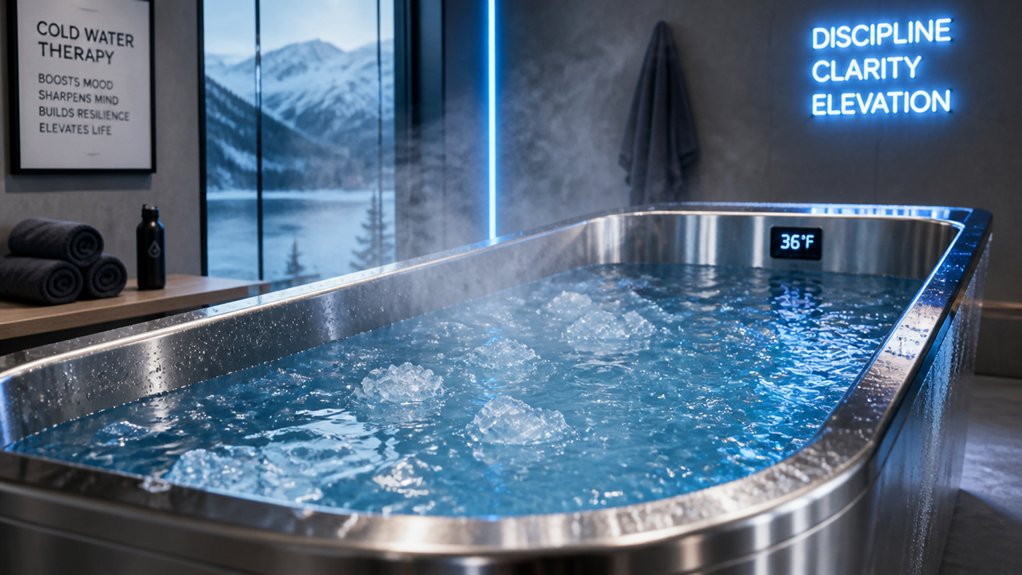
Cold water immersion activates your body’s cold receptors, which in turn stimulate brain pathways involved in stress adaptation. CWI triggers the release of neurotransmitters like endorphins and norepinephrine, boosting your mood and alertness while reducing pain perception.
Cold water immersion activates stress-adaptive brain pathways and boosts mood through neurotransmitter release.
It also lowers cortisol levels for up to three hours after immersion, helping you manage stress more effectively. This activation enhances mental resilience by stabilizing mood and decreasing negative feelings like tension and depression.
Additionally, regular cold exposure increases dopamine and serotonin levels, promoting sustained improvements in mood and cognitive focus. These chemical changes help you feel more motivated, energized, and emotionally balanced, which are essential for maintaining peak mental performance.
Understanding adaptogen synergy and how it supports stress response during cold plunges can further enhance mental resilience. These adaptogenic blends modulate stress hormones to maintain mood and focus, complementing the benefits of cold water immersion.
CWI, thus, plays a key role in modulating brain chemistry for better mental well-being.
How Your Nervous System Helps You Feel Calm and Focused
When you dip into cold water, your nervous system responds by activating the parasympathetic nervous system, which helps you feel calm and centered. Cold water immersion stimulates this part of your nervous system through the vagus and trigeminal nerves, lowering your heart rate and promoting calmness.
The cold shock response triggers the release of neurotransmitters like norepinephrine and dopamine, which boost focus, alertness, and mood. Additionally, ice baths help reduce cortisol levels, aiding in stress regulation and emotional regulation.
Engaging your face in cold water also activates the diving reflex, further enhancing parasympathetic activation and emotional balance. Repeated cold exposure trains your neural circuits to better tolerate stress, fostering a state of calmness and improved mental resilience during athletic performance. Knowing how sensor accuracy can be maintained during cold exposure ensures that your body’s responses are measured accurately, supporting optimal mental and physical adaptation.
How Cold Exposure Sharpens Your Focus and Attention
Exposing yourself to cold water activates your sympathetic nervous system, which floods your brain with noradrenaline (norepinephrine), sharply boosting alertness, focus, and mental energy.
During cold water immersion, this adrenaline surge enhances mental clarity and heightens attention. It also increases cerebral blood flow, improving cognitive function and concentration.
Here’s what happens next:
- The cold shock response stimulates the release of noradrenaline, sharpening mental acuity.
- Cold immersion boosts sympathetic nervous system activity, fueling sustained focus.
- Brief cold facial immersions activate the parasympathetic nervous system via the diving reflex, promoting calmness and reducing mental fatigue.
- Using reliable blood oxygen monitors ensures accurate tracking of physiological responses during cold exposure, supporting safe and effective sessions.
This combination helps you stay alert longer and improves task-focused performance.
How Cold Water Helps Lower Stress Hormones Like Cortisol
When you take an ice bath, your body initially reacts to the cold, but soon after, cortisol levels actually drop. A consistent routine of cold exposure can also enhance your body’s natural muscle relaxation response, further supporting mental resilience. Regular cold exposure over time trains your system to better regulate stress hormones, making you more resilient. This reduction in cortisol can lead to improved mood and better management of mental stress.
Cold Stimulates Stress Response
Cold water immersion triggers the body’s cold shock response, which initially causes a surge in adrenaline but soon leads to a significant reduction in cortisol levels for up to three hours afterward. This process helps with stress reduction and promotes mental benefits by calming the nervous system. Additionally, modern chillers are designed for energy efficiency, ensuring consistent and sustainable cold exposure sessions.
Hormone Regulation Enhances Mood
The body’s hormonal response to cold water immersion plays a key role in boosting mood and emotional well-being. Ice baths lower cortisol levels through cold water immersion, reducing stress hormones for up to three hours after exposure and supporting hormone regulation. Regular cold water immersion diminishes cortisol response over time, enhancing stress resilience and helping manage anxiety and depression. Cold-induced activation of the parasympathetic nervous system encourages relaxation, promoting better mood and mental performance. Additionally, certain muscle recovery creams used after cold plunges can aid in reducing inflammation and support quicker mental restoration.
How Cold Plunges Increase Endorphins and Dopamine for Better Mood
When you take an ice bath, your body triggers the cold shock response, releasing endorphins that give you a natural high and pain relief. This process also boosts dopamine levels, which sharpens your focus and lifts your mood. As a result, regular cold plunges help you feel more motivated, resilient, and emotionally balanced. Incorporating controlled breathing exercises can further enhance lung capacity and improve overall respiratory efficiency during cold exposure.
Endorphin Release Mechanisms
Engaging in cold water immersion triggers the body’s cold shock response, leading to a surge in endorphins that naturally alleviate pain and create feelings of euphoria.
During ice baths and cold immersion, your body activates mechanisms that boost endorphin levels, providing natural pain relief and mood enhancement. Here’s how it works:
- The cold shock response stimulates the release of endorphins, the body’s feel-good chemicals, reducing perceived pain.
- The activation of the sympathetic nervous system promotes an endorphin surge, fostering euphoria and mental well-being.
- Repeated cold water immersion sustains high endorphin levels, which support endurance, stress resilience, and long-term mood regulation.
This process not only enhances mental health but also helps you recover faster and improve overall performance. Cold plunge devices often include features like rapid temperature adjustment and quiet operation, making consistent cold exposure more effective and comfortable for recovery.
Dopamine Boost Effects
Cold plunges activate your sympathetic nervous system, causing a rapid increase in dopamine and noradrenaline levels. This boosts your mental state, motivation, and mood through cold water immersion. As your body responds to ice baths, it releases endorphins and elevates dopamine, creating feelings of well-being and alertness. This surge supports enhanced energy and mental toughness, helping you resist stress and improve focus. Regular cold plunges sustain these benefits, promoting long-term mood regulation. The interaction between increased endorphins and dopamine also uplifts positive emotions like vigor, pride, and resilience. The table below summarizes these effects:
| Effect | Result |
|---|---|
| Endorphin release | Natural pain relief |
| Dopamine boost | Improved mood and motivation |
| Sympathetic activation | Increased energy and focus |
| Long-term adaptation | Enhanced mental toughness |
| Positive emotions | Vigor, pride, and resilience |
Building Mental Toughness With Controlled Cold Stress
Controlled cold stress through ice baths actively trains your mind to handle discomfort and pressure, strengthening mental resilience.
Cold exposure builds mental toughness by helping you manage discomfort and pressure effectively.
When you practice cold water immersion, your body responds with a cold shock that increases adrenaline and endorphins, boosting alertness and mood. This process:
- Enhances endurance by challenging your physiological limits
- Elevates norepinephrine levels, sharpening focus and cognitive performance
- Activates the parasympathetic nervous system through controlled breathing, promoting calmness and mental clarity
As you endure the discomfort, you build resilience and mental stamina essential for high-pressure situations. Regular exposure to cold stress trains your mind to manage stress better, creating a stronger foundation of mental toughness that persists beyond the ice bath.
Simple Ways to Use Ice Baths to Enhance Mental Performance
You can boost your mental performance by incorporating simple ice bath techniques that fit easily into your training routine. Start with short, controlled cold water immersions—like face dips or partial plunges—to quickly elevate mood and sharpen focus. During cold water immersion, practice controlled deep breathing, such as box breathing, to enhance stress reduction and mental clarity. These methods stimulate ice baths’ cold shock response, increasing dopamine and serotonin, which lift motivation and mental toughness. Regular exposure boosts endorphin and norepinephrine levels, improving alertness, focus, and mood. Incorporate these steps gradually, building your tolerance and mental endurance over time.
| Technique | Emotional Impact | Benefit |
|---|---|---|
| Cold face immersions | Instant mood elevation | Quick mental boost |
| Controlled deep breathing | Stress relief & clarity | Enhanced focus |
| Partial cold water plunges | Strengthens mental resilience | Long-term mental toughness |
Top Safety Tips and Myths About Cold Water and Mental Benefits
While ice baths can offer notable mental benefits, it’s important to prioritize safety and clear up common misconceptions. Cold water immersion isn’t harmful if done correctly, and it supports mental resilience without stunting long-term performance.
Ice baths boost mental resilience safely when done correctly, without harming long-term performance.
To stay safe and effective:
- Limit sessions to 5–15 minutes at 50–59°F (10–15°C), avoiding head submersion and daily use without guidance.
- People with cardiovascular or blood pressure issues should consult their healthcare provider before attempting cold water immersion due to potential increases in heart rate and blood pressure.
- Use controlled breathing techniques, like the Wim Hof method or box breathing, to enhance focus, reduce hyperventilation risk, and manage the cold shock response. Proper acclimatization involves starting with cold showers or short immersions, gradually extending duration and lowering temperature for peak mental performance.
Frequently Asked Questions
How Do Ice Baths Help Mentally?
Ice baths help you mentally by releasing endorphins and norepinephrine, boosting mood and focus. They activate your nervous system, increase energy, reduce stress hormones, and improve emotional resilience, leaving you feeling more vigorous, centered, and in control.
Why Should Athletes Take Ice Baths?
You should take ice baths because they reduce muscle soreness, boost mood with endorphins, enhance mental resilience, promote relaxation, improve sleep, and support immune health, all of which help you perform better physically and mentally during competitions.
Are Ice Baths Good for ADHD?
Ice baths can be beneficial for ADHD by boosting alertness, improving emotional regulation, and reducing stress. They activate your parasympathetic nervous system, elevate neurotransmitters like dopamine, and promote mental clarity, supporting overall cognitive function.
What Is the Psychology Behind Ice Baths?
The psychology behind ice baths involves triggering a cold shock response that boosts your mood, focus, and resilience. You experience immediate euphoria, reduced negative emotions, and develop mental toughness, which enhances your emotional regulation for better performance.