Ice baths help speed up your strength recovery by reducing muscle inflammation and soreness. They work through vasoconstriction, which limits swelling and flushes out metabolic waste. Cold immersion also numbs pain and improves circulation when blood flow returns. Timing is key—using them 24-48 hours after workouts can boost recovery without hindering muscle growth. Stick around to discover how to optimize your ice bath routine for better results.
How Do Ice Baths Support Muscle Recovery After Strength Training?
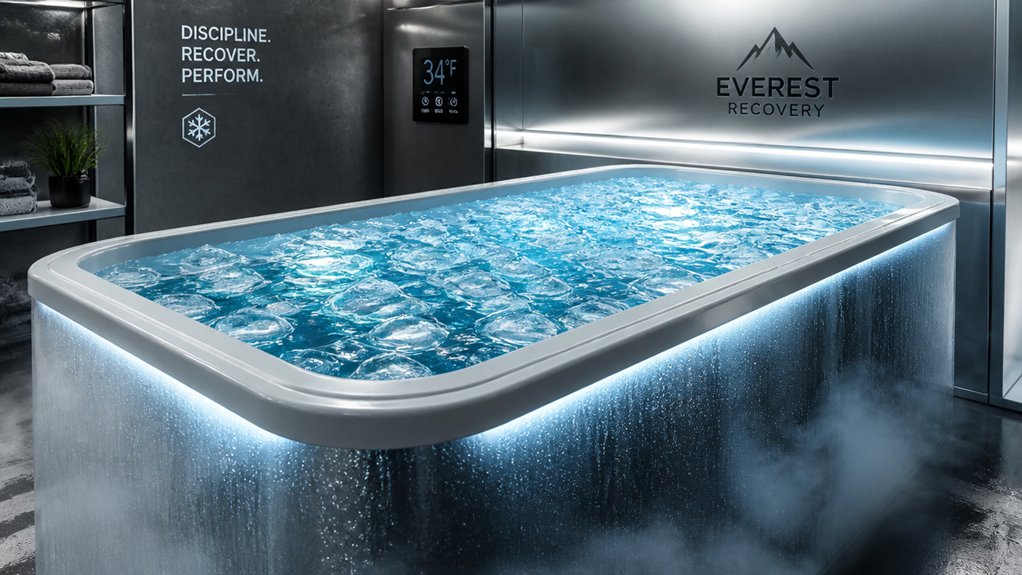
Ever wonder how ice baths speed up muscle recovery after strength training? When you immerse yourself in cold water for 10-15 minutes, the cold water immersion causes vasoconstriction, narrowing the blood vessels. This reduces swelling and delays onset muscle soreness (DOMS), helping you recover faster. Using devices with dual temperature therapy features can enhance this process by providing rapid and targeted heat or cold, optimizing recovery. The cold helps lower pain perception, so you’re less sore and more prepared for your next workout. Once you exit the bath, vasodilation occurs, increasing blood flow and delivering essential nutrients to your muscles. This process also aids in removing metabolic waste, reducing muscle fatigue. Regular ice baths support muscle function and recovery, especially after intense resistance training, by promoting effective inflammation control and muscle relaxation, enabling you to perform at your best sooner.
The Science Behind Cold Water Immersion and Muscle Inflammation
When you immerse yourself in cold water, vasoconstriction reduces blood flow, which helps limit inflammation and swelling in your muscles. This process not only eases soreness but also helps flush out waste products that can hinder recovery. Additionally, incorporating adaptogens may support your stress response and immune function during recovery. Full-spectrum blends can enhance bioavailability and provide synergistic benefits, optimizing your cold plunge routines.
Vasoconstriction and Blood Flow
Cold water immersion triggers vasoconstriction, causing blood vessels to narrow and reduce blood flow to the muscles. This constriction limits the infiltration of inflammatory cells and fluid into muscle tissues, helping to decrease swelling and inflammation. As a result, your muscles experience less soreness and pain. Additionally, the cold can stimulate fascia release, improving tissue flexibility and reducing tension. The numbness from cold also diminishes nerve signals, further reducing discomfort. Once you exit the ice bath, vasodilation occurs, expanding blood vessels and boosting blood flow. This increased circulation helps flush out metabolic waste products and delivers essential nutrients needed for muscle repair and recovery.
Inflammatory Response Modulation
After cold water immersion induces vasoconstriction and reduces blood flow to muscles, it also modulates the inflammatory process that follows intense exercise.
Ice baths help limit inflammation by decreasing fluid and inflammatory cell influx into damaged tissues, which can reduce muscle soreness. Cold immersion numbs nerves, lowering pain perception and making soreness more manageable.
When you finish your workout, applying cold immersion within 1-2 hours can preempt excessive inflammation, reducing markers like creatine kinase. This modulation keeps the inflammatory response balanced, supporting muscle recovery without impairing necessary repair processes.
However, using ice baths too frequently or for too long might dampen hypertrophic signals, potentially hindering muscle growth.
In post-workout recovery, ice baths serve as a tool to control inflammation and enhance overall muscle repair.
Waste Removal and Healing
Vasoconstriction caused by cold water immersion temporarily narrows blood vessels, reducing the influx of fluids and inflammatory cells into muscle tissues and minimizing swelling and damage. This initial response helps control inflammation and prevents excessive tissue breakdown. Using a well-calibrated chiller system ensures the water temperature remains consistent, maximizing these benefits. After removing yourself from the ice bath, vasodilation increases blood flow, delivering oxygen and nutrients essential for muscle repair. The rebound flush effect from the shift clears lactic acid and cellular debris, speeding up healing of microtrauma in muscle fibers. Additionally, ice baths lessen nerve signaling and pain perception, encouraging early movement. This fluid exchange supports waste removal and tissue recovery. To optimize healing, aim for 10-15 minute immersions in 50-59°F water within 1-2 hours of exercise, promoting efficient inflammation control and muscle repair.
When and How Should You Use Ice Baths for Best Strength Gains?
To get the most benefit from ice baths, plan to use them 24-48 hours after your strength workouts, avoiding them immediately before or after training. Keep the temperature between 50-59°F and stay submerged for 10-15 minutes to optimize recovery while reducing risks. Be sure to rewarm gradually and listen to your body’s response to fine-tune the timing and frequency for maximum strength gains. Incorporating water treatment with hydrogen peroxide can help maintain water quality over repeated uses.
Optimal Timing and Duration
When is the best time to incorporate ice baths into your recovery routine for maximum strength benefits? For ideal recovery, use ice baths 24 to 48 hours after your workout, not immediately before or after training.
Applying ice baths within 1-2 hours post-exercise helps reduce inflammation and muscle soreness, aiding quicker recovery. Keep the water temperature between 50-59°F (10-15°C) and limit your immersion to 10-15 minutes to maximize benefits while avoiding risks.
Remember, overdoing it with daily ice baths during active hypertrophy can hinder muscle growth signals. Using bromine tablets can help maintain sanitized water without affecting the ice bath’s effectiveness, ensuring a safe and comfortable experience.
To get the most out of your recovery routine:
- Use ice baths within the recommended window
- Stick to the 10-15 minute duration
- Maintain proper water temperature
- Rewarm thoroughly afterward for circulation
Timing and Temperature Tips
Timing your ice baths effectively depends on understanding the ideal windows for recovery and strength gains.
For peak muscle recovery, use ice baths 24 to 48 hours after strength training sessions, avoiding immediate post-workout immersion. Temperatures between 50-59°F (10-15°C) for 10-15 minutes strike a balance between benefits and risks like nerve damage.
Cold exposure immediately before or after strength workouts can blunt muscle growth and hinder strength adaptations, so skip them during these windows. Instead, focus on post-training periods—ideally within 1-2 hours—to reduce soreness.
Incorporating insulation efficiency and carefully controlling water temperature can enhance recovery results and prevent over-cooling or discomfort.
Adjust the timing based on how your body responds. Consistent use and monitoring can help you refine both timing and temperature to maximize the benefits of ice baths for muscle recovery and strength training success.
What Are the Optimal Temperatures and Durations for Safe Ice Baths?
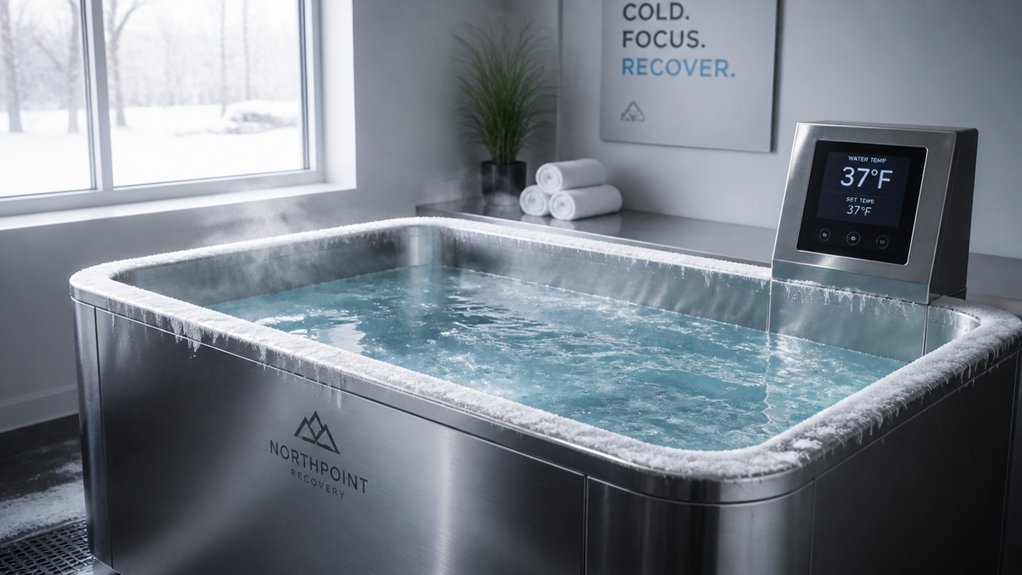
What’re the ideal temperatures and durations that guarantee your ice baths are both safe and effective? To optimize strength recovery, aim for temperatures between 50 to 59°F (10 to 15°C). Staying within this range helps reduce swelling while avoiding frostbite or nerve damage. The recommended time to take ice baths is 10 to 15 minutes; exceeding this can increase risks like hypothermia without extra benefits. To maintain safety, use a thermometer to monitor water temperature regularly. When using ice baths, limit immersion duration and avoid sudden hot rewarming. Properly managing the temperature and time maximizes recovery benefits while minimizing injury risk, making your ice baths a safe and effective tool for strength training. Proper temperature control is essential for ensuring safe and effective recovery sessions.
Who Should Avoid Using Ice Baths for Recovery?
Who should steer clear of ice baths? If you have cardiovascular disease or high blood pressure, ice baths can cause dangerous blood pressure spikes and heart stress. People with Raynaud’s Phenomenon risk extreme circulatory reactions, leading to numbness and pain. Those with cold allergy (Cold Urticaria) may develop hives or swelling, risking serious reactions. If you have diabetes or neuropathies, ice baths could worsen nerve damage or impair circulation. Open wounds or skin conditions like eczema are also risks, as cold exposure can cause infections or irritation.
| Condition | Risks from Ice Baths |
|---|---|
| Cardiovascular disease, high blood pressure | Heart strain, blood pressure spikes |
| Raynaud’s Phenomenon | Circulatory reactions, numbness |
| Cold allergy (Cold Urticaria) | Hives, swelling |
| Diabetes, neuropathies | Nerve damage, circulation issues |
| Skin conditions | Infection, irritation |
Comparing Ice Baths With Other Recovery Strategies: Which Works Best?
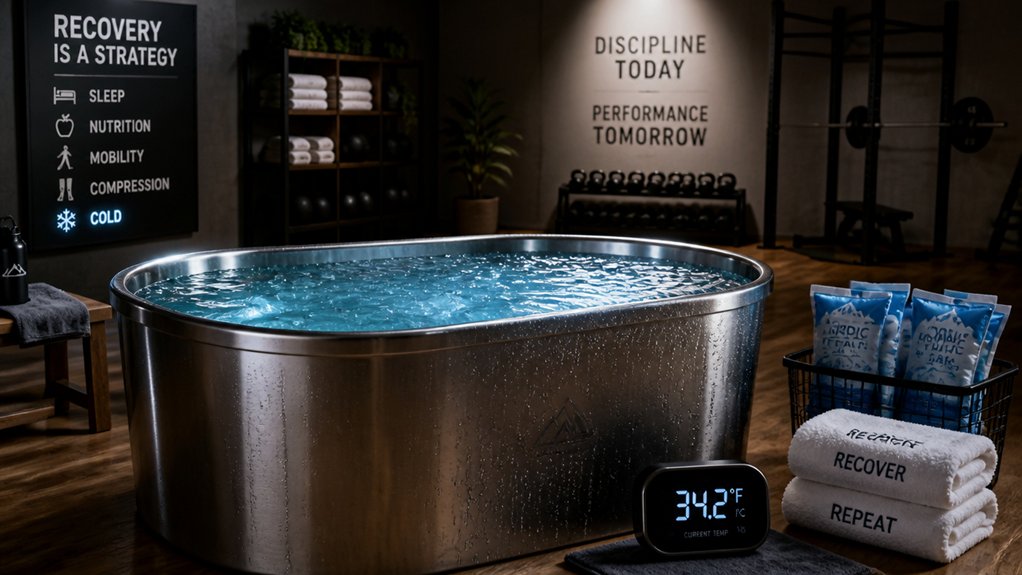
When comparing ice baths to other recovery methods, it’s clear that each approach offers unique benefits and limitations. Ice baths excel at reducing Delayed Onset Muscle Soreness (DOMS) and inflammation faster than passive rest, helping you return to your strength training sessions sooner. Cold therapy causes vasoconstriction followed by vasodilation, which reduces swelling and flushes waste.
Unlike active recovery or contrast therapy, ice baths don’t rely on movement, but they may blunt hypertrophy signaling if used immediately after training. Combining ice baths with foam rolling, nutrition, and sleep boosts recovery more than cold therapy alone. However, for long-term gains, active recovery and proper nutrition outperform frequent ice baths, which can hinder muscle growth if overused.
- Accelerates DOMS relief and inflammation reduction
- Limits swelling through vasoconstriction and vasodilation
- May impact muscle growth if overused post-training
- Works best with complementary strategies like foam rolling
How Does Cold Water Immersion Improve Blood Flow and Nutrient Delivery?
Have you ever wondered how cold water immersion actually boosts blood flow and nutrient delivery? When you submerge in cold water, vasoconstriction occurs, narrowing blood vessels to reduce swelling and prevent additional inflammation.
After the immersion, vasodilation kicks in, widening blood vessels to increase blood flow. This process helps deliver oxygen and essential nutrients to damaged muscles, supporting repair. The rebound flush effect clears metabolic waste products like lactic acid, aiding recovery.
Immersing within 1-2 hours after exercise can boost cardiac output by up to 102%, promoting efficient circulation. Improved circulation through cold-water immersion guarantees that healing resources reach your muscles promptly, optimizing strength recovery. This cycle of vasoconstriction and vasodilation directly enhances blood flow and nutrient delivery during recovery.
How to Take a Safe and Effective Ice Bath: Step-by-Step Guide
Taking an ice bath safely and effectively involves several key steps.
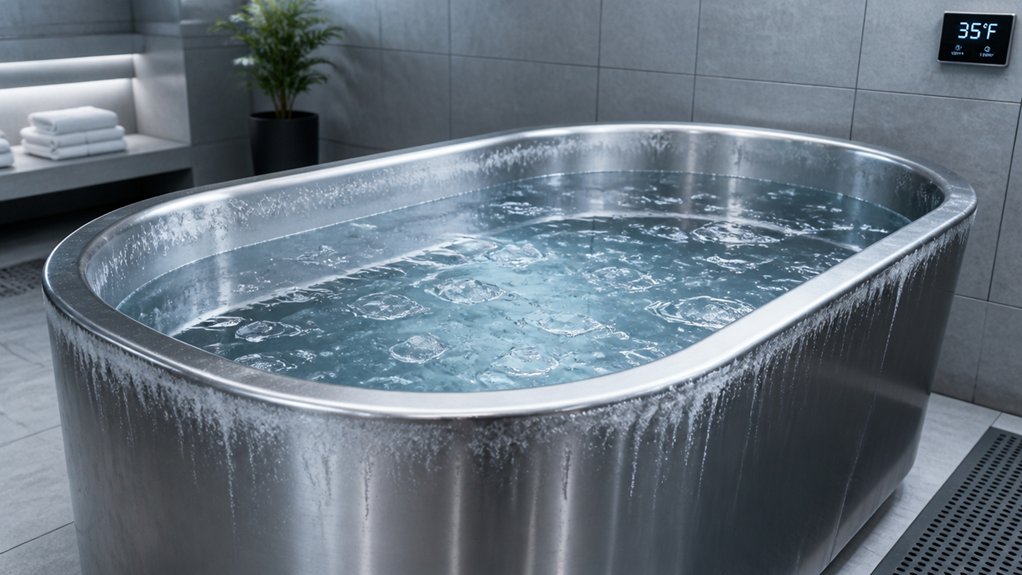
First, fill a tub with water cooled to 50-59°F (10-15°C), using a thermometer to monitor temperature. Limit immersion time to 10-15 minutes to prevent frostbite and nerve damage, while still reducing soreness.
Before entering, slowly step into the bath and focus on controlled deep breathing during the initial cold shock response to adapt comfortably.
Focus immersion primarily on the muscles you worked during exercise, and distract yourself with music or podcasts to tolerate the cold.
After exiting, dry off promptly and rewarm gradually with warm towels—avoid hot showers immediately.
Following these steps helps maximize recovery benefits while minimizing risks.
Do Cold Plunges Help You Build Muscle and Gain Strength Long-Term?
Do cold plunges really support long-term muscle building and strength gains? While ice baths can reduce Onset Muscle Soreness (DOMS) and speed short-term recovery, their impact on long-term strength and muscle growth is complex. Using cold water immersion immediately after strength training might blunt hypertrophy signaling pathways, potentially limiting muscle gains over time. Timing matters; ice baths are most beneficial 24-48 hours post-workout, balancing soreness relief and avoiding interference with muscle adaptation. To understand better, consider this:
| Effect of Cold Plunges | Impact on Long-Term Growth |
|---|---|
| Reduces DOMS | Can hinder hypertrophy signaling |
| Speeds short-term recovery | May limit muscle gains long-term |
| Modifies muscle temperature | Needs personalized timing |
Combine ice baths with proper nutrition and rest, but always tailor your approach for peak strength gains.
Frequently Asked Questions
What Does an Ice Bath Do for Recovery?
An ice bath reduces muscle soreness, speeds up recovery, and decreases fatigue by narrowing blood vessels, numbing pain, then improving circulation. This helps you bounce back faster and get ready for your next workout effectively.
Does an Ice Bath Increase Strength?
An ice bath doesn’t directly increase strength but helps you recover faster from workouts by reducing muscle soreness and fatigue, enabling you to train more effectively over time. It supports long-term strength gains through enhanced recovery.
How Long Should You Ice Bath for Recovery?
You should limit your ice bath to 10-15 minutes for recovery. Keep the water between 50-59°F, and monitor how you feel during that time. Avoid longer exposure to prevent risks and maximize benefits effectively.
Why Do Bodybuilders Take an Ice Bath?
You take an ice bath to reduce muscle soreness, swelling, and inflammation, helping you recover faster. It also numbs pain, improves blood flow, and allows you to train more intensely, though with caution for long-term muscle growth.