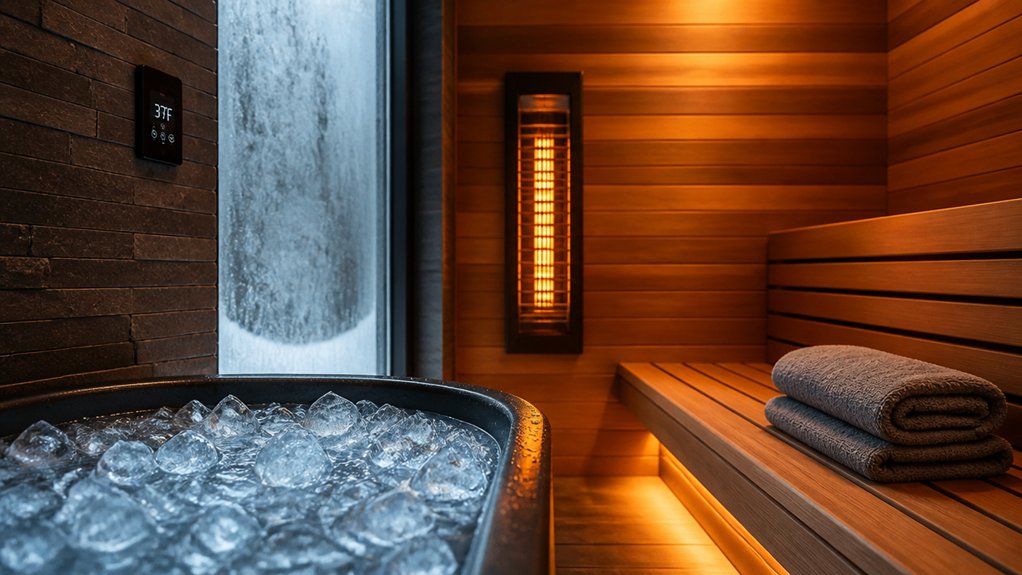
To optimize recovery with a sauna and ice-bath routine, start with 10-15 minutes in a sauna at 65°C, gradually increasing heat and duration over time. Follow this with 1-3 minutes in a cold plunge at 10-15°C, repeating the cycle 2-3 times. Stay hydrated, listen to your body, and gradually build your tolerance. With consistent practice, you’ll enhance circulation, reduce inflammation, and boost muscle repair—continue to explore more effective strategies for best results.
Why Sauna and Cold Plunge Therapy Boost Your Recovery
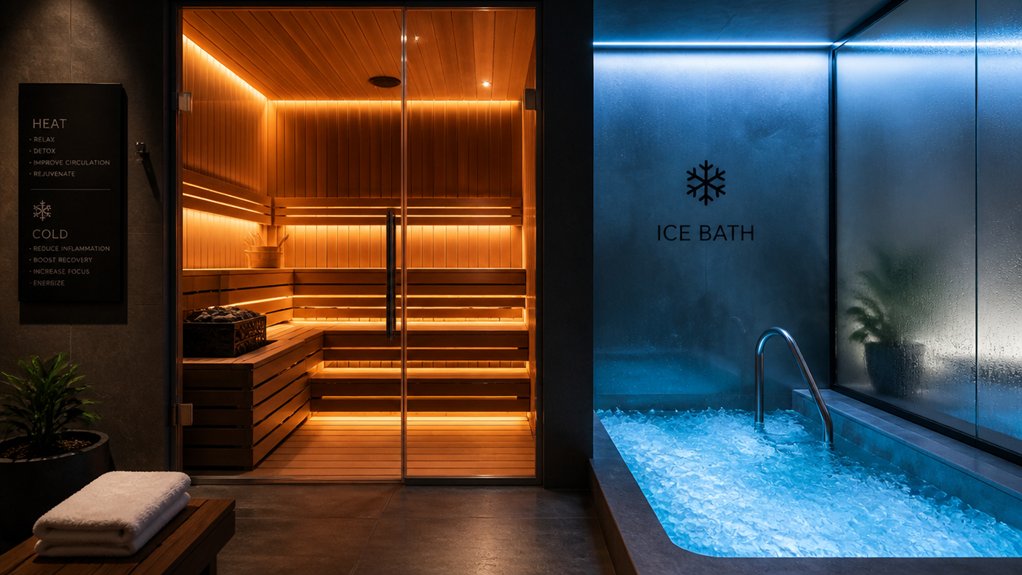
Sauna and cold plunge therapy boost your recovery by actively improving circulation and reducing inflammation. When you use a sauna, the heat causes vasodilation, increasing blood flow and delivering nutrients to your muscles, which accelerates muscle recovery.
Sauna and cold plunge therapy enhance recovery by boosting circulation and decreasing inflammation naturally.
Cold plunges at 50-59°F tighten blood vessels through vasoconstriction, lowering inflammation and swelling after exercise. Alternating between heat and cold creates a vascular pumping effect, promoting efficient blood circulation.
Sauna sessions between 65-90°C elevate your heart rate, mimicking light cardio and stimulating heat shock proteins that support muscle repair. This combination also enhances mental clarity and resilience by increasing dopamine and norepinephrine levels.
Incorporating regular sauna and cold plunge sessions 2-3 times weekly helps reduce muscle damage, supports immune function, and speeds up your overall physical recovery process.
Preparing for Your Sauna and Cold Plunge Sessions
Before your sessions, make sure to hydrate thoroughly to replace fluids lost through sweating and prevent dehydration.
Set up your cold plunge at the right temperature and prepare warm clothes for rewarming afterward.
Pay close attention to your body’s signals to guarantee comfort and safety throughout the recovery routine.
Consider testing the temperature control options of your tub beforehand to ensure precise and consistent therapy sessions.
Hydration Strategies
Proper hydration is essential to optimize your sauna and cold plunge routines and prevent dehydration. To hydrate well, start by drinking at least 500 ml of water before your session to offset fluid loss from sweating.
During your routine, keep sipping water to sustain electrolyte balance and support your cardiovascular system. After finishing cycles, rehydrate with water or electrolyte-rich beverages to replenish lost fluids and aid muscle recovery.
Avoid alcohol or caffeine beforehand, as they can worsen dehydration and impair body temperature regulation. Throughout your routine, monitor urine color and frequency as practical indicators of your hydration status.
Staying properly hydrated guarantees your body can adapt efficiently to the temperature changes, minimizes risks, and maximizes the benefits of your sauna and ice-bath recovery.
Gradual Temperature Adjustment
Adjusting gradually to temperature changes is key to comfortably and safely integrating sauna and cold plunge sessions into your routine. Start with a few minutes of room temperature cool down before entering the cold plunge to help your body adapt.
When using the sauna, begin at a moderate temperature around 65°C (150°F) and stay for 10-15 minutes. Increase heat and duration slowly as your tolerance builds.
For cold baths, start with 30-60 seconds at 55-59°F (13-15°C), extending to 2-3 minutes over time.
Alternate heat and cold slowly by completing one full sauna-to-cold plunge cycle initially before adding more rounds.
Use controlled breathing during cold exposure to manage the cold shock response and promote smoother acclimatization.
Recognizing Body Signals
How can you tell if your body is handling the heat or cold safely? During sauna sessions, monitor for signs like lightheadedness, nausea, or dizziness to prevent overexposure.
In the cold shock phase, when you first enter the ice bath, you’ll notice rapid breathing and an increased heart rate—use slow, deep breaths to manage discomfort. Pay attention to intense or uncontrollable shivering, as it’s a signal to exit immediately to avoid hypothermia or excessive stress.
Notice changes in skin color, numbness, or persistent tingling as cues to adjust the session’s duration or temperature. Tracking how you feel afterward—less muscle soreness, better energy, mental clarity—helps you fine-tune your routine for safety and maximum benefit. Incorporating accurate measurement of blood oxygen levels can further ensure your body’s response remains within safe limits during cold exposure.
How to Safely Perform a Sauna and Cold Plunge Routine
Start your routine gradually by adjusting to temperature changes over time and listening to how your body responds. Always stay well-hydrated before, during, and after each session to prevent dehydration. Pay attention to your body’s signals and use controlled breathing to manage cold shock, stopping if you experience discomfort. Incorporating specific breathing exercise tools can further enhance your resilience and recovery.
Gradual Temperature Adaptation
To perform a safe sauna and cold plunge routine, it’s essential to build your tolerance gradually over several weeks. This process is called gradual adaptation, and it helps your body adjust to temperature changes safely.
Start with shorter sessions: limit sauna time to 10-15 minutes at 65-75°C, followed by brief cold plunges of 30-60 seconds at 10-15°C. As your body’s comfort improves, gradually increase the duration of both your sauna and cold plunge segments. Remember, contrast therapy sessions should be manageable, not overwhelming.
To promote adaptation, follow these steps:
- Increase session times gradually, listening to your body’s signals.
- Incorporate brief room temperature cool-downs before entering the ice bath.
- Practice slow, deep breathing during cold plunges to manage shock and build resilience.
Monitoring Body Responses
Monitoring your body’s responses during sauna and cold plunge sessions guarantees safety and helps prevent adverse reactions. Pay close attention to signs like dizziness, nausea, or excessive shivering, and exit immediately if these occur.
Use slow, deep breathing to manage the cold shock response when entering the ice bath, gradually increasing exposure from beginner levels of 30-60 seconds up to 2-3 minutes. Always observe your body’s signals and avoid pushing beyond comfort.
It’s crucial to start with one cycle of 10-15 minutes in the sauna, then 1-2 minutes in a cold plunge, gradually increasing as tolerated. End with cold exposure and allow 5-10 minutes of relaxation to help your body recover without sudden temperature changes.
Monitoring your responses guarantees a safe and effective routine. Proper water treatment and insulation are essential to maintain water safety and temperature consistency during your recovery routine.
Maintaining Hydration Properly
Maintaining proper hydration is essential for a safe and effective sauna and ice-bath routine. To stay hydrated properly, you should focus on these key steps:
- Hydrate thoroughly before starting, drinking water to compensate for fluid loss from sweating.
- Continuously sip water during the sauna session and immediately after to support electrolyte balance and cardiovascular health.
- After the cold plunge, rehydrate with water or electrolyte-rich fluids to replenish fluids lost through sweating and cold-induced diuresis.
Avoid alcohol and caffeine beforehand, as they can worsen dehydration and reduce heat tolerance.
Monitor your hydration by checking urine color and frequency, adjusting your fluid intake as needed.
Staying properly hydrated helps guarantee your recovery is safe, effective, and enjoyable.
Cold Plunge Techniques and Tips for Best Results
Starting your cold plunge gradually can maximize comfort and safety, so step into the ice bath slowly after a brief cooldown. Keep the temperature between 10-15°C (50-59°F), and begin with 1-2 minute immersions, extending the time as your tolerance improves. A portable ice bath tub allows for better control over water temperature and ease of use during your routine. Enter the cold plunge slowly, keeping your head above water initially to manage cold shock. Practice slow, deep breathing to stay calm and focus mentally. Limit each session to 5-12 minutes, and get out immediately if you feel numbness, dizziness, or extreme discomfort. After exiting, dry off quickly and dress warmly, allowing your body to rewarm naturally over 10-15 minutes. These techniques optimize muscle recovery and deliver mental benefits, making your cold plunge both safe and effective.
Building Your Contrast Therapy Routine for Maximum Benefits
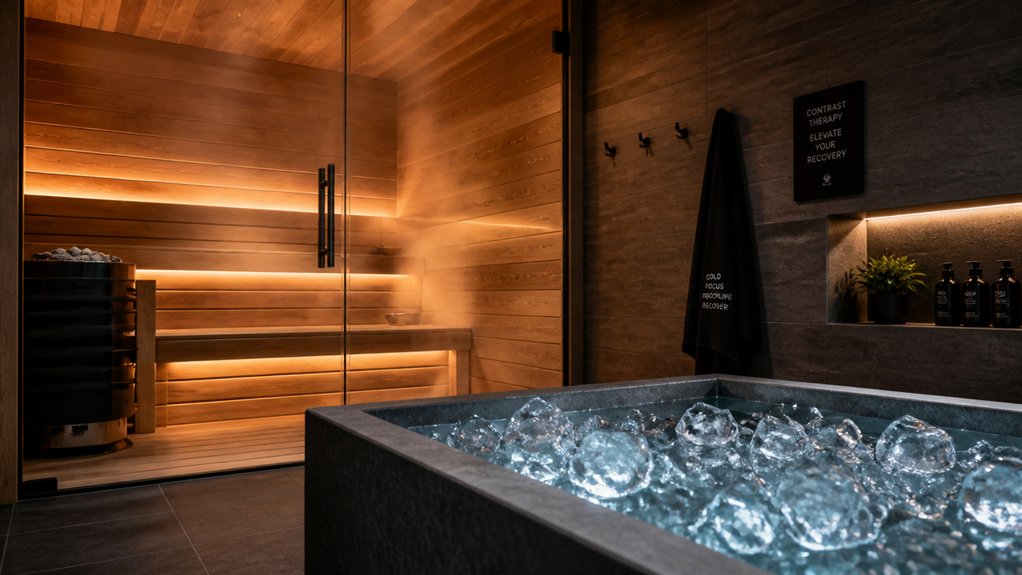
To build an effective contrast therapy routine, begin with a structured plan that balances heat exposure and cold immersion to maximize recovery and mental resilience. Start with a 10–15 minute sauna session at 65–90°C to stimulate muscle recovery and promote circulation. Then, shift immediately into a 1–3 minute cold water immersion at 10–15°C to reduce inflammation and enhance recovery. Repeat this cycle 2–3 times, carefully monitoring your body signals to avoid overheating or hypothermia. During cold immersion, practice controlled, slow breathing to manage the cold shock response and boost mental clarity. Incorporating low EMF infrared saunas can further enhance safety and comfort during sessions, especially with frequent use. Finish each session with 5–10 minutes of relaxation and stay well-hydrated. Consistency, gradual adjustments, and attentive listening help optimize contrast therapy benefits over time.
Tips to Grow Tolerance and Stay Consistent
Building tolerance and maintaining consistency with sauna and ice-bath routines require deliberate, gradual adjustments. Start with shorter sessions—10-15 minutes in the sauna and 30-60 seconds in the cold plunge—then gradually increase duration over weeks.
A cold plunge thermometer can help monitor water temperature accurately, ensuring safe and effective sessions. To grow your cold plunge routine safely, focus on consistent hydration before, during, and after sessions to support recovery and prevent dehydration. Use controlled breathing techniques during cold exposure to manage the cold shock response, helping you stay calm and build resilience.
Schedule sessions 2-3 times weekly, aligning with your training and recovery needs. Keep track of session duration, temperature, sensations, and recovery effects to identify what works best, ensuring steady progress and a sustainable routine you can stick to long-term.
Common Mistakes and How to Avoid Them
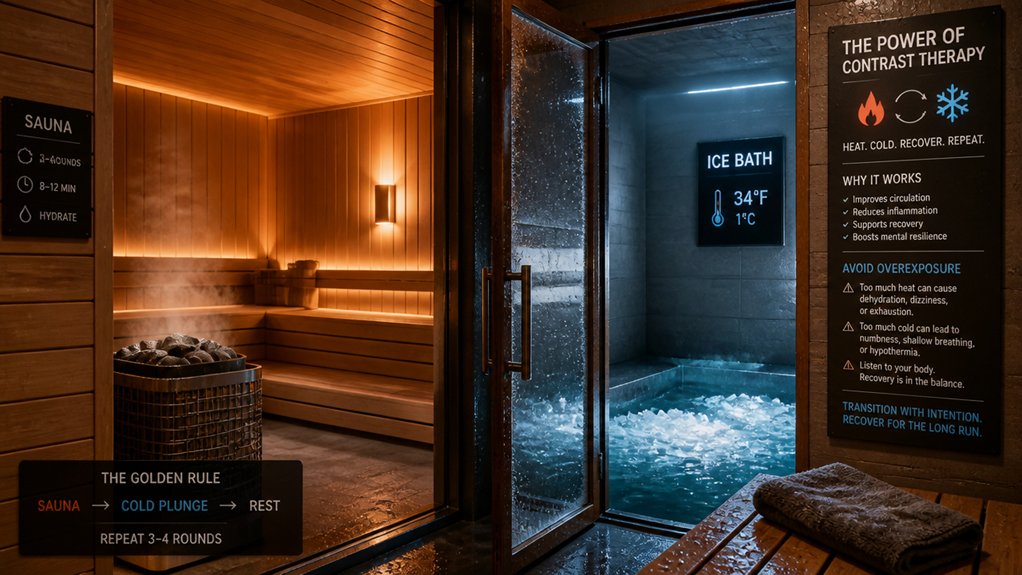
Even with a consistent recovery routine, mistakes can undermine your progress and safety.
For example, rushing into a cold plunge or extending sauna sessions beyond 30 minutes at over 90°C increases dehydration and overheating risks.
To avoid errors:
- Don’t stay in the sauna too long—limit sessions to 30 minutes and keep temperatures below 90°C.
- Avoid jumping into the ice bath immediately after intense resistance training, as it can blunt muscle growth signals.
- Start cold plunge durations at 30-60 seconds in 50-59°F water, gradually increasing to prevent cold shock and adverse reactions.
- Paying attention to chiller capacity and noise levels can enhance your recovery experience and ensure safe, efficient cooling.
Proper hydration before, during, and after sessions is essential.
Skipping the cool-down phase after cold plunging can also diminish therapy benefits and cause discomfort.
Frequently Asked Questions
Should You Sauna Before or After an Ice Bath?
You should sauna before an ice bath because it warms your muscles, improves circulation, and promotes detoxification, ensuring you get the maximum recovery benefits. Ending with an ice bath reduces soreness and boosts mental alertness effectively.
How to Use Ice Bath and Sauna for Recovery?
You should use the sauna first, then an ice bath immediately afterward. Alternate between 2-3 cycles for maximum benefits, ending with a cold plunge and rest. Stay hydrated and adjust session lengths based on your tolerance.
How Often Should I Do a Sauna and Cold Plunge?
You should do a sauna and cold plunge 2 to 3 times a week for ideal recovery. Start slow, listen to your body, and adjust frequency based on your tolerance, training demands, and overall health to prevent overtraining.
What Is Best for Recovery, Ice Bath or Sauna?
For recovery, ice baths are best for reducing acute inflammation and soreness quickly, while saunas support long-term muscle repair and cardiovascular health. Using both in contrast therapy maximizes circulation, speeds recovery, and offers all-encompassing benefits.