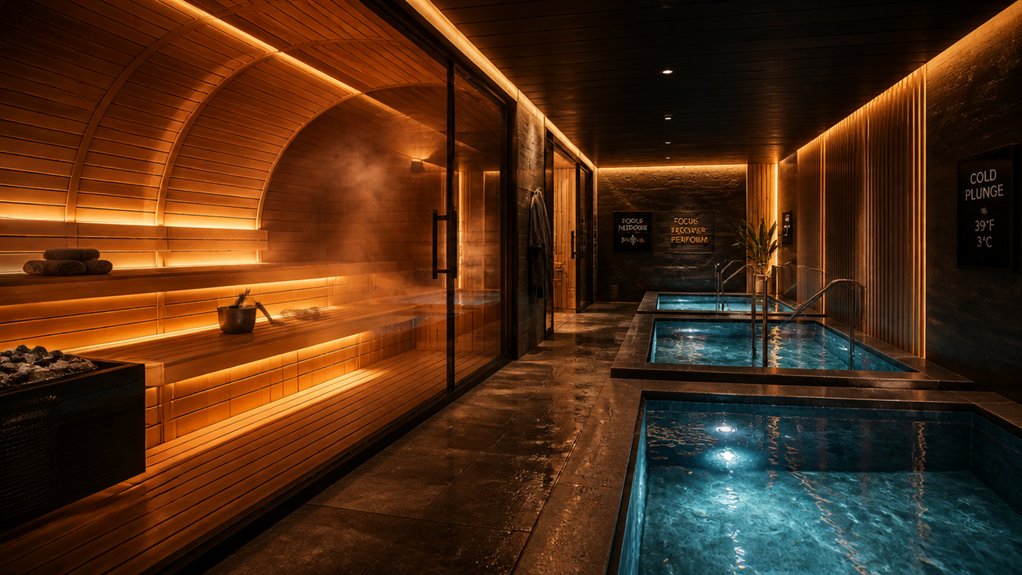
For ideal recovery, alternate 10–15 minute sauna sessions with 1–3 minute cold plunges at 45–55°F, repeating 1–3 cycles for a total of 20–30 minutes. Adjust the timing based on your training goals, avoiding cold plunges immediately after lifting. Use rhythmic breathing and monitor your body for signs of stress. Incorporate these routines 3–5 times weekly for better circulation, reduced inflammation, and faster muscle repair — keep going to learn more about customizing your routine.
Quick Guide: Using Sauna and Cold Plunge for Athletic Recovery
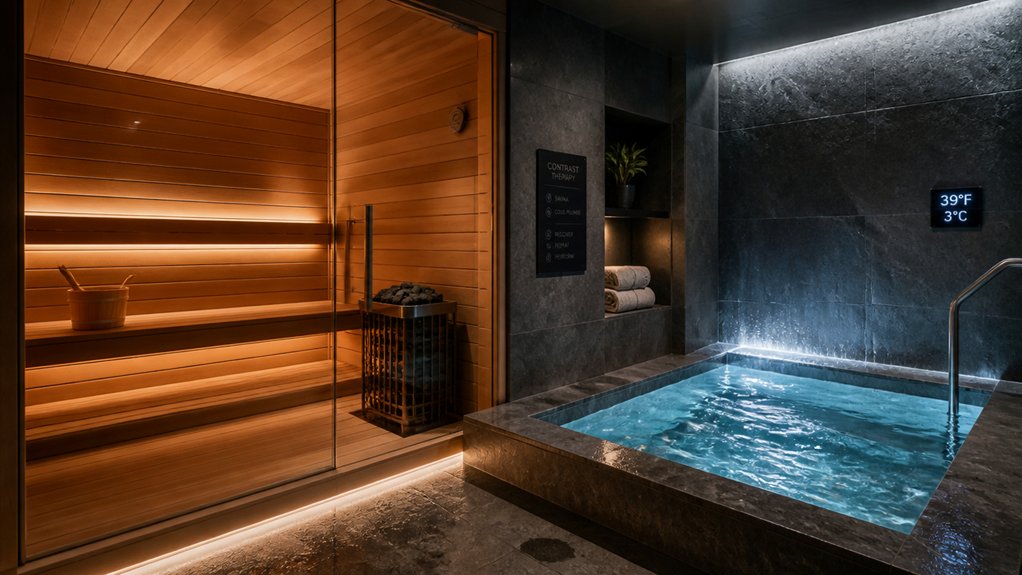
Have you ever wondered how to maximize your athletic recovery with simple sauna and cold plunge routines? Start with 10–15 minutes in a Finnish or infrared sauna to relax your muscles and boost blood flow.
Immediately follow with 1–3 minutes of cold plunge immersion at 45–55°F to reduce inflammation and promote circulation. Repeat this hot-cold contrast therapy 1 to 3 times, ending with cold immersion to lock in vasoconstriction and trigger a norepinephrine boost for mental clarity.
Cold plunges are best on non-lifting days or 6–24 hours after endurance sessions, so you don’t blunt muscle gains.
Remember to hydrate before, during, and after, then rest for 5–10 minutes to optimize recovery and minimize muscle soreness. Sauna Portability and compatibility with contrast therapy make these routines convenient and effective.
How Sauna and Cold Plunge Work Together to Speed Up Recovery
Alternating sauna heat with cold plunge immersion creates a powerful vascular pumping effect that accelerates recovery by boosting nutrient delivery and removing metabolic waste. During sauna sessions, heat exposure induces vasodilation, increasing blood flow and relaxing muscles. When you immerse in a cold plunge, vasoconstriction reduces inflammation and directs oxygen-rich blood to core organs. This cycle causes blood vessels to expand and contract repeatedly, enhancing circulation and promoting lymphatic drainage. The cold plunge also triggers norepinephrine surges, rebooting your nervous system and boosting mental clarity. Ending on cold maintains vasoconstriction benefits, prolonging anti-inflammatory effects and reducing muscle soreness. Here’s how the process works:
| Step | Effect | Benefit |
|---|---|---|
| Sauna session | Vasodilation | Increased blood flow for recovery |
| Cold plunge | Vasoconstriction | Reduced inflammation |
| Repeated cycle | Circulatory pumping | Faster waste removal, muscle repair |
| Norepinephrine surge | Nervous system reboot | Improved focus and reduced soreness |
| End cold immersion | Prolonged anti-inflammatory | Shortened recovery time |
Additionally, the rapid temperature shifts enhance EMF safety by stimulating circulation without prolonged exposure to harmful electromagnetic fields.
Create Your Ideal Sauna and Cold Contrast Routine
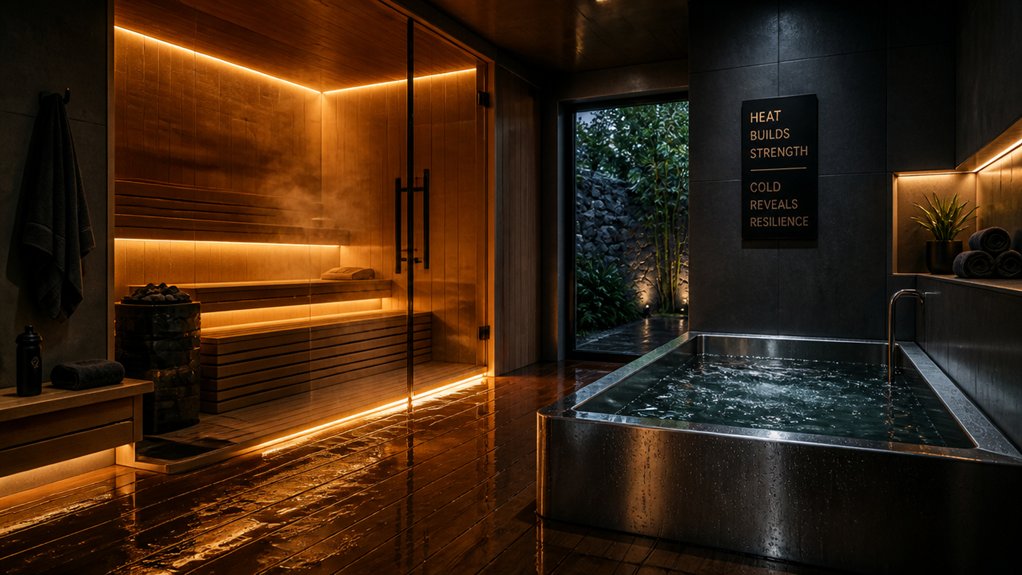
To create your ideal sauna and cold contrast routine, focus on balancing session durations, cycling frequency, and hydration. Start with shorter hot and cold exposures, gradually extending them as your body adapts, and drink plenty of fluids before and after each cycle. Adjust the number of cycles based on how your body responds to optimize recovery without overtaxing yourself. Incorporate water treatment solutions to maintain water clarity and quality for consistent sessions.
Optimal Session Durations
Determining the ideal durations for sauna and cold contrast routines is essential for maximizing recovery and minimizing fatigue. Spend about 10-15 minutes in the sauna to relax muscles and boost blood flow before cold immersion.
Afterward, a 1-3 minute cold plunge at 45-55°F helps reduce inflammation and enhances circulation. Repeat this hot-cold cycle 1 to 3 times per session, depending on your experience and tolerance. It is also beneficial to be mindful of the temperature range to ensure safety and effectiveness during your contrast therapy.
Keep your contrast therapy sessions to about 20-30 minutes for peak benefits.
- Limit sauna sessions to 15 minutes to prevent overheating
- Cold plunge durations of 1-3 minutes maximize inflammation reduction
- Conduct 3-5 contrast sessions per week for musculoskeletal recovery and mental clarity
Cycling Frequencies
Finding the right frequency for your sauna and cold contrast routines depends on your training goals, experience level, and recovery needs.
Athletes typically perform contrast therapy 3-5 times weekly, alternating 10-15 minutes in a sauna with 1–3 minutes in a cold plunge or cold immersion. Beginners should start with shorter cycles, such as 5–10 minutes in the sauna and 1–2 minutes in cold immersion, then gradually increase as tolerated.
For strength and hybrid athletes, avoid cold plunges on lifting days or delay them at least 6 hours post-lifting to prevent interference with muscle adaptations.
Endurance athletes benefit from regular weekly or bi-weekly contrast sessions to promote blood flow, reduce inflammation, and boost recovery during high-volume training. Incorporating rhythmic breathing patterns into your routines can further enhance relaxation and recovery.
Hydration Strategies
Staying properly hydrated is essential for maximizing the benefits of your sauna and cold contrast routines, especially since both heat and cold exposure can quickly dehydrate your body. To support your body’s natural cooling and rehydration processes, start by drinking water or electrolyte-rich fluids beforehand. Incorporating an electrolyte drink with the right electrolyte balance can enhance hydration and muscle recovery during and after your sessions. During sessions, sip small amounts of water between hot and cold cycles to prevent dehydration, especially in sauna environments reaching 150–175°F or infrared saunas at 120–130°F. After completing your contrast therapy, replenish fluids with water and electrolytes to restore hydration status. Remember, for 20-30 minute sessions combining multiple cycles, aim to drink at least 12–16 ounces to compensate for sweat loss. Avoid alcohol and caffeine before and after to prevent impairing hydration and recovery.
When and How Often Should Athletes Use Contrast Therapy?
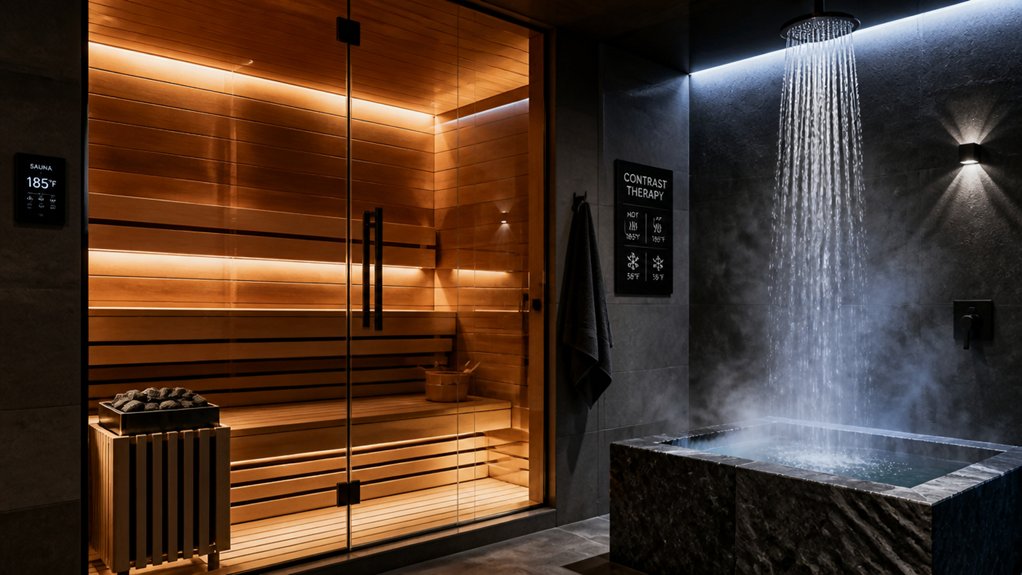
How often you should incorporate contrast therapy depends on your training schedule and recovery needs. Athletes typically benefit from 3 to 5 sessions per week, adjusting based on training volume.
Use contrast therapy 3 to 5 times weekly, tailored to your training volume and recovery needs for optimal results.
Endurance athletes find regular cold plunge sessions within 6 to 24 hours after intense workouts help manage inflammation and systemic fatigue. Strength and hybrid athletes should avoid cold immersion immediately after lifting, waiting at least 6 hours or using cold plunges on non-lifting days to prevent hindering muscle growth.
Ideal contrast therapy usually involves 1 to 3 cycles of 10–15 minutes of sauna exposure followed by 1–3 minutes of cold immersion, enhancing vascular pumping and recovery.
Beginners should start with shorter sessions and gradually increase frequency and duration as tolerated for safe, effective recovery.
Safety Tips for Using Sauna and Cold Plunge Safely
To stay safe, always keep yourself well-hydrated before, during, and after your sessions.
Pay close attention to how your body feels; if you experience dizziness or discomfort, stop immediately.
Remember to limit your session durations to avoid overstressing your body and guarantee a safer experience.
Additionally, utilizing adjustable heating levels can help you customize your session temperature, promoting safety and comfort.
Stay Hydrated Always
Maintaining proper hydration is essential for safely enjoying sauna and cold plunge routines, as these practices greatly impact your body’s fluid balance. When engaging in contrast therapy, such as sauna and cold, staying hydrated supports blood flow and prevents dehydration.
To stay safe:
- Drink water before, during, and after sessions to support body cooling and avoid dehydration.
- Keep sauna and cold sessions short—5–10 minutes for sauna, 1–2 minutes for cold plunges—especially when starting out.
- Replenish electrolytes with water or electrolyte-rich drinks post-session to restore minerals lost through sweating.
- Using reliable blood oxygen monitors can help track your body’s response to cold and heat stress, ensuring safe levels during recovery.
Avoid alcohol and heavy meals before sessions, as they impair hydration and increase fainting risks. Proper hydration helps manage vasodilation and vasoconstriction, ensuring safe and effective contrast therapy.
Listen to Your Body
Listening to your body is essential for safely benefiting from sauna and cold plunge routines. Start with shorter sessions—about 5–10 minutes in the sauna and 1–2 minutes in the cold plunge—to prevent dizziness or lightheadedness. Always listen to your body and stop immediately if you feel dizzy, nauseous, or uncomfortable.
Remember, a short-term approach helps your body adapt; avoid pushing too hard too quickly. Gradually increase the duration and intensity of your hot and cold cycles over multiple sessions to safely build tolerance without overexertion.
Maintaining proper hydration supports your body’s cooling and recovery processes. Track your physical and mental signals closely, and consult a healthcare professional if you have pre-existing health conditions. Prioritize safety by listening to your body and respecting its limits.
Limit Session Duration
Limiting the duration of sauna and cold plunge sessions is essential for safety, especially for beginners. Keep sauna sessions between 5–10 minutes and cold plunge immersion from 1–2 minutes to monitor your tolerance and prevent lightheadedness. Adjust session durations based on your sauna type; traditional Finnish saunas may require shorter sessions than infrared saunas.
During contrast therapy cycles, stick to 1–3 minutes of cold immersion per round and limit the total cycles to avoid overexposure. Remember to stay well-hydrated before, during, and after your sessions to support body cooling and prevent dehydration.
If you have heart or circulation conditions, consult a healthcare professional to determine safe session limits. Always listen to your body and don’t push beyond comfortable durations.
Adjust Contrast Therapy Based on Your Training Goals
Adjusting your contrast therapy routine to match your training goals guarantees you get the most benefits without hindering progress.
Tailor your contrast therapy to optimize recovery and performance without hindering your progress.
For endurance athletes, regular cold plunge sessions 3-4 times weekly, ideally 6 to 24 hours after intense workouts, effectively manage inflammation and boost blood flow without impairing adaptation.
Strength-focused athletes should avoid immediate post-lift cold immersion; instead, schedule cold plunges on rest days or wait at least 6 hours to prevent blunting muscle growth.
Incorporate 10-15 minute sauna sessions followed by 1-3 minutes of cold immersion, repeating 1-3 cycles based on recovery needs.
Ending with cold immersion helps lock in vasoconstriction and norepinephrine benefits, enhancing recovery and inflammation control essential for sport-specific performance.
Adjust durations and temperatures to suit your training phase and goals.
Monitoring Your Body’s Response During Recovery Sessions
Monitoring your body’s response during recovery sessions is essential to maximize benefits and prevent injury. By paying close attention, you can adjust your routine to guarantee safety and effectiveness.
Watch for signs like dizziness, lightheadedness, or excessive fatigue, which indicate overexertion or dehydration. Track your heart rate and perceived exertion during both sauna and cold immersion, beginning with shorter sessions—sauna for 5–10 minutes and cold for 1–2 minutes—and see how your body responds.
Observe skin color and sensation during cold immersion, stopping immediately if numbness or pain occurs. Also, monitor hydration levels and fatigue post-session to refine your routine, using physiological markers like heart rate variability to optimize recovery without added stress.
Frequently Asked Questions
What Type of Sauna Is Best for Athletes?
You should choose an infrared sauna if you prefer deeper muscle penetration, longer, more comfortable sessions, and better muscle recovery. Opt for a traditional Finnish sauna if you want intense sweating and rapid vascular conditioning. Your goals and tolerance guide the choice.
What Is the 200 Rule for Saunas?
The 200 Rule for saunas means you should keep your total heat exposure under 200°F-minutes, like 20 minutes at 100°F or 10 minutes at 200°F, helping you prevent overheating and safely maximize recovery benefits during sessions.
What Is Joe Rogan’s Sauna Routine?
Joe Rogan’s sauna routine involves spending 20-30 minutes in a high-heat Finnish-style sauna at 150–175°F, then immediately cold plunges, alternating several times, while staying hydrated and resting to maximize recovery, circulation, and mental clarity.
How Often Should an Athlete Use a Sauna?
You should aim to use a sauna 2 to 5 times weekly, with sessions lasting 10 to 20 minutes. Always start with shorter durations, stay hydrated, and consider contrast therapy to maximize recovery and cardiovascular benefits safely.