To get the most out of sauna and contrast therapy, set clear goals like relaxation or recovery, then choose appropriate temperatures and session lengths. Stay well-hydrated, wear breathable clothing, and start slowly—begin with shorter durations and gradually increase. Use controlled breathing to enhance relaxation, and alternate between hot and cold cycles safely. Track your progress and adjust frequency based on how your body responds. Keep exploring these tips for a safer, more effective practice.
What Is Sauna and Cold Contrast Therapy & How It Works
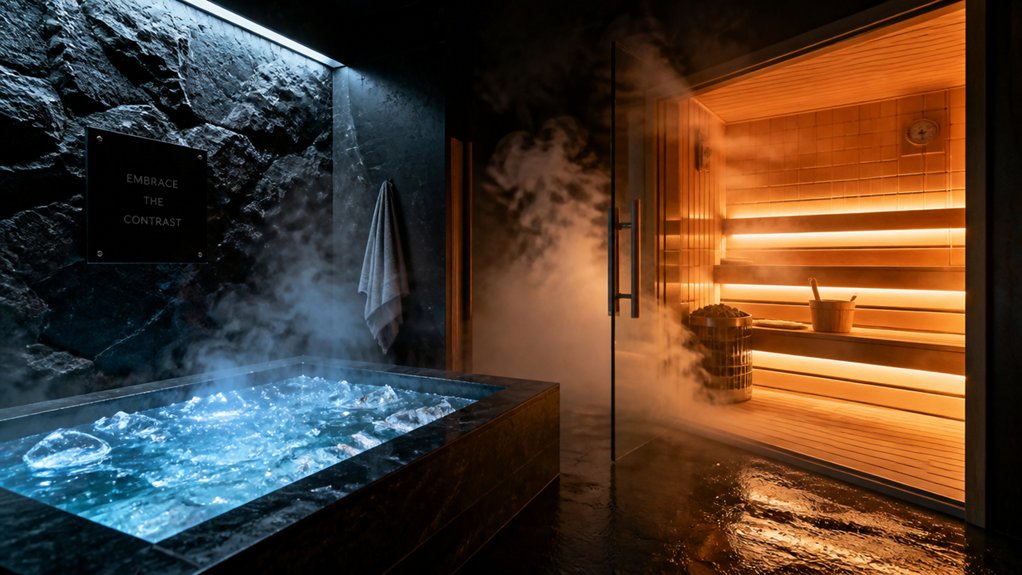
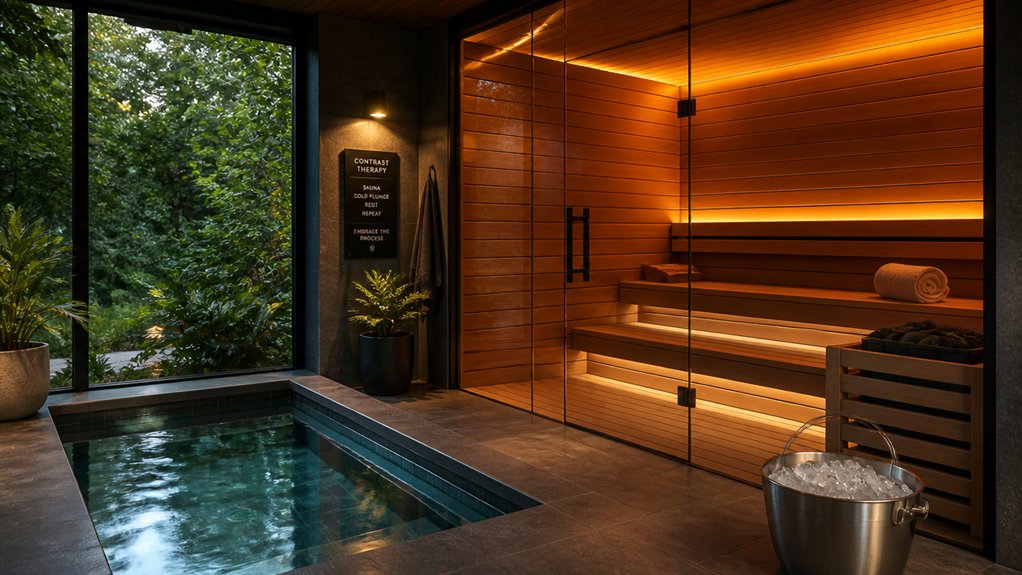
Have you ever wondered how alternating between heat and cold can boost your health? Sauna and cold contrast therapy involve switching between a hot sauna, usually at 150–175°F, and cold immersion like an ice bath at 40–50°F. This contrast stimulates your blood vessels: heat causes vasodilation, increasing blood flow, relaxing muscles, and promoting detox through sweating.
Cold induces vasoconstriction, reducing inflammation and helping flush metabolic waste. The cycle enhances circulation by creating a pumping effect, which aids in reducing muscle soreness, speeding healing, and supporting lymphatic drainage.
Additionally, this temperature contrast activates your nervous system, releasing endorphins that improve stress relief, mental clarity, and sleep. Typical sessions include alternating between these temperatures, maximizing their therapeutic benefits. Incorporating low EMF infrared heat, which minimizes health risks during frequent use, can further optimize the experience.
Why Set Clear Goals Before You Start
Setting clear goals before you begin helps you personalize your sauna and contrast therapy sessions to suit your needs, whether for recovery or relaxation. When you define what you want to achieve, you can choose the right heat and cold durations to maximize benefits and stay safe. Having specific objectives also makes it easier to track progress and stay motivated over time. Incorporating temperature control features like digital or app-based systems can further tailor your experience to meet those goals.
Define Your Wellness Objectives
Why is it essential to define your wellness objectives before beginning sauna and contrast therapy? Knowing your goals helps tailor each session to fit your wellness routine, whether you’re aiming for muscle recovery, stress relief, or inflammation reduction. Clear objectives guide you to select the right temperature, session length, and cycle frequency, optimizing benefits. For example:
- To boost energy in the morning, you might prefer brisk contrast cycles with higher temperatures.
- For relaxation, focus on longer, calming sessions with gentle heat and cold shifts.
- To reduce inflammation, set specific durations and cycle repetitions that maximize circulation.
- To track progress, note how your body responds and adjust your goals accordingly.
Having these objectives guarantees safety, effectiveness, and helps you stay motivated on your wellness journey. Additionally, utilizing reliable recovery tracking apps can optimize your progress and ensure safe practice.
Match Goals With Practices
Understanding your goals before starting contrast therapy guarantees each session delivers targeted benefits. Whether your aim is muscle recovery, stress relief, or energy boosting, goal-driven contrast therapy sessions help you customize your sauna session and cold plunge timing.
Knowing if you want relaxation or invigoration guides your choice of hot and cold exposure, influencing body temperature fluctuations and cycle frequency. Clear goals allow you to adjust session timing—such as shorter cold plunges to reduce inflammation or longer heat phases for deep muscle relaxation—ensuring you get the most from each practice. Incorporating appropriate water treatment solutions is also essential for maintaining water quality and hygiene during your sessions.
How to Prepare Your Body With Hydration and Clothing
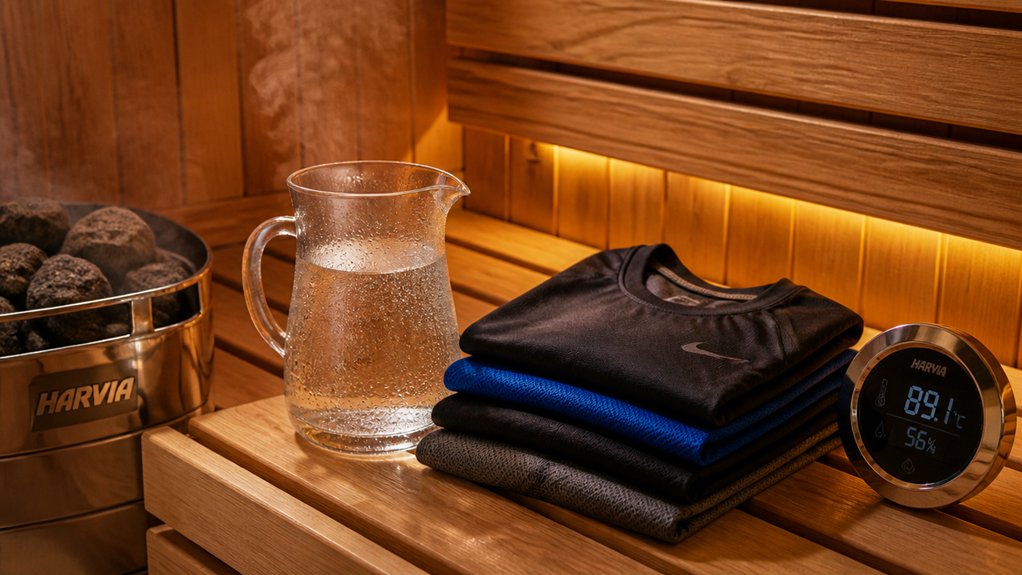
To prepare your body, start by drinking plenty of water before, during, and after your session to stay hydrated. Choose lightweight, breathable clothing or use a towel to help sweat evaporate comfortably, and avoid heavy meals that can cause discomfort. Removing jewelry and moisture-trapping accessories also guarantees safer, more effective temperature changes. Incorporating electrolytes into your hydration routine can further enhance fluid balance and support muscle recovery during cold plunge and sauna sessions.
Drink Water Before Session
Proper hydration before your sauna contrast therapy session is essential to prevent dehydration caused by sweating. You should drink plenty of water at least 30 minutes beforehand to stay hydrated and support your body through the heat.
To prepare effectively, imagine:
- Filling a bottle with 16-20 ounces of water, ready to sip.
- Visualizing yourself drinking steadily, feeling your body absorb hydration.
- Leaving behind caffeinated or alcoholic drinks that can increase dehydration.
- Wearing loose, breathable clothing to help sweat evaporate and keep you cool.
- Incorporating pH-balanced cleansing to ensure your skin is properly prepared and less prone to irritation after exposure to extreme temperatures.
Continue sipping water during the session, especially after cold plunges, to maintain hydration and support circulation. Staying well-hydrated is key for a safe and effective contrast therapy session.
Wear Breathable Clothing
Wearing breathable clothing is essential for maintaining comfort and safety during sauna and contrast therapy sessions. You should choose lightweight, moisture-wicking fabrics like cotton or technical fibers that help regulate body temperature and wick away sweat. This prevents overheating and keeps your skin dry, making your experience more comfortable. Proper clothing also supports material durability, ensuring it withstands repeated exposure to moisture and temperature shifts. Avoid heavy or non-breathable clothing, which can trap heat and restrict circulation, hindering your body’s cooling process. Removing accessories and synthetic layers allows your skin to breathe, enhancing the session’s effectiveness. Remember to hydrate thoroughly before, during, and after your session to maintain hydration and support temperature regulation. Proper clothing helps your body adapt to heat and cold, ensuring a safer, more enjoyable experience with maximum benefits.
Avoid Heavy Meals
Eating a heavy meal right before your contrast therapy session can lead to discomfort or nausea as your body works hard to regulate temperature changes. To prepare your body properly, avoid heavy meals that may cause sluggishness during heat exposure and cold immersion.
Instead, opt for light snacks or easily digestible foods at least 1-2 hours beforehand, supporting your energy without overloading digestion. Remember to stay hydrated by drinking plenty of water before, during, and after your session, counteracting dehydration from sweating and temperature shifts.
When in the sauna, wear lightweight, breathable clothing or use towels to help with sweat evaporation. Use towels or robes during cold immersion to maintain body warmth and minimize chilling, making your contrast therapy more comfortable and effective. Additionally, selecting the right heated towel racks can enhance your experience by keeping towels warm and dry throughout your session.
Choosing Safe Temperatures and Durations for Beginners
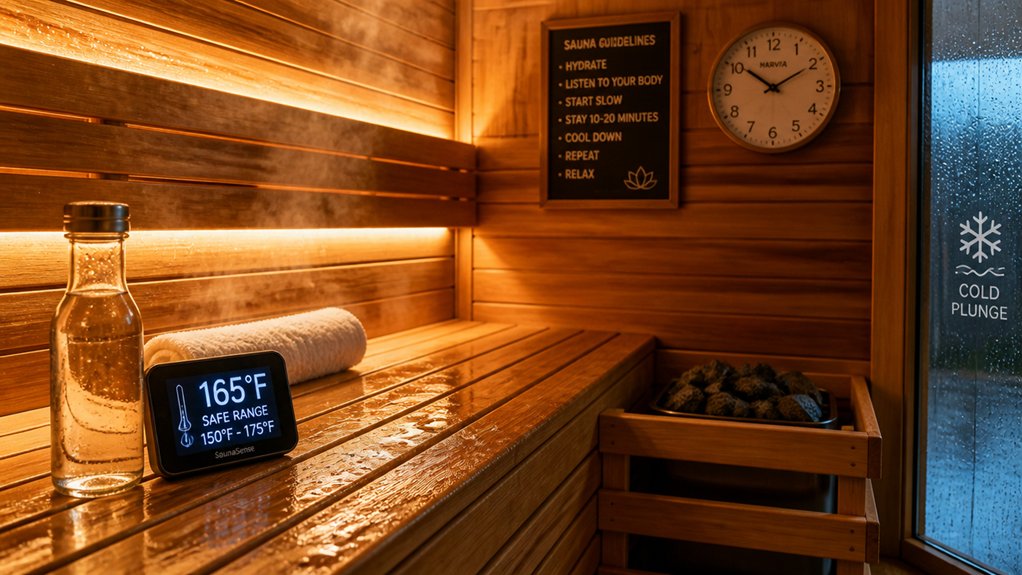
If you’re new to sauna and contrast therapy, starting with moderate temperatures and shorter durations keeps you safe and comfortable. Beginners should limit sauna sessions to 5–10 minutes, with temperatures around 120–130°F for infrared or 150–175°F for traditional saunas. For cold immersion, stick to 1–2 minutes at 40–60°F to prevent shock. Begin contrast therapy with one hot-cold cycle, then gradually add more based on how you feel. Always monitor your body signals—dizziness or lightheadedness mean it’s time to stop. Stay well-hydrated before, during, and after your sessions. Keep these guidelines in mind to build tolerance without risking overexposure.
| Level | Sauna Temperature | Cold Immersion Temp |
|---|---|---|
| Beginner | 120–130°F / 150–175°F | 40–60°F |
| Duration | 5–10 minutes | 1–2 minutes |
| Cycles | Start with 1, increase gradually | 1-2 cycles |
Designing an Effective Hot and Cold Cycling Routine
How can you create a safe and effective hot and cold cycling routine? First, start with 10-15 minutes in a sauna at 150-175°F to promote vasodilation and muscle relaxation.
Begin with 10-15 minutes in a sauna at 150-175°F to boost circulation and soothe muscles.
Then, switch to cold immersion at 40-60°F for 1-3 minutes, triggering vasoconstriction and reducing inflammation. Repeat this cycle 1 to 3 times, adjusting durations based on your comfort.
Always end with a cold phase to help minimize residual inflammation and restore energy. During heat exposure, focus on deep, controlled breathing, allowing your body to naturally adjust when shifting between hot and cold.
Visualize the process as a sequence of heating, relaxing muscles, cooling, and renewing, all designed to optimize contrast therapy and enhance circulation.
Staying Safe: Tips to Listen to Your Body During Sessions
Listening to your body is essential when practicing contrast therapy, especially since it involves rapid shifts between hot and cold. Stay calm and pay close attention to signs like dizziness, lightheadedness, or discomfort—if these occur, stop immediately. Start with shorter sessions—5-10 minutes in the sauna and 1-2 minutes in cold immersion—to gauge your tolerance. Gradually increase the intensity and duration over time, allowing your body to adapt safely. Always consult a healthcare professional before starting contrast, particularly if you have heart conditions or circulatory issues. Hydrate well throughout your session, and don’t ignore your body’s signals. Remember, your body’s responses are the best guide to guarantee safe and effective contrast therapy.
| Step | Tip | Key Focus |
|---|---|---|
| 1 | Begin with shorter sessions | Gauge tolerance |
| 2 | Monitor signs like discomfort | Stay alert, stay calm |
| 3 | Gradually increase intensity | Prevent shock |
| 4 | Consult a healthcare professional | Prioritize safety |
Using Breathing Exercises to Boost Relaxation and Recovery
Incorporating breathing exercises during contrast therapy can greatly enhance your relaxation and recovery. Deep, controlled breathing activates your parasympathetic nervous system, promoting calm and improving oxygen delivery to muscles.
Deep, controlled breathing enhances relaxation and recovery by activating the parasympathetic nervous system during contrast therapy.
During cold dips, slow, rhythmic breaths help manage shock, reduce stress, and boost mental resilience. For example:
- Inhale slowly through your nose, filling your lungs completely.
- Hold your breath briefly to build tolerance.
- Exhale gradually through pursed lips to promote relaxation.
- Repeat the cycle during both cold and heat phases to enhance blood flow and lymphatic drainage.
This combination supports better toxin removal, improves circulation, and fosters mental clarity.
Consistently using breathing exercises during contrast therapy helps balance heart rate variability, leading to more effective stress relief and faster recovery.
How Often Should You Do Contrast Therapy for Best Results
Determining the ideal frequency for contrast therapy depends on your goals and tolerance level. Typically, doing contrast therapy 2-3 times per week supports overall wellness, with more frequent sessions benefiting athletes. Consistency helps your body adapt, promoting better recovery and health benefits.
During each session, alternating hot and cold temperatures causes blood vessels to dilate and constrict, enhancing circulation. Beginners should start with fewer sessions and gradually increase as they build tolerance.
Aim for about 11 minutes of total cold exposure weekly, spread across these sessions. Pay attention to how your body responds; if you feel excessive fatigue or discomfort, cut back temporarily to allow proper recovery. Listening to your body guarantees you maximize benefits while avoiding overuse.
Incorporating Sauna Contrast Into Your Wellness Routine
Adding sauna contrast into your wellness routine is a simple way to maximize recovery and relaxation. Begin with a 10-15 minute session in a traditional Finnish or infrared sauna to relax your muscles and boost circulation.
Then, shift to alternating between heat and cold cycles:
- Picture yourself sitting in the sauna, deep breaths helping you relax.
- Jump into a cold plunge, invigorating your senses and constricting blood vessels.
- Repeat the cycle 1 to 3 times, starting with shorter times like 5-10 minutes in the sauna and 1-2 minutes in cold water.
- Stay hydrated before, during, and after each session to counteract sweating and temperature shifts.
Incorporating contrast therapy regularly can enhance muscle recovery, reduce stress, and promote overall wellness.
Tracking Your Progress & Making Adjustments Over Time
Keep an eye on how your body responds during each session, adjusting cycle lengths and temperatures if you feel dizziness or discomfort.
Record your session details—like duration, temperature, and how you feel afterward—to track your progress over time. Use that information to tweak your routine, increasing frequency or intensity as you build tolerance and see improvements.
Monitor Physical Responses
Monitoring your physical responses during sauna and contrast therapy is essential for maintaining safety and optimizing benefits. You should:
- Monitor heart rate to see if your circulation is improving; a rising rate with comfort is a good sign.
- Assess perceived exertion to gauge how hard your body is working and prevent overexertion.
- Track tolerance by gradually increasing session durations while noting dizziness or discomfort, and adjusting frequencies accordingly.
- Watch for lightheadedness and signs of overheating or numbness, then adjust durations or temperatures as needed.
Staying hydrated before, during, and after sessions helps prevent dehydration symptoms. Listening to your body and responding to its physical response guarantees safe, effective therapy.
Record Session Details
Tracking your session details carefully allows you to observe patterns and adjust your contrast therapy routine for better safety and effectiveness. Record the duration and temperature of each sauna and cold plunge phase to monitor your tolerance and optimize sessions.
Note physical responses such as muscle soreness, energy levels, or discomfort to fine-tune timing and intensity. Keep track of hydration intake before, during, and after each session to maintain proper fluid balance and aid recovery.
Log the number of hot-cold cycles completed to gradually increase exposure or maintain safety. Consistent records of session frequency and wellness benefits like improved sleep or reduced stress help you evaluate long-term progress.
This systematic approach guarantees you make informed adjustments that support consistent improvement and safety.
Adjust Frequency and Intensity
Adjusting the frequency and intensity of your contrast therapy sessions is essential for maximizing benefits and avoiding overstimulation. Start with shorter sessions—5–10 minutes in the sauna and 1–2 minutes cold plunge—and gradually increase the frequency to 2–3 times per week as your body responds.
Keep an eye on your body’s response; if you feel excessive fatigue, dizziness, or discomfort, reduce the session length or intensity. For peak recovery, athletes may increase to 3–4 sessions weekly, while others may stick to 1–2, adjusting to their tolerance.
Track soreness, energy, and sleep to see how changes in session duration and temperature impact your recovery. Regularly adjust the heat, cold exposure, and cycles to prevent overstimulation and guarantee steady progress.
Frequently Asked Questions
How to Do Contrast Therapy With a Sauna?
To do contrast therapy with a sauna, spend 10-15 minutes in the sauna, then immediately switch to a cold plunge for 1-3 minutes. Repeat once or twice, ending with cold, and stay hydrated throughout.
How Long to Stay in the Sauna for Contrast Therapy?
You should stay in the sauna for 10-15 minutes initially, then alternate with cold immersion for 3-4 minutes per cycle, aiming for a total session time of 20-30 minutes to maximize benefits safely.
Is It Better to Do Contrast Therapy in the Morning or at Night?
You should do contrast therapy in the morning if you want to boost energy and mental clarity. At night, it’s better for relaxing muscles and easing into restful sleep, aligning with your goals for stimulation or relaxation.
How to Get the Most Out of Contrast Therapy?
To get the most out of contrast therapy, you should follow a consistent routine, stay well-hydrated, and listen to your body’s response. End with cold sessions to reduce inflammation, and breathe deeply for relaxation and enhanced circulation.