To get the most pain relief from ice baths, start by ensuring the water is between 50-59°F (10-15°C) and stay immersed for 10-15 minutes within 1-2 hours after your workout. Focus on controlled breathing to manage cold shock, inhaling slowly through your nose and exhaling through your mouth. Afterward, dry off quickly and stay warm to prevent hypothermia. Keep these tips in mind, and you’ll maximize your recovery benefits as you learn more.
Should You Use an Ice Bath for Recovery?
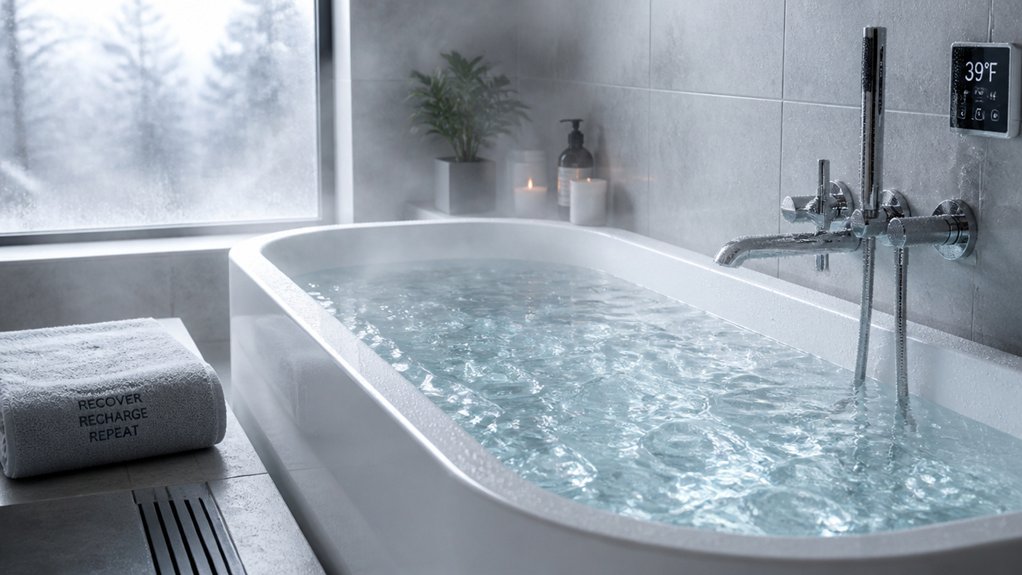
Wondering if an ice bath is right for your recovery routine? Ice baths are effective for muscle recovery when used within 1-2 hours after intense or new exercise, helping reduce delayed-onset muscle soreness (DOMS). Cold water immersion triggers vasoconstriction, which decreases inflammation and numbs nerve endings to provide immediate pain relief.
Ideal ice bath temperature ranges from 50-59°F (10-15°C), and staying in for 10-15 minutes balances benefits and minimizes risks like hypothermia. They’re especially useful for endurance athletes needing rapid soreness relief and quick post-workout recovery.
However, if you have cardiovascular disease, high blood pressure, Raynaud’s, or open wounds, ice baths could pose serious health risks. Consider your health and goals before incorporating cold water immersion into your routine.
How Do You Prepare and Perform an Effective Ice Bath?
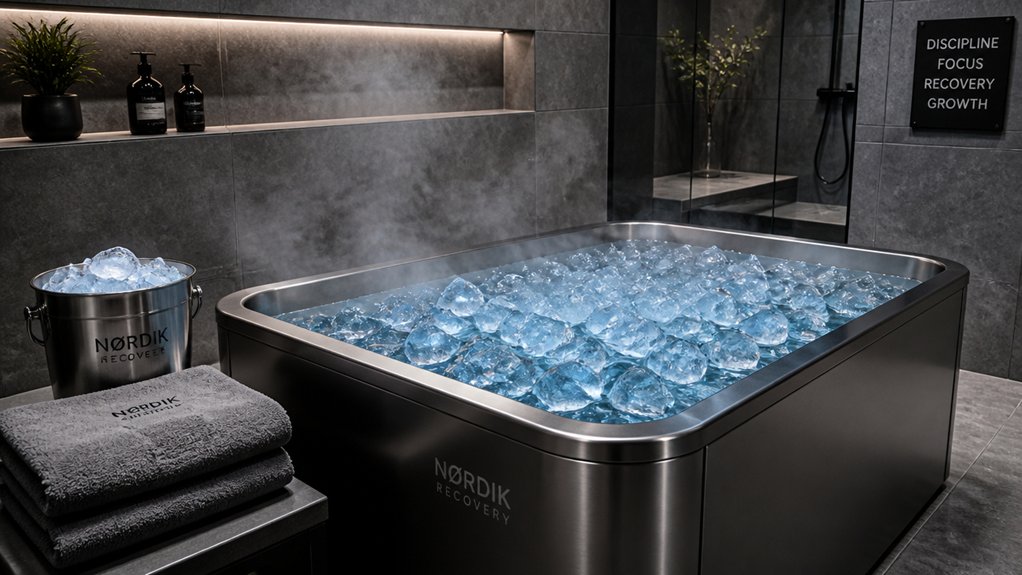
To prepare an effective ice bath, start by filling a tub with water cooled to 50-59°F (10-15°C) and add enough ice to reach that temperature. Use a thermometer to verify the water’s temperature for safe and effective cold water therapy. For optimal results, consider using a tub with appropriate temperature control options, which can help maintain a precise and consistent cold environment throughout your session.
When performing the ice bath, fully immerse your muscles for 10-15 minutes within 1-2 hours after exercise to reduce muscle soreness and inflammation, supporting recovery.
During the initial cold shock response, control your breathing with slow, deep inhales through your nose and controlled exhales through your mouth to prevent hyperventilation.
Have warm towels and dry clothing ready for immediate use afterward, helping you avoid hypothermia and dizziness as you gradually rewarm.
Timing the immersion properly balances recovery benefits and muscle growth.
What’s the Best Way to Care for Yourself After an Ice Bath?
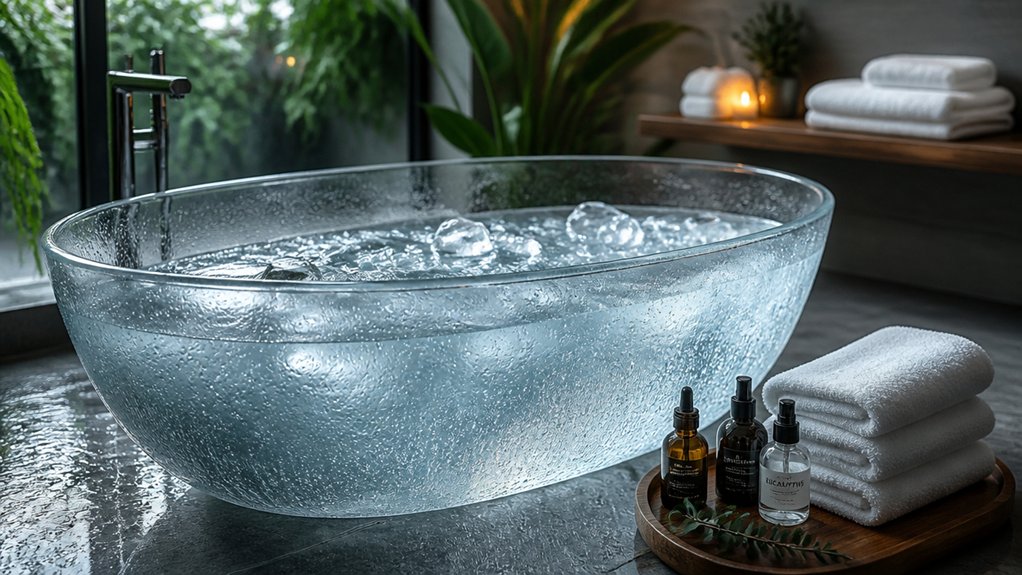
How you care for yourself immediately after an ice bath is essential for safe recovery. First, dry off quickly and wrap yourself in warm towels or clothing to prevent hypothermia and promote gradual rewarming. Avoid hot showers or saunas right away, as rapid temperature changes can cause dizziness and cardiovascular strain. Sit quietly for 20 to 45 minutes to support natural rewarming and help restore nerve function and muscle power. Stay hydrated to counteract cold-water immersion dehydration and facilitate recovery. Keep an eye out for persistent numbness, dizziness, or chest discomfort, and seek medical help if needed. Proper aftercare enhances recovery and reduces risks associated with cold-water immersion.
Frequently Asked Questions
How to Make Ice Baths Less Painful?
To make ice baths less painful, start with warmer water, breathe deeply to manage shock, limit your time, distract yourself with music or meditation, and have warm clothes nearby for quick rewarming post-bath.
Is 20 Minutes in an Ice Bath Too Long?
Yes, 20 minutes in an ice bath is too long. You risk frostbite, nerve damage, and hypothermia. Stick to 10-15 minutes at 50-59°F to maximize benefits and stay safe, avoiding diminishing returns and potential health complications.
Can You Cold Plunge if You Have Raynaud’s?
You shouldn’t cold plunge if you have Raynaud’s, as cold exposure triggers extreme vasoconstriction, risking numbness, pain, and tissue damage. Instead, opt for safer, localized cold treatments like ice packs with a barrier.
Can Ice Baths Help With Lipedema?
Yes, ice baths may help with lipedema by reducing inflammation, swelling, and pain through vasoconstriction, while also improving circulation afterward. However, you should proceed cautiously, follow proper guidelines, and consult your healthcare provider before trying them.