To set up effective at-home contrast therapy, guarantee you have quality equipment like an infrared sauna with carbon fiber panels and a cold plunge tub with precise temperature controls. Position everything within 30 seconds for smooth changes and use non-slip flooring and good lighting for safety. Keep temperatures safe—hot around 140-155°F and cold around 50-59°F—and limit cold dips to 1-3 minutes. Following these tips can enhance your routine’s comfort and benefits—discover more to optimize your system even further.
The Must-Have Equipment for Your Home Contrast Therapy Setup
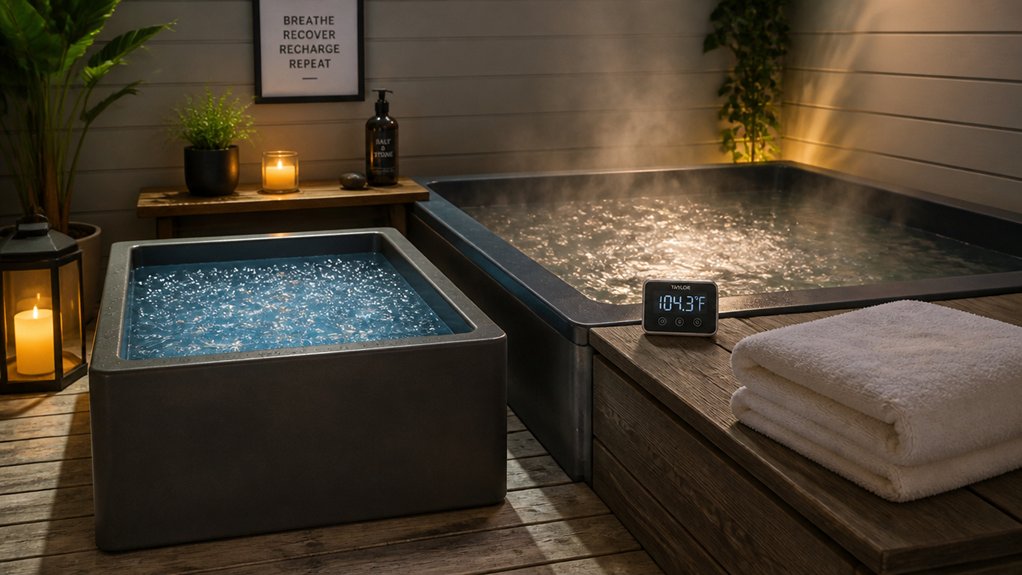
Setting up an effective home contrast therapy space starts with selecting the right equipment. An infrared sauna with carbon fiber panels guarantees even heat distribution at an ideal temperature range between 130-160°F, promoting proper vasodilation during your session.
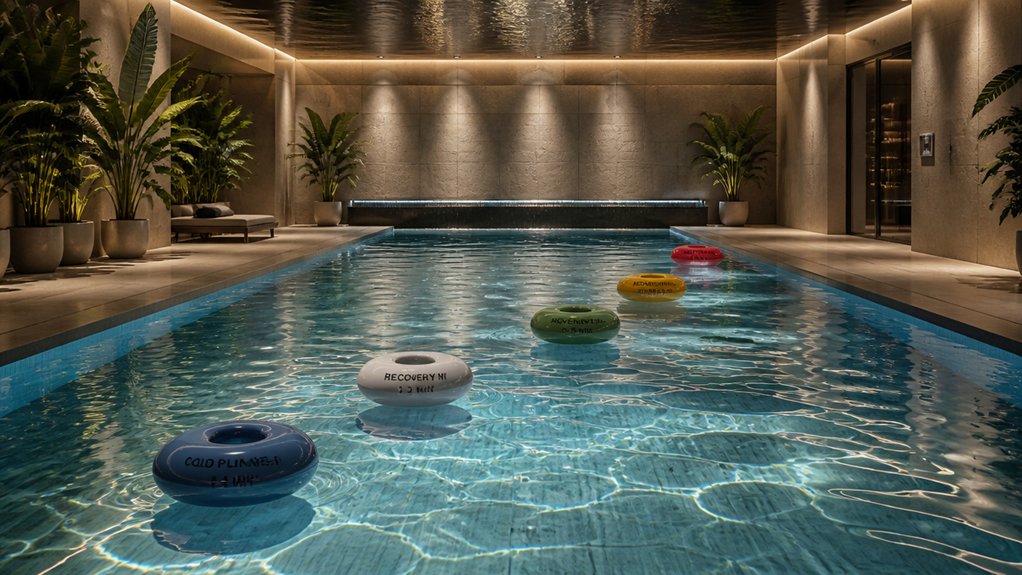
For cold plunge immersion, choose a tub with precise temperature control, maintaining water between 50-58°F, to achieve safe vasoconstriction and anti-inflammatory benefits. Advanced cold plunge units with multi-stage filtration, ozone, or UV sanitation keep the water hygienic for routine use.
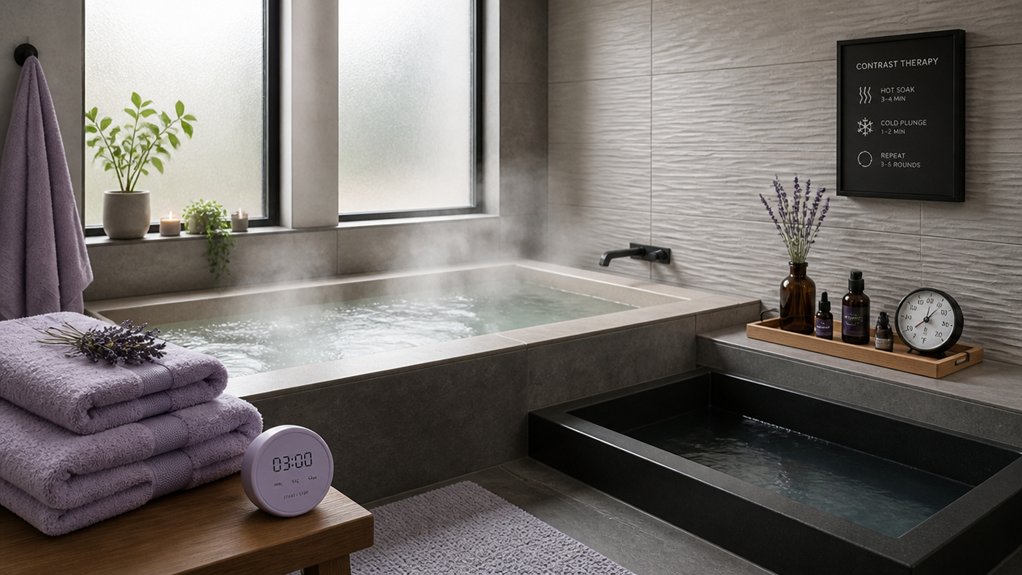
Essential accessories include a reliable thermometer, a timer for tracking session durations, and towels or robes for warming rituals. Placing your sauna and cold plunge within 30 seconds makes shifting smooth and maximizes your contrast therapy’s benefits through full immersion and efficient vascular cycling.
Setting the Right Temperatures for Safe Hot and Cold Sessions
Maintaining the correct temperatures during hot and cold contrast therapy sessions is essential for both safety and effectiveness. Proper temperature control guarantees you get the vasoconstriction benefits of cold therapy without risking hypothermia and allows muscle relaxation in the hot phase without overheating. Using an appropriately calibrated high-powered chiller can help you precisely regulate water temperatures, ensuring consistent and safe sessions.
To keep your session safe: 1. Keep hot therapy between 37–40°C (98–104°F), or 140–155°F if using a sauna, to promote relaxation without overdoing it. 2. Set cold plunge or immersion temperatures between 10–15°C (50–59°F), avoiding extremes below 10°C (50°F) for safety. 3. Use a reliable thermometer and limit cold immersion to 1–3 minutes at first, adjusting as your tolerance builds, to prevent cold shock and overexposure.
Designing Your Space for Comfort, Safety, and Easy Transitions
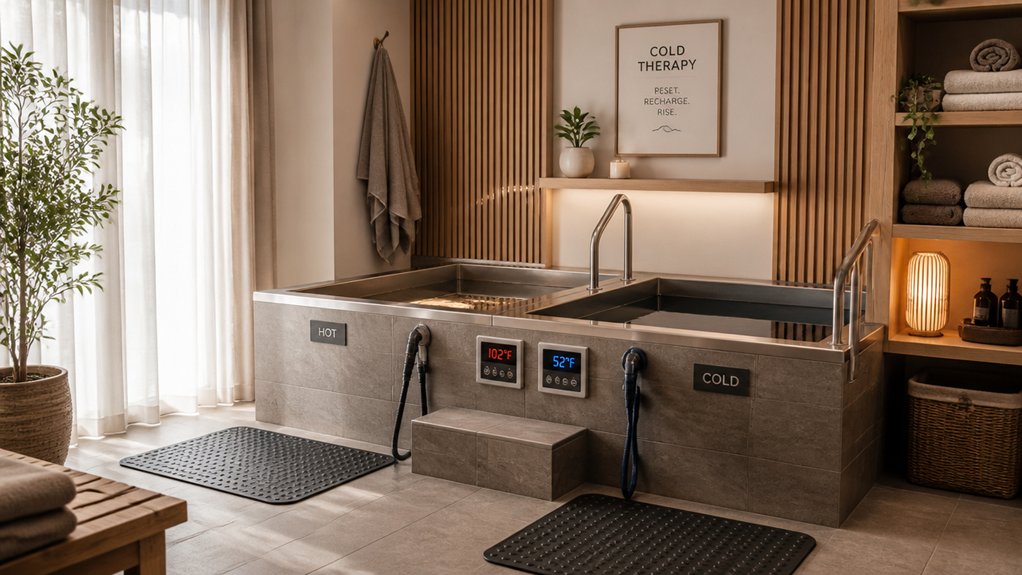
Creating an efficient and safe at-home contrast therapy space involves thoughtful planning to guarantee smooth shifts and overall comfort. Position your sauna and cold plunge within 30 seconds of each other to enable quick changes and maximize vascular benefits. Incorporate fit adjustment mechanisms to ensure secure and versatile setup options for various tub shapes and sizes.
Ensure proper ventilation, especially for infrared saunas, to maintain air quality and prevent overheating. Use non-slip flooring and waterproof, insulated mats around wet areas to enhance safety during cold plunges. Arrange seating, towels, robes, and temperature controls within easy reach to foster a comfortable environment.
Good lighting and calming aesthetics support mental relaxation, making sessions more enjoyable. Designing your therapy set-ups with these elements guarantees safety, seamless shifts, and a peaceful space for effective contrast therapy.
Crafting an Effective Routine: Duration, Frequency, and Transition Tips
To craft an effective at-home contrast therapy routine, focus on balancing duration and shift speed to optimize benefits and safety. Start with 10-15 minutes of heat, followed by 1-3 minutes of cold plunge, repeating 2-3 times. This rhythm maximizes vascular pumping and circulation without overstressing your body.
Balance heat and cold: 10-15 minutes of heat, 1-3 minutes of cold, repeated 2-3 times for optimal circulation and safety.
Keep changes swift but safe, ensuring controlled breathing during cold exposure to manage discomfort and prevent hyperventilation. After completing cycles, take a 10-15 minute rest period to allow your cardiovascular and nervous systems to normalize, enhancing relaxation.
Additionally, selecting the right cold plunge setup with proper insulation and temperature control helps maintain consistent temperatures, making your routines more effective and safer.
- Prioritize smooth, quick changes to boost vascular pumping and prevent shock.
- Maintain consistent frequency—2 to 4 times weekly—for steady recovery.
- Respect your body’s signals during duration and rest, building a sustainable routine.
Post-Session Rituals to Maximize Recovery and Relaxation
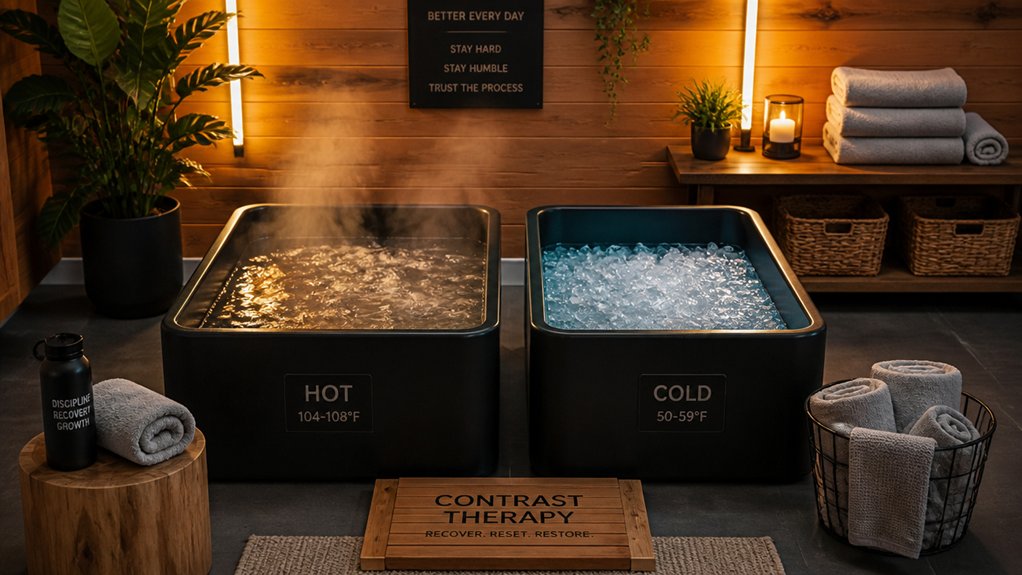
After completing your contrast therapy session, winding down effectively can greatly enhance recovery and relaxation. To maximize benefits, dry off thoroughly and dress warmly to support core temperature normalization. Drinking warm beverages post-session restores body temperature and boosts hydration, aiding recovery. Engage in gentle movement, such as stretching, yoga, or slow walking, to encourage blood flow and help clear metabolic waste, reducing muscle soreness. Practicing mindfulness through deep breathing or meditation resets your nervous system and promotes mental calmness. Avoid sudden exposure to cold air to prevent rapid heat loss and maintain the vascular cycling benefits. Incorporating temperature therapy features can further optimize your recovery process.
Frequently Asked Questions
How to Maximize Contrast Therapy?
To maximize contrast therapy, quickly switch between heat and cold within 30 seconds, follow structured cycles of 10-20 minutes heat, 1-3 minutes cold, and rest, all while practicing controlled breathing for peak circulation, recovery, and stress reduction.
How to Do Contrast Therapy at Home?
To do contrast therapy at home, you alternate 10-15 minutes of heat with 1-3 minutes of cold, repeating 2-3 cycles. Prepare your space, monitor temperatures, build cold tolerance gradually, and rest between cycles for safety.
In What Order Should You Do Contrast Therapy?
You should start with heat, like a sauna or hot bath, to open your vessels. Then, switch to cold immersion to constrict vessels. Repeat 2-4 cycles, ending on cold for alertness and vascular benefits.
How Many Days a Week Should You Do Contrast Therapy?
You should do contrast therapy 2 to 4 times a week for consistent benefits, or daily if you’re an athlete in intense training. Spreading sessions evenly and avoiding late-night use helps maximize safety and effectiveness.