To optimize contrast therapy as a runner, start with 3-4 minutes of hot immersion (100-104°F), then switch to 1 minute of cold (46-50°F), repeating 4-5 times for about 20 minutes. Always finish with cold to reduce swelling. Avoid abrupt temperature changes and excessive cold durations. Limit sessions to 2-3 times weekly, scheduled 1-3 hours post-run for best recovery. For more essential tips, keep exploring how to refine this effective recovery method.
How Contrast Therapy Benefits Runners’ Recovery and Performance
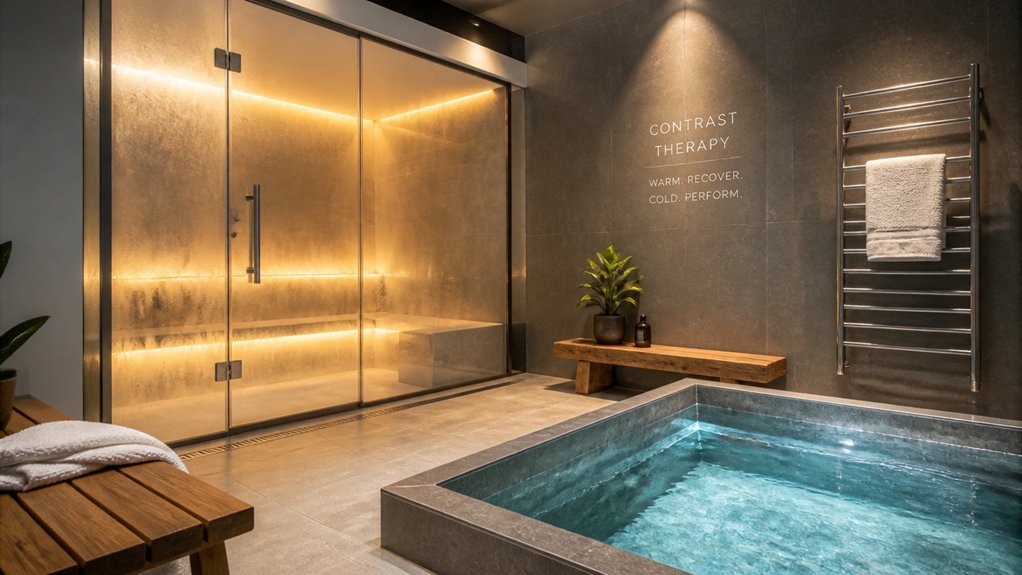
Contrast therapy offers significant benefits for runners by enhancing recovery and boosting performance. Alternating hot water immersion (100-104°F) with cold water immersion (46-50°F) creates a vascular pump effect that improves circulation, helping to clear metabolic waste and reduce inflammation. Devices with dual temperature therapy features can optimize this process by allowing quick and precise temperature adjustments to maximize benefits.
This process accelerates muscle recovery, especially within the critical 1 to 3 hours after training. Using contrast therapy post-run can decrease delayed onset muscle soreness (DOMS) by 10-20%, cutting down recovery time. During a typical 20-30 minute session, switching between hot and cold water maximizes blood flow, minimizes swelling, and reduces fatigue. Finishing with cold immersion helps decrease residual inflammation and enhances alertness, supporting your overall recovery and readiness for future runs.
Designing Your Contrast Therapy Routine for Running Recovery
To maximize your recovery after a run, it’s essential to follow a structured contrast therapy routine within 1 to 3 hours post-exercise.
Start with contrast therapy sessions that include 3 minutes of hot water immersion (100–104°F/38–40°C), followed by 1 minute of cold water immersion (46–50°F/8–10°C). Repeat this cycle 4–5 times for about 20 minutes. Always finish with a cold immersion phase to reduce residual inflammation and boost alertness.
Limit these sessions to 2–3 times per week to avoid adaptation and maintain effectiveness. Incorporate light mobility exercises and hydrate well to enhance circulation.
Choosing the right ice bath size and insulation can optimize your recovery by maintaining water temperature for longer periods and reducing discomfort during immersion.
A consistent contrast therapy routine helps optimize recovery, aids in the removal of metabolic waste, and supports overall running recovery.
Choosing the Right Temperatures for Contrast Therapy
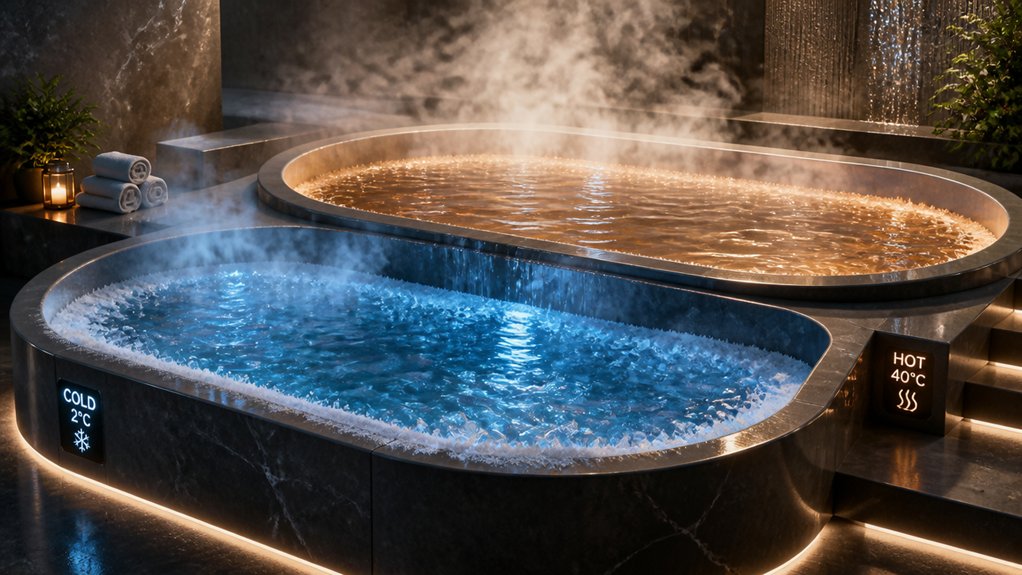
Have you ever wondered how to select the ideal water temperatures for effective contrast therapy? The key lies in understanding the desired temperature contrast.
Hot water should be between 100-104°F (38-40°C) to promote vasodilation and boost circulation without risking burns. Cold immersion should range from 46-50°F (8-10°C) to trigger vasoconstriction, reduce inflammation, and ease muscle soreness safely.
Balancing these temperatures creates a vascular pumping effect, enhancing oxygen delivery and waste removal. For recovery from muscle soreness, start with 3-4 minutes in hot water, then switch to cold immersion for about 1 minute.
If you’re new to contrast therapy, begin with colder water closer to 50°F (10°C) and gradually lower the temperature to avoid unnecessary discomfort while maximizing benefits.
Understanding how target temperatures influence cellular responses can help optimize the effectiveness of your contrast sessions.
Timing Your Sessions for Maximum Benefits
Timing your contrast therapy sessions correctly can greatly impact recovery and performance. For peak benefits, schedule sessions during the ascending phase of delayed onset muscle soreness (DOMS), usually 1 to 3 hours post-run.
Initiating contrast therapy within 30 minutes can reduce muscle soreness by up to 20%, by promoting waste removal and controlling inflammation. However, avoid doing contrast therapy immediately before runs or intense workouts to prevent hindering muscle adaptation and training gains. Strength-focused runners should delay cold immersion until 4 to 6 hours after training to support muscle protein synthesis. Incorporating magnesium-based creams into your post-exercise routine can further aid muscle relaxation and recovery.
Always finish your contrast therapy with cold immersion to minimize swelling and inflammation, preparing your muscles for the next run or workout. Proper timing amplifies recovery and enhances your overall running performance.
A Simple Step-by-Step Contrast Therapy Protocol for Runners
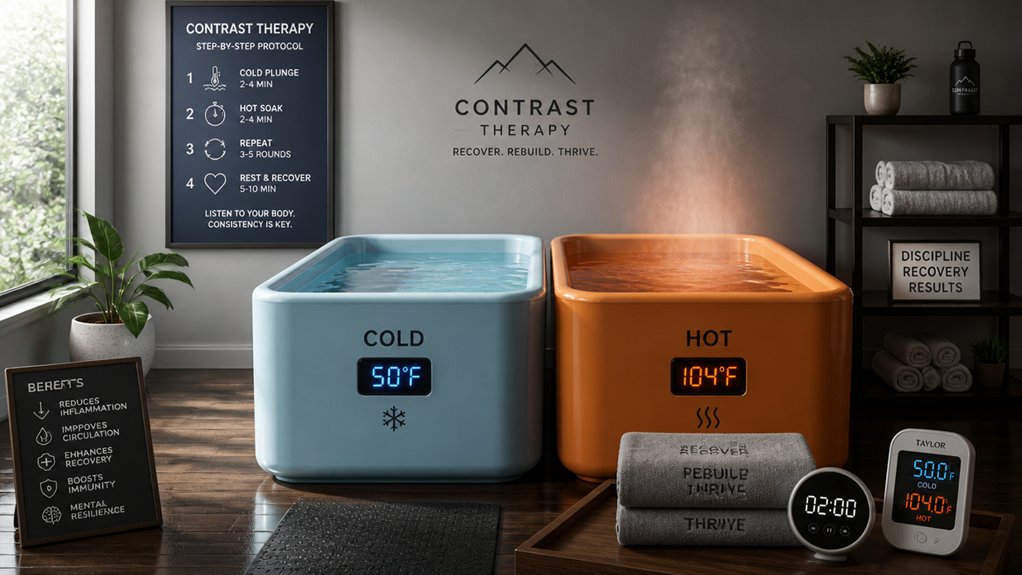
Implementing a straightforward contrast therapy protocol can considerably boost your recovery after runs. Start with hot water immersion at 100–104°F (38–40°C) for 3 to 4 minutes to induce vasodilation, relaxing muscles. Follow with cold water immersion at 46–50°F (8–10°C) for 1 minute to promote vasoconstriction, reducing inflammation.
Repeat these hot and cold cycles 4 to 5 times, totaling 20 to 30 minutes, always ending with cold immersion to help minimize swelling. Timing matters, so perform contrast therapy within 1 to 3 hours post-run during the initial phase of soreness. Be sure to stay well-hydrated throughout.
Using a durable portable ice bath tub allows for consistent and comfortable recovery sessions at home. This simple contrast therapy routine accelerates metabolic waste removal and alleviates delayed onset muscle soreness (DOMS), optimizing your recovery process.
Adapting Contrast Therapy for Different Recovery Goals
Adjusting contrast therapy protocols to suit specific recovery goals allows you to optimize benefits like reducing inflammation, alleviating chronic pain, or enhancing performance. Using the appropriate wattage and choosing between infrared or ceramic heat types can significantly impact the effectiveness and safety of your therapy session. For acute injury recovery, use a contrast therapy protocol with short cold and warm cycles ending on cold to limit inflammation and swelling within 48-72 hours. To manage chronic pain and joint stiffness, focus on longer heat phases combined with shorter cold exposures, which help joints move freely and reduce persistent inflammation. For athletic performance recovery, alternating 3-minute hot immersions with 1-minute cold dips enhances circulation and speeds up lactic acid elimination. Personalizing cycle durations guarantees your blood vessels open effectively without compromising tissue adaptation, supporting quicker recovery and better overall results tailored to your specific needs.
Common Mistakes That Can Reduce Effectiveness and Cause Injury
You may reduce your recovery benefits or risk injury if you ignore safe temperature limits during contrast therapy.
Skipping a proper warm-up before sessions can also cause muscle strain or diminish effectiveness.
Overusing cold cycles or pushing beyond recommended durations can lead to numbness, skin damage, or overstimulation of your nervous system.
Ignoring Temperature Limits
Ignoring temperature limits during contrast therapy can greatly reduce its effectiveness and increase injury risk. Using water that’s too hot—above 104°F—can cause burns or overheating, while water colder than 46°F risks frostbite and numbness.
Maintaining ideal temperatures—hot water between 100–104°F and cold water between 46–50°F—is essential for proper vasodilation and vasoconstriction, maximizing the benefits of each contrast therapy session. Failing to stay within these ranges diminishes anti-inflammatory effects and can lead to discomfort or nerve damage.
Additionally, abrupt changes without gradual temperature adjustments, especially for beginners, can shock your circulatory system. Always end your session with cold immersion at the proper temperature to reduce swelling and optimize inflammation control, ensuring safe, effective contrast therapy.
Skipping Proper Warm-Up
Skipping a proper warm-up before contrast therapy can compromise its benefits and increase the risk of injury. A warm-up prepares your muscles and enhances vascular pumping, allowing for more effective heat phase and cold water immersion.
Without a proper warm-up, your muscles are less pliable, making you more prone to muscle strain during the contrast cycles. Sudden cold water immersion after inadequate warming may cause excessive vasoconstriction, limiting circulation and reducing the therapy’s effectiveness.
Research shows that at least 3–5 minutes of light aerobic activity or gentle heat exposure improves circulation, preparing your muscles for the alternating hot and cold phases. Failure to warm-up can also hinder metabolic waste removal and slow recovery, diminishing the overall benefits of contrast therapy. Additionally, incorporating appropriate water treatment ensures water hygiene and prevents algae growth, maximizing safety and efficacy.
Overusing Cold Cycles
While cold cycles are beneficial when used appropriately, overdoing them can undermine your recovery efforts and increase injury risk. Contrast therapy works best when cold phases are brief, typically 1–3 minutes, to prevent numbness and vascular constriction.
Excessive or prolonged cold exposure can cause muscle stiffness, reduced blood flow, and hinder injury prevention. Ending sessions with too many or extended cold cycles instead of a balanced approach may impair tissue repair and delay recovery.
Additionally, frequent cold exposure immediately after heavy resistance training can suppress protein synthesis, risking overtraining. Using a proper emissivity adjustment can improve the accuracy of temperature readings, helping you monitor and regulate cold exposure more effectively.
To avoid cold-related injury, gradually increase cold duration and frequency, and be mindful of your body’s response. Properly alternating cold and warm cycles guarantees effective recovery without compromising tissue health.
How to Incorporate Contrast Therapy Into Your Weekly Running Plan
To get the most benefit, schedule contrast therapy 2–3 times a week on your easy or recovery days, ideally 1–3 hours after your runs.
Choose the standard protocol of hot and cold immersions and adjust based on how your body responds, always ending on cold to reduce swelling.
Be mindful of timing, monitor your recovery, and avoid sessions right before hard workouts to support peak adaptation and safety.
Timing for Optimal Recovery
Timing your contrast therapy sessions correctly can greatly enhance your recovery process. The ideal timing for contrast therapy is within 1 to 3 hours post-run, when it effectively reduces muscle soreness and inflammation during the early phase of DOMS.
Applying contrast therapy 1–2 hours after intense runs helps flush metabolic waste and decreases soreness by up to 20%. However, avoid using contrast therapy immediately before running, as it can temporarily hinder muscle adaptation and performance.
Aim for 2–3 sessions per week, on easy or recovery days, to support circulation and speed up recovery without disrupting training goals. Always finish with the cold phase to minimize swelling and boost alertness, ensuring you’re ready for your next workout.
Selecting Appropriate Protocols
Incorporating contrast therapy into your weekly running routine requires strategic planning to maximize benefits without disrupting training. As an athlete looking to reduce inflammation and speed recovery, follow established therapy protocols.
Aim for 2–3 sessions per week, ideally 1–3 hours after runs, during the ascending phase of soreness. Use a mixture of hot and cold temperatures: hot water (100-102°F/38-39°C) for 3 minutes and cold water (46-50°F/8-10°C) for 1 minute, alternating for about 20 minutes. Always end with a cold immersion to minimize residual inflammation.
Be cautious to avoid contrast therapy immediately before or within hours after heavy resistance training, as it can interfere with muscle adaptation. Properly selected protocols help enhance circulation, reduce inflammation, and promote faster recovery for your upcoming runs.
Monitoring for Safety
Monitoring safety when adding contrast therapy to your running schedule is essential to prevent overdoing it and hindering progress. During each session, pay close attention to subjective responses such as cold difficulty (rated 1–10), muscle soreness, and energy levels over 2–4 weeks. Adjust the cold phases gradually—starting with 30 seconds—and avoid overloading your training schedule. Limit contrast therapy to 2–3 sessions weekly, always ending with cold immersion to reduce inflammation and support alertness. Remember to avoid contrast therapy right before runs and wait 1–2 hours after workouts. Use this table to track your responses and progress:
| Session | Cold Phase Duration | Response Observed | Adaptation Needed |
|---|---|---|---|
| 1 | 30 sec | Yes/No | |
| 2 | 30 sec–1 min | Yes/No | |
| 3 | 1 min–2 min | Yes/No | |
| 4 | 2 min+ | Yes/No | |
| 5 | Adjust accordingly | Yes/No |
Safety Tips and Signs You’re Overdoing Contrast Therapy
While contrast therapy can be beneficial for runners, it’s essential to recognize when you’re pushing too far. Overdoing contrast therapy, especially with cold exposure, can stress your circulation and recovery.
Limit sessions to 2–3 times per week and never exceed a total session time of 30 minutes. Always end your session on a cold phase to reduce inflammation and prevent residual tissue engorgement that can cause soreness.
Be cautious with cold exposure duration—start at 30 seconds if you’re a beginner, and avoid advanced protocols for the first 1–2 weeks. If you experience dizziness, nausea, persistent pain, or numbness, stop therapy immediately.
Proper monitoring of signs guarantees you enjoy contrast therapy’s benefits without risking overexertion or injury.
Tracking Your Progress and Tweaking Your Routine
Tracking your progress and tweaking your routine is essential to finding the most effective contrast therapy protocol for your recovery needs. Keep detailed records of each session, including date, time, protocol used, and your subjective cold difficulty on a 1–10 scale.
Monitoring soreness and energy levels over 2–4 weeks helps you identify ideal timing and frequency to support recovery. Gradually increase cold duration, starting with 30–45 seconds, and adjust weekly based on soreness feedback and comfort.
Use soreness ratings to modify training load, aiming for faster soreness resolution as a sign of readiness for more intense runs. Consistent logging of therapy details and responses enables you to fine-tune your contrast therapy, maximizing benefits like inflammation reduction and circulation enhancement.
Frequently Asked Questions
Can Contrast Therapy Replace Traditional Recovery Methods for Runners?
Contrast therapy can’t fully replace traditional recovery methods for runners, but it can complement them. It improves circulation and reduces soreness, aiding recovery, but should be used alongside rest, hydration, stretching, and proper nutrition for best results.
How Long Should Each Contrast Therapy Session Last?
Each contrast therapy session should last about 15 to 20 minutes, alternating between hot and cold. You should spend around 1-3 minutes in each temperature, ensuring your body adapts without overdoing it.
Is Contrast Therapy Safe for All Running Experience Levels?
Contrast therapy is generally safe for most runners, but you should consult with a healthcare professional if you’re new, have certain health conditions, or experience discomfort. Always listen to your body and adjust sessions accordingly.
Can Contrast Therapy Be Combined With Other Recovery Techniques?
Yes, you can combine contrast therapy with other recovery methods like stretching, foam rolling, or massage. Just make sure you listen to your body, gradually integrate techniques, and avoid overloading yourself to prevent injury or excessive fatigue.
What Are the Signs That Contrast Therapy Isn’t Suitable for Me?
You should avoid contrast therapy if you have poor circulation, skin infections, recent injuries, or nerve conditions. If you experience persistent pain, numbness, or unusual discomfort during or after the sessions, stop immediately and consult a healthcare professional.