Contrast therapy helps reduce inflammation by alternating hot and cold water immersions, which boost circulation and promote lymphatic drainage. The hot phase vasodilates blood vessels, increasing oxygen and nutrients to tissues, while the cold phase constricts vessels, reducing swelling and inflammatory chemicals. This rhythmic cycle accelerates waste removal and tissue repair, easing pain and swelling faster. Keep exploring how this technique can support your recovery and improve your comfort.
What Is Contrast Therapy and How Can It Help Reduce Inflammation?
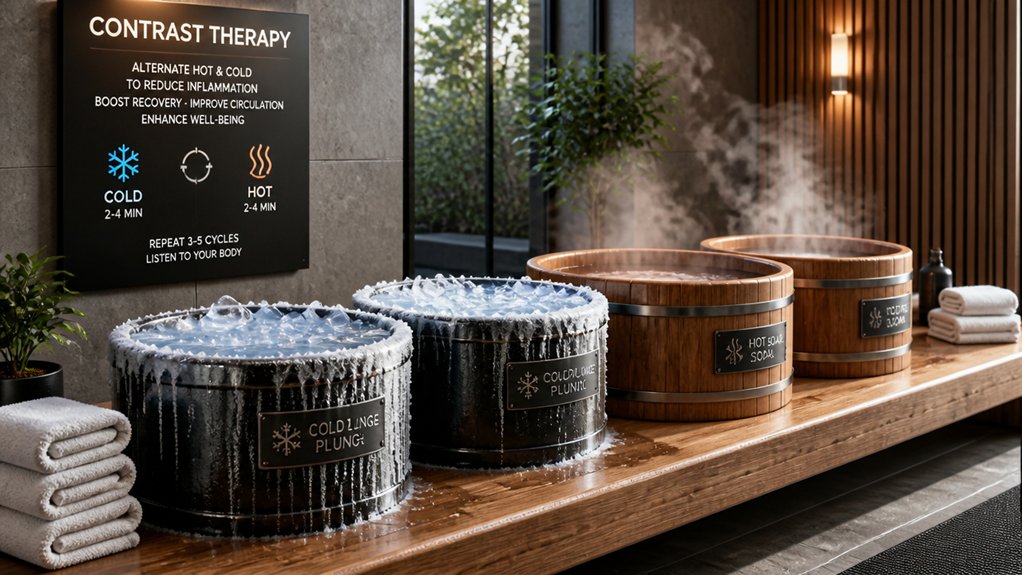
What exactly is contrast therapy, and how does it help reduce inflammation? Contrast therapy involves alternating immersion in hot (100-110°F) and cold (50-59°F) water, which creates a vascular pumping action. This cycle helps improve blood flow and lymphatic drainage, key for reducing inflammation. Some devices also offer temperature therapy features that rapidly switch between hot and cold settings to optimize this process. During the heat phase, vasodilation occurs, increasing circulation and relaxing muscles. When you switch to cold, vasoconstriction takes place, narrowing blood vessels and decreasing swelling. This continuous alternation accelerates the removal of cellular waste and inflammatory chemicals, facilitating faster tissue repair. As a result, contrast therapy effectively reduces inflammation, eases muscle soreness, and minimizes joint stiffness by supporting better oxygen and nutrient delivery. It’s a natural, safe method that promotes faster recovery after injury or exercise.
How Do Hot and Cold Cycles Work to Control Inflammation?
Hot and cold cycles work by manipulating blood vessels—hot promotes vasodilation to increase blood flow and relax muscles, while cold causes vasoconstriction to reduce swelling. Alternating between the two creates a pumping effect that boosts circulation and helps clear inflammatory chemicals. This balanced approach controls inflammation by improving oxygen delivery and reducing tissue swelling. Additionally, using infrared red light therapy can enhance the anti-inflammatory effects by penetrating tissues and promoting cellular repair.
Vasodilation and Vasoconstriction
The hot and cold cycles in contrast therapy work by actively controlling blood vessel behavior to manage inflammation. When you apply heat, vasodilation occurs, expanding blood vessels to increase blood flow and deliver oxygen and nutrients, which helps reduce inflammation and promotes tissue healing. Cold immersion triggers vasoconstriction, narrowing blood vessels to limit swelling and prevent the buildup of inflammatory fluids. Alternating between vasodilation and vasoconstriction creates a pumping effect in your blood vessels, enhancing lymphatic drainage and aiding the removal of cellular waste and inflammatory chemicals. This vascular cycling mimics a natural circulatory pump, balancing blood flow and fluid management. Efficient chillers with features like energy efficiency and smart controls ensure consistent temperature regulation, maximizing the benefits of contrast therapy.
Enhanced Blood Pumping
The rhythmic cycle of temperature changes in contrast therapy creates a natural pumping action within your blood vessels. During the heat phase, blood vessels expand—heat causes blood vessels to dilate—boosting blood flow and delivering oxygen and nutrients to tissues.
When you switch to cold, blood vessels constrict—cold causes blood vessels to narrow—reducing blood flow and minimizing swelling. This alternating pattern causes a rhythmic vascular pumping action that increases circulation efficiently.
The repeated vasodilation and vasoconstriction improve lymphatic drainage, helping remove waste products and inflammatory chemicals. As a result, fluid buildup and tissue edema decrease.
Repeating these cycles of warm and cold immersion for several minutes maximizes circulation, energizes blood flow, and enhances the body’s ability to control inflammation naturally through improved blood movement.
Reduced Inflammatory Chemicals
Alternating temperature cycles in contrast therapy directly influence inflammatory mediators, helping to control your body’s inflammatory response. Cold phases decrease capillary permeability and slow the migration of inflammatory mediators, which reduces tissue swelling and pain. Additionally, the application of cooling creams after cold exposure can further assist in muscle recovery, supporting reduction of soreness and inflammation. Meanwhile, heat causes vasodilation, boosting blood flow, tissue oxygenation, and delivering essential nutrients crucial for tissue repair. The hot and cold cycles act as a natural pump, enhancing lymphatic drainage, which speeds up the removal of cellular waste and excess inflammatory chemicals.
How Alternating Hot and Cold Boosts Circulation and Lymphatic Drainage
When you alternate hot and cold, your blood vessels go through a rhythmic expansion and contraction, creating a pumping effect that boosts circulation. This process helps move waste and inflammatory chemicals out of tissues more efficiently while delivering oxygen and nutrients for faster healing. Using appropriate heat lamp setups ensures the safe and effective application of thermal therapy for optimal recovery. As a result, your lymphatic system becomes more active, reducing swelling and supporting quicker recovery.
Vascular Pumping Effect
Contrast therapy creates a rhythmic vascular pumping action by causing blood vessels to alternately dilate with heat and constrict with cold. This process involves vasodilation during heat application and vasoconstriction when exposed to cold, creating a dynamic cycle.
The repeated expansion and contraction of blood vessels boost blood flow, delivering oxygen and nutrients more efficiently to tissues. This pulsating effect also stimulates lymphatic drainage by moving lymph fluid, helping to decrease tissue swelling and inflammation.
As these cycles repeat 3-5 times, they amplify the pumping mechanism, ensuring waste products and inflammatory chemicals are swiftly removed from the affected area. This vascular pumping action is a key reason why contrast therapy effectively reduces inflammation and promotes faster healing. Accurate temperature measurement ensures safe and effective treatment sessions.
Enhanced Circulatory Flow
The rhythmic fluctuation between hot and cold stimulates your blood vessels to expand and tighten repeatedly, creating a powerful boost in circulation. This is a key advantage of contrast therapy, as it promotes vasodilation and vasoconstriction cycles, enhancing blood circulation and lymphatic drainage.
Here’s what happens:
- Warm water causes vasodilation, increasing oxygen and nutrient delivery while reducing local inflammation.
- Cold water triggers vasoconstriction, directing blood flow to essential organs, which reduces swelling and inflammation.
- The alternating cycle mobilizes lymph fluid, accelerating the removal of metabolic waste and inflammatory chemicals.
- High-efficiency energy-efficient chillers help maintain consistent temperatures for optimal contrast therapy sessions.
This process improves tissue oxygenation, reduces tissue fluid overload, and speeds up recovery, making contrast therapy an effective method to target inflammation and support healing.
Lymphatic System Activation
Alternating hot and cold exposure creates a rhythmic pumping action that actively boosts your lymphatic system, enhancing its ability to drain waste and inflammatory chemicals from tissues. Contrast therapy triggers vasodilation during heat sessions, increasing blood flow and opening lymphatic vessels, while cold exposure causes vasoconstriction, redirecting fluid and promoting waste removal. This cycle of vasodilation and vasoconstriction stimulates lymphatic drainage, helping clear cellular waste and inflammatory chemicals more efficiently. Utilizing specialized infrared heating panels in portable saunas can further intensify these effects by delivering targeted deep tissue warmth.
Benefits of Contrast Therapy for Swelling and Musculoskeletal Injuries
By cycling between hot and cold therapy, you can effectively reduce swelling and accelerate recovery from musculoskeletal injuries. Contrast therapy uses vascular cycling—hot water causes vasodilation, while cold water prompts vasoconstriction—creating a pumping action that promotes lymphatic drainage and removes inflammatory fluids. This process helps decrease swelling and relieves pain.
Here’s what contrast therapy can do for you:
- Improve blood circulation and oxygen delivery to injured tissues, speeding up muscle recovery.
- Reduce accumulation of inflammatory chemicals and waste, lessening edema and joint stiffness.
- Shorten recovery time by decreasing soreness and joint discomfort after injuries or intense activity.
These benefits make contrast therapy a powerful tool for managing swelling and supporting healing in musculoskeletal injuries.
Simple Ways to Use Contrast Therapy in Your Recovery Routine at Home
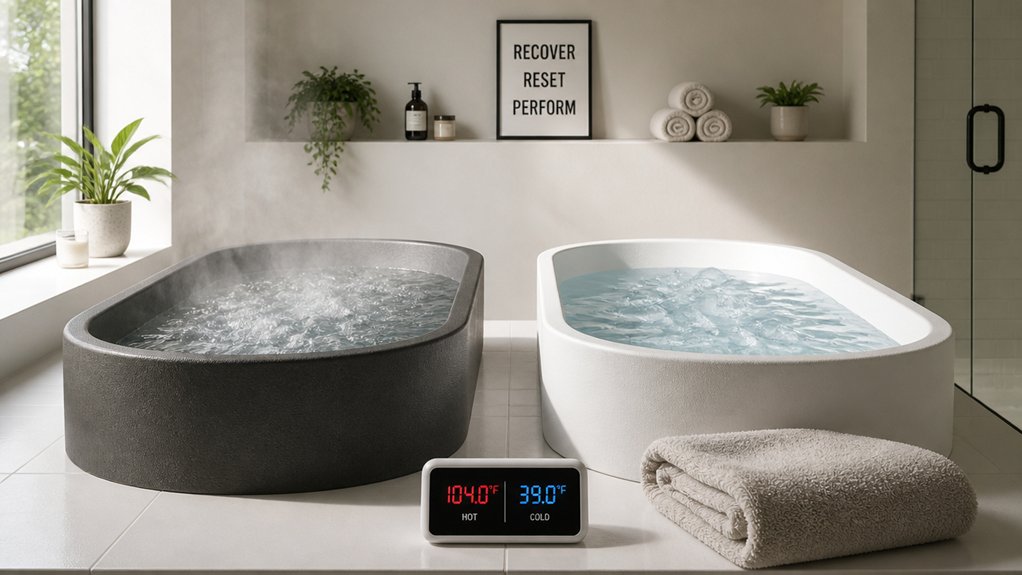
Implementing contrast therapy at home can be straightforward and effective for reducing inflammation and speeding up muscle recovery. Start by preparing two basins—one with hot water (100-104°F) and the other with cold water (50-59°F).
Immerse the affected area in hot water for 3-5 minutes to relax muscles and open blood vessels. Then switch to cold water for 30 seconds to 1 minute to constrict blood vessels and reduce swelling.
Repeat this cycle 3-5 times, finishing with a cold immersion. Make sure you stay hydrated and monitor water temperatures for safety.
Begin gradually based on your comfort level, and consult a healthcare professional if you have underlying circulatory issues. Incorporating contrast therapy into your recovery routine can be simple and highly beneficial.
Traditional Cold Plunge Baths vs. Modern Contrast Therapy: What’s the Difference?
Have you ever wondered how traditional cold plunge baths compare to modern contrast therapy for reducing inflammation and promoting recovery?
Cold plunge baths involve full-body immersion at 50°F to 59°F for 10-15 minutes, primarily causing vasoconstriction for inflammation reduction. In contrast, contrast therapy alternates between warm water (100-110°F) and cold water, creating a vascular pumping effect that boosts circulation. Specifically:
- Cold plunge baths focus on sustained vasoconstriction to decrease inflammation.
- Contrast therapy cycles vasodilation and vasoconstriction, improving tissue oxygenation and waste removal.
- Contrast therapy offers more comfort and enhanced muscle relaxation compared to prolonged cold exposure.
While cold plunge baths are effective solely for inflammation reduction, contrast therapy balances inflammation control with increased blood flow, making it more versatile for recovery.
When Should You Avoid Using Contrast Therapy for Inflammation?
You should avoid contrast therapy if you have uncontrolled high blood pressure or certain heart conditions, as temperature changes can put extra strain on your cardiovascular system.
It’s also unsafe for open wounds, infections, or surgical sites, since heat or cold could worsen injury or cause complications.
Additionally, if you’re pregnant or have nerve or circulation issues, contrast therapy might do more harm than good.
Cardiovascular Risks Present
Contrast therapy should be avoided in individuals with uncontrolled high blood pressure or significant cardiovascular conditions, as the rapid fluctuations between hot and cold can cause dangerous blood pressure spikes and added stress on the heart and blood vessels.
This vascular stress can worsen cardiovascular health and increase the risk of complications. For example:
- Hot temperatures induce vasodilation, lowering blood pressure temporarily.
- Cold exposure triggers vasoconstriction, raising blood pressure and impeding blood flow.
- Frequent cycles strain blood vessels, risking adverse effects like vascular injury or cardiac stress.
If you have high blood pressure or heart issues, these shifts can overload your cardiovascular system, raising risks of dangerous blood pressure fluctuations and vascular damage.
Always consult a healthcare provider before using contrast therapy if you have cardiovascular concerns.
Skin or Nerve Damage
When skin is compromised or nerve function is impaired, contrast therapy can do more harm than good. If you have open wounds, exposed hardware, or active infections, applying temperature changes may worsen tissue damage or spread infection. People with peripheral neuropathy or reduced temperature sensation risk severe nerve pain or injury since they can’t detect harmful heat or cold. Those with peripheral vascular disease might experience increased pain due to cold-induced vasoconstriction, impairing circulation further. Use caution if you have a history of skin burns or extreme temperature sensitivity, as contrast therapy could worsen tissue injury. Always consult a healthcare professional before proceeding if you have skin or nerve damage.
| Condition | Risk Explanation |
|---|---|
| Open wounds | Worsen tissue damage and infection spread |
| Exposed hardware | Potential damage or infection risk |
| Active infections | Accelerate infection or tissue deterioration |
| Peripheral neuropathy | Unaware of harmful temperatures, risk nerve pain |
Pregnancy or Health Conditions
Because of the potential risks involved, pregnant women and individuals with certain health conditions should avoid using contrast therapy to reduce inflammation. Rapid temperature changes can affect fetal circulation and maternal cardiovascular stability during pregnancy.
If you have:
- Pregnancy, avoid contrast therapy due to possible risks to fetal health.
- Cardiovascular disease or uncontrolled high blood pressure, it can worsen your condition or cause adverse cardiac events.
- Peripheral vascular disease, open wounds, or infections, contrast therapy might increase pain, worsen inflammation, or lead to infections.
People with neuropathy or exposed hardware should also steer clear, as cold exposure can cause nerve damage or increased discomfort.
Always consult your healthcare provider before starting contrast therapy if you have any chronic health conditions.
Essential Equipment You’ll Need for Safe Home Contrast Therapy
To guarantee safe and effective home contrast therapy, you’ll need two containers or tubs: one filled with hot water at 100°F to 104°F (38°C to 40°C) and another with cold water at 46°F to 50°F (8°C to 10°C).
A reliable thermometer is essential to monitor and maintain the water temperatures within safe ranges, preventing burns or cold injury. A timer or stopwatch is indispensable for following proper immersion cycles—about 3-5 minutes in hot water, then 30 seconds to 1 minute in cold water—repeated several times.
Towels are handy for drying between immersions and can be used with hot or cold wet cloths if tubs aren’t available. Access to plain tap water simplifies the setup, making these simple tools enough for home contrast therapy.
How to Perform Contrast Therapy Safely to Maximize Results
Performing contrast therapy safely involves paying close attention to your water temperatures and timing to maximize its benefits without risking injury. Start by immersing the affected area in hot water between 100°F and 104°F for 3-5 minutes to promote vasodilation.
Then switch to cold water, ranging from 46°F to 59°F, for 30 seconds to 1 minute to induce vasoconstriction and reduce inflammation. Repeat the alternating hot and cold water cycles 3 to 5 times, ending with a cold phase for ideal anti-inflammatory effects.
Always monitor temperatures with a thermometer to prevent burns or cold injury. Adjust exposure times gradually based on your tolerance and response. Avoid contrast therapy if you have underlying health issues, and consult a healthcare professional if unsure.
What Does Science Say About Contrast Therapy and Swelling Reduction?
What does science reveal about contrast therapy’s effectiveness in reducing swelling? Research shows that contrast hydrotherapy, which alternates hot-induced vasodilation and cold-induced vasoconstriction, creates a vascular pumping action that promotes fluid movement and reduces tissue swelling.
This alternating process enhances lymphatic drainage and accelerates the removal of inflammatory chemicals. Scientific studies confirm that contrast therapy more effectively decreases edema and soft tissue inflammation than cold therapy alone by improving circulation and waste clearance.
Clinical evidence also indicates that repeated hot and cold immersions reduce joint stiffness and muscle inflammation, speeding up recovery after musculoskeletal injuries. Overall, contrast therapy’s ability to modulate blood flow and manage inflammation is comparable to steroid injections but with fewer side effects—making it a science-backed approach to swelling reduction.
Common Mistakes to Avoid When Using Contrast Therapy for Inflammation
While contrast therapy can effectively reduce inflammation, neglecting common mistakes can diminish its benefits or cause harm.
First, avoid extreme water temperatures—hot water above 110°F can cause burns, and cold below 46°F may trigger nerve pain or discomfort.
Second, stick to recommended immersion durations: 3-5 minutes for hot water and 30 seconds to 1 minute for cold water, preventing adverse vascular reactions.
Third, don’t end with hot water when inflammation is present, as it can worsen swelling instead of easing it. Also, skip contrast therapy if you have uncontrolled cardiovascular conditions or poor circulation to reduce risks like bleeding or worsened symptoms.
Finally, always listen to your body, stopping immediately if you experience dizziness, nausea, or intense pain.
Final Tips for Speeding up Healing and Alleviating Pain With Contrast Therapy
To maximize the benefits of contrast therapy for healing and pain relief, it’s important to finish each session with a cold phase. This cold water step helps reduce inflammation and stimulates vascular pumping, improving circulation and waste removal.
To get the most out of contrast therapy, repeat cycles of 3-5 minutes of hot water (100-104°F) followed by 30 seconds to 1 minute of cold water (46-59°F). Gradually increase exposure times as your tolerance improves to avoid adverse effects.
Stay well hydrated before, during, and after your sessions to support lymphatic drainage and tissue healing. Always listen to your body—discontinue if you experience pain, dizziness, or weakness.
Consistent, mindful contrast therapy encourages faster healing and pain alleviation.
Frequently Asked Questions
Why Do I Feel so Good After Contrast Therapy?
You feel so good after contrast therapy because the alternating heat and cold boost blood flow, release mood-enhancing hormones, relax muscles, and reduce inflammation, giving you a revitalizing, rejuvenating sensation and a sense of overall well-being.
What Are the Downsides of Contrast Therapy?
Contrast therapy can cause burns if water temperatures are too high and may trigger nerve pain or discomfort, especially if you have certain health conditions. Prolonged or improper use could worsen skin issues or cardiovascular problems.
What Is the Best Therapy to Reduce Inflammation?
You should try contrast therapy, as it effectively reduces inflammation through alternating heat and cold, boosting circulation, clearing waste, and decreasing swelling. It’s a natural approach that promotes faster healing without medications, making it your best option.
Can You Overdo Contrast Therapy?
Yes, you can overdo contrast therapy. Using excessively hot or cold temperatures for too long can cause burns, nerve pain, or blood vessel issues. Always start slow, follow safe guidelines, and stop if you experience dizziness or increased pain.