
After immersion, try cyclic sighing by doing slow nasal breaths followed by a long exhale to boost circulation and warmth. Use box breathing—inhale, hold, exhale, and hold all at four seconds—to calm nerves and generate warmth. Try 4-7-8 breathing to relax muscles and lower cortisol. Practice coherent breathing at 5-6 breaths per minute for effective circulation. Pursed lip and diaphragmatic breathing open airways and improve oxygen flow. Incorporate visualization to enhance warmth. Keep exploring these techniques for better recovery.
Why Breathwork Helps Warm You After Cold Exposure
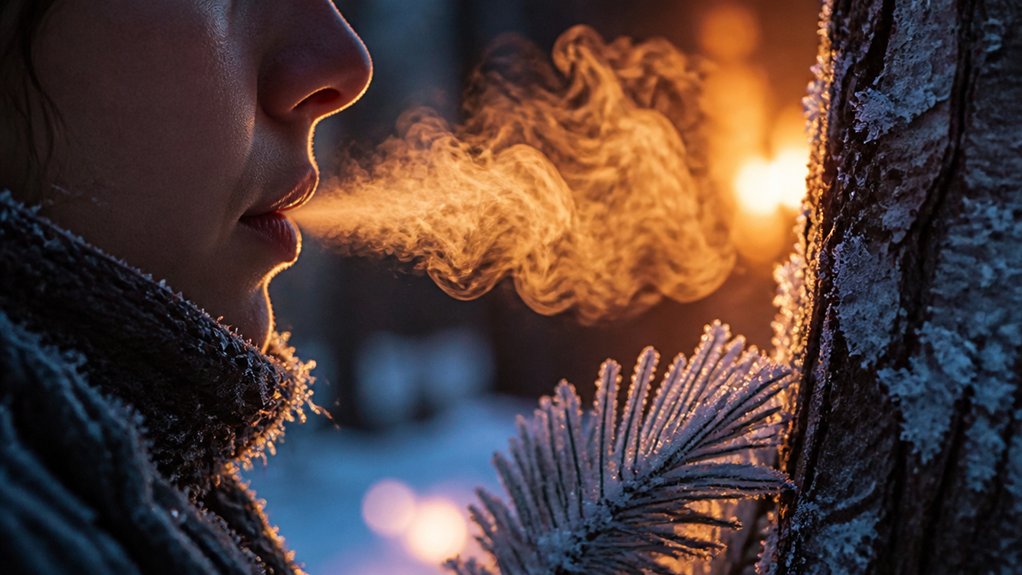
Have you ever wondered how breathwork can help you warm up after cold exposure? When you use slow, deep nasal breathing, you activate your parasympathetic nervous system, encouraging relaxation and vasodilation, which helps increase blood flow and warmth.
Incorporating breath retention during techniques like Wim Hof breathing influences blood circulation and oxygen delivery, aiding in core temperature recovery.
Controlled breathing also stimulates the vagus nerve, reducing stress hormones such as cortisol that spike during cold stress, supporting your body’s natural recovery.
Additionally, mindful, rhythmic breathwork boosts heart rate variability, signaling nervous system flexibility. This balance helps your body manage cold stress better, ultimately making it easier to rewarm and restore your body’s temperature efficiently. Paying attention to resistance and airflow control during practice can enhance these effects even further.
How to Use Cyclic Sighing for Instant Warmth
To quickly generate warmth after cold immersion, cyclic sighing is a highly effective breath technique that you can easily practice. Start by taking two slow nasal inhales, with the second filling your lungs fully, encouraging deep, calming breathing.
Follow this with a prolonged exhale that pushes out stale air, signaling your body to activate the parasympathetic nervous system. This shift promotes relaxation, reduces stress hormones like cortisol, and enhances circulation.
The rhythmic pattern of nasal inhales and extended exhalation helps regulate your nervous system while synchronizing with your heartbeat and blood pressure. Just five minutes of cyclic sighing can quickly elevate your body temperature and restore warmth, making it an efficient tool for recovering from cold exposure and supporting overall thermal regulation.
How Box Breathing Can Calm and Warm Your Body
Building on the calming effects of cyclic sighing, Box Breathing offers a structured technique to help your body recover warmth and stability after cold immersion. This practice involves a steady 4-second inhale, hold, exhale, and hold, gently activating your parasympathetic nervous system to promote deep relaxation and regulation of body temperature. The controlled breath-holding during each cycle enhances focus, reduces cold perception, and stimulates warming sensations. Slow breathing improves heart rate variability, boosting blood flow and peripheral circulation, aiding natural warming. Breath-holding creates an adaptive rise in carbon dioxide, encouraging vasodilation to warm extremities. Additionally, understanding waterproof thermometers can help optimize your recovery process by accurately monitoring temperature changes during and after your sessions.
How to Do 4-7-8 Breathing to Ease Cold Tension
To ease cold tension after immersion, try the 4-7-8 breathing technique by inhaling through your nose for 4 seconds, then holding your breath for 7 seconds. Exhale slowly through your mouth for 8 seconds to activate relaxation and calm your body. This pattern promotes a longer exhale, helping reduce stress, anxiety, and warming your muscles. Incorporating guided meditation devices with visual cues can further enhance the effectiveness of your breathing exercises.
Relaxation Through Extended Exhale
After cold water immersion, calming your nervous system with the 4-7-8 breathing technique can greatly reduce muscle tension and stress. Focus on your breath as you exhale slowly through your mouth for 8 seconds, emphasizing relaxation with each exhale.
This prolonged exhale signals your parasympathetic nervous system to activate, helping you shift into a calm state. As you exhale, release tension and stress that built up from the cold exposure. Keep your inhalations quiet and brief, then exhale slowly and intentionally, allowing your body to settle.
Regularly practicing this breath pattern after immersion promotes relaxation, lowers your heart rate, and enhances your overall stress resilience. Over time, extended exhale breathing can support a quicker recovery and deeper sense of calm. Incorporating adaptogens into your routine may further enhance your stress response and support recovery during cold plunge practices adaptive stress support.
Calming Anxiety and Tension
Once you’ve practiced the 4-7-8 breathing technique after cold immersion, you can actively use it to calm anxiety and tension. By focusing on a prolonged exhalation, you stimulate the parasympathetic nervous system, encouraging relaxation and tension relief.
This simple pattern helps slow your heart rate and reduce cortisol levels, easing cold-induced stress. To maximize benefits:
- Inhale deeply through your nose for 4 seconds.
- Hold your breath for 7 seconds.
- Exhale slowly through your mouth for 8 seconds, emphasizing a long exhale.
Regular practice of this technique quickly calms nervous system hyperarousal, reducing anxiety and muscular tension. With consistency, it becomes a powerful tool for calming anxiety and achieving tension relief after cold immersion. Accurate measurement of your physiological responses can enhance your relaxation routine.
Breathing Pattern for Warmth
Implementing the 4-7-8 breathing pattern after cold immersion can help you activate your body’s natural warmth response.
To do this, start with the 4-7-8 breathing technique: inhale slowly through your nose for 4 seconds, feeling your diaphragm expand. Hold your breath for 7 seconds, allowing your nervous system to relax. Exhale audibly through your mouth for 8 seconds, pushing out stale air and signaling your heart to slow down.
This deep, nasal breathing promotes parasympathetic nervous system activation, which helps reduce cold tension and muscle shivering. Temperature regulation is enhanced by controlled breathing, supporting faster recovery.
Practicing this pattern for just a few minutes enhances warmth perception and calms your mind, making it easier to recover physically and psychologically. Regular use boosts your resilience to cold stress over time.
Using Coherent Breathing to Boost Circulation and Warmth
You can boost your circulation and warmth by practicing coherent breathing, which balances your nervous system and enhances heart rate variability. This slow, steady breathing stimulates your parasympathetic nervous system, helping your body warm up more efficiently after cold immersion. By maintaining this rhythm, you’ll support better blood flow and overall temperature regulation during your recovery. Incorporating slow breathing techniques can further amplify these benefits, promoting deeper relaxation and improved recovery outcomes.
Enhances Heart Rate Variability
Practicing coherent breathing at a slow, steady pace after immersion actively enhances heart rate variability (HRV), signaling a better balance between your sympathetic and parasympathetic nervous systems.
This deliberate slow breathing, typically at 5 to 6 breaths per minute, stimulates diaphragmatic breathing and boosts vagal tone. As you deepen your exhalations, you activate the parasympathetic nervous system, promoting relaxation.
To understand the benefits, consider:
- Increased heart rate variability, reflecting improved autonomic regulation.
- Enhanced parasympathetic activation, supporting recovery and relaxation.
- Better modulation of heart rate through improved vagal tone, aiding quicker core temperature stabilization.
Promotes Blood Flow Efficiency
Coherent breathing at a steady, slow rhythm not only enhances heart rate variability but also directly promotes more efficient blood flow. By practicing slowly and deeply nasal breathing, you stimulate the parasympathetic nervous system, which helps reduce vasoconstriction and encourages vasodilation. This process improves blood flow efficiency, ensuring oxygen-rich blood reaches your muscles and peripheral tissues more effectively. Using targeted cold therapy methods can further support this process by reducing inflammation and aiding in faster recovery.
As you synchronize your breathing to about five breaths per minute, you support smoother circulation and quicker recovery after cold immersion. The deep, mindful inhalations and exhalations optimize circulation, helping your body distribute warmth and nutrients more evenly.
Consistent practice of coherent breathing accelerates rewarming and promotes overall circulation health, making it a crucial part of post-immersion recovery.
Increases Body Warmth
By adopting a slow, rhythmic breathing pattern at around five cycles per minute, the body can greatly increase its warmth after cold water immersion. Coherent breathing, when done slowly through your nose, enhances heart rate variability and stimulates the parasympathetic nervous system, promoting relaxation and improved circulation.
This upsurge in blood flow helps distribute heat more effectively throughout your body. To maximize warming effects, consider these key points:
- Engage in coherent breathing for 3–5 minutes post-immersion to support circulation.
- Focus on equal inhale and exhale durations to synchronize your breathing with cardiovascular oscillations.
- Use this technique to bolster body warmth, reduce shivering, and stabilize thermal comfort rapidly.
How Pursed Lip and Diaphragmatic Breathing Warm You Up
Breath is a powerful tool for warming your body after cold immersion, with specific techniques like pursed lip and diaphragmatic breathing playing key roles.
Breath techniques like pursed lip and diaphragmatic breathing help rewarm the body after cold immersion.
Pursed lip breathing slows your exhalation, helping keep airways open longer and increasing oxygen delivery. This prolongation of exhalation allows stale, cold air to exit more efficiently, improving circulation and warming tissues.
Diaphragmatic breathing involves engaging your diaphragm fully, promoting deep nasal inhalations that maximize lung expansion and elevate oxygen levels.
Both techniques activate your parasympathetic nervous system, encouraging relaxation and reducing stress responses. As you focus on controlled breathing, your core temperature stabilizes, and internal heat production improves.
Together, pursed lip and diaphragmatic breathing support a gradual and effective rewarming process after immersion in cold water.
Using Visualization and Breath to Feel Warmer
After practicing pursed lip and diaphragmatic breathing to warm your body, incorporating visualization techniques can amplify the effect. Visualizing inhaling warm air and exhaling cold tension helps you feel more relaxed and increases your sense of warmth.
By engaging in deep breathing, you stimulate the parasympathetic nervous system, which promotes calmness and heat perception. To optimize this, consider these approaches:
- Focus on visualizing warmth with each inhale, imagining your body filling with cozy heat.
- Use slow, deep diaphragmatic breathing to support blood flow and warmth distribution.
- Practice prolonged exhalations, like breathing cycles or 4-7-8 patterns, to enhance relaxation and activate calming brain regions.
Breathing helps deepen the sensation of heat, making cold exposure more manageable.
Frequently Asked Questions
What Is the 4 7 8 Rule for Breathing?
The 4-7-8 breathing rule involves inhaling through your nose for 4 seconds, holding that breath for 7 seconds, then exhaling slowly through your mouth for 8 seconds. This helps promote relaxation and reduces anxiety effectively.
How to Make Yourself Warm by Breathing?
You can warm yourself by slowing your nasal breaths, extending exhalations, and practicing cyclic sighing to activate your parasympathetic nervous system, improve circulation, and boost internal heat through increased oxygen exchange and vagus nerve engagement.
Can I Do Wim Hof Breathing After a Workout?
Yes, you can do Wim Hof breathing after your workout. It helps boost recovery, promotes relaxation, reduces cortisol, and improves endurance. Just sit or lie comfortably, start with 3-4 rounds, and listen to your body.
Can Breathing Exercises Reduce Cortisol?
Yes, breathing exercises can reduce cortisol by activating your parasympathetic nervous system, lowering stress hormone levels, and promoting relaxation. Regular practice enhances autonomic balance, diminishes brain activity in stress areas, and supports overall mood and inflammation regulation.