Exhale-focused breathing helps you stay calm, manage cold shock, and improve safety during winter immersion. By lengthening your exhale to 6-8 seconds, you activate your parasympathetic nervous system, reduce stress hormones, and prevent hyperventilation. Focus on gentle, slow exhalations before and during cold plunges to ease panic and support recovery afterward. Keep practicing these techniques, and you’ll discover how they can make your cold water experiences more comfortable and safer over time.
How Exhale-Focused Breathing Can Make Cold Plunges More Comfortable

Have you ever wondered how controlling your breath can make cold plunges feel easier? Exhale-focused breathing helps activate your parasympathetic nervous system, calming the stress response triggered by cold water.
When you lengthen your exhale to 6-8 seconds, you slow your breathing, reducing cortisol spikes and easing the panic often felt during a cold plunge. This breath control prevents hyperventilation and breath-holding, lowering the risk of shallow water blackout.
Maintaining a calm, extended exhale buffers against cold shock acidosis, keeping your muscles relaxed and reducing cold stress. After your immersion, continuing deep, exhale-focused diaphragmatic breathing supports better reheating and thermogenic adaptation, making future cold plunges more comfortable.
This simple technique immediately lowers your stress, making cold water immersion more manageable. Incorporating breathing exercise tools can enhance your ability to sustain controlled, exhale-focused breaths during cold plunges.
Step-by-Step: How to Practice Exhale-Extension Before Cold Exposure
To effectively prepare your body for cold exposure, start by sitting comfortably in a quiet space.
Begin practicing your breathing technique by inhaling slowly through your nose for about 4 seconds, allowing your belly or sides to expand naturally. Next, gently extend your exhale through pursed lips for 6 seconds or longer. Focus on fully relaxing your body and activating your parasympathetic nervous system with each exhale-extension.
It’s important to avoid breath-holding during this step; slow, continuous exhales help buffer cold feel sensations and reduce cold shock response. Repeat this inhalation-exhalation rhythm for several minutes daily, especially near or before entering cold water. Incorporating breathing regulation techniques like this can enhance your resilience to cold exposure. Practicing the technique regularly can lower your stress hormone levels and improve your calmness during your winter immersion session.
Simple Techniques to Lengthen Your Exhale and Relax During Cold Immersion
Lengthening your exhale during cold immersion can greatly enhance your relaxation and overall experience. To do this, slow your exhale to six or more seconds through pursed lips or nose, which stimulates your parasympathetic nervous system, reducing cortisol. Focus on maintaining breath control with a longer exhale while inhaling gently through your nose for about four seconds. This pattern supports relaxation and helps prevent panic responses. Incorporate this table into your practice:
| Technique | Benefit |
|---|---|
| Slow exhale | Activates vagus nerve, reduces stress |
| Consistent pace | Fosters calm and breath regulation |
| Post-immersion | Aids internal reheating and resilience |
A mindful approach to breathing modes can optimize your cold plunge experience by fostering a balanced nervous system.
Common Mistakes That Might Reduce the Benefits of Your Breathing Practice
Using shallow breathing habits or pushing yourself too hard can limit the relaxation and thermogenic benefits of your practice.
Ignoring body signals or overexerting may cause safety issues or reduce effectiveness.
To get the most from your winter immersion, listen to your body and breathe mindfully. Accurate and fast measurements are essential to monitor your oxygen levels and ensure safe practice during cold exposure.
Shallow Breathing Habits
Shallow breathing patterns often develop unnoticed during winter immersion, limiting oxygen intake and undermining the calming effects you’re seeking.
When you breathe shallowly, you miss out on the full benefits of exhale-focused breaths, which help activate the parasympathetic nervous system. This reduced activation keeps stress levels high and prevents the vagus nerve from promoting relaxation.
Habitual shallow breathing during cold exposure can also increase cortisol levels, intensifying your stress response and diminishing cold therapy benefits. Additionally, shallow breaths combined with irregular gasping or breath-holding during cold shock can cause dizziness or fainting.
To optimize your experience, focus on slow, controlled exhales that stretch for 6 to 8 seconds, stimulating the vagus nerve and enhancing relaxation amid cold immersion. Incorporating adaptogenic blends that support stress regulation can further improve your resilience and recovery during cold plunges.
Overtrying Techniques Too Hard
Pushing your breathwork too hard or trying to hold your breath longer than comfortable can backfire during winter immersion. Overdoing breath holds or rushing exhale-focused breathing may trigger panic responses, increasing cortisol and undermining relaxation.
Too much force or speed disrupts parasympathetic activation, which is essential for calming your body during cold exposure. Skipping a gradual buildup and jumping into intense breathing exercises near water increases risks like falls or shallow water blackout.
These mistakes not only reduce the safety of your session but also limit the physiological benefits, such as improved resilience and stress response. Focus on slow, controlled exhale-focused breathing, respecting your limits and progressing gradually.
Ensuring proper breathing technique can enhance comfort and safety during cold immersion. This approach keeps your practice safe, effective, and aligned with the body’s natural relaxation processes during winter immersion.
Ignoring Body Signals
Ignoring your body’s signals during winter immersion can greatly reduce the benefits of your breathing practice and increase safety risks.
If you push through dizziness or lightheadedness, you risk fainting and negating safe practice guidelines.
Holding your breath too long when you feel the urge to breathe can suppress your respiratory drive, leading to low CO2 levels and increased syncope risk.
Failing to listen to cues to let go of breath work during stress responses may impair your physiological balance and cause harm.
To stay safe and effective, remember:
- Respect the urge to breathe and avoid holding your breath excessively.
- Monitor physical feelings like dizziness or discomfort, and respond promptly.
- Gradually progress in breath hold duration and intensity.
- Stop or modify if extreme stress or distress arises.
- Be mindful of your pH balance, as improper levels can affect your overall stability during cold immersion.
How to Track Your Progress and Build Cold Tolerance Safely
How can you effectively track your progress and build cold tolerance safely during winter immersion sessions?
Begin by monitoring heart rate variability and noting your energy levels during and after each session. Record your breath hold durations and how often you practice exhale-focused breathing, like the Wim Hof Method, adjusting gradually as you improve.
Track heart rate variability, energy levels, and breath hold times to safely monitor and progress your winter immersion practice.
Start with shorter immersions in water around 60°F (15°C), then slowly decrease temperature and increase duration over 2-4 weeks to build tolerance. Use inhalation for 4 seconds and exhalation for 6-8 seconds during breathing exercises to promote relaxation and parasympathetic response.
Maintain a consistent schedule, and if progress stalls after four weeks, tweak water temperature or practice duration. Safety measures, including gradual increases, are essential to prevent dizziness or adverse effects. Additionally, using a sensor with high accuracy in cold environments can help ensure your physiological data remains reliable throughout your training.
Easy Tips to Incorporate Exhale Breathing Into Your Cold Immersion Routine
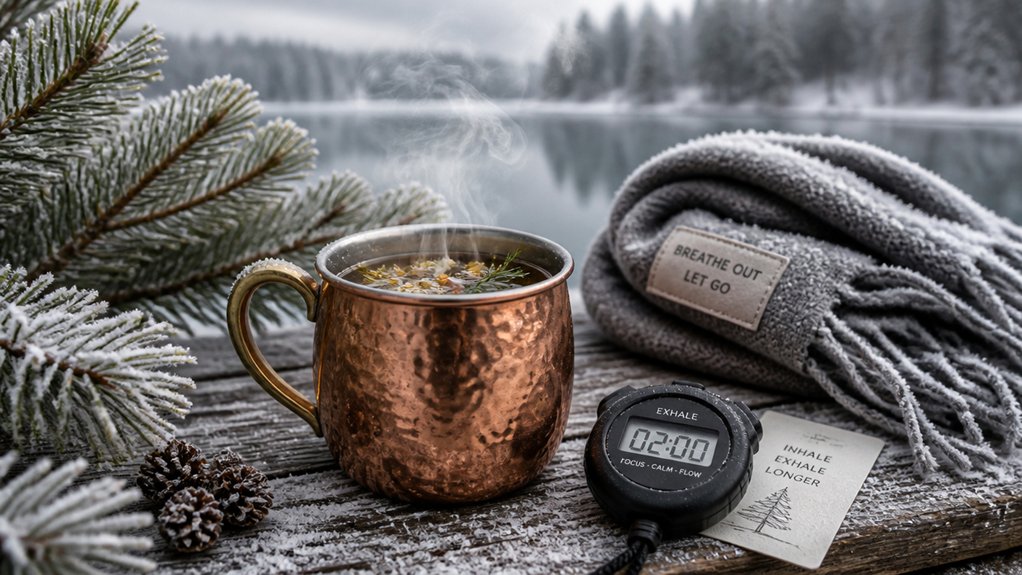
To start, focus on lengthening your exhalations to 6-8 seconds with pursed lips, which helps activate your relaxation response during cold immersion.
Before entering the water, practice slow, controlled breaths to sync your breathing pattern and build confidence.
During immersion, keep your exhale steady and avoid breath holds to stay calm and prevent panic.
Emphasize Longer Exhales
Incorporating longer exhales into your cold immersion routine is a simple yet powerful way to stay calm and manage stress. Lengthening your exhale to 6-8 seconds activates the parasympathetic nervous system, helping you reduce stress and mitigate cortisol spikes.
Use controlled breathing with pursed lips to slow your exhalation, promoting relaxation and preventing panic. Focus on a breathing pattern where your exhale is twice as long as your inhale, which supports better heart rate variability.
To deepen your practice:
- Gently exhale through pursed lips, imagining tension leaving your body.
- Extend your exhale to 6-8 seconds during each breath cycle.
- Inhale softly through your nose, maintaining a steady rhythm.
- Visualize relaxation as you focus on lengthening the exhale, reinforcing calmness and resilience.
Sync Breaths With Cold
Syncing your breaths with cold exposure helps you stay calm and controlled during immersion. Focus on a breathing technique where you inhale gently through your nose for 4 seconds, allowing your belly to expand. Then, exhale slowly through pursed lips for about 6 seconds to stimulate parasympathetic activity and counteract cold stress. Regularly practicing lengthened exhale cycles reduces cortisol spikes and prevents panic responses triggered by cold shock. Avoid breath holding—steadiness is key to managing the gasp reflex and maintaining relaxation. After immersion, continue diaphragmatic breathing to support recovery and thermogenic adaptation.
| Cold Stress Response | Breathing Technique |
|---|---|
| Cortisol spikes | Lengthened exhale |
| Gasp reflex | Controlled exhale |
| Parasympathetic | Diaphragmatic breathing |
| Cold shock panic | Steady rhythmic breathing |
| Recovery boost | Exhale-focused focus |
Practice Before Immersion
Before stepping into cold water, start with slow, controlled exhalations through pursed lips for about six seconds. This exhale-focused breathing technique stimulates parasympathetic activity, helping you relax and reduce the cold shock response.
Incorporate deep breaths, long calm exhales, and avoid breath holds to minimize panic.
To prime your nervous system effectively:
- Practice controlled exhale-focused breathing seated or lying down to prevent dizziness.
- Use box breathing—equal counts for inhale and exhale—for balanced relaxation.
- Begin with 3-4 deep nasal inhales paired with long, calm exhales to prepare.
- Focus on calm exhales to regulate your breathing rhythm, easing tension during immersion.
This approach creates a mindful foundation, reinforcing calmness and breath control before facing the cold.
Frequently Asked Questions
Can Exhale-Focused Breathing Improve Recovery After Cold Immersion?
Yes, exhale-focused breathing can improve your recovery after cold immersion by promoting relaxation, reducing stress hormones, and enhancing circulation, which helps your body recover faster and mitigate the discomfort associated with cold exposure.
How Long Should I Practice Exhale-Focused Breathing Before Cold Exposure?
You should practice exhale-focused breathing for about 5 to 10 minutes before cold exposure. This duration helps you calm your nervous system and prepare your body to handle the cold more effectively and safely.
Is Exhale Extension Safe for Individuals With Respiratory Conditions?
Exhale extension may be risky for individuals with respiratory conditions. You should consult your healthcare provider first, as intensified breathing exercises might trigger symptoms or complications, and personalized guidance guarantees safe practice for your health.
Can Breath Temperature Awareness Prevent Hyperventilation During Cold Immersion?
Yes, by paying attention to your breath temperature, you can recognize signs of hyperventilation early. This awareness helps you slow your breathing, maintain control, and prevent over-breathing during cold immersion sessions, ensuring safety and comfort.
How Does Exhale-Focused Breathing Affect Mental Clarity During Winter Dips?
Exhale-focused breathing sharpens your mental clarity during winter dips by calming your nervous system and increasing oxygen efficiency. You’ll feel more centered, alert, and in control, helping you navigate cold exposure with greater confidence and focus.