To boost your cold plunge routine, focus on three top strength activations: dynamic bodyweight exercises like jumping jacks and lunges to increase circulation and activate large muscles, foam rolling to loosen tissues and improve mobility, and plyometric drills such as jump squats to elevate muscle temperature and neuromuscular drive. These steps help prevent injury and enhance performance. Keep going to discover how combining these can optimize your cold plunge experience even further.
Why a Proper Warm-Up Enhances Your Cold Plunge Experience
A proper warm-up greatly boosts your cold plunge experience by preparing your muscles and circulation. Increasing your muscle temperature and blood flow helps counteract vasoconstriction caused by the cold, reducing stiffness and discomfort.
A warm-up also facilitates faster muscle rewarming after the plunge, enhancing mobility and performance. Activating your muscles through dynamic exercises primes the neuromuscular system, which increases norepinephrine levels and boosts alertness. This process helps maintain muscle contractility despite the cold, lowering injury risk and preventing muscles from becoming overly stiff or strained.
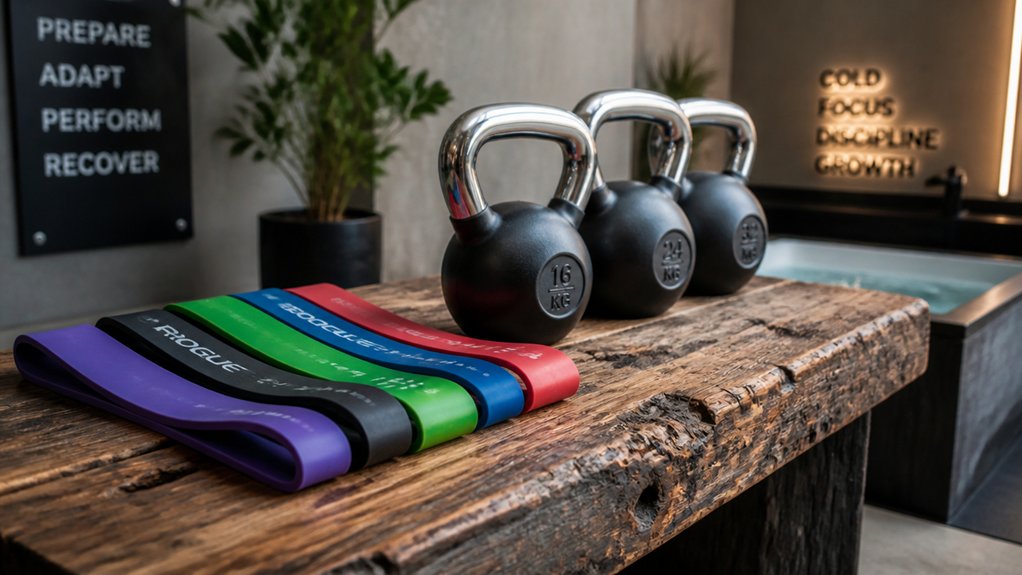
Additionally, a warm-up balances the sympathetic activation from cold exposure, ensuring your muscles are ready for physical activity. Incorporating resistance bands into your warm-up routine can enhance muscle activation and stability, making the cold plunge even more effective. Overall, it creates a safer, more effective, and more invigorating cold plunge experience.
Top Bodyweight Exercises to Activate Your Muscles
Preparing your muscles with dynamic bodyweight exercises before a cold plunge can greatly enhance your overall experience. Incorporate exercises like jumping jacks and high knees to boost muscle activation by increasing heart rate and circulation. Lunges and inchworms improve joint mobility and activate large muscle groups, aiding post-plunge rewarming. Push-ups target upper body muscles, priming neural pathways for strength activation. Glute bridges engage posterior chain muscles—glutes and hamstrings—ensuring key muscles are awake despite cold exposure. Perform 2–3 sets of 8–12 reps with controlled movements to optimize activation without fatigue. Additionally, selecting a suitable foam roller can help further prepare and loosen muscles prior to your plunge.
Using Plyometric Drills to Boost Blood Flow and Performance
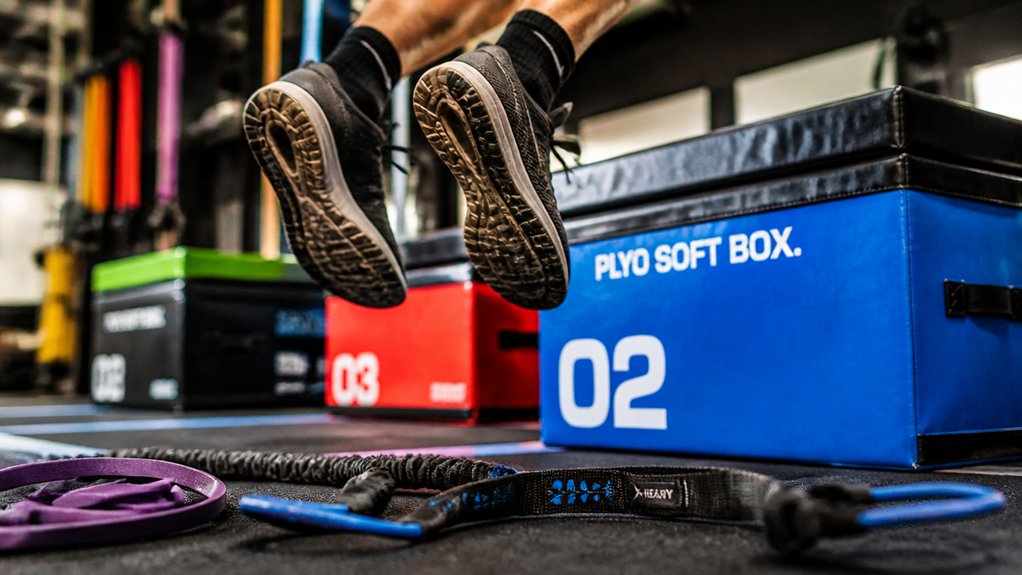
Incorporating plyometric drills like jump squats and bounding before a cold plunge can greatly boost blood flow and muscle temperature, effectively priming your neuromuscular system. These explosive movements increase circulation and elevate muscle temperature, preparing your body for cold immersion.
Performing 3-5 minutes of plyometric exercises enhances circulatory dynamics, promoting faster muscle rewarming and reducing stiffness after the plunge. This dynamic warm-up also elevates motor unit recruitment and neural drive, counteracting the temporary decline in muscle power caused by cold exposure.
Additionally, plyometric activity combined with controlled breathing activates the sympathetic nervous system, boosting norepinephrine release and alertness. Incorporating the right temperature therapy features into recovery routines can further optimize these benefits, especially with devices that offer rapid heating and cooling. Overall, integrating these drills or pairing with suitable percussion massagers enhances muscle contractility and joint mobility, setting the stage for improved performance and recovery following your cold plunge routine.
Frequently Asked Questions
What Is the 3-3-3 Rule for Workout?
The 3-3-3 rule involves doing 3 sets of 3 different strength activation exercises, each with 3 repetitions. You perform these quickly to boost blood flow, nervous system engagement, and muscle readiness before your cold plunge.
Should I Cold Plunge Before or After I Workout?
You should avoid cold plunging immediately before or after your workout if your goal is muscle growth. Instead, do it 4-6 hours afterward or in the morning to support recovery without hindering strength and hypertrophy.
How to Maximize Strength Before a Workout?
To maximize strength before your workout, perform dynamic warm-ups with compound movements, include ramp-up sets to engage neural pathways, and incorporate explosive exercises. Activate stabilizer and core muscles for peak performance and injury prevention.
How to Activate Muscles Before a Workout?
You should perform dynamic warm-ups like bodyweight squats, lunges, and leg swings to boost blood flow and activate muscles, incorporate explosive movements for CNS engagement, and include specific drills like glute bridges to prepare your muscles effectively.