To prepare for an ice bath in five minutes, focus on dynamic movements like arm circles, leg swings, and torso twists to quickly boost blood flow and warm muscles. Incorporate light cardio such as jogging or jumping jacks for a minute or two to elevate your heart rate. Finish with controlled breathing to relax your nervous system. Staying active and mindful helps reduce injury risk and improves cold tolerance. Keep exploring for more tips to optimize your warmup now.
Why Warming Up Is Important Before Your Ice Bath
Warming up before an ice bath is essential because it prepares your muscles and circulatory system for cold exposure. When you increase your body’s warmth, blood flow improves, helping your muscles stay more elastic and reducing stiffness. This boost in circulation supports better muscle performance during and after the cold plunge, minimizing the risk of injury or discomfort. Additionally, preparing your body with a warm-up routine enhances the effectiveness of your cold exposure by promoting more controlled vasoconstriction and ensuring safety. A brief warmup, such as light jogging or arm and leg rotations, gradually elevates your muscle temperature, maintaining muscle contractility and preventing performance impairment caused by cold. Starting with a warm body also helps ease your nervous system into the cold stress, making the shift smoother.
How Proper Warmup Preparation Enhances Cold Water Tolerance
By warming up first, you boost your muscle warmth and body temperature, making the cold less intense. Active movements increase circulation, helping your body handle vasoconstriction more comfortably.
This preparation not only improves cold tolerance but also reduces the risk of injury during your ice bath.
Increases Muscle Warmth
Engaging in a proper warmup before an ice bath raises your muscles’ temperature, which enhances blood flow and makes cold water immersion more comfortable. When your muscle temperature increases, your tissues become more flexible, reducing stiffness and easing the body’s adjustment into cold water. This process also supports nervous system adaptation, helping manage cold stress better. Material durability plays a role in how well your suit retains heat and protects against the cold. By elevating your muscle warmth, your cardiovascular system prepares for rapid temperature shifts, improving your cold tolerance. The warmer muscles act as a buffer, reducing shock and discomfort during immersion.
Prepares Body Temperature
A proper warmup raises your core body temperature and boosts blood flow, which helps your body better handle the shock of cold water immersion. Increasing your body temperature through a quick warmup prepares your nervous system and reduces cold shock response.
Here, utilizing a percussion massager with heat and cold therapy can further enhance circulation and muscle readiness before your ice bath.
Here’s how it works:
- Raising muscle temperature decreases stiffness and cramping risk.
- Elevating blood flow enhances circulation, promoting faster adaptation.
- A 5-minute warmup slightly increases your core temperature by 1–2°C.
- Warmer muscles and improved blood flow stabilize your blood vessels, easing vasoconstriction during immersion.
This preparation helps you tolerate cold water more comfortably and safely, making the overall experience less stressful on your body.
Proper warmup sets the stage for better cold water adaptation and reduces discomfort.
Reduces Injury Risk
Performing a proper warmup before an ice bath directly minimizes your risk of injury during cold exposure. A good warmup raises muscle temperature, which improves blood flow and keeps your muscles flexible.
Increased circulation from dynamic movements like light jogging or arm rotations helps the blood vessels respond better to sudden cold water immersion. When your muscles are warmer, they’re less prone to stiffness, cramps, or spasms, which can cause injury.
A gradual increase in heart rate during warmup also primes your nervous system, making your body more adaptable to cold stress. Starting with warmed muscles guarantees a quicker vascular response, reducing discomfort caused by vasoconstriction. Overall, a proper warmup enhances safety and protects you from cold-related muscle damage. Resistance bands can be an effective tool for engaging muscles in a controlled, low-impact manner before your ice bath.
Essential Exercises to Warm Up for an Ice Bath
To prepare your muscles for an ice bath, start with dynamic movements like arm circles, leg swings, and torso twists to increase blood flow.
Incorporate light exercises such as jogging in place or hopping to raise your heart rate gradually.
Finish with brief dynamic stretching to keep your muscles flexible and ready for cold exposure.
Additionally, using foam rollers to target specific muscle groups can help release tension and enhance circulation before the cold plunge.
Dynamic Movement Activation
Engaging in dynamic movements before an ice bath triggers your muscles and nervous system, helping you warm up efficiently and prepare for cold water immersion.
These exercises activate major muscle groups and increase muscle blood flow, essential for stability and comfort during cold exposure.
Focus on:
- Arm circles to loosen shoulders and upper back
- Leg swings to stretch hip flexors and hamstrings
- Torso twists to warm core muscles
- Light jogging or hopping to elevate heart rate
Incorporating respiratory training tools into your routine can also enhance breathing efficiency and resilience, contributing to safer cold plunges.
Gradual Heart Rate Increase
Building on the dynamic movements to activate your muscles, gradually increasing your heart rate prepares your body for the cold challenge ahead. Start with 1-2 minutes of light cardio like brisk walking or jogging in place to slowly elevate your heart rate. This helps stimulate circulation and warms your muscles without causing fatigue.
Incorporate gentle motions like arm circles and leg swings to boost blood flow and improve joint mobility. Perform light hops or step-touches for another 1-2 minutes to keep circulation moving and maintain an elevated heart rate.
Aim to raise your heart rate to about 50-60% of its maximum, which increases core temperature and reduces shock during the ice bath. This gradual approach guarantees your body is prepared and resilient for the cold immersion. Foldable designs enable quick setup and easy adjustment during your warmup routine.
Best Dynamic Movements to Increase Blood Flow Quickly
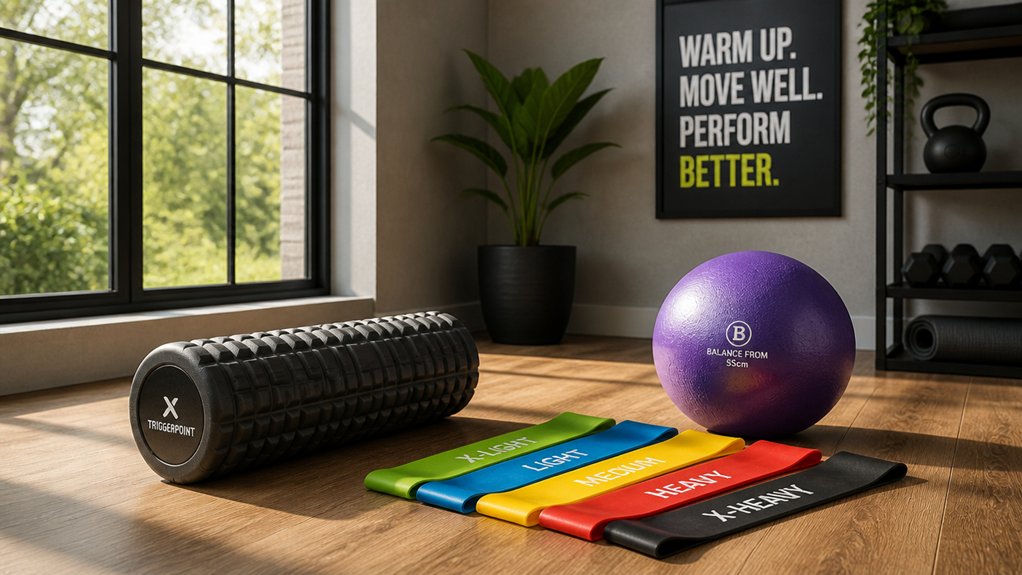
Jumpstart blood flow quickly with dynamic movements that activate large muscle groups and get your heart pumping. These movements boost circulation, warm muscles, and prepare your body for the cold ice bath. Incorporating exercises with precise interval timing can enhance the effectiveness of your warm-up routine. Focus on exercises that engage multiple joints and muscle groups for maximum effect. Here are the best dynamic movements to incorporate:
Activate large muscles and boost circulation quickly with dynamic movements before your ice bath.
- Arm circles and torso twists to promote upper body blood flow
- Leg swings and bodyweight squats to stimulate lower limb circulation
- High knees and jumping jacks to elevate heart rate rapidly
- Lunges and brisk walking to activate both upper and lower body muscles
Perform these with continuous motion for about 5 minutes, ensuring better circulation and reducing cold shock during your ice bath adjustment.
Light Cardio Activities to Elevate Your Heart Rate
Starting with light cardio activities like jogging or marching helps raise your heart rate gradually and prepares your body for the cold bath.
You can also include jumping jacks or gentle arm circles to boost circulation without causing fatigue.
These movements warm your muscles and improve blood flow, making your ice bath more comfortable.
Jogging or Marching
Engaging in light jogging or marching for 1 to 3 minutes quickly elevates your heart rate and stimulates blood flow to your muscles, making cold immersion safer and more effective.
This simple movement prepares your body by warming muscles and easing the shock of cold water.
To maximize benefits, focus on:
- Increasing your heart rate gradually for smoother circulation
- Enhancing muscle blood flow to reduce injury risk
- Activating your nervous system for better cold tolerance
- Boosting alertness and mental readiness before the ice bath
Jumping Jacks
Have you considered how a few minutes of jumping jacks can effectively elevate your heart rate and prepare your body for an ice bath? These dynamic movements promote flow, engaging multiple muscle groups and boosting circulation. Performing jumping jacks for 1-2 minutes increases blood flow, warming your muscles efficiently and reducing cold shock. This light cardio activity activates your nervous system, improving your overall performance in cold immersion.
| Benefit | Effect | Why It Matters |
|---|---|---|
| Elevates heart rate | Prepares body quickly | Prevents sudden cold shock |
| Engages multiple muscles | Promotes full-body warmth | Guarantees balanced flow |
| Improves oxygen flow | Enhances cold tolerance | Boosts overall performance |
| Activates nervous system | Smooths shift to cold water | Minimizes discomfort |
| Enhances circulation | Supports quick recovery | Optimizes warm-up effect |
Arm Circles
Arm circles are an effective way to gently increase blood flow to your shoulders and arms, preparing them for cold exposure in an ice bath. Performing arm circles for 1-2 minutes at a controlled pace elevates your heart rate slightly, helping to raise your core body temperature.
Small to large circular motions engage the deltoids, rotator cuff, and surrounding muscles, improving joint mobility and reducing stiffness. Additionally, arm circles activate your nervous system, promoting neuromuscular coordination. By doing this, your body can better tolerate the shock of cold water.
To maximize benefits:
- Start with small circles and gradually increase size
- Keep movements controlled for safety
- Focus on smooth, consistent rotations
- Repeat for 1-2 minutes for peak blood flow and nervous system activation
Stretching and Mobility Drills to Prepare Your Muscles
To effectively prepare your muscles for an ice bath, focus on dynamic stretches and mobility drills that increase blood flow and loosen joints. Perform movements like leg swings, hip rotations, and arm circles for 3–5 minutes to gently mobilize major joints.
Incorporate mobility drills targeting your neck, shoulders, hips, and ankles to boost movement range and reduce stiffness from cold exposure. Light dynamic movements such as walking lunges or knee hugs help warm your muscles and ready them for vasoconstriction during the ice bath.
Avoid static stretching, as cold temperatures can stiffen muscles further. With smooth, controlled motions, these drills activate your nervous system and promote gradual acclimation, making your cold exposure safer and more effective.
Breathing Techniques to Manage Cold Shock and Anxiety
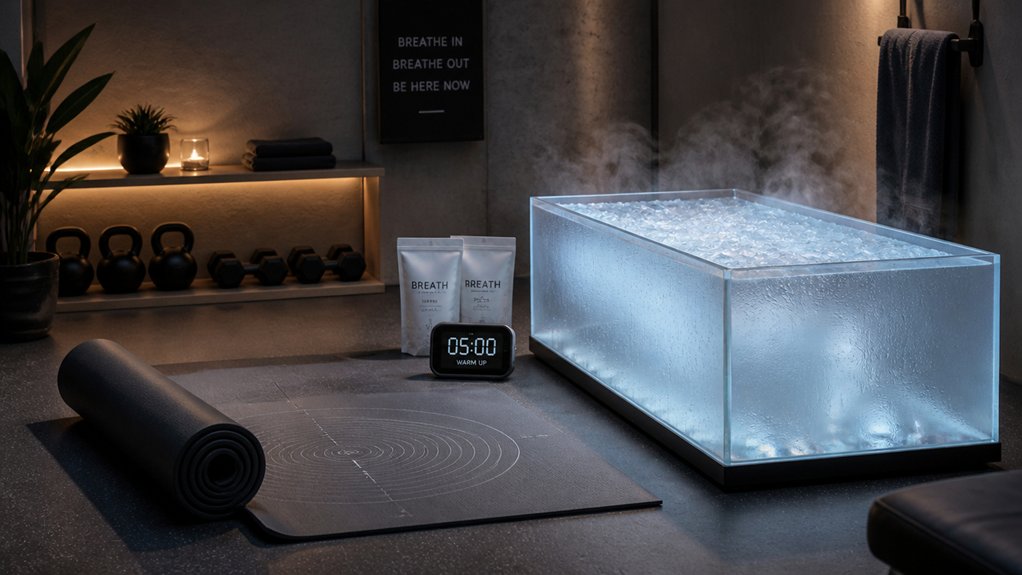
After preparing your muscles with dynamic stretches and mobility drills, focusing on your breathing can greatly influence how you handle the cold shock during an ice bath. Proper breathing calms the nervous system, reducing the cold shock response and anxiety.
Use these techniques:
- Practice diaphragmatic breathing with slow, deep nasal breaths and controlled exhalations to activate your parasympathetic nervous system.
- Implement a 4-7-8 breathing pattern—inhale for 4 seconds, hold for 7 seconds, exhale for 8 seconds—to lower your heart rate before the cold plunge.
- Focus on controlled breath-holding with slow exhalations during the initial 30 seconds of immersion to increase pain tolerance.
- Spend 2-3 minutes consciously breathing to prepare your mind and body, easing the shock and reducing involuntary gasp reflex.
How to Customize Your Warmup Based on Your Exercise Type
Your warm-up should match your activity to maximize effectiveness and reduce injury risk.
For running, incorporate light jogging or leg swings, while weightlifting benefits from easy sets targeting the same muscles.
If you’re into martial arts, focus on mobility drills and sport-specific moves to prepare your body for action.
Dynamic Movements for Running
Tailoring your warmup with specific dynamic movements prepares your muscles effectively for running, especially before an ice bath. These movements help increase blood flow and muscle temperature, reducing injury risk.
To customize your warmup:
- Perform leg swings and high knees to activate your quadriceps and hamstrings.
- Use butt kicks to engage your calves and improve flexibility.
- Incorporate walking lunges to stretch hip flexors and activate lower-body muscles.
- Add light jogging or brisk walking for 1-2 minutes to further boost blood flow and elevate your heart rate.
Focusing on exercise-specific dynamic movements primes your body efficiently, preparing your muscles for running and cold exposure. This targeted warmup guarantees your muscles stay elastic and reduces cold-induced stiffness.
Warm-Up for Weightlifting
Customizing your warm-up routine for weightlifting involves more than just a few light sets; it requires specific exercises that prepare your muscles and joints for the demands of your workout.
Start with 3–5 minutes of light aerobic activity, like brisk walking or cycling, to boost blood flow and raise muscle temperature. Incorporate dynamic stretches and mobility exercises targeting major muscle groups—think leg swings, arm circles, and hip openers—to improve joint range of motion and reduce injury risk.
Begin with warm-up sets at 40–60% of your working weight, performing 8–12 reps to activate muscles and nervous system. Adjust the warm-up intensity and duration based on your workout’s heaviness, promoting better recovery time and minimizing muscle soreness post-exercise.
Completing this 5-minute routine guarantees muscles are prepared without excessive fatigue.
Martial Arts Activation Techniques
To effectively prepare for an ice bath after martial arts, focus on a dynamic warmup that emphasizes movement and sport-specific activation. You want to boost muscle blood flow and prime your nervous system for cold immersion.
Start with:
- Perform light kicks, punches, and joint rotations to activate key muscle groups.
- Incorporate sport-specific drills like shadowboxing or quick footwork for 2–3 minutes to improve coordination.
- Include dynamic stretching of hips, shoulders, and core to reduce stiffness risks during the cold bath.
- Add brief cardio like jumping jacks or light jogging for 1–2 minutes to elevate heart rate and optimize circulation.
Adjust warmup intensity based on your martial arts style to balance muscle readiness and energy conservation before the ice bath.
Signs You’re Ready for the Cold Water Dip
Are you physically and mentally prepared to plunge into the cold water? Signs you’re ready for the ice bath include a steady heart rate with no dizziness or lightheadedness during your warmup, indicating your cardiovascular system can handle the shock of cold water immersion.
Feeling mentally alert and calm shows you’re ready to face the initial cold shock. If your muscles feel relaxed with no stiffness or tension, circulation has improved, lowering injury risk during water immersion on muscle.
A mild sweat suggests your body temperature has risen enough to maximize cold exposure benefits. Additionally, consistent deep breathing and controlled respiration help you stay focused and manage discomfort.
When these signs align, you’re equipped to safely enjoy the benefits of the cold water dip.
Relaxation Tips to Ease Discomfort During Your Ice Bath
Wondering how to make your ice bath more tolerable? Relaxation techniques can help ease discomfort during immersion. Focus on:
- Deep, slow diaphragmatic breathing to activate your parasympathetic nervous system and reduce shock.
- Practicing mindfulness meditation to stay present, observing sensations without judgment, which manages pain and stress.
- Visualizing warmth spreading through your body to mentally counteract the cold.
- Gradually tensing and relaxing muscle groups to promote circulation and distract from cold sensations.
These strategies encourage relaxation and shift your mindset toward benefits like reduced inflammation and endorphin release.
Timing Your Warmup to Maximize Cold Tolerance
Timing your warmup correctly can make a noticeable difference in how well you tolerate the cold during your ice bath. Start your warmup 5–10 minutes before entering the ice to elevate core and muscle temperatures, reducing shock and discomfort. Engage in dynamic movements like jogging, arm circles, or leg swings to boost blood flow and prepare your body for cold immersion. Finish the warming activity about 2 minutes before stepping into the ice, allowing your heart rate to stabilize while keeping muscles warm.
| Warmup Timing | Key Benefit | Recommended Duration |
|---|---|---|
| 5–10 minutes before | Elevates body temperature | 3-5 minutes |
| 2 minutes before | Stabilizes heart rate | Brief cool-down |
| During cold immersion | Vasodilation for tolerance | Immediate shift |
Equipment and Space Tips for a Safe Warmup Routine
Creating a safe and effective warmup environment starts with selecting the right space and equipment. Choose a spacious, non-slip area to perform dynamic movements like hops, arm circles, and leg swings comfortably and safely.
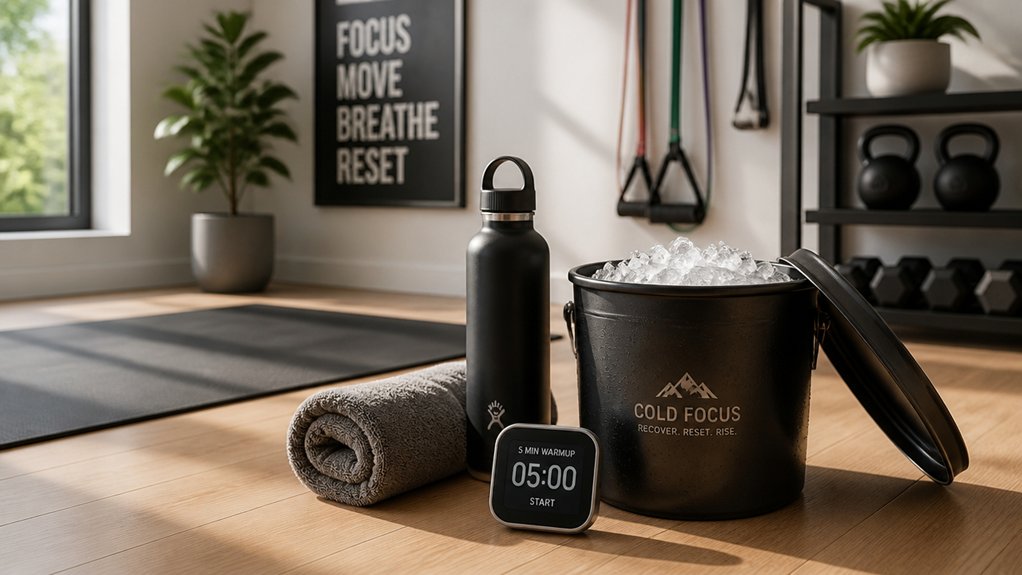
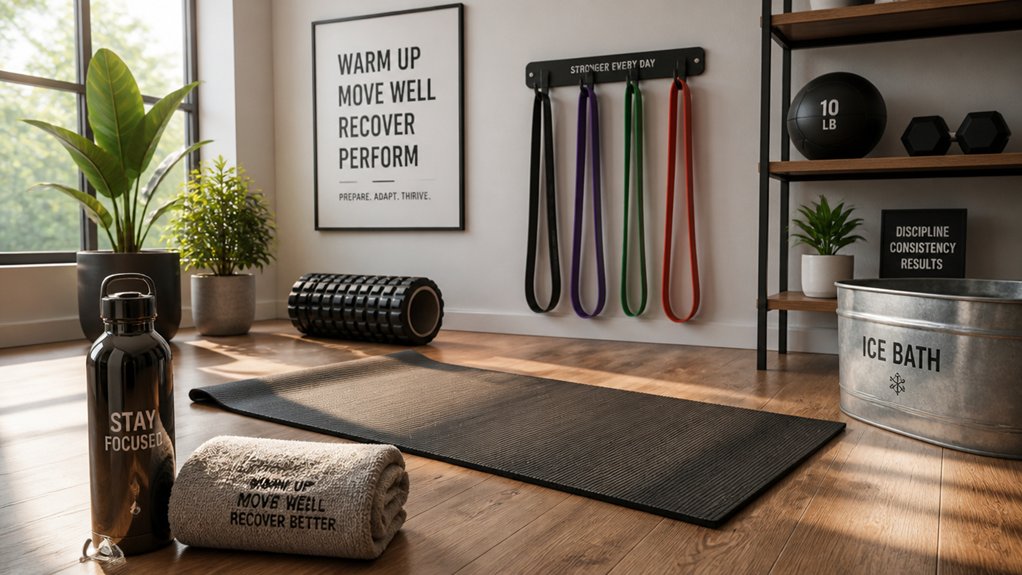
To enhance stability, use a yoga or exercise mat, which offers cushioning and prevents slipping. Wear breathable, moisture-wicking clothing to move freely and prepare your body for cold immersion. Keep a timer or stopwatch nearby, and set it for 1 to 3 minutes to guarantee your muscles warm up properly without fatigue.
Additionally, have a water bottle accessible to stay hydrated before entering the ice bath. Proper space and equipment setups help optimize your warmup, reduce injury risk, and improve your overall cold therapy experience.
Common Mistakes to Avoid When Warming Up for an Ice Bath
Failing to avoid common mistakes during your warm-up can negate its benefits and increase the risk of injury or discomfort before an ice bath. Avoid intense or prolonged warm-ups that overly elevate body temperature, as this can cause shock when entering an ice bath.
Skipping dynamic movements can leave blood flow and muscle function insufficiently prepared; static stretching alone isn’t enough. Timing matters—finish your warm-up at least 5-10 minutes before cold immersion to prevent muscle stiffness.
Never skip warming up altogether, as cold muscles are prone to strain and circulatory stress. Also, don’t neglect hydration. Proper hydration guarantees your muscles function well and reduces cold intolerance and cramps during the ice bath.
Avoid these mistakes to optimize your warm-up routine and safety.
Transition Strategies: Moving Smoothly From Warmup to Cold Plunge
Once you’ve completed your warm-up, it’s essential to shift carefully to the cold plunge to maximize safety and comfort. Let your body temperature stabilize for 3-5 minutes to prevent excessive shock.
Transition smoothly to cold plunge after warm-up, allowing 3-5 minutes for stabilization to ensure safety and comfort.
Reduce the sudden temperature contrast by rinsing off sweat with cool water before immersion might help your body adapt smoothly. Perform light, controlled breathing exercises to regulate your heart rate and prepare mentally for cold exposure.
Dress appropriately in swimwear or shorts to maintain mobility and prevent overheating. Plan to enter the ice bath gradually, lowering yourself in slowly rather than plunging abruptly. This approach helps maintain the flow to the muscles, minimizes cold shock, and reduces perceived muscle tension during immersion.
Taking these steps guarantees a safer, more comfortable shift into the cold plunge.
Frequently Asked Questions
What Should I Do Before an Ice Bath?
Before an ice bath, you should do light aerobic activity, dynamic stretches, hydrate, check water temperature, limit immersion to 2-5 minutes, and wear appropriate clothing like a swimsuit, ensuring your body is prepared and safe for cold exposure.
What Are 5 Warm-Up Exercises?
You can do arm circles, leg swings, light jogging, torso twists, and shoulder shrugs. These exercises activate muscles, increase circulation, and prepare your body for cold immersion, helping you get the most benefit and minimize discomfort during the ice bath.
Can Ice Baths Help With Lipedema?
Ice baths might help reduce inflammation and provide short-term pain relief for lipedema, but you should consult your healthcare provider first. Use moderate temperatures and brief durations to avoid worsening circulation issues, and always prioritize safety.
Do Ice Baths Reduce DOMS?
Yes, ice baths can reduce DOMS by constricting blood vessels and decreasing inflammation, which numbs pain. Using them immediately after intense exercise for 2-10 minutes at 50-59°F can help, but don’t overuse to avoid hampering muscle adaptation.