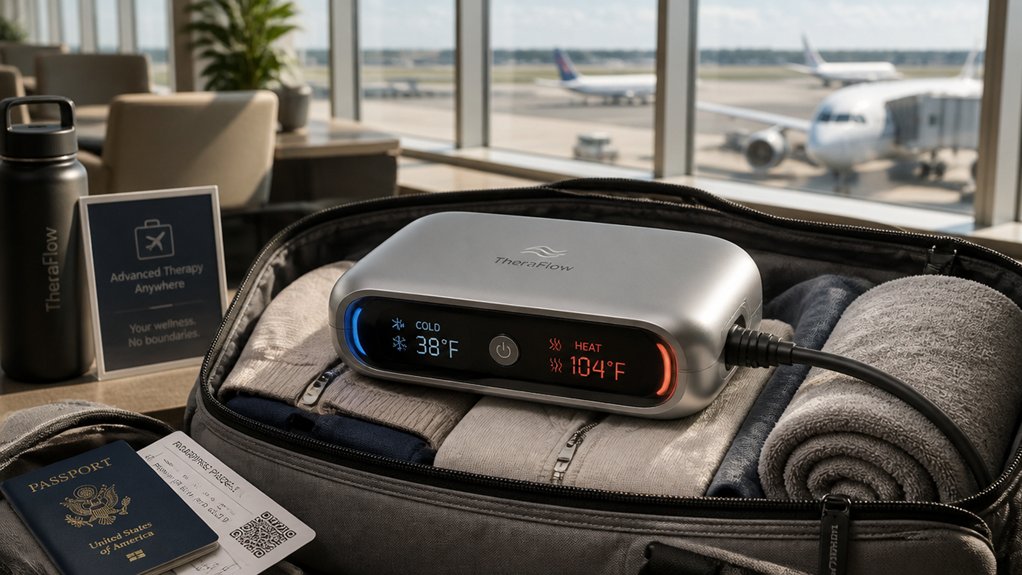
Combining heat and cold therapy during travel helps you reduce inflammation, relieve muscle soreness, and speed up recovery. Cold therapy minimizes swelling and pain right after activity or long flights, while heat boosts circulation and relaxes tense muscles. Alternating between these treatments maximizes circulation, clears waste, and eases stiffness. If you want practical tips and tools to stay comfortable on the go, sticking with this approach can make a big difference—you’ll discover more effective ways to stay active and pain-free.
What’s the Science Behind Hot and Cold Therapy?
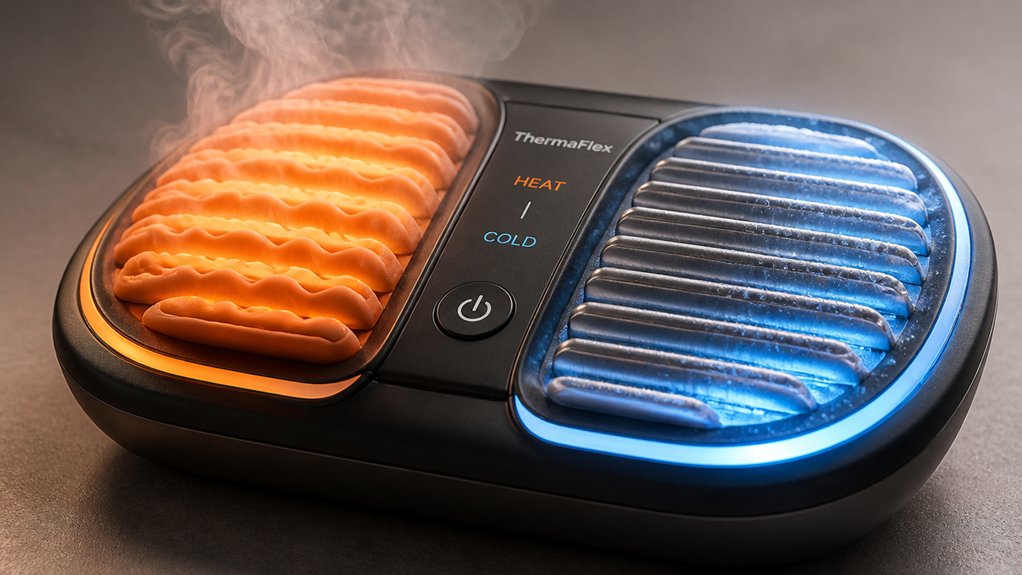
Ever wondered how hot and cold therapies actually work in your body? Heat therapy causes vasodilation, increasing blood flow and delivering nutrients that promote healing. Cold therapy, on the other hand, causes vasoconstriction, reducing inflammation and numbing pain signals. Adjustable heat settings help tailor treatments to individual needs and improve safety during therapy sessions.
Contrast therapy switches between hot and cold, combining the benefits of both: it reduces inflammation, stimulates circulation, and loosens tight muscles. The process involves cold-induced vessel constriction followed by heat-induced dilation, helping flush out cellular waste like lactic acid and speeding up recovery.
Using these therapies in timed cycles—like 1 minute cold, 3–4 minutes heat—can improve pain relief and tissue repair more effectively than using either alone. This modulation of blood flow and inflammation naturally supports your body’s healing process.
How Hot and Cold Therapy Speed Up Travel Recovery
When you’ve been traveling for long periods, your muscles can become stiff, sore, and inflamed, making recovery essential. Combining heat and cold therapy accelerates this process by targeting different issues simultaneously. Cold therapy reduces inflammation and easing muscle pain, while heat therapies improve circulation and flexibility. Contrast therapy, which alternates between one minute of cold and three to four minutes of heat, boosts blood flow and reduces stiffness. It also helps clear metabolic wastes like lactic acid, decreasing fatigue and tightness. Using devices capable of rapid temperature adjustments ensures effective contrast therapy during recovery.temperature regulation Applying this method up to twice daily post-travel supports faster muscle recovery and eases joint stiffness.
Why Alternating Heat and Cold Is Effective for Sore Muscles and Inflammation
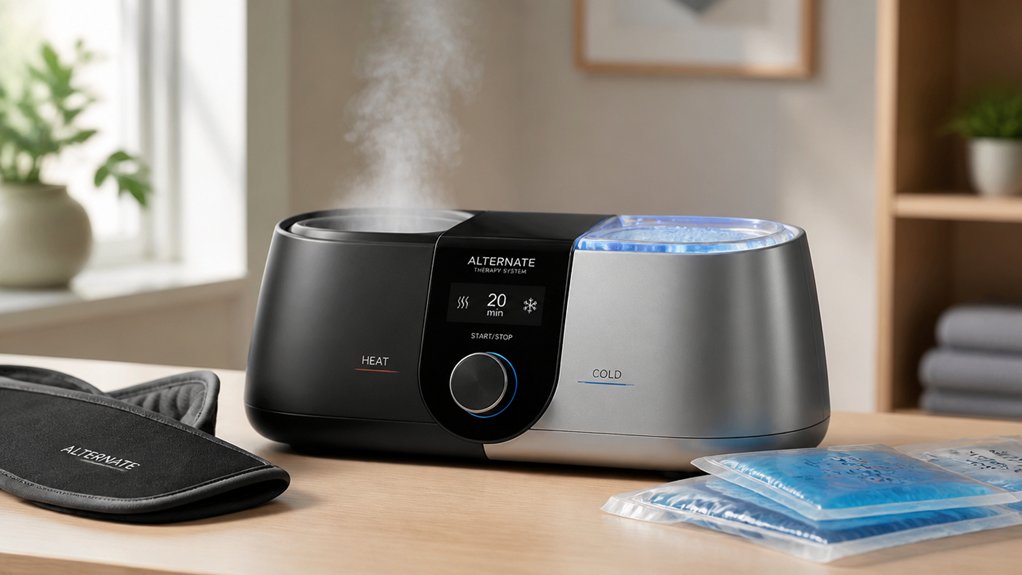
Alternating heat and cold boost circulation by constricting and relaxing blood vessels, helping to reduce inflammation and promote healing. This contrast also eases muscle tension and flushes out waste products like lactic acid, speeding up recovery. Using this method addresses both soreness and swelling naturally, making it highly effective for travel-related discomfort. Incorporating infrared heating pads, which provide deep and targeted heat therapy, can further enhance these benefits.
Stimulates Circulation Effectively
Alternating heat and cold therapy works because it causes your blood vessels to constrict and dilate in sequence, boosting overall blood flow to sore muscles and inflamed areas. This process, known as contrast therapy, effectively enhances circulation.
When you switch between cold and heat, cold causes vasoconstriction, reducing swelling, while heat prompts vasodilation, delivering fresh oxygen and nutrients. Using infrared heat panels can penetrate deeper tissues for more effective relief.
This cycle benefits you in several ways:
- Flushes out metabolic waste like lactic acid
- Promotes faster muscle recovery
- Loosens tight muscles for improved flexibility
- Reduces inflammation more efficiently than heat or cold alone
- Prevents swelling by starting and ending with cold therapy
Reduces Muscle Tension
Combining heat and cold therapy can effectively ease muscle tension and reduce inflammation, making it a valuable tool during travel when muscles often feel stiff or overworked.
Heat therapy relaxes tight muscles by increasing blood flow and nutrient delivery, helping loosen stiff muscles and reduce spasms. Cold therapy, on the other hand, reduces inflammation and swelling while numbing pain signals.
Alternating between the two causes blood vessels to constrict and dilate, improving circulation and flushing out inflammatory substances that contribute to soreness. This contrast therapy’s rapid temperature shifts help decrease muscle spasms without the tightness often caused by ice alone. Additionally, using targeted muscle scraping tools can enhance these effects by breaking down fascia restrictions and promoting further circulation.
Using short cycles of heat followed by cold makes muscles more flexible and decreases soreness, offering relief during and after long journeys.
Manages Inflammation Naturally
Because fluctuating between hot and cold treatments affects your blood vessels, this approach naturally reduces inflammation and boosts circulation. Alternating heat and cold therapy helps manage soreness by stimulating blood flow and minimizing swelling.
Cold therapy reduces inflammation and numbs pain through vasoconstriction, while applying heat afterward encourages vasodilation, delivering oxygen and nutrients for healing. This contrast therapy, cycling about one minute cold with three to four minutes heat, balances inflammation control with muscle relaxation.
It also helps flush out cellular waste and lactic acid buildup, speeding recovery. Beginning and ending with cold limits excessive inflammation, while the heat phase promotes healing. Using foam rollers with firm support and textured surfaces can enhance the benefits of contrast therapy by ensuring targeted muscle relief and proper pressure.
- Use cold therapy to reduce swelling
- Apply heat to stimulate blood flow
- Cycle for effective inflammation management
- Natural relief without medication
- Optimize recovery through contrast therapy
Top Tips for Using Hot and Cold Therapy While Traveling
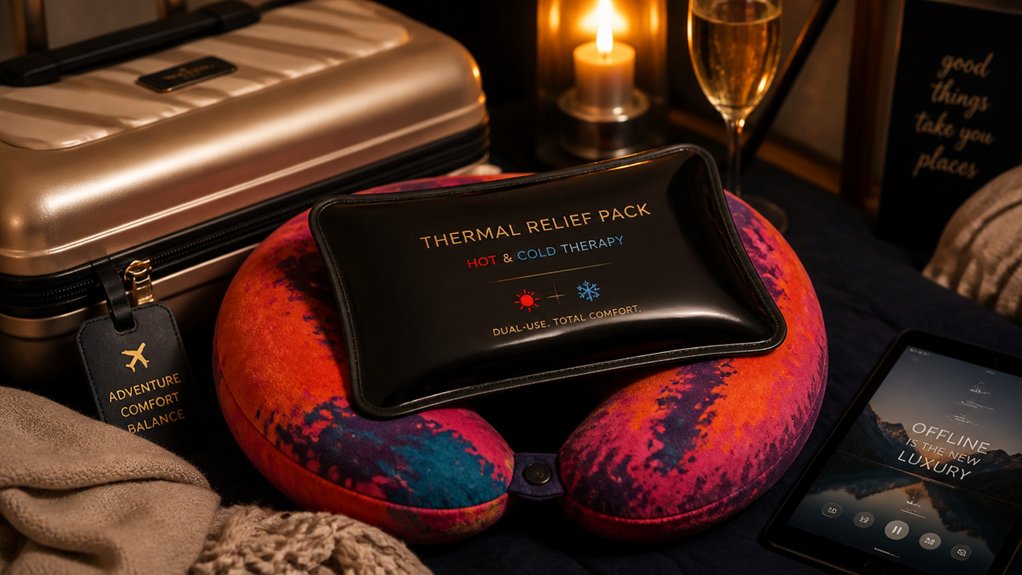
Having a compact therapy kit makes it easy to manage soreness on the go, whether you’re heating or cooling packs. Always use a cloth between your skin and the packs to prevent burns or frostbite, especially in unfamiliar settings. Target common sore areas with small, flexible packs for quick relief during travel breaks, keeping safety and convenience in mind. Incorporating versatile, reusable gel ice packs can provide long-lasting relief while traveling.
Compact Therapy Kits
Compact therapy kits are an essential travel companion for quick relief from muscle aches and injuries. They include versatile gel packs that can be microwaved or frozen, making them perfect for on-the-go pain management.
These kits are lightweight and small, easily fitting into your luggage without adding bulk. Use microwavable heat packs or small reusable ice packs for localized treatment anytime, anywhere.
With contrast therapy, you can alternate between cold and heat packs, boosting blood flow and easing tension. Many kits come with features like thin cloth barriers to protect your skin and elastic straps for hands-free use.
Incorporating reusable cold packs into your routine helps ensure reliable, long-lasting relief during your travels.
Top tips for using compact therapy kits:
- Always follow safety instructions for heat and cold application
- Keep ice packs in your freezer, heat packs ready in your microwave
- Use the included barriers for skin safety
- Secure packs with straps to keep hands free
- Alternate cold and heat for effective contrast therapy
Safe Application Tips
When using hot and cold therapy while traveling, safety should always come first to prevent further injury. Always place a thin cloth barrier between your skin and the heat pack or ice pack to avoid burns or frostbite, especially where temperature control might be limited.
Choose portable, microwavable heat packs and small, reusable gel ice packs that are easy to reheat or refreeze in hotel microwaves or airport freezers. Limit hot or cold therapy sessions to 10–20 minutes to avoid skin damage or nerve issues. Avoid applying heat on acute injuries or open wounds.
For contrast therapy, alternate one minute cold with three to four minutes heat, starting and ending with cold, to boost relief and reduce inflammation. Monitor your skin closely and stop if you notice redness, pain, or numbness.
Best Hot Therapy Tools for Travel Relief
Travelers seeking quick relief from muscle discomfort can turn to a variety of hot therapy tools designed for convenience and effectiveness on the go. Microwavable heat packs are perfect for travel relief because they’re compact, reusable, and easy to heat in a microwave or hot water.
These packs conform to your body, providing targeted warmth without hassle.
Here are some top hot therapy tools for travel:
- Microwavable heat packs
- Disposable adhesive heating patches
- Lightweight electric heating pads with USB or battery power
- Microwavable rice or grain-filled cloth bags
- Small hot water bottles with insulated covers
Choose the tool that best fits your needs, and enjoy soothing warmth wherever your journey takes you.
Cold Therapy Techniques Perfect for Travelers
After exploring hot therapy tools that provide soothing warmth on the go, it’s equally important to have effective cold therapy options for quick pain relief during travel. Cold packs, especially portable gel ice packs and small reusable cold packs, fit easily into your luggage without leaks.
DIY options like frozen peas or rice-filled socks pre-chilled in hotel freezers also work well for lightweight cryotherapy. Cold towels soaked, wrung out, and refrigerated briefly offer fast, mess-free cryotherapy. Instant cold packs activated by bending, or cooling sprays, provide targeted relief without bulky equipment.
For hands or feet, partial immersion in cold water and ice cubes using hotel sinks or small basins delivers effective contrast therapy. These techniques keep cold therapy accessible, portable, and practical during your travels.
How to Safely Use Hot and Cold Therapy on the Road: Step-by-Step Guide
Using hot and cold therapy safely on the road involves following simple, effective steps to prevent injury and maximize relief. Start by selecting portable heat and ice therapy packs like microwavable rice bags or small gel ice packs.
When using heat and ice, always place a thin cloth between your skin and the therapy pack to avoid burns or frostbite. For contrast therapy, apply cold for one minute, then switch to heat for three to four minutes, repeating about three times, starting and ending with cold. Consider using local partial immersion methods, such as soaking hands or feet in contrast baths.
Monitor your skin closely—discontinue if pain worsens or skin darkens. Limit sessions to 10–20 minutes, several times daily, for safe, effective relief during travel.
- Use portable therapy packs like rice bags or gel packs
- Always add a cloth barrier between therapy and skin
- Follow contrast cycles: cold for 1 minute, heat for 3-4 minutes
- Use local immersion methods for targeted relief
- Watch for skin reactions and limit session duration
When Should You Use Heat, Cold, or Both During Your Trip?
Knowing when to apply heat, cold, or both during your trip can make a significant difference in managing injuries and discomfort. Use cold therapy, such as ice packs, during the first 24–48 hours of an acute injury to reduce swelling and numb pain.
For muscle stiffness, chronic pain, or after inflammation subsides, Use Heat to increase circulation and relax tense muscles through 15–20 minute sessions.
Contrast therapy combines both: alternate one minute cold with three to four minutes heat, repeating three times, which helps reduce inflammation and boost blood flow. Always start and end with cold to control swelling and avoid worsening inflammation.
Adjust the intensity gradually and use a barrier to protect your skin, ensuring safe, effective pain relief on the go.
Safety Tips for Hot and Cold Therapy During Travel
Make sure to pack portable therapy devices like gel packs or rice bags to control temperature safely while traveling.
Always monitor your skin’s reaction and remove the packs immediately if you notice color changes or discomfort.
Using a cloth barrier and limiting sessions to 10–20 minutes helps keep your therapy safe in unfamiliar environments.
Pack Travel-Ready Devices
When traveling with hot or cold therapy devices, choosing compact, sealed gel packs that can be easily microwaved or frozen guarantees safety and convenience. These packs are easy to pack in your bag, guaranteeing you’re prepared for changing therapy needs on the go.
Always use a thin cloth barrier between the pack and your skin to prevent burns or frostbite. Limit therapy sessions to 10-20 minutes and include breaks to reduce risks.
Consider versatile devices like reusable hot/cold packs or small portable heating pads for flexibility. Keep these tips in mind:
- Pack sealed, travel-friendly gel packs
- Use a cloth barrier when applying therapy
- Follow local regulations for carrying ice or heating devices
- Opt for disposable heat wraps or frozen gel packs
- Make certain your device is safe and easy to use on the move
Monitor Skin Reactions
How can you guarantee your skin stays safe during hot and cold therapy while traveling? The key is to monitor skin color regularly. Bright red skin is expected with heat, but dark red or blistering signals overheating and requires you to stop icing immediately.
Always place a thin cloth between your skin and the packs to prevent burns or frostbite, especially if your sensation is impaired. Limit each session to 10-20 minutes, and avoid falling asleep with packs on to prevent prolonged exposure.
Check for abnormal sensations like numbness, excessive pain, or burning, as these indicate adverse skin or nerve reactions. Never apply therapy on open wounds or infections, and promptly cease treatment if red or blistered skin develops.
Staying vigilant keeps your therapy safe and effective.
Which Travel Injuries Respond Best to Contrast Therapy?
Have you noticed muscle aches or joint discomfort after long flights or extended travel? Contrast therapy is especially effective for travel-related muscle strains and sprains caused by prolonged sitting or heavy luggage. It reduces inflammation while boosting circulation, helping your body recover faster.
You’ll find contrast therapy valuable for:
- Muscle strains from unfamiliar physical activities
- Joint aches in knees, shoulders, and lower back
- Muscle spasms caused by overuse or poor posture
- Repetitive-strain injuries from repetitive travel movements
- Soft tissue soreness from travel-related overexertion
This method works by alternately applying cold and heat, easing stiffness, loosening muscles, and controlling inflammation. While less effective for deep joints like the hips, it still offers significant relief for softer tissues impacted during travel.
Combining Hot and Cold Treatments for Long-Haul Travel and Recovery
Long-haul travel often leaves your muscles stiff, swollen, and sore, but combining heat and cold therapy can speed recovery and ease discomfort. Cold therapy constricts blood vessels, reducing inflammation and swelling, while heat therapy improves circulation and relaxes muscles. Contrast therapy—alternating 1-minute cold with 3-4 minutes hot—effectively alleviates muscle cramps and deep vein pooling. Using heat after cold helps deliver nutrients to tissues and eases tension caused by immobility. Portable heat wraps and gel ice packs make applying this combined treatment simple and safe during or after your journey. To maximize benefits, consider the following:
| Cold Therapy | Heat Therapy |
|---|---|
| Constricts vessels, reduces inflammation | Improves circulation and relaxes muscles |
| Eases swelling, reduces cramps | Promotes faster recovery and nutrient delivery |
FAQs: Hot and Cold Therapy Tips for Travelers
Are you unsure about the best way to use hot and cold therapy while traveling? Contrast therapy can be a game-changer, providing quick pain relief and preventing stiffness.
To maximize benefits, consider these tips:
- Use cold therapy first (about 1 minute) to reduce inflammation
- Follow with hot therapy (3-4 minutes) to loosen muscles
- Apply contrast therapy to hands, feet, or neck with hotel sinks or portable packs
- Carry microwavable heat packs or small ice packs for convenience
- Avoid ending with heat if swelling or inflammation is present
This simple approach helps manage muscle soreness, improve circulation, and recover faster from travel fatigue.
Frequently Asked Questions
Can I Do Hot and Cold Therapy at the Same Time?
You shouldn’t do hot and cold therapy at the same time because it can confuse your body’s signals, reduce effectiveness, and cause counteracting effects like constriction and dilation, which may worsen inflammation instead of improving your condition.
Why Is Ice No Longer Recommended?
Ice is no longer recommended because it can worsen muscle tension, delay healing by reducing blood flow, and risk frostbite if used improperly. Combining heat and cold offers a balanced approach, promoting better recovery and effective inflammation control.
How Long Between Ice and Heat Therapy?
You should wait about one minute after applying ice before switching to heat therapy. This pause allows your skin to recover, reduces the risk of injury, and guarantees effective contrast therapy, typically repeating the cycle three times for best results.
Should You Do Heat or Cold Therapy First?
You should start with cold therapy first. Applying cold initially reduces inflammation and numbs pain, then follow with heat to promote blood flow and relax muscles, helping your body heal effectively during your travels.