Ice baths boost your athletic performance by reducing muscle soreness, inflammation, and fatigue. They trigger vasoconstriction, limiting swelling and waste buildup, then improve circulation when you warm up afterward. This cycle speeds muscle recovery and lowers lactic acid, helping you feel less sore and ready sooner. Plus, cold exposure sharpens mental focus and reduces stress. To learn how to use ice baths safely and effectively, keep exploring these recovery techniques.
How Do Ice Baths Help You Recover After Exercise?
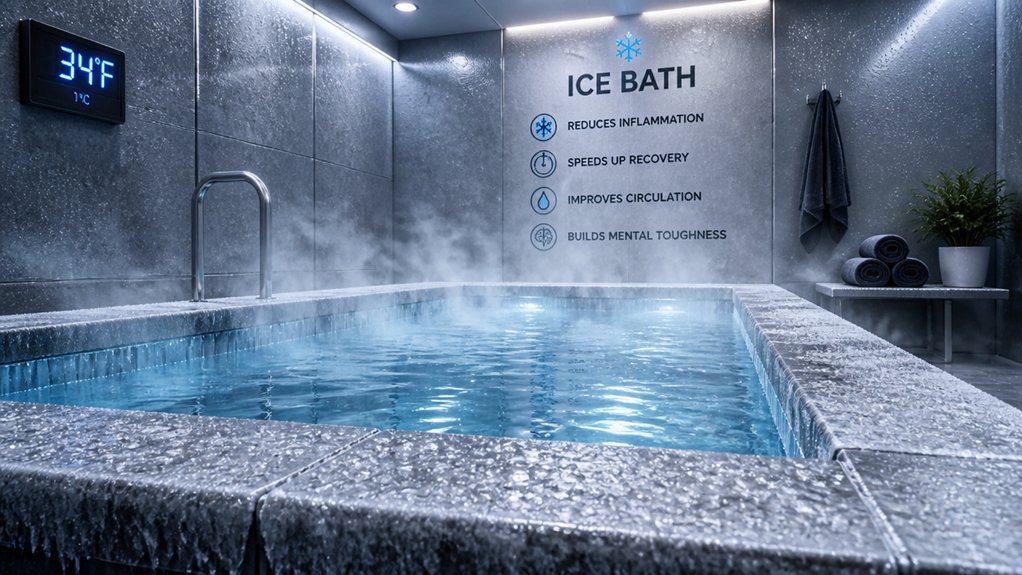
Have you ever wondered why athletes swear by ice baths for recovery? Cold water immersion helps reduce muscle soreness and inflammation after intense exercise.
When you immerse in cold water, vasoconstriction occurs, constricting blood vessels and lowering blood flow to your muscles. This process decreases swelling and tissue breakdown, helping you recover faster. The cold temperature also numbs muscles, temporarily easing soreness caused by delayed onset muscle soreness (DOMS).
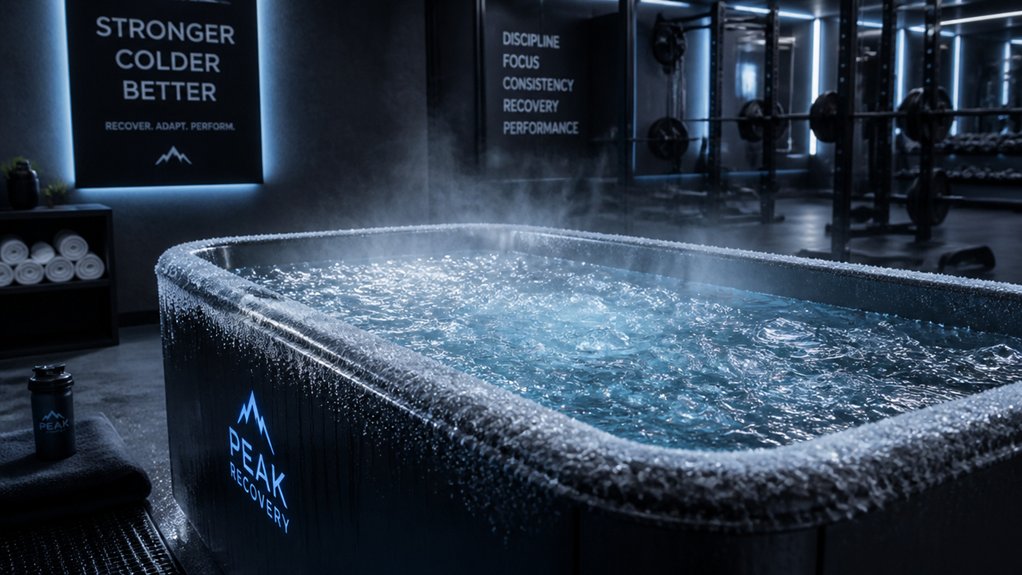
After your ice bath, warming up encourages vasodilation, which boosts nutrient delivery and waste removal. Additionally, cold water immersion slows metabolism and lessens lactic acid buildup, reducing fatigue. Proper insulation and temperature control are crucial to maintaining consistent cold temperatures, enhancing the recovery benefits cold plunge tubs.
Staying in 50°F to 59°F water for 10-15 minutes cools your body temperature, lowers cardiovascular strain, and optimizes muscle recovery, making ice baths a popular recovery method.
How Does Vasoconstriction Improve Circulation and Speed Recovery?
How exactly does vasoconstriction enhance circulation and accelerate recovery after exercise? During an ice bath, vasoconstriction narrows blood vessels, temporarily reducing blood flow to muscles. This limits swelling and inflammation immediately after intense activity, preventing tissue breakdown.
It also helps decrease the buildup of metabolic waste, like lactic acid, around muscle fibers. When you exit the ice bath, vasodilation occurs, restoring blood flow. This surge delivers oxygen and nutrients needed for muscle repair, speeding recovery.
The cycle of vasoconstriction and vasodilation acts as a flushing mechanism, removing cellular waste more efficiently. Controlled vasoconstriction during ice baths supports quicker healing and reduces delayed soreness, helping your muscles recover faster and regain strength swiftly. Additionally, using reliable blood oxygen monitors can ensure optimal recovery by accurately tracking oxygen saturation levels during sessions.
How Can Cold Water Immersion Reduce Muscle Soreness and Inflammation?
Vasoconstriction triggered by cold water immersion plays a key role in reducing muscle soreness and inflammation after intense exercise. When you immerse in ice baths, blood vessels constrict, limiting blood flow, which decreases swelling and inflammation. The numbing effect also helps temporarily dull muscle pain, making soreness less noticeable 12 to 72 hours post-exercise. Once you exit the cold water, vasodilation occurs, increasing nutrient flow and flushing out waste products that contribute to inflammation. This process limits muscle damage and tissue breakdown, ultimately improving recovery time. Additionally, the aromatic botanicals found in recovery creams can provide soothing effects that complement cold therapy for enhanced comfort.
How Do Ice Baths Lower Lactic Acid to Speed Muscle Repair?
Ice baths cause blood vessels to constrict right after exercise, limiting lactic acid buildup in your muscles. When you rewarm in warm water, your vessels dilate again, boosting blood flow and helping clear out metabolic waste. This process speeds up muscle repair and reduces soreness. Additionally, the use of specialized cold plunge chillers ensures precise and consistent temperature control, maximizing the benefits of recovery.
Cold Water Dilates Blood Vessels
When you immerse in cold water, your blood vessels initially constrict to protect your muscles and reduce swelling.
As you warm up afterward, vasodilation occurs, increasing blood flow to your muscles. This process enhances delivery of oxygen and nutrients essential for muscle recovery.
Cold water immersion temporarily limits blood circulation, which helps reduce inflammation and prevents tissue breakdown during cold exposure.
Once circulation improves, rapid vasodilation flushes out metabolic waste, like lactic acid, accumulated during exercise. This boosted blood flow speeds up the removal of soreness-inducing substances, leading to quicker recovery.
Effective filtration systems in chillers ensure consistent water quality, promoting better circulation and cleaner recovery environments.
Reduced Metabolic Rate
Cooling your muscles during an ice bath slows down their metabolic activity, which directly impacts how much lactic acid builds up. The cold temperature of ice and water causes vasoconstriction, reducing blood flow and limiting the production of lactic acid during intense exercise. Additionally, high-powered chillers enable rapid cooling to maintain consistent low temperatures, enhancing these effects. This lowered metabolic rate helps decrease inflammation and minimizes muscle fiber damage, preventing prolonged soreness. When you exit the ice bath, rewarming triggers vasodilation, increasing circulation and facilitating the removal of lactic acid. This process accelerates muscle recovery and reduces delayed onset muscle soreness (DOMS). By lowering the metabolic rate through cold exposure, ice baths help keep lactic acid levels in check, supporting faster muscle repair and promoting a quicker return to peak athletic performance.
What’s the Best Temperature and Duration for Ice Baths?
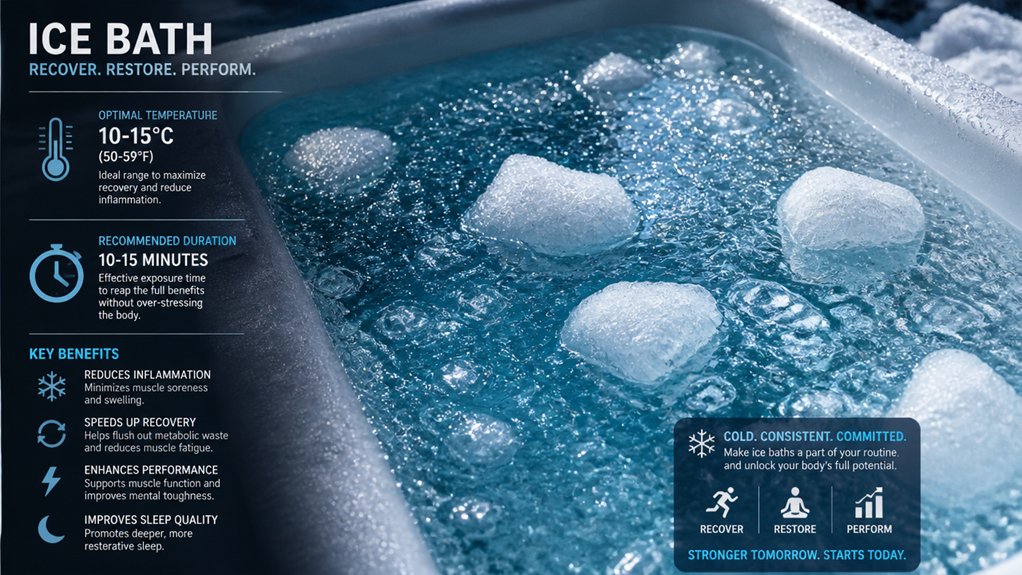
What’s the ideal temperature and duration for an ice bath to optimize recovery? The best cold water exposure occurs between 50°F and 59°F (10°C to 15°C), balancing benefits and safety. Aim for an immersion duration of 10 to 15 minutes to effectively reduce inflammation and muscle soreness without risking hypothermia. Start with shorter sessions of 30 seconds to 1 minute, then gradually extend to 5–10 minutes as your body adapts. Avoid exceeding 20 minutes, as it offers minimal gains and increases cold-related risks. Maintaining consistent timing within two hours post-exercise enhances recovery by reducing delayed onset muscle soreness (DOMS) and supporting nutrient delivery. Proper temperature and duration are key to maximizing benefits while minimizing adverse effects. Incorporating temperature control features can help maintain optimal conditions and improve overall safety during ice baths.
Which Recovery Technique Is Better: Cold Plunge, Cold Shower, or Cryotherapy?
Which recovery technique works best after intense exercise: cold plunge, cold shower, or cryotherapy? Cold plunges provide more uniform and intense cooling, typically at 50-59°F, which helps reduce muscle soreness and inflammation faster through cold-water immersion.
Cold plunges offer the most effective and intense cooling for quicker muscle recovery.
Cold showers are a convenient, less intense option that supports recovery and boosts alertness but may be less effective for deep muscle recovery.
Whole-body cryotherapy exposes you to freezing air for short periods; however, scientific evidence for its superiority over cold water methods is weak and inconsistent.
Both cold plunges and ice baths tend to better reduce delayed onset muscle soreness and swelling compared to cold showers or cryotherapy, especially for short-term recovery. However, water treatment solutions and proper water circulation are essential to maintaining water quality and effectiveness for optimal recovery. Additionally, timing and method selection are vital to avoid impairing muscle strength gains.
Is an Ice Bath Right for You? Who Should Use It Carefully?
Considering an ice bath? Cold immersion can provide significant recovery benefits, but it’s not for everyone. If you have cardiovascular disease, diabetes, neuropathies, or poor circulation, consult a doctor before trying ice baths. These conditions increase risks like cold shock or cardiac events.
Beginners should start slowly—immerse feet first and limit sessions to 10-15 minutes at 50-59°F (10°C-15°C). Watch for signs of discomfort, lightheadedness, or excessive cold feelings—stop immediately to avoid adverse effects.
Avoid ice baths right before exercise, as cold exposure impairs muscle function. Use them within two hours post-workout, preferably in a controlled environment for safety.
Be cautious; cold immersion isn’t suitable for everyone without proper guidance.
How to Safely Use Cold Water Immersion for Recovery
To safely use cold water immersion for recovery, start by gradually acclimating your body to the cold. Begin by dipping your feet first, then progress to waist or chest depth, to reduce the cold shock response. Limit your ice bath sessions to 10-15 minutes in water between 50°F and 59°F (10°C to 15°C) to prevent hypothermia and cardiovascular risks. Always warm up slowly afterward to restore circulation and avoid shock. Use cold therapy within two hours post-workout, but avoid it immediately before exercise, as it can impair muscle function and proprioception. Perform this recovery in a controlled environment with supervision, and stop immediately if you feel excessively cold or lightheaded.
| Step | Action | Tips |
|---|---|---|
| 1 | Gradually dip into cold water | Start with feet, then waist, then chest |
| 2 | Limit duration | 10-15 minutes within recommended temps |
| 3 | Warm up slowly after | Restore circulation to prevent shock |
| 4 | Choose safe environment | Supervision and stop if uncomfortable |
| 5 | Timing of immersion | Use within two hours after workout |
How Cold Exposure Can Boost Mental Focus and Reduce Stress
Building on the idea of using cold water immersion for physical recovery, brief cold exposure can also greatly enhance mental focus and reduce stress.
When you expose yourself to cold water, even for just 10 seconds, it triggers a mental alertness boost and an invigorating mental clarity. Cold exposure stimulates the release of endorphins and noradrenaline, which help decrease anxiety and sharpen focus. It also activates your parasympathetic nervous system, promoting relaxation and stress management.
Regular cold water therapy can reduce feelings of fatigue, improve cognitive performance, and elevate mood. Incorporating cold exposure into your routine can support emotional stability by increasing positive emotions and alleviating symptoms of depression.
- Releases endorphins for natural mood lifting
- Activates nervous system pathways for focus
- Promotes stress relief through parasympathetic activation
- Enhances cognitive performance despite sleep disruptions
- Boosts mood and emotional well-being
What’s the Difference Between Partial Ice Packs, Cold Showers, and Full-Body Baths?
What’s the main difference between partial ice packs, cold showers, and full-body ice baths? Partial ice packs target specific sore or injured areas, reducing localized inflammation and numbness without affecting the whole body.
Cold showers involve standing under cold water (usually ≤59°F/15°C), offering a quick, accessible form of cold exposure that cools your body temporarily.
Full-body ice baths immerse your entire body—in water between 50°F and 59°F (10°C to 15°C)—providing uniform cold body immersion that promotes systemic effects. Ice baths cause blood vessels to constrict and then rapidly dilate after removal, improving circulation and reducing muscle soreness more effectively than partial or cold showers.
These differences help you optimize recovery based on your needs and desired systemic benefits.
How to Incorporate Ice Baths Into Your Overall Recovery Routine
Incorporating ice baths into your recovery routine can markedly enhance muscle repair and reduce soreness, especially when timed correctly. Ideally, submerging oneself within 10 to 20 minutes after exercise helps minimize inflammation and boosts nutrient delivery.
Start with short durations of 30 seconds to 1 minute, then gradually extend to 10-15 minutes as your cold tolerance develops. Maintain water temperatures between 50°F and 59°F (10°C to 15°C).
Pair ice baths with other recovery methods like stretching, foam rolling, and proper nutrition to optimize healing and prevent injury. Always consult a sports medicine specialist if you have health concerns.
Remember to warm up slowly afterward and avoid cold exposure immediately before training to prevent impairing muscle function.
Frequently Asked Questions
Can Ice Baths Help With Lipedema?
Ice baths can temporarily reduce lipedema swelling and pain through vasoconstriction and improved circulation, but they’re not a cure. Use them cautiously as a complementary therapy alongside medical treatments, because scientific evidence is limited.
How Long Should an Athlete Do an Ice Bath?
You should aim for 10 to 15 minutes in an ice bath, keeping the temperature between 50°F and 59°F. Start with shorter sessions if you’re a beginner, and don’t exceed 20 minutes to prevent risks.
What Happens After 30 Days of Ice Baths?
After 30 days of ice baths, you’ll notice reduced muscle soreness, faster recovery, boosted alertness, and improved mood. You might also experience better metabolic regulation and increased mental resilience, but watch for potential effects on muscle growth if done after strength training.
What Does a 3 Minute Ice Bath Do?
A 3-minute ice bath constricts your blood vessels, reduces inflammation and swelling, numbs soreness, boosts alertness through endorphins, slows muscle metabolism, and helps clear waste products, speeding up recovery and preparing you for your next workout.