To boost recovery after workouts, try alternating between a 10-minute infrared sauna session at 120-140°F and a 1-2 minute cold plunge at 50-59°F to stimulate blood flow and reduce inflammation. Hydrate well beforehand and start gradually, increasing session length as you build tolerance. Incorporate cold plunges at the end of each session, and add light stretching or relaxation techniques. If you want to learn more about optimizing your recovery routine, keep exploring these tips.
How Contrast Therapy Boosts Recovery
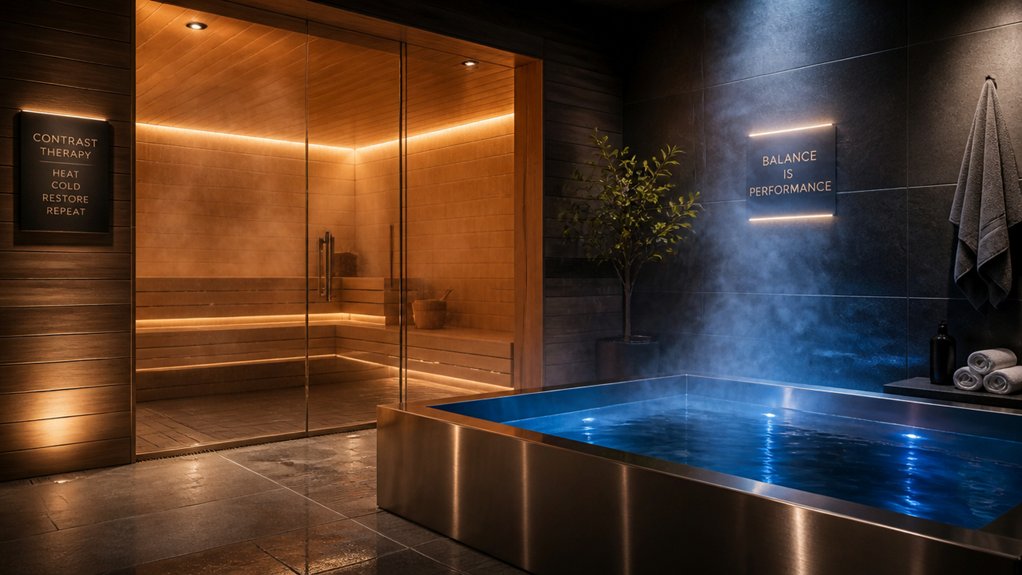
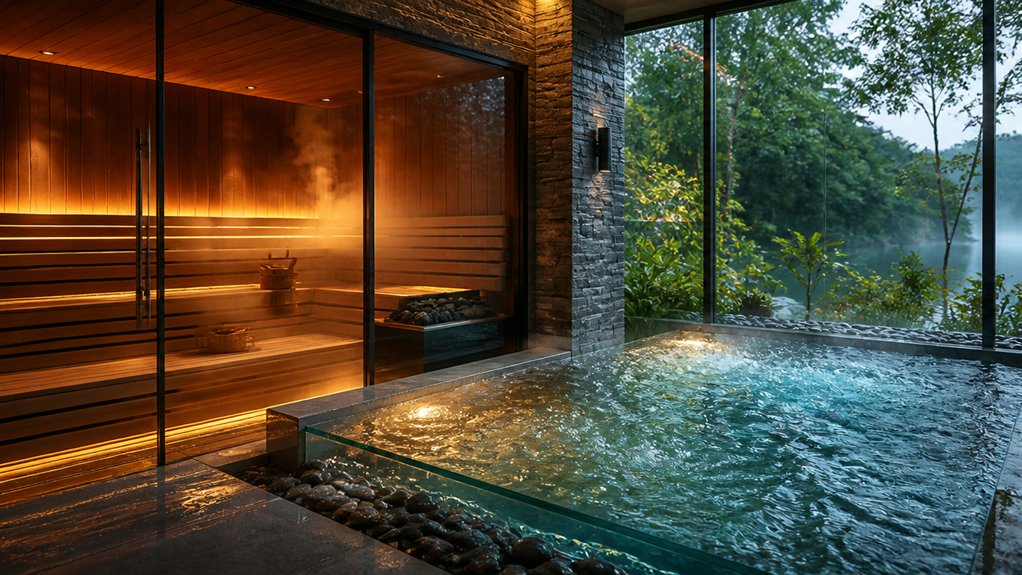
Contrast therapy boosts recovery by stimulating blood flow and flushing out metabolic waste from muscles. Alternating infrared sauna sessions (120-140°F) and cold plunge immersion (50-59°F) causes blood vessels to dilate and constrict, promoting better blood circulation. This process enhances muscle repair by delivering essential nutrients and removing waste products.
The heat phase relaxes muscles and encourages circulation, while the cold step reduces inflammation and lactic acid buildup, easing delayed onset muscle soreness (DOMS). Regular contrast therapy can lower muscle damage markers like creatine kinase by 27%, speeding up recovery within 24-48 hours.
Additionally, switching between hot and cold triggers endorphin release, which reduces cortisol levels and supports mental recovery, offering pain relief and mood enhancement.
How to Prepare for Your First Contrast Therapy Session
Preparing properly for your first contrast therapy session helps you get the most benefits while staying safe. Start by hydrating well beforehand to support your body’s temperature regulation and recovery process.
Proper preparation boosts benefits and ensures safety during your first contrast therapy session.
Begin with shorter exposure times, such as 8-10 minutes in an infrared sauna at 120-140°F, then switch to a 1-minute cold plunge at 50-59°F. This gradual approach helps you build tolerance to alternating heat and cold, reducing muscle soreness and inflammation.
Always end with a cold plunge for peak results. Use a private suite if possible to control temperature shifts and timing, ensuring a personalized experience.
Furthermore, choosing a sauna blanket with adjustable temperature controls allows you to customize heat intensity safely during your sessions.
Consult your healthcare provider before starting, especially if you have circulation issues. Stick to 2-3 sessions per week for safe, effective recovery after workouts.
Customize Your Contrast Therapy Routine for Better Results
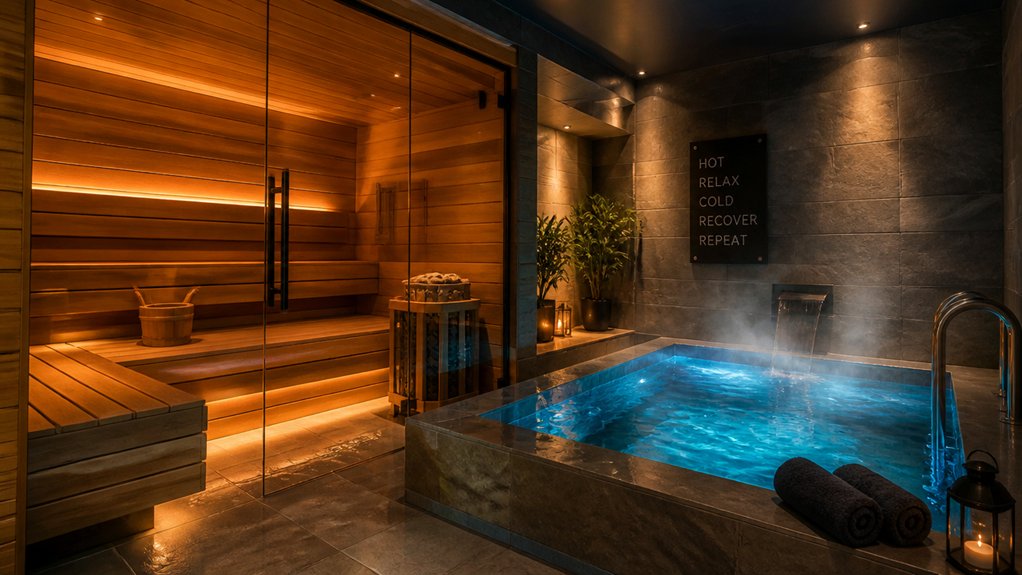
To get the most out of your contrast therapy routine, it’s important to tailor session lengths, temperatures, and frequency to match your workout intensity and recovery goals. Adjusting these variables allows you to optimize benefits like reducing muscle soreness and inflammation. Incorporating the right infrared sauna features, such as low EMF and precise temperature controls, can enhance safety and effectiveness. Beginners should start with shorter heat (8–10 minutes at 120–140°F) and cold (1–2 minutes at 50–59°F) cycles and gradually increase duration as tolerance builds. Use private suites with infrared saunas and cold plunges to precisely control temperature extremes, cycle duration, and shifts. Involve consistent practice, around 2-3 contrast therapy sessions weekly, especially after intense workouts, and continuously track your progress. This helps you fine-tune your routine, ensuring maximum recovery, injury prevention, and overall performance enhancement.
Incorporate Contrast Therapy Into Your Workout Recovery
Incorporating contrast therapy into your workout recovery routine can considerably enhance your muscle healing process. Alternating hot and cold, like 10 minutes in an infrared sauna (120-140°F) with 1-2 minutes in a cold plunge (50-59°F), repeated 2-3 times, helps reduce inflammation and post-workout soreness. This process boosts blood flow and speeds up muscle recovery, effectively decreasing DOMS. Start with shorter intervals and adjust based on comfort, hydrating well and adding light stretching during sauna sessions for peak results. Regular use of contrast therapy 2-3 times weekly supports faster muscle repair. Here’s a quick visual guide:
| Step | Hot Phase | Cold Phase | Benefits |
|---|---|---|---|
| 1 | Infrared sauna (10 min) | Cold plunge (1-2 min) | Reduce inflammation |
| 2 | Repeat cycles | Increase blood flow | |
| 3 | Hydrate, stretch | Speed up muscle recovery |
Additionally, utilizing calming heated infrared heating pads after workouts can help relax muscles and ease soreness more effectively.
Safety Tips for Using Sauna and Cold Plunge Devices
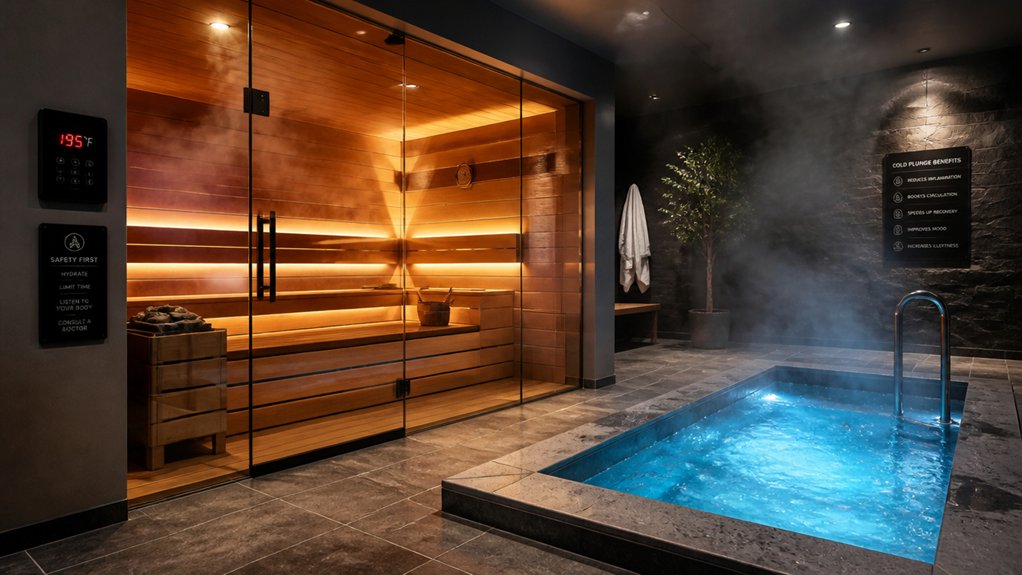
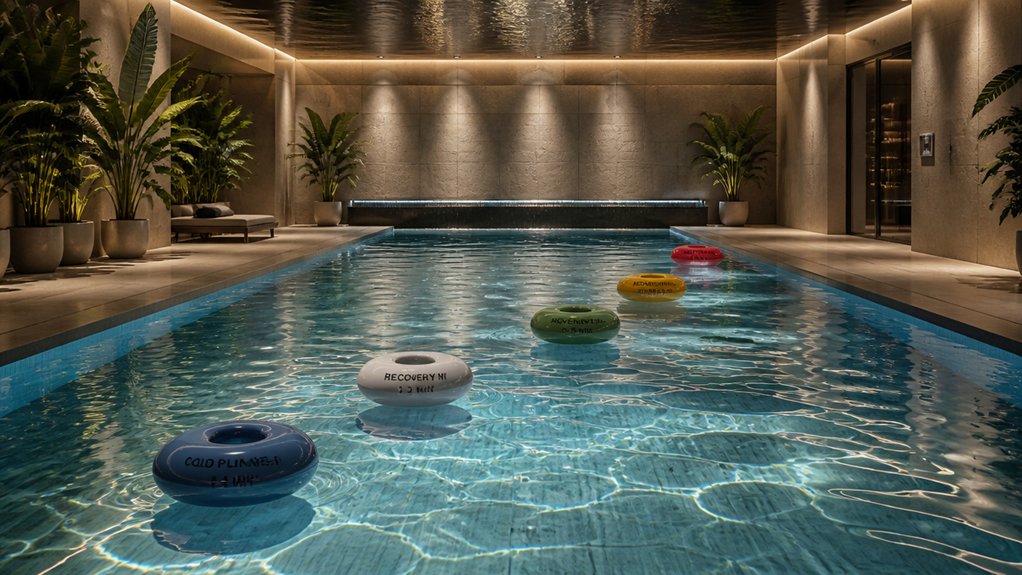
Using sauna and cold plunge devices safely is essential to maximize their benefits without risking injury or health complications. Stick within the recommended temperature ranges—120-140°F for infrared saunas and 50-59°F for cold plunges—to guarantee safe and effective contrast therapy.
Limit cold plunge sessions to 1-2 minutes per cycle to prevent excessive vasoconstriction and related issues. If you have circulation problems, Raynaud’s disease, or heart concerns, consult a healthcare provider before beginning.
Beginners should start with shorter sessions and fewer cycles, gradually building tolerance. Remember to stay properly hydrated before, during, and after each session. Additionally, ensuring the use of reliable interval timers can help you accurately track and manage your duration in both hot and cold environments.
- Adjust cycles gradually
- Monitor your body’s responses
- Consult a healthcare provider if unsure
Frequently Asked Questions
Can You Do Contrast Therapy After a Workout?
Yes, you can do contrast therapy after a workout. It helps accelerate recovery by increasing blood flow and reducing inflammation, especially when you alternate hot and cold sessions. Just start slowly and listen to your body’s responses.
Is It Good to Sauna Immediately After a Workout?
Yes, you should sauna immediately after a workout. It helps dilate blood vessels, boost circulation, relax muscles, and flush out toxins. Just make sure to hydrate well and avoid overheating by limiting your session to 10-20 minutes.
Are Saunas Good for Post Game Recovery?
Saunas are excellent for post-game recovery; they boost blood flow, reduce soreness, and help flush out waste. Regular sessions relax muscles, lower inflammation, and promote faster healing, so you can get back to peak performance quicker.
How Do You Feel After Contrast Therapy?
After contrast therapy, you feel less muscle tightness and inflammation, thanks to better circulation. You experience mental clarity, relaxation, and a balanced mix of energized alertness and calmness, leading to quicker recovery and an overall sense of well-being.