Start with water temperatures around 59-65°F (15-18°C) to prevent shock and discomfort. Limit your first sessions to 30-90 seconds and gradually increase as you adjust. To safely lower the temperature over time, reduce it by 1-2°F (0.5-1°C) every few sessions, using accurate thermometers and insulation. Be mindful of your body’s responses and avoid water colder than 50°F (10°C). Keep exploring for more tips on making your cold plunges safer and more effective.
What Are the Best Starting Temperatures for Beginners?

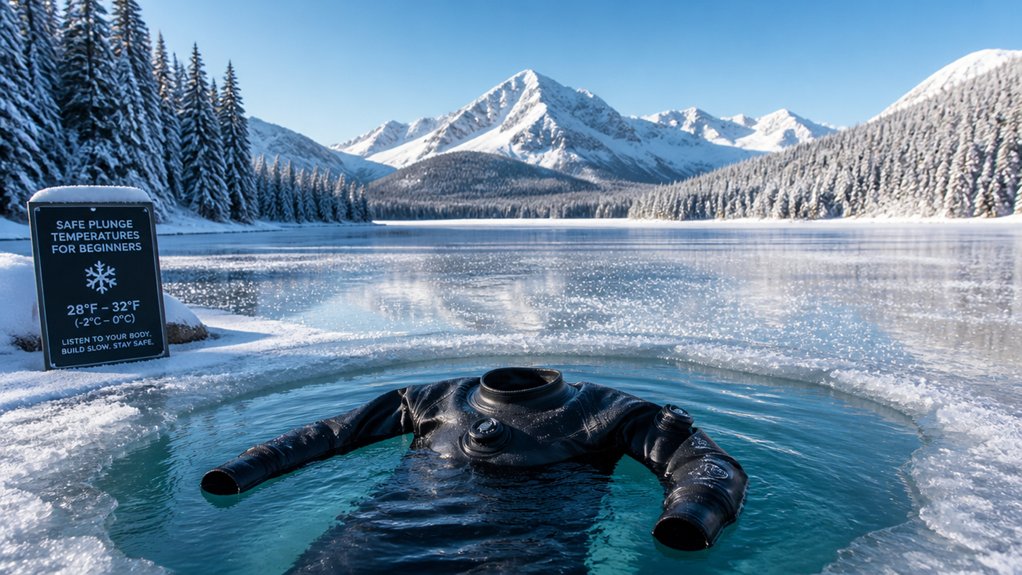
When you’re just starting out with cold plunging, it’s best to begin with water temperatures around 59-65°F (15-18°C). This range helps beginners ease into cold water immersion without overwhelming their bodies. Starting with shorter cold plunge sessions of 30-90 seconds allows you to gradually build resistance.
During your first plunge, your body will experience cold shock, so it’s crucial to start at these moderate temperatures to develop tolerance to the cold safely. Avoid plunging into water colder than 50°F (10°C), as it can cause discomfort and increase risk.
Many beginners find that using cold showers at 64-68°F (18-20°C) beforehand helps prepare them for full cold plunges. Remember, patience is key; gradually lowering the temperature over time helps you adapt effectively, especially as you familiarize yourself with different cold plunge tub capacities and insulation options.
How Can You Safely Lower the Water Temperature Over Time?
To safely lower your water temperature over time, start by making small, gradual adjustments—about 1-2°F (0.5-1°C)—every 2-3 sessions.
Cold plunging works best when you follow a cold plunge temperature guide that prioritizes your comfort and safety. Begin with a beginner-friendly temperature around 64.4-68°F (18-20°C), then gradually decrease the water temperature as your cold tolerance improves.
Start at 64.4-68°F (18-20°C) and gradually lower the temperature as your tolerance increases.
This slow decrease allows your body to adapt without shock. Use precise temperature control, like calibrated thermometers and circulation pumps, to avoid sudden drops that can cause cold exposure issues. Incorporating insulation features into your setup can help maintain consistent water temperatures during your sessions.
Keep monitoring your body’s response and adjust accordingly. Over time, lowering the water temperature carefully helps you build cold tolerance safely while enjoying the benefits of cold plunges.
What Are the Key Tips to Avoid Cold Shock and Overexposure?

Have you considered how to minimize the risk of cold shock and overexposure during your cold plunges? Managing cold shock involves practicing controlled breathing techniques, like box breathing, to keep your airways steady. A proper water temperature is essential, as temperatures around 59-64°F (15-18°C) are generally safer for beginners. Start by entering water slowly, beginning feet first, to let your body acclimate and reduce initial shock. Keep your water temperatures in the safer range, around 59-64°F (15-18°C), and limit your safe duration to 30-90 seconds, increasing gradually by 15-30 seconds over sessions. Paying attention to signs of discomfort—numbness, dizziness, or uncontrollable shivering—is crucial. Exiting promptly at any discomfort prevents cold-related injuries. With patience and mindful practices, you’ll build tolerance and safely enjoy cold plunging, avoiding overexposure and cold shock reactions.
Frequently Asked Questions
What Is a Good Cold Plunge Temperature for Beginners?
You should start with a cold plunge between 50-60°F (10-15°C). It’s safe and comfortable, allowing your body to adapt gradually. Don’t go colder initially, and limit your time to avoid shock or discomfort.
Is 42 Degrees Too Cold for a Cold Plunge?
Yes, 42°F is too cold for your first cold plunge because it can cause shock and risks like hypothermia. Start at higher temperatures like 50-60°F, build tolerance gradually, and keep initial sessions brief for safety.
What Temperature Is Joe Rogan’s Cold Plunge?
Joe Rogan’s cold plunge is around 38°F (3°C), which is quite cold for most beginners. If you’re new, start warmer, gradually lower the temperature over time, and always prioritize safety and proper breathing techniques.
How to Start Cold Plunging for Beginners?
You start cold plunging by beginning with cold showers at 64.4-68°F to build tolerance. Gradually move to colder water, stay for 30-90 seconds, focus on controlled breathing, and don’t push too hard initially for safety.