For an effective post-workout plunge, aim for a water temperature between 50-59°F (10-15°C), which helps reduce soreness and inflammation. Stay in the cold bath for 2-4 minutes if you’re a beginner, and up to 10-15 minutes if you’re experienced, but don’t go below 45°F. Always monitor your body’s responses and gradually adjust the temperature over time. If you want to master safe, effective cold plunges, keep exploring these essential tips.
What Is the Ideal Temperature for Post-Workout Cold Plunges?

Have you wondered what temperature is best for a post-workout cold plunge? The ideal water temperature for cold water immersion is between 50-59°F (10-15°C). This range helps reduce muscle soreness and inflammation effectively.
When you take a cold plunge shortly after exercise—within 30 minutes—it boosts recovery by promoting vasoconstriction and flushing out metabolic waste. Experienced users can safely stay in water at around 50°F for up to 10-15 minutes without risking hypothermia.
Temperatures below 50°F may increase cardiovascular stress and limit safe exposure time, making 50-59°F the prime choice for most. Proper chiller selection ensures you can consistently maintain these ideal temperatures for safe and effective recovery. Remember, maintaining the right cold plunge temperatures guarantees you get the benefits of faster recovery and reduced soreness with minimal risk.
How Long Should You Stay in a Cold Plunge at Different Temperatures?
How long you should stay in a cold plunge depends on the water temperature and your experience level.
For beginners, a 2-4 minute immersion at a cold plunge temperature of 50-59°F helps reduce inflammation and muscle soreness effectively.
Experienced cold plungers can safely extend immersion times up to 10-15 minutes at 50°F to enhance recovery without risking hypothermia.
When the temperature drops below 45°F, limit your session to about 3 minutes, and at temperatures below 40°F, keep it to 1-2 minutes.
Staying longer than 15 minutes at 50°F greatly raises hypothermia risk and isn’t recommended.
Gradual progression, starting with shorter durations and warmer temperatures, guarantees safe adaptation and maximizes recovery benefits from your cold plunge sessions.
Using tubs with advanced temperature control options, such as built-in chillers or external cooling systems, can help maintain precise temperatures and optimize your cold plunge routine.
What Risks Do Too Cold or Too Warm Post-Workout Baths Pose?
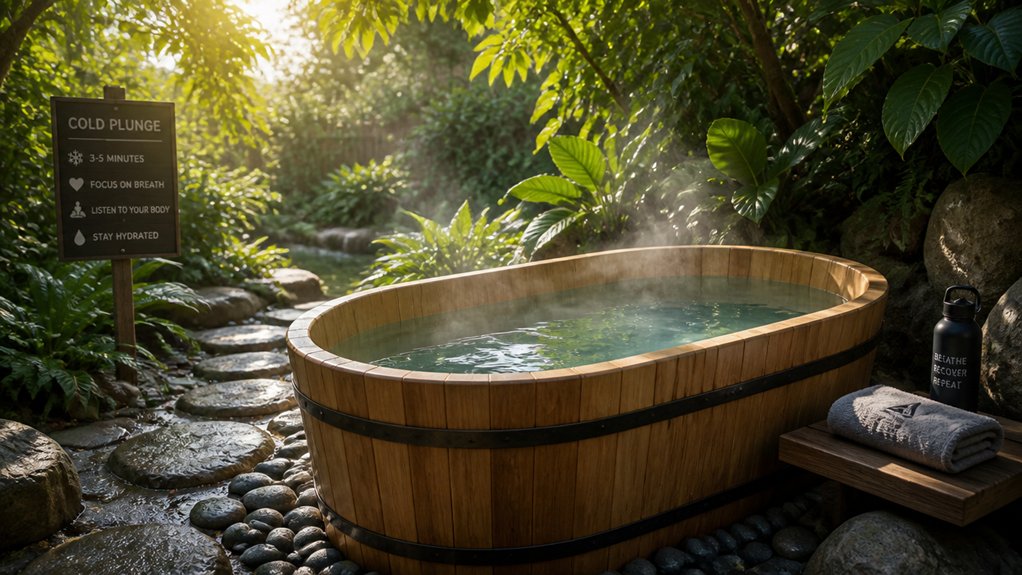
Exposing your body to excessively cold or warm post-workout baths can pose significant health risks. Cold baths below 45°F (~7°C) may cause hypothermia or cardiovascular stress, especially if held longer than five minutes. Conversely, water above 60°F (~15.5°C) diminishes anti-inflammatory and muscle soreness relief. Immersion in water below 39°F (~4°C) can trigger cold shock, respiratory distress, and impede muscle repair. Warm baths above 99°F (~37°C) may prolong inflammation and delay recovery. To visualize, consider this table:
| Temperature Range | Risks | Recovery Potential |
|---|---|---|
| <39°F (~4°C) | Cold shock, hypothermia | Reduced therapeutic benefits |
| 50–59°F (~10–15°C) | Balanced, minimal risks | Ideal recovery |
| >60°F (~15.5°C) | Less anti-inflammatory effect | Delayed muscle soreness relief |
Proper water temperature management is essential for safe and effective recovery, especially with the advanced high-powered chillers available today.
How Can You Safely Adjust Your Cold Plunge Temperature Over Time?
Adjusting your cold plunge temperature safely involves a gradual approach that allows your body to adapt without shock or stress. Start with warmer cold plunge water, around 60-65°F (15-18°C), during the first week.
Begin with warmer water, around 60-65°F, to safely ease into cold plunge adaptation.
Gradually decrease the temperature by 3-5°F every 1-2 weeks, giving your body time to adjust to cold exposure. Always use calibrated digital thermometers for precise temperature control.
Limit initial plunges to 2-3 minutes at higher temperatures and increase duration as the temperature drops, but stay below 10 minutes at around 50°F (10°C). Regularly monitor how your body responds—such as breath control and muscle soreness—to confirm safe adaptation.
Consistency matters; sticking to set protocols 3-4 times weekly helps optimize your physiological response and prevent extreme fluctuations or risks.
How to Measure and Maintain the Correct Ice Bath Temperature?
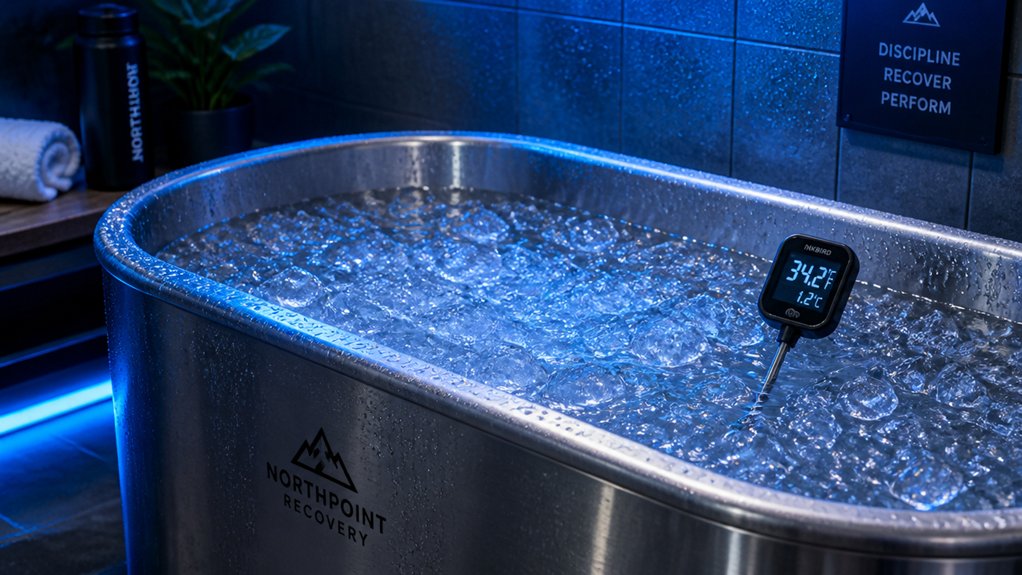
Measuring and maintaining the correct ice bath temperature is essential for effective and safe cold exposure. Use calibrated digital thermometers with ±0.5°F accuracy to get precise water temperature readings, as standard household thermometers can be off by 3-5°F. Because cold water stratifies, with surface temperatures 5-7°F warmer than chest level, circulating pumps or stirring help guarantee uniform measurements. Dedicated chillers are ideal—they keep the water temperature stable within ±1°F during your post-workout plunge, providing consistent cold exposure and reducing hypothermia risk. Incorporating thermal insulation quality into your setup can also help maintain a steady temperature and minimize heat transfer from the environment. Traditional ice baths without temperature controls warm quickly above 60°F, lessening therapeutic benefits. Regularly monitor the water temperature throughout your session, aiming for a range of 50-59°F (10-15°C) for peak recovery.
Top Tips for Enhancing Your Post-Workout Cold Plunge Recovery
To improve your cold plunge recovery, focus on choosing the right water temperature, timing, and duration. Incorporate controlled breathing to stay safe and manage the cold shock response, and always listen to your body’s signals. Ensuring your tub has proper insulation and temperature retention can help maintain consistent water temperatures during each session. Starting gradually and maintaining safety practices can help you maximize benefits without risks.
Optimal Temperature Selection
- Maintain steady water temperature around 50-55°F for consistent results.
- Limit immersion to 2-4 minutes within 30 minutes post-exercise.
- Avoid water below 39°F (4°C) to prevent unnecessary cardiovascular stress.
- Follow a regular *immersion therapy* schedule to establish physiological adaptation and improve recovery.
- Choose a reliable water chiller capable of maintaining your desired temperature to ensure optimal recovery benefits.
Timing and Duration Tips
Timing and duration are critical factors in maximizing the benefits of your post-workout cold plunge, helping you recover more effectively and safely. Ideally, you should plunge within 30 minutes of finishing your workout to reduce inflammation and delay onset muscle soreness. Limit your time in the cold plunge tub to 2-4 minutes; this duration is sufficient to lower muscle soreness without risking cold stress. Avoid plunging immediately after resistance training focused on muscle growth—wait at least 4–6 hours. Incorporate controlled breathing techniques to manage cold shock safely. Consistent cold plunges—1-2 times per week—accelerate waste removal and recovery. Additionally, ensuring proper water treatment keeps the water clear and free from contaminants, enhancing safety during your recovery routine.
Breathing and Safety Practices
Practicing controlled breathing during your cold plunge can greatly enhance safety and recovery. Cold shock can trigger hyperventilation or breath-holding, so focus on steady, rhythmic breathing like box or 4-7-8 techniques.
- Monitor your breathing to stay calm; avoid rapid, shallow breaths.
- Enter and exit gradually, respecting the recommended exposure time of 2–4 minutes at 50–59°F.
- Use a timer to prevent excessive immersion, especially for beginners.
- Have supervision or an accomplice nearby, and listen to your body — stop immediately if you experience dizziness, numbness, or excessive shivering.
- Ensuring accurate temperature measurements with a reliable infrared thermometer can help you maintain consistent and safe cold plunge conditions.
These safety practices optimize cold plunge therapy, boost cold tolerance, and guarantee your post-workout recovery remains safe and effective.
Frequently Asked Questions
Is 42 Degrees Too Cold for a Cold Plunge?
Yes, 42°F is too cold for a cold plunge, especially if you’re new. It can cause cold shock and hypothermia. If experienced, limit your time to 1-3 minutes, and gradually ease into colder temps safely.
When Should I Cold Plunge After a Workout?
You should cold plunge within 30 minutes after your workout for best benefits. Keep the temperature between 50-59°F, dunk for 2-4 minutes, and avoid plunging immediately after resistance training focused on muscle growth.
What Temperature Is Joe Rogan’s Cold Plunge?
Joe Rogan’s cold plunge typically stays around 50-55°F (10-13°C). You should aim for this temperature, as it maximizes recovery benefits without causing discomfort, and stay submerged for about 3-5 minutes for ideal results.
Can You Overdo Cold Plunges?
Yes, you can overdo cold plunges by exceeding safe time limits or going below recommended temperatures, which increases hypothermia risk and cardiovascular stress. Always listen to your body, start slow, and gradually increase exposure to avoid adverse effects.