After an ice bath, you can improve your sleep by warming up gradually with layered clothing and gentle movement, avoiding hot showers or heating pads right away. Practice deep breathing or relaxation techniques like diaphragmatic or box breathing to activate your parasympathetic nervous system. Keep your bedroom cool and dark to support melatonin production, and steer clear of screens or bright lights before bed. Managing arousal and creating a calming environment will help you fall asleep faster—exploring these tips further can boost your sleep quality even more.
How Cold Exposure Benefits Your Sleep
Cold exposure from ice baths offers several benefits for your sleep. Cold therapy triggers the parasympathetic nervous system, which promotes relaxation by stimulating the vagus nerve. This calming response reduces stress and prepares your body for restful sleep. Incorporating temperature regulation features like heating or cold therapy can enhance recovery and relaxation, making it easier to transition into restful sleep. Cold immersion also lowers your core body temperature, making it easier to enter slow wave sleep—the deep sleep stage essential for physical and cognitive restoration. Research shows that athletes using ice baths experience longer periods of deep sleep and fewer nighttime awakenings, improving overall sleep quality.
Timing your ice bath 1–2 hours before bed allows adrenaline levels to subside, helping you relax more quickly and maintain sleep throughout the night. Overall, cold exposure sets the stage for restorative, high-quality sleep.
What Happens to Your Sleep Stages During Cold Water Therapy
When you take cold water therapy, your deep sleep stages tend to last longer, helping your body recover and retain memories. You may also notice an increase in REM sleep, which is essential for mental health and emotional balance. Overall, your sleep becomes more efficient, allowing you to feel more rested and refreshed. Incorporating adaptogens like Rhodiola or Ashwagandha can further enhance these stress regulation benefits, promoting better sleep quality after cold plunges.
Enhanced Deep Sleep Stages
Ice baths can actively influence your sleep architecture by increasing the amount of deep slow-wave sleep (SWS) during the early night hours. This boost supports physical and mental restoration, making your sleep more restorative.
Cold water immersion stimulates the parasympathetic nervous system via vagus nerve activation, promoting relaxation that helps you enter deep sleep stages more easily. Additionally, lowering your core body temperature signals your brain to initiate thermoregulation, which naturally promotes slow-wave sleep.
To maximize these benefits, consider:
- Practicing regular ice baths to strengthen parasympathetic responses.
- Timing immersion to align with your sleep cycle for enhanced SWS.
- Incorporating relaxation techniques post-ice bath to deepen sleep quality.
- Ensuring proper arousal regulation helps maintain the balance necessary for optimal sleep patterns.
This process ultimately enhances deep sleep, supports tissue repair, and improves sleep continuity.
Increased REM Duration
Although research on cold water therapy’s direct effects on REM sleep is limited, evidence suggests it may help extend REM duration by promoting overall relaxation and stabilizing sleep cycles. Cold water therapy stimulates the parasympathetic nervous system, encouraging a relaxed state that can support longer, more consistent REM phases.
Enhanced vagus nerve activity reduces stress responses, which may improve emotional processing during REM sleep. Additionally, lowering your core body temperature through cold immersion helps align sleep stages with your body’s natural circadian rhythm, potentially boosting REM sleep quality and timing.
Timing cold exposure 1-2 hours before bed optimizes your relaxation while preventing residual alertness, thereby supporting a longer, more restorative REM cycle that contributes to improved sleep quality overall.
Improved Sleep Efficiency
Cold water therapy influences your sleep stages by promoting deeper, more restorative sleep cycles. When you take ice baths 1-2 hours before bed, your body temperature drops, making it easier to enter and stay in sleep stages.
This reduction improves overall sleep efficiency by:
- Increasing the duration of deep, slow-wave sleep (by 10-20%), which helps with physical restoration and memory.
- Activating the parasympathetic nervous system through vagus nerve stimulation, supporting longer, uninterrupted sleep.
- Facilitating shifts into REM sleep by reducing nighttime sympathetic activity and heart rate variability, which enhances emotional regulation.
- Utilizing effective recovery tracking apps to monitor and optimize your cold plunge routines and sleep outcomes.
This combination results in more restful, quality sleep, helping you wake up feeling refreshed and restored after ice baths.
When Is the Best Time to Take an Ice Bath Before Bed?
Taking an ice bath 1 to 2 hours before bed helps your body relax and fall asleep more easily, as it allows adrenaline levels to subside. Doing it too close to bedtime might boost alertness and make falling asleep harder. Keep in mind that individual tolerance varies, so experimenting with timing can help you find what works best for you. Incorporating breathing techniques during this period can further promote relaxation and enhance sleep quality.
Timing for Relaxation
Timing your ice bath correctly can make a significant difference in how well you sleep afterward. The best timing is generally 1–2 hours before bed, giving your body time to relax and cortisol levels to normalize. Immediate cold exposure right before sleep might spike adrenaline, making it harder to fall asleep.
To optimize the quality of your sleep, consider these points:
- Take the cold bath at least an hour before bed.
- Allow your body temperature to naturally drop to promote deep sleep.
- Keep your bedroom cool (15–20°C) to enhance cold exposure benefits.
- Be mindful of sensor accuracy during cold plunges, as peripheral vasoconstriction can affect your physiological readings.
Individual responses vary, so track how your sleep improves when adjusting timing. Properly spaced cold immersion helps guarantee relaxation, leading to better sleep quality.
Hormonal Response Effects
Planning your ice bath within the right timeframe before bed can optimize hormonal responses that support restful sleep. Taking an ice bath 1–2 hours before bed allows adrenaline and cortisol levels to subside, helping your body move into relaxation. A properly timed ice bath can also encourage the activation of parasympathetic nervous system, which is crucial for promoting recovery and relaxation. Cold immersion stimulates melatonin release, which is key for regulating sleep-wake cycles, but timing is essential so melatonin peaks align with sleep onset. If you soak too close to bedtime, heightened sympathetic activity from adrenaline can delay sleep and increase alertness. Allowing enough time after the ice bath promotes parasympathetic nervous system activation, enhancing melatonin production and reducing stress hormones. This hormonal balance helps your body shift into deep, restorative sleep, supporting overall sleep quality and recovery.
Personal Tolerance Factors
Since individual responses to cold immersion vary, it’s important to experiment to discover when an ice bath best supports your sleep. Your personal tolerance influences how your body reacts, especially your parasympathetic nervous system’s activation, which is key to deep sleep. Taking into account the measurement accuracy of your devices can help ensure you’re monitoring your body’s responses effectively. To find your ideal timing:
- Take ice baths 1 to 2 hours before bed, giving your adrenaline and cortisol levels time to normalize.
- Avoid immediate cold exposure before sleep, as it can spike alertness, making it harder to fall asleep.
- Track your experiences with a journal, noting the timing, sleep quality, and energy levels to identify your best window for cold immersion.
Experimentation helps tailor cold therapy to improve your sleep quality effectively.
How to Warm Up Safely After Cold Plunges
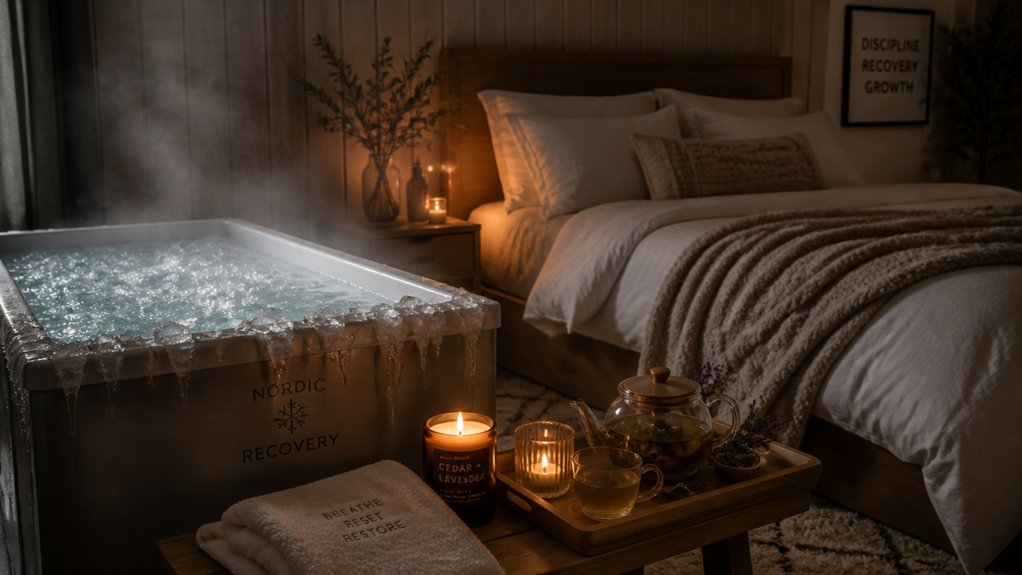
After completing an ice bath, it’s important to rewarm your body gradually to prevent abrupt temperature changes that could interfere with sleep. Use layers of dry, warm clothing to aid rewarming without causing rapid shifts in body temperature. Keeping the bedroom between 15-20°C helps maintain the lowered core temperature needed for deep sleep. Avoid hot showers or heating pads immediately after cold immersion, as they can negate the cooling benefits and disrupt your sleep cycle. Gentle movement or stretching promotes circulation and safe rewarming without overstimulation. Drinking a warm, non-caffeinated beverage can also enhance comfort during this phase.
| Rewarming Technique | Effect on Body | Benefits |
|---|---|---|
| Layered clothing | Gradual heat | Prevents rapid temperature shifts |
| Light movement | Circulation | Promotes safe, even warming |
| Warm beverage | Comfort | Eases adjustment, relaxes |
Top Relaxation Techniques to Use After Cold Exposure
After an ice bath, try gentle stretching to relax your muscles and ease tension. Incorporate mindful breathing techniques to calm your nervous system and reduce stress hormones.
Keep your sleep environment warm and comfortable to support your body’s shift into restful sleep.
Gentle Stretching Exercises
Engaging in gentle stretching exercises following an ice bath can greatly enhance relaxation and support better sleep. Gentle stretching increases blood flow and muscle temperature gradually, reducing stiffness and easing discomfort.
To maximize effects, focus on stretches that target major muscle groups like hamstrings, calves, and shoulders, which tend to be tense after cold exposure. Prolonged holds of 20-30 seconds in static stretches help lengthen muscles and release built-up tension.
Incorporate these key steps:
- Practice deep, slow breathing during stretches.
- Hold each stretch steadily for at least 20 seconds.
- Target tight areas to promote muscle relaxation.
These gentle stretching routines activate the parasympathetic nervous system, calming your body and creating an ideal environment for better sleep.
Mindful Breathing Techniques
Practicing mindful breathing techniques can greatly enhance your relaxation response following an ice bath, helping ease the changeover from cold shock to calmness. Deep diaphragmatic breathing stimulates the vagus nerve, activating the parasympathetic nervous system to promote relaxation and sleep readiness. Slowing your breath to about 4–6 breaths per minute reduces cortisol, lowering stress levels after cold exposure. Techniques like box breathing—inhale, hold, exhale, hold each for 4–5 seconds—improve oxygen flow and calm your nervous system. Mindful breath awareness shifts focus from the cold shock to present sensations, easing progression to rest. Incorporate this table to better understand the benefits of these techniques:
| Technique | Benefit |
|---|---|
| Deep diaphragmatic breathing | Stimulates vagus nerve; relaxes body |
| Slow breathing (4-6/min) | Reduces cortisol, stress levels |
| Box breathing | Improves oxygen delivery, calmness |
| Breath awareness | Focuses mind, shifts from alertness |
| Consistent practice | Enhances sleep quality, melatonin release |
Warm Sleep Environment
Maintaining a warm, comfortable sleep environment is essential for shifting smoothly from cold exposure to restful sleep. To guarantee this, keep your bedroom temperature between 15–20°C, supporting your body’s ability to regulate temperature and improve deep sleep quality.
Use warm, breathable bedding so you don’t feel cold when rewarming from the ice bath, helping your body relax more easily. Additionally, avoid overheating by steering clear of heavy blankets or extra clothing, as a cool but cozy environment complements your lowered core temperature.
Consider calming techniques like gentle stretching or mindfulness meditation while settling into your warm bed. To further promote relaxation, try a warm herbal tea after cold therapy—this encourages gradual warming and enhances your body’s shift into restful sleep.
How Light and Bedroom Environment Affect Your Sleep After Cold Baths
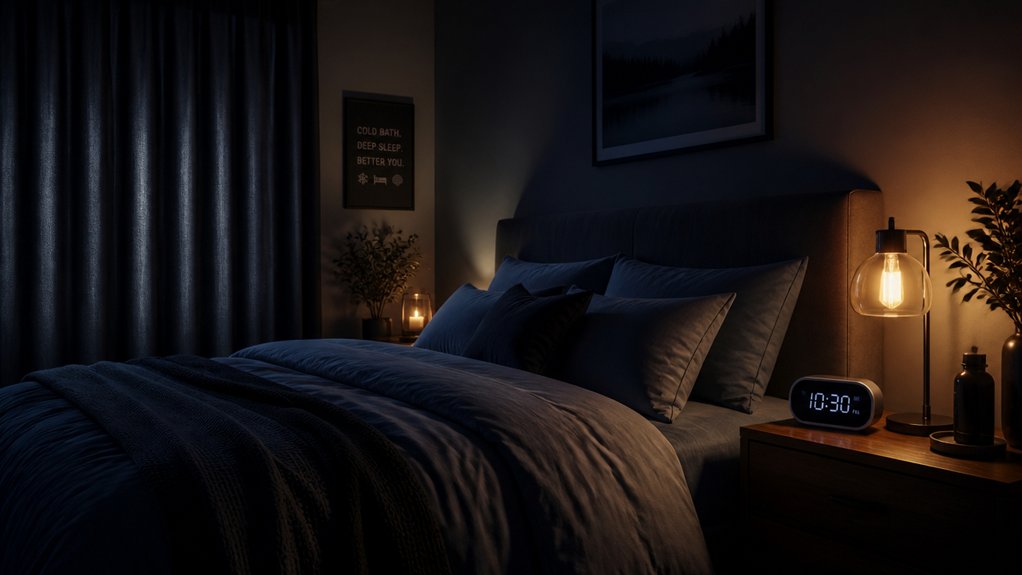
After an ice bath, your bedroom environment plays a crucial role in supporting restful sleep by signaling to your body that it’s time to wind down. Maintaining dim lighting helps boost melatonin production, aiding your shift to deep sleep stages. Keeping your bedroom temperature between 15-20°C preserves the lowered core temperature necessary for slow-wave sleep. Reducing screen time and artificial light prevents melatonin suppression, facilitating better sleep quality. Using blackout curtains or sleep masks minimizes light pollution, aligning your circadian rhythm. Soft, warm ambient lighting encourages relaxation and activates the parasympathetic nervous system, promoting sleep onset.
| Lighting | Environment |
|---|---|
| Dim, warm light | Blackout curtains or masks |
| No screens | Cool, controlled temperature |
| Relaxing glow | Reduced artificial light |
Choosing the Right Water Temperature and Duration for Better Sleep
To boost sleep benefits, aim for ice bath water between 2°C and 15°C, with many experts recommending around 10-15°C.
Keep your immersion lasting about 3 to 5 minutes to trigger relaxation hormones without overstressing your body. Staying within these parameters helps you enjoy better sleep quality without risking increased stress levels.
Optimal Water Temperature Range
What’s the ideal water temperature for ice baths to boost sleep quality? Generally, the best water temperature ranges from 2°C to 15°C.
For maximizing sleep benefits, colder temperatures around 2°C to 7°C are often recommended to amplify deep sleep stages.
To make the most of your cold immersion, keep these points in mind:
- Aim for water temperatures close to 7°C for a balance of comfort and effectiveness.
- Avoid going below 2°C, as overly cold water can cause stress rather than relaxation.
- Time your immersion about 1-2 hours before bed to allow your body to normalize and promote deeper sleep.
Maintaining this best water temperature range helps trigger the parasympathetic nervous system, encouraging relaxation and enhancing your sleep benefits.
Ideal Immersion Duration
Choosing the right duration for your ice bath is essential to reap sleep benefits without inducing unnecessary stress. Ice baths help regulate your core temperature, but staying too long can trigger stress hormones like cortisol and adrenaline, making it harder to settle into sleep.
The ideal immersion duration is typically short, around 3 to 5 minutes, which is enough to activate relaxation responses and promote parasympathetic nervous system activity. Maintaining bath water between 2°C and 15°C enhances relaxation and supports better sleep quality.
Longer immersions beyond 10 minutes generally aren’t recommended, as they can counteract the calming effects. Individual responses vary, so tracking your sleep and adjusting bath length and temperature helps optimize those benefits for more restful sleep.
Building a Consistent Cold Therapy Routine for Restful Sleep
Establishing a consistent cold therapy routine is key to maximizing sleep benefits from ice baths. To do this effectively, follow these steps:
Consistent cold therapy enhances sleep quality and promotes overall restorative benefits.
- Schedule your ice baths 1–2 hours before bed, allowing adrenaline to normalize and promoting parasympathetic activation for better sleep.
- Start with short cold water immersion sessions of a few minutes at 2–15°C, gradually increasing duration and cold exposure to enhance deep sleep and restorative benefits.
- Keep a journal to track immersion details, sleep quality, and mood, helping you personalize your routine for ideal results.
Additionally, maintain a cool bedroom environment (15–20°C) after cold water immersion to prolong body temperature drops and deepen sleep stages. Consistency boosts melatonin and improves sleep quality over time.
Combining Cold Water Immersion With Sleep Hygiene Habits
To maximize the sleep benefits of cold water immersion, it’s essential to integrate it with effective sleep hygiene habits. Schedule your ice baths 1–2 hours before bed, giving your adrenaline levels time to normalize and deep sleep to improve.
Afterward, follow a consistent bedtime routine to reinforce your body’s natural sleep-wake cycle and promote better sleep quality. Keep your bedroom cool—between 15–20°C—to support body temperature regulation, which aids slow-wave sleep.
Avoid screen exposure for at least two hours post-ice bath, as blue light can disrupt melatonin production, making it harder to fall asleep. Limiting caffeine and alcohol and engaging in daytime exercise can further enhance sleep onset and efficiency, ensuring your body fully benefits from ice baths.
Tracking Your Sleep to See How Cold Baths Help
Tracking how your cold water immersion routine affects your sleep can help you fine-tune your approach. Keep a detailed sleep journal to log the timing, temperature, and duration of each ice bath, so you can identify patterns in how cold exposure influences your sleep quality and duration.
Additionally, record your mood and energy levels before and after taking ice baths to see if relaxation or alertness impacts your sleep onset. To gain objective insights, use wearable sleep trackers to measure changes in deep sleep and heart rate variability.
Consider experimenting with ice bath timing—ideally 1–2 hours before bedtime—and document the outcomes. Remember, consistent tracking helps you personalize cold therapy for improving sleep quality over time.
How to Manage Arousal and Alertness After Cold Plunges
Managing arousal and alertness after cold plunges involves strategic timing and mindful adjustments to guarantee your body shifts smoothly into sleep.
After an Ice Bath, your arousal levels spike due to increased adrenaline and cortisol, making it harder to fall asleep. To counter this, schedule your ice baths 1–2 hours before bed, giving your nervous system time to activate the parasympathetic response. Short immersion times of just a few minutes effectively lower your core temperature while minimizing excessive alertness.
Maintaining a cool bedroom environment (15–20°C) further supports calming effects without reversing the benefits of cold exposure. Monitoring your mood and energy shifts helps tailor timing and duration, ensuring your body moves from arousal to relaxation efficiently for restful sleep.
Optimizing Bedroom Temperature and Darkness for Melatonin Production
Creating an ideal environment after an ice bath involves optimizing your bedroom conditions to boost melatonin production. Maintaining a temperature between 15-20°C helps preserve your lowered core temperature, supporting increased melatonin release and deeper sleep.
Keep your room cool (15-20°C) to boost melatonin and enhance restful, restorative sleep after an ice bath.
To enhance this process:
- Keep your room dark with blackout curtains or eye masks to prevent light from disrupting melatonin secretion.
- Minimize artificial light exposure to sustain melatonin levels, vital after cold exposure.
- Maintain a cool, consistently chilled environment, which complements the parasympathetic activation from ice baths and promotes restorative sleep.
A cool, dark room maximizes melatonin secretion, facilitating entry into deep sleep stages like slow-wave and REM. This environment guarantees your post-ice bath recovery is both effective and restful.
Safety Tips and Precautions for Cold Water Therapy and Sleep
While cold water therapy can offer significant recovery benefits, it’s essential to prioritize safety to prevent adverse effects.
When taking ice baths, limit exposure to cold by staying between 2°C and 15°C for only a few minutes. Prolonged immersion can cause cold shock, dizziness, or cardiovascular stress.
If you have vascular conditions, high blood pressure, or other health issues, consult a healthcare professional before beginning cold water therapy to confirm it’s safe for you. Avoid taking ice baths right before bed, as the adrenaline response can increase alertness and delay sleep.
Always monitor your body closely; if you experience numbness, shivering, or dizziness, discontinue immediately.
After an ice bath, rewarm gradually and keep your bedroom cool to enhance sleep benefits safely.
Next Steps: Personalizing Your Cold Sleep Routine
To personalize your cold sleep routine effectively, start by experimenting with the timing of your ice baths. Taking baths 1–2 hours before bed allows adrenaline levels to normalize, optimizing deep sleep benefits.
Pay attention to how your body responds within the first three hours after immersion, as this window is key to your sleep quality.
To personalize further:
- Adjust the timing based on your sleep patterns and response.
- Keep the temperature controlled around 2–15°C for consistent effects.
- Track your sleep, mood, and energy levels to refine both timing and intensity over time.
Frequently Asked Questions
Does an Ice Bath Affect Sleep?
An ice bath can positively affect your sleep by boosting deep sleep phases and reducing nighttime awakenings. You’ll feel more relaxed, and your body cools down after immersion, helping you fall asleep faster if taken 1–2 hours before bed.
What Is the 3 3 3 Rule for Sleep?
The 3 3 3 Rule for sleep recommends taking a 3-minute ice bath at about 3°C, 3 hours before bed. It helps your body relax, lowers core temperature, and boosts melatonin for better sleep quality.
Can Cold Plunge Lower Cortisol?
Yes, cold plunges can lower your cortisol levels over time. They activate your parasympathetic nervous system, promote stress adaptability, and support vagus nerve stimulation, ultimately helping to reduce overall stress and improve your sleep quality.
Can Ice Baths Help With Lipedema?
Ice baths can help with lipedema by reducing inflammation and swelling, tightening blood vessels, and enhancing lymphatic drainage. You should consult your healthcare provider first, as cold exposure may not suit everyone, but it can be a helpful complement.