To optimize your post-plunge recovery, track muscle soreness on a 1-10 scale before and after sessions to measure progress. Monitor heart rate variability (HRV) to gauge nervous system balance, and log sleep quality to assess restorative benefits. Keep an eye on energy and mood scores for signs of fatigue, and record how long you feel cold, noting how tolerance improves over time. Using recovery scores helps refine your routine; if you keep these metrics in check, you’ll reveal more insights into your progress.
Track Muscle Soreness to Measure Recovery Progress
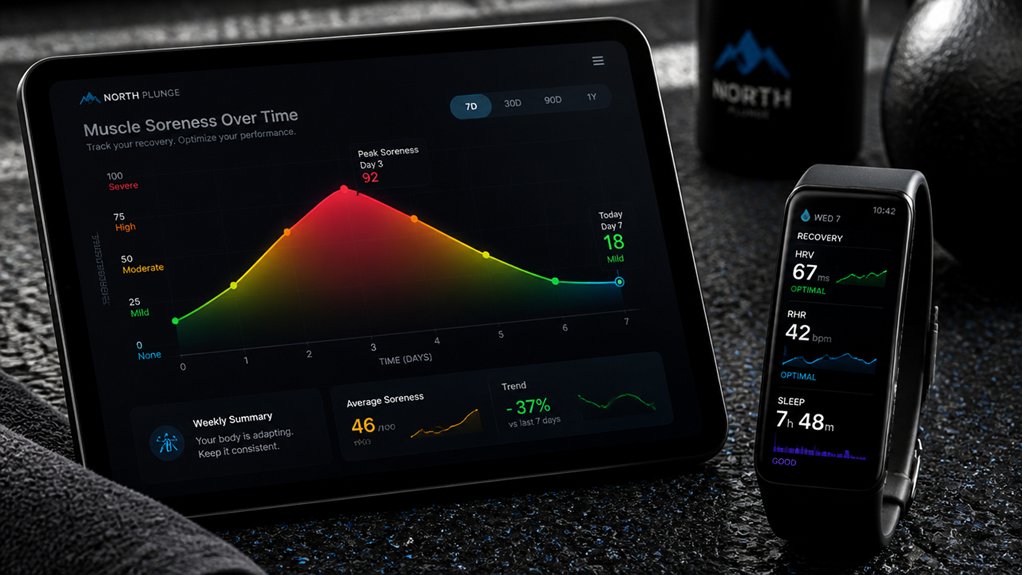
Tracking muscle soreness is an effective way to gauge your recovery progress after cold plunge sessions. By monitoring self-reported soreness ratings on a 1-10 scale before and after each session, you can see how your muscles respond.
With weeks of consistent cold plunge practice, many people notice a 15-25% decrease in DOMS, indicating improved muscle recovery. Regular soreness tracking helps you identify patterns and adjust your cold plunge frequency or duration for peak results.
Use recovery questionnaires or training readiness scores alongside soreness data to get a clearer picture of your overall recovery. This approach guarantees you’re not just relying on subjective feelings but objectively measuring how cold plunges influence your muscles’ ability to recover after intense workouts. Incorporating magnesium-based recovery creams into your routine may also support faster muscle repair and reduce soreness over time.
Monitor Heart Rate Variability for Better Nervous System Balance
Monitoring heart rate variability (HRV) after cold plunges provides valuable insight into how well your nervous system is recovering and adapting. HRV reflects the balance between your parasympathetic nervous system and sympathetic nervous system, key components of your autonomic nervous system.
After cold plunge therapy, an increase in HRV indicates improved vagal tone, signaling better nervous system balance and recovery benefits. Tracking HRV regularly helps you see how cold exposure enhances your stress resilience and autonomic nervous system adaptation. A rising HRV trend over weeks suggests reduced sympathetic activation and enhanced relaxation capacity.
Combining HRV data with subjective measures like energy levels gives you a clear picture of your nervous system’s response, supporting ideal post-plunge recovery and mental well-being. Cold environments can cause peripheral vasoconstriction, which may temporarily affect heart rate sensors but overall, proper device choice and consistent monitoring can still provide reliable insights into your sensor accuracy.
Assess Sleep Quality to Gauge Restorative Benefits of Cold Water Therapy
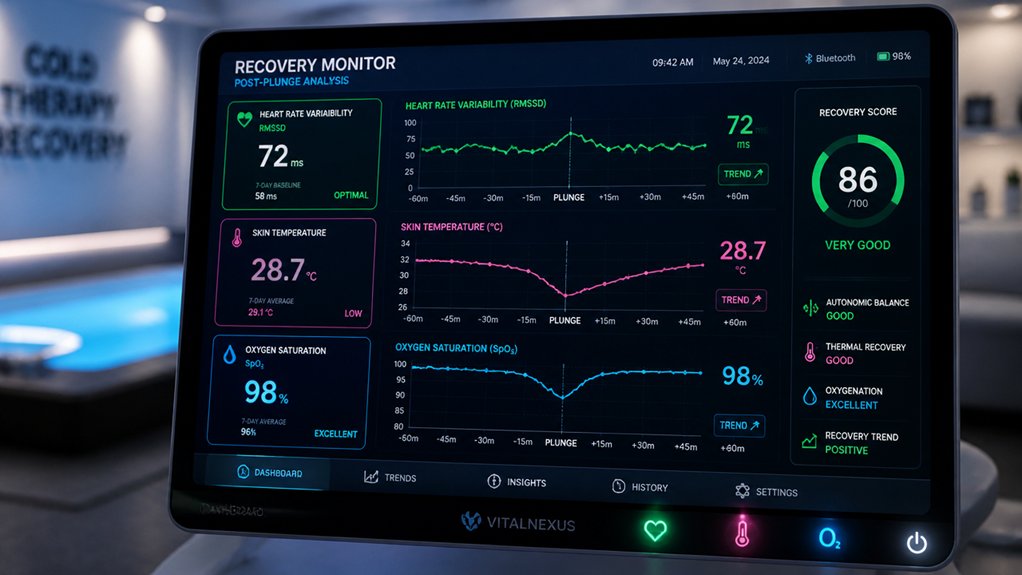
Monitoring how quickly you fall asleep and the total sleep you get helps reveal the restorative effects of cold water therapy. Tracking changes in sleep cycles and awakenings provides insight into how well your body recovers overnight. By comparing these metrics over time, you can better understand the true impact of cold plunges on your sleep quality. Incorporating data from recovery tracking apps can further enhance your understanding of your body’s response to cold water therapy.
Effects on Sleep Onset
Cold water therapy can greatly influence how quickly you fall asleep by triggering a core temperature drop approximately 60 to 90 minutes after your plunge. A cold plunge reduces your core temperature, easing the shift into sleep and decreasing sleep onset latency.
Evening cold plunges at water temperatures between 58-62°F help prevent overstimulation, promoting smoother sleep initiation. Regular, consistent sessions over two to four weeks amplify benefits, improving overall sleep quality.
Tracking your sleep onset with wearable devices or sleep journals provides objective data to assess progress. Subjective assessments—like noting how fast you fall asleep or nighttime awakenings—complement these measures. Monitoring these effects helps determine how cold plunge therapy supports restorative sleep and enhances your overall sleep health. Additionally, choosing a smartwatch with appropriate water resistance ratings ensures reliable tracking during cold water immersion routines.
Impact on Sleep Cycles
By evaluating your sleep patterns beyond just how quickly you fall asleep, you can better understand how cold water therapy influences restorative sleep. Cold plunge sessions spaced over two hours before bedtime, with water around 58-62°F, help lower core body temperature and boost sleep efficiency. Using sleep tracking devices or apps can provide accurate data on how your sleep quality changes over time. Tracking metrics like heart rate variability (HRV) reveals increased parasympathetic activation, promoting deeper sleep stages. To assess sleep cycle improvements:
- Monitor deep sleep duration for signs of restorative sleep.
- Record nighttime awakenings to identify disruptions.
- Measure sleep efficiency by comparing total sleep time to time in bed.
- Use subjective questionnaires alongside objective data for thorough insight.
Consistent cold plunge routines over several weeks can enhance overall sleep quality and support healthier, more restorative sleep cycles.
Log Energy and Mood to Detect Signs of Overtraining or Fatigue
Tracking your daily energy and mood after cold plunges helps you spot early signs of overtraining or fatigue. A blood oxygen level measurement can provide additional insight into how well your body is responding to recovery, especially when combined with other indicators. Monitoring these patterns regularly allows you to make informed decisions to avoid burnout and optimize recovery.
Mood Fluctuations Signaling Fatigue
Monitoring mood fluctuations after cold plunge sessions offers a practical way to detect early signs of fatigue or overtraining. Tracking daily mood and energy scores helps identify subtle changes that indicate nervous system fatigue. Incorporating adaptogens may further support stress regulation and recovery during these routines.
To refine your recovery process, consider these points:
- A persistent low mood or irritability signals the need for rest days.
- Increased emotional volatility suggests overstimulation or inadequate recovery.
- Fluctuations in mood stability can reflect stress response modulation from cold plunge intensity.
- Consistent declines in mood or energy scores may point to overtraining or nervous system stress.
Energy Levels Decrease Indicators
Paying close attention to your energy levels after cold plunge sessions can reveal early signs of overtraining or fatigue. Log your post-plunge energy and mood on a 1-10 scale immediately after and several hours later. If your energy levels consistently drop below 7/10 over weeks, it may signal cumulative fatigue and the need to adjust your cold plunge routine. Incorporating amino acid support from your recovery regimen can also aid in reducing muscle soreness and promoting faster repair. Monitoring mood alongside energy helps distinguish physical fatigue from psychological stress or burnout caused by excessive cold exposure. Using weekly questionnaires or readiness scores can reveal trends indicating sympathetic nervous system overstimulation. Recognizing these decrease indicators allows you to modify session frequency or duration, supporting better recovery and safeguarding your mental health. Maintaining consistency in tracking guarantees you catch early signs and prevent prolonged fatigue.
Tracking Patterns for Overtraining
Keeping a close eye on your daily energy and mood levels can reveal important early signs of overtraining or fatigue. Consistently logging these metrics alongside cold plunge sessions helps identify downward trends over time.
To accurately track patterns:
- Monitor post-plunge energy levels, noting persistent dips.
- Record mood ratings to detect sustained low states.
- Measure heart rate variability (HRV) regularly to assess autonomic nervous system fatigue.
- Use recovery readiness questionnaires to compare subjective feelings with objective data.
These combined insights reveal if excessive cold exposure or training stress is overstimulating your sympathetic nervous system.
See How Long You Feel Cold and How Tolerance Grows Over Time
Ever notice how your body responds immediately after a cold plunge? The duration you feel cold reflects your growing cold tolerance. With consistent exposure, this time drops by 30-50% in four weeks, showing your body’s adaptation. Recording the intensity of cold shock on a scale helps track discomfort reduction. Monitoring post-plunge shivering—its duration and severity—indicates physiological responses improving over time. Fewer breaths per minute during breath cycles by week 6 highlight better autonomic control. The table below illustrates these changes:
| Metric | Week 1 | Week 4 | Week 6 |
|---|---|---|---|
| Feeling cold duration | 10 minutes | 5-7 minutes | 3-4 minutes |
| Cold shock intensity | 7/10 | 4/10 | 2/10 |
| Shivering duration | 5 minutes | 2 minutes | Less or none |
| Breaths per minute | 12 breaths | 8 breaths | Fewer than 5 |
Tracking these metrics showcases your increasing cold tolerance and improved mental resilience.
Use Training Readiness Scores to Optimize Cold Plunge Frequency
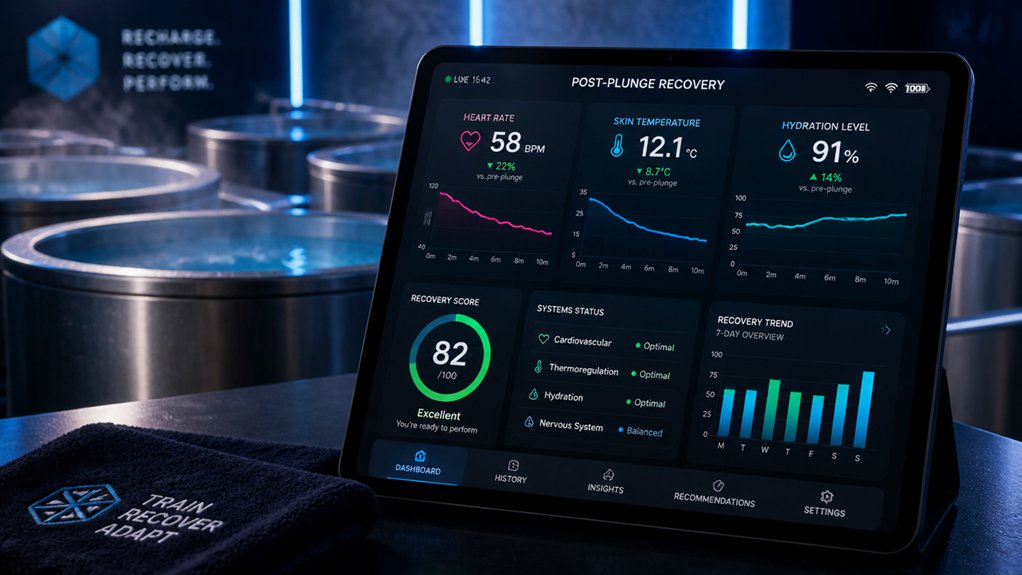
Monitoring how your body responds to cold plunges goes beyond tracking physical sensations; using training readiness scores offers real-time insights into your recovery status. By regularly evaluating your readiness, you can:
- Adjust cold plunge frequency to prevent nervous system fatigue and overtraining.
- Optimize performance recovery by balancing hormetic stress and anti-inflammatory effects.
- Tailor plunge timing and duration to support muscle adaptation without impairing recovery.
- Enhance adherence by recognizing recovery plateaus and addressing setbacks promptly.
These scores, combining subjective questionnaires and biometric data, guide you in maintaining a consistent routine of 3-4 sessions weekly, maximizing benefits while avoiding burnout.
In this way, training readiness becomes a powerful tool to fine-tune your cold plunge strategy for better overall recovery.
Keep Consistent Recovery Data to Fine-Tune Your Cold Plunge Routine
Tracking your recovery data consistently allows you to identify patterns and make precise adjustments to your cold plunge routine. Record muscle soreness on a 1-10 scale before and after sessions to measure improvements and tweak the duration or temperature, typically between 10-15°C for 2-15 minutes.
Use subjective training readiness questionnaires or daily recovery scores to see how your cold plunge impacts workout performance and fatigue over time. Note changes in mental clarity and mood stability within 4-8 hours post-plunge to assess neurological benefits.
Additionally, log sleep quality metrics, especially after evening plunges, to optimize session timing. Monitoring adherence to specific temperature and minutes guarantees sustained anti-inflammatory and metabolic benefits, enabling you to refine your routine for better recovery and muscle health.
Frequently Asked Questions
How to Measure Recovery After a Workout?
You should measure recovery by tracking muscle soreness, using readiness questionnaires, monitoring HRV, recording performance metrics, and rating mental clarity and mood. These combined indicators give you an all-encompassing view of your recovery progress.
Is a 2 Minute Cold Plunge Enough?
Yes, a 2-minute cold plunge can be enough for beginners, activating your sympathetic system, reducing soreness, and promoting recovery. Consistent sessions three times weekly can provide significant benefits, making it a practical, safe, and effective recovery method.
What Should You Do Immediately After a Cold Plunge?
Immediately after a cold plunge, you should dry off thoroughly with a warm towel, put on dry, warm clothes, rehydrate with warm fluids, and consume a balanced snack. This helps stabilize your temperature and supports recovery effectively.
Do Professional Athletes Use Ice Baths?
Yes, professional athletes use ice baths regularly to speed up muscle recovery, reduce soreness, and improve performance. They strategically time these baths after intense sessions, combining them with other recovery techniques for maximum benefit and minimized risks.