
For stress relief, aim for cold plunges lasting 2–4 minutes in water around 50–57°F, performed 3–5 times weekly. Start with shorter sessions and gradually increase their duration as your body adapts, but avoid exceeding 8–10 minutes to prevent stress overload. Focus on controlled breathing to stay calm and safe during each plunge. Want to discover how to optimize these sessions and avoid common pitfalls? Keep exploring to reveal more effective strategies.
Understanding How Cold Plunge Duration Impacts Stress and Relaxation
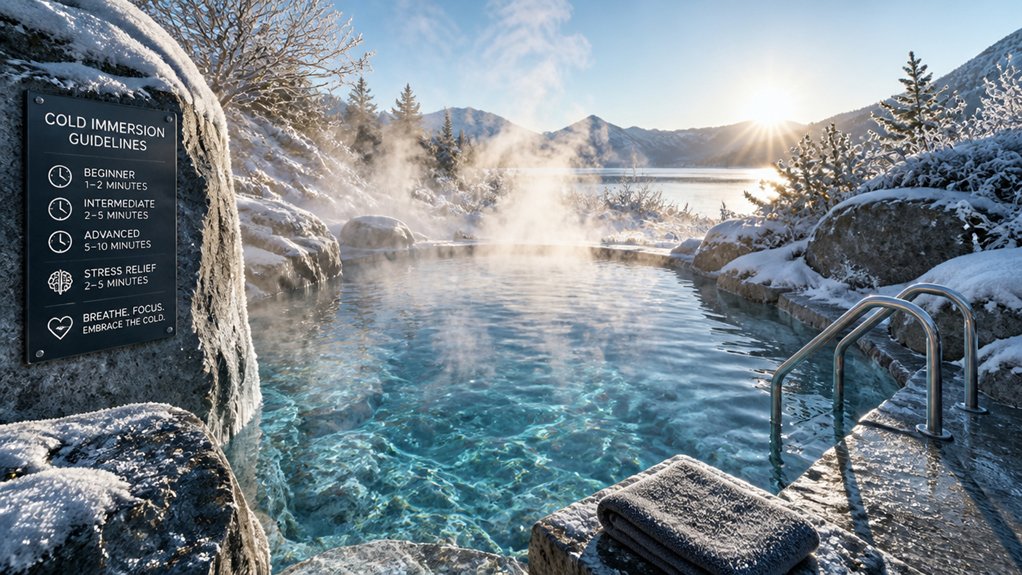
Understanding how cold plunge duration affects stress and relaxation is key to maximizing their benefits. When you stay in a cold plunge for 2-4 minutes at 50-57°F, your body elevates norepinephrine levels, which helps reduce cortisol and boosts stress resilience.
Beginners should start with 1-2 minutes, focusing on controlled breathing to prevent cold shock and promote relaxation. Duration is vital—going beyond 5 minutes doesn’t considerably improve stress relief and can increase discomfort or cold stress.
Regular sessions, 3-5 times weekly, help regulate the sympathetic nervous system and support parasympathetic recovery, leading to mental clarity and improved mood. Incorporating breathwork during the cold plunge optimizes relaxation, emphasizing the importance of consistent practice for lasting benefits. Additionally, using effective recovery tracking apps and tools can help monitor your sessions and optimize recovery strategies.
How Brief Cold Dips Help You Feel Calm and Focused
Short cold dips of 1 to 3 minutes at 50–55°F can quickly boost your mental clarity and focus. During cold water immersion, you experience a norepinephrine surge that sharpens your alertness by activating your sympathetic nervous system.
Controlled breathwork during the dip helps reduce panic, supporting a shift to parasympathetic relaxation afterward, which enhances calmness. Cold exposure also elevates dopamine levels by up to 250%, improving your mood and sustained focus.
Regular cold dips 3-4 times weekly, especially in the morning, increase stress resilience by balancing cortisol and promoting a healthy hormonal response. These brief immersions improve focus and reduce stress by enhancing vagal tone and heart rate variability, key indicators of a calm, resilient nervous system.
What’s the Ideal Cold Plunge Time for Beginners and Experts?
For beginners, sticking to 1–2 minutes helps build tolerance without risking discomfort, while focusing on controlled breathing.
As you gain experience, extending sessions to 3–5 minutes can enhance benefits like reduced inflammation and mental clarity.
For more advanced users, going up to 8–10 minutes can be beneficial, but it’s important to watch your body’s signals to avoid hypothermia. Additionally, using a well-insulated tub with temperature stability can help maintain safe and effective cold plunge durations.
Beginners: Short, Steady Dips
Starting with brief, controlled cold plunges allows beginners to enjoy the benefits of stress relief without risking overexposure or discomfort. Keep your cold plunge durations between 1 to 2 minutes, focusing on controlled breathwork to prevent shivering and overexposure.
Maintaining steady dips helps you build resilience in your nervous system while reducing the risk of sudden discomfort. Use temperatures in the range of 50–59°F (10–15°C) to guarantee safety and effectiveness for beginners.
As your comfort and resilience improve, you can gradually extend your plunge time. Avoid rushing into longer durations until you’re confident, as excessive cold exposure can cause stress or harm. Additionally, choosing a durable, insulated tub with proper temperature control features can enhance safety and comfort during your recovery sessions.
Experts: Extended Cold Exposure
As you gain confidence with brief, steady cold plunges, you can gradually extend your sessions to reap more profound physical and mental benefits. Extended cold exposure, lasting up to 8–10 minutes, enhances stress resilience and recovery.
To do this safely, maintain controlled breathing to manage the cold shock response and avoid discomfort. Keep the temperature between 10°C–15°C (50°F–59°F), with longer durations at the lower end for seasoned users.
You’ll experience heightened mental clarity, reduced inflammation, and improved stress relief from longer dips. However, don’t exceed 15 minutes, as it increases risk.
Proper duration guarantees a balance between getting the benefits of cold plunge and safety, maximizing the positive effects on your body and mind.
Monitoring Body Responses
Monitoring how your body responds during a cold plunge is essential to determine the ideal duration for your experience. Pay attention to signs such as shivering, which indicates your water temperature or immersion duration might be too intense.
Focus on steady breathing and avoid uncontrollable shivering to stay safe and comfortable. Controlled breathwork helps you acclimate and maintain calm mental states, making it easier to extend your cold plunge time safely.
Beginners should start with 1–2 minutes in water between 50–59°F (10–15°C), gradually increasing as your individual tolerance improves. Intermediate and advanced users can extend their cold plunge time to 3–5 or even 8–10 minutes while monitoring body responses carefully.
Always prioritize your comfort, ensuring your stress relief goals align with your physical signals.
Why Longer Cold Dips Aren’t Always Better for Stress Reduction

Although it might seem intuitive that longer cold dips could enhance stress relief, research shows this isn’t the case. Extending your cold plunge beyond 8-10 minutes often increases discomfort and can harm your progress. Longer sessions may elevate cortisol levels and strain your cardiovascular system, making stress worse instead of better. Shorter, controlled dips, around 2-4 minutes, activate your sympathetic nervous system and promote norepinephrine release, both essential for stress reduction. Additionally, proper water temperature control can prevent overstimulation and ensure a safe, effective experience. Remember, *consistency matters*: sticking to moderate plunge durations helps sustain long-term resilience. Overly long durations can also disrupt sleep quality and recovery, negating the calming effects. Prioritize moderate timeframes to maximize mood benefits without risking adverse effects.
How to Safely Increase Your Cold Plunge Time Gradually
Start with brief plunges of 1–2 minutes at 50–55°F to let your body adapt safely.
Gradually extend your time by 30 seconds to a minute every few sessions, making sure you stay calm and breathe steadily.
Pay close attention to your body’s signals, and stop immediately if you feel numbness, dizziness, or uncontrolled shivering.
Understanding water temperature safety guidelines can help prevent adverse effects and ensure a comfortable cold plunge experience.
Build Tolerance Step-by-Step
Building tolerance to cold plunges should be done gradually to guarantee safety and maximize benefits. Start with 1–2 minutes at 50–55°F, focusing on controlled breathwork to manage cold stress and prevent shivering. To build tolerance: – Incrementally increase exposure time by 30 seconds to 1 minute every 1–2 weeks – Maintain stable body temperature and breathing during each session – Progress to colder temperatures (down to 45–50°F) over 4–6 weeks – Never exceed 8–10 minutes to avoid unnecessary risks without added benefits. Consistent practice, three to four times weekly, facilitates nervous system adaptation and reduces shock response. Additionally, using an energy-efficient chiller can help maintain precise temperatures and consistent cold exposure over time, supporting your gradual buildup safely.
Listen to Body Signals
As you increase your cold plunge duration, paying close attention to your body signals guarantees safe and effective progress. Listen to your body and combine controlled breathwork to stay calm and avoid uncontrollable shivering. Proper water treatment using suitable products ensures water quality and hygiene, supporting a safer cold plunge experience. Start with short cold plunge durations of 1–2 minutes, and only gradually increase your time by about 30 seconds to 1 minute per session once you feel comfortable without signs of cold shock or discomfort. Monitor the body signals carefully—numbness, dizziness, or excessive shivering indicate it’s time to exit. Never push beyond safe limits; aim for 3–5 minutes for stress relief and inflammation reduction. Prioritize safety by respecting your cues, ensuring steady adaptation of your nervous system and reducing risks of hypothermia or adverse reactions.
When and How to Cold Plunge for Maximum Stress Relief
Wondering when and how to cold plunge for the best stress relief? Your first cold plunge should be gentle—start with 1–2 minute immersions focusing on slow nasal breathing to lower cold shock.
Ideal timing is in the morning, before the day gets busy, to take advantage of natural cortisol peaks and boost mood. Perform sessions 3–4 times weekly at 10–15°C (50–59°F) to promote dopamine and norepinephrine surges that enhance stress relief.
Keep plunging consistent over 2–4 weeks to strengthen your parasympathetic response and boost vagal tone. Remember, avoid plunging right after strenuous workouts. Incorporating measured breathing techniques during your sessions can further amplify relaxation benefits and support recovery from cold exposure.
Common Mistakes to Avoid When Using Cold Water for Stress Relief
When using cold water for stress relief, it’s crucial to avoid common mistakes that can undermine your efforts or cause harm. Don’t exceed five minutes in your cold plunge, as longer durations can increase cortisol and negate stress reduction.
Avoid plunging into water colder than 10°C (50°F) without proper acclimation; excessive cold can trigger a cold shock response and heighten stress. Skipping breath control during immersion may lead to panic, so practice controlled breathing to manage your response and prevent escalation.
Keep a consistent schedule, ideally 3-4 times weekly, to sustain dopamine release and mood improvements. Finally, never begin cold plunges without medical clearance if you have cardiovascular or neurological issues, since cold stress might worsen health conditions instead of providing relief.
Frequently Asked Questions
Is a 10 Minute Cold Plunge Too Long?
A 10-minute cold plunge is likely too long for most people, especially if you’re not experienced. It can increase risks like hypothermia and stress your cardiovascular system, so sticking to safer durations of 1–5 minutes is advisable.
How Long Does Joe Rogan Stay in Cold Plunge?
Joe Rogan stays in his cold plunge for about 2 to 3 minutes, maintaining a water temperature of 50–59°F. He focuses on controlled breathing, avoiding overexposure, and often plunges 3 to 4 times weekly for maximum stress relief.
What Is the Optimal Length of Time to Cold Plunge?
You should aim for a cold plunge lasting 3 to 5 minutes, as this is ideal for stress relief, mood improvement, and mental clarity, especially when combined with controlled breathing to maximize relaxation and minimize risks.
Is a 3 Minute Cold Plunge Good?
Yes, a 3-minute cold plunge is good for you. It reduces inflammation, boosts mood by releasing dopamine, and enhances mental clarity without risking overexposure or health issues, especially if you’re an intermediate or beginner seeking effective stress relief.