
To effectively reduce swelling, stick to ice baths lasting 2 to 4 minutes at water temperatures between 10°C and 14°C. Shorter sessions activate your body’s natural anti-inflammatory response through vasoconstriction, minimizing risks like numbness or frostbite. Avoid exceeding 10 minutes or going colder for safety. By following these guidelines, you support recovery while staying safe—and there’s more to discover about optimizing your cold therapy.
What Is the Ideal Duration for Ice Baths to Reduce Swelling?
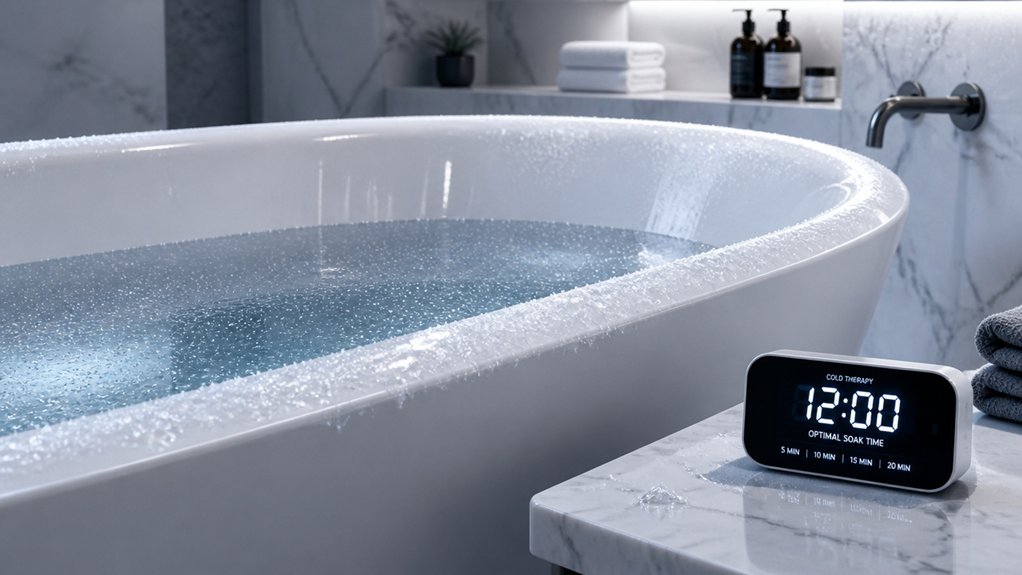
How long should you stay in an ice bath to effectively reduce swelling? The ideal duration is typically between 2 to 4 minutes. Staying within this window helps you reduce inflammation without risking adverse effects.
Keep the water temperature between 10°C and 14°C for peak results. It’s important not to exceed 10 minutes, especially during initial sessions, to help your body safely adapt to cold exposure. Ending the ice bath upon feeling discomfort, dizziness, or numbness guarantees safety and maximizes swelling reduction.
Using proper insulation techniques in your setup can help maintain consistent temperatures and improve overall efficacy. Consistently using ice baths 2-3 times weekly can effectively manage inflammation and minimize swelling after injury or intense activity. Stick to this timeframe and temperature range, and you’ll harness the full benefits of cold therapy for swelling control.
Why Do Shorter Cold Exposures Work Better Than Longer Sessions?
Shorter cold exposures, usually between 2 and 4 minutes, work better than longer sessions because they effectively activate the body’s natural anti-inflammatory response without risking tissue damage. Cold water causes vasoconstriction, which reduces blood flow and inflammation efficiently during brief immersions.
A pressure levels in compression boots can help optimize recovery times and prevent overcompression that might hinder circulation.
Longer exposure can impair circulation, leading to numbness or skin irritation that might worsen swelling or delay recovery. Ending cold treatments early also prevents excessive skin dryness and irritation, both of which can be counterproductive.
Maintaining shorter sessions helps preserve the vascular pump effect by alternating constriction and dilation, without overwhelming your blood vessels. While individual tolerance varies, exceeding 10 minutes in cold water often blunts anti-inflammatory effects and increases discomfort, making shorter durations the smarter choice.
How Water Temperature Affects Your Ice Bath Timing?
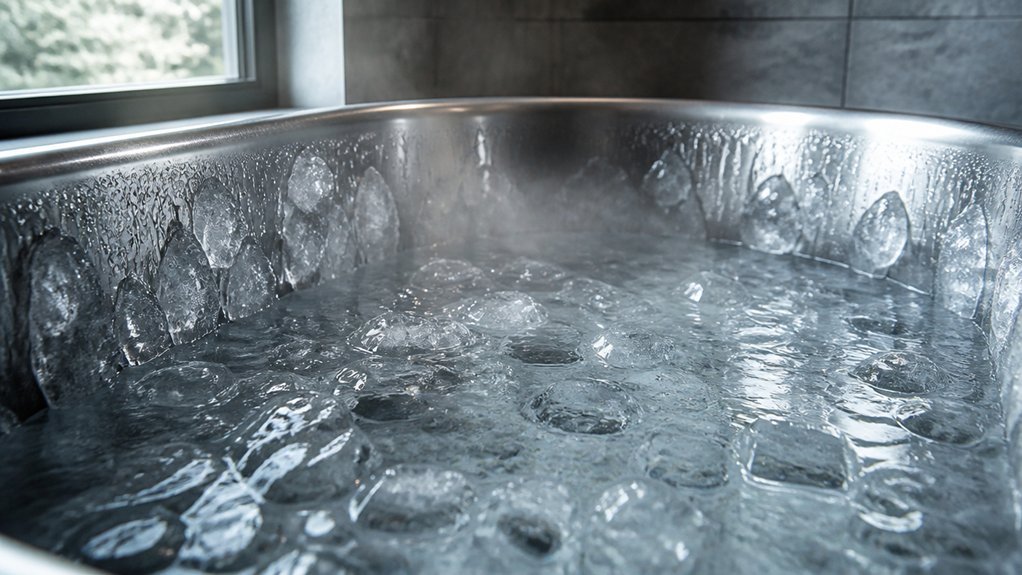
Ever wondered how water temperature influences your ice bath timing? It’s vital because ideal water temperature, ideally between 10–14°C, helps reduce swelling effectively while keeping health risks minimal.
Water temperature between 10–14°C is key for safe, effective ice bath recovery.
Cooler water within this range may require shorter soak times initially to prevent discomfort like numbness or dizziness. Staying in the bath too long, even at the right temperature, can cause tissue damage, so sticking to 2 to 4 minutes is recommended, with a maximum of 10 minutes.
Your body’s response varies with temperature, so monitor how you feel during each session. Maintaining proper water temperature supports your health by enhancing inflammation reduction without overexposing your body to cold, ensuring safe and effective recovery.
Proper timing based on temperature safeguards your well-being.
What Are the Risks of Staying in an Ice Bath Too Long?
Staying in an ice bath too long can put you at risk of hypothermia, numbness, and poor circulation.
If you go beyond the recommended time, you might also experience discomfort, dizziness, or nerve injury. Knowing when to exit helps protect your body from these dangers and guarantees safe recovery. A proper temperature range is essential to avoid adverse effects and optimize the benefits of cold therapy.
Risk of Hypothermia
Spending too long in an ice bath can dangerously lower your core body temperature, increasing the risk of hypothermia. Staying beyond 10 minutes or in water colder than 14°C (57°F) greatly raises this risk. To visualize this:
| Cold Water Effect | Body Response | Result |
|---|---|---|
| Rapid heat loss | Core temperature drops | Hypothermia risk increases |
| Dizziness | Reduced blood flow | Drowsiness or fainting |
| Numbness | Nerve response slows | Loss of coordination |
Remain vigilant, and exit immediately if symptoms appear, seeking medical help when needed. Your safety depends on watching for these signs. Proper thermal insulation can also help maintain water temperature and reduce sudden heat loss.
Numbness and Reduced Circulation
Prolonged immersion in an ice bath beyond the recommended time frames can greatly increase the risk of numbness and reduced blood circulation. When you stay in too long, vasoconstriction persists, cutting off blood flow to tissues. This can lead to numbness, tingling, or a burning sensation, signaling you should exit immediately. Extended cold exposure also causes tissue hypoxia, risking skin and nerve damage. Staying in an ice bath too long raises the chances of frostbite-like effects and impairs circulation recovery afterward. Dizziness and fainting are also risks due to reduced circulation. To stay safe, limit your sessions to 2–4 minutes initially and avoid exceeding 10 minutes. Paying attention to sensation during the process is essential to prevent cold-induced injury. Understanding the temperature control features and safe operational guidelines of your cold plunge tub can help you manage exposure time effectively.
How to Safely Gradually Increase Your Ice Bath Duration
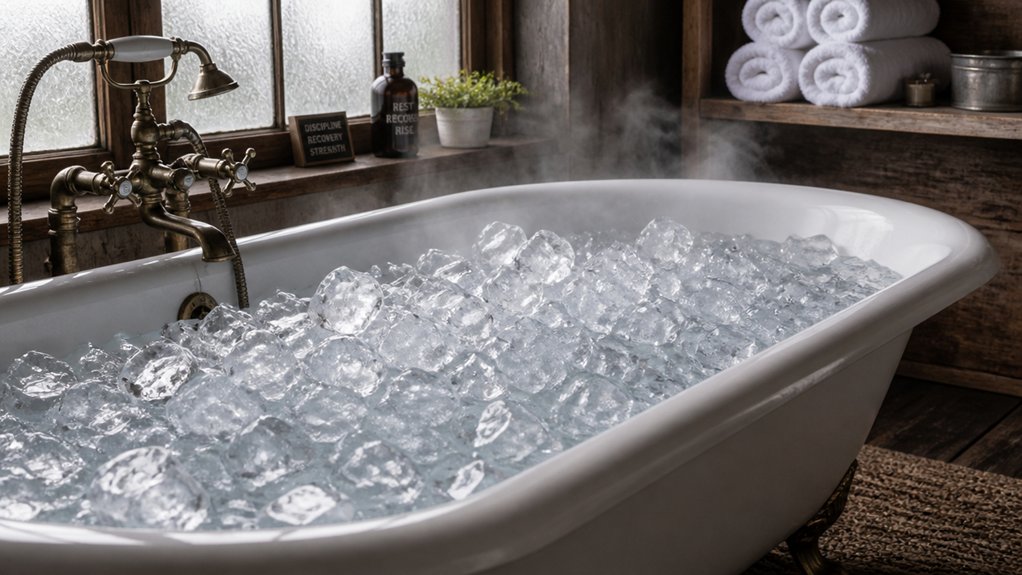
To safely increase your ice bath duration, start by maintaining sessions at 2 minutes in water temperatures between 10–14°C. Don’t push beyond 10 minutes initially to prevent adverse effects. Using a reliable shower timer can help you monitor your time accurately and stay within safe limits. As your body adapts and your tolerance improves, gradually extend the time spent in the bath by 30 seconds to 1 minute per session. Watch closely for signs of discomfort, dizziness, or numbness—and end the bath immediately if these occur. Consider these tips for a safe increase: – Hydrate well both before and after each session – Have a spotter or companion nearby for added safety – Keep track of your time spent during each bath – Avoid exceeding 10 minutes in early experiences
Signs It’s Time to End Your Ice Bath Early
If you notice numbness or tingling that doesn’t go away, it’s time to end your ice bath to protect your tissues.
Dizziness or feeling lightheaded are also signs you should stop immediately to avoid fainting or injury.
Trust your body: if anything feels unusually uncomfortable, exit the bath to stay safe.
Monitoring water clarity is important—cloudy or murky water can indicate imbalance or contamination, so stop your session if you notice these signs.
Unusual Numbness or Tingling
Have you ever felt numbness or tingling during an ice bath? If so, it’s a clear sign to listen to your body and stop immediately. These sensations indicate reduced blood flow and potential cold injury, meaning you should end the session to prevent nerve damage or frostbite.
Be mindful that Monitoring oxygen levels with a pulse oximeter can help track your body’s response to cold exposure more accurately.
Watch out for these signs:
- Unusual numbness or tingling in your limbs
- Persistent cold sensations or loss of feeling
- Pain or sharp discomfort in affected areas
- Any signs of skin discoloration
If you experience any of these, gently warm the area and avoid further cold exposure until sensation returns. Always stay alert to your body’s signals, as early intervention keeps you safe and helps prevent injury.
Dizziness or Lightheadedness
Dizziness or lightheadedness during an ice bath is a clear warning that your body needs to stop cold exposure immediately. These symptoms indicate decreased blood flow to your brain and can lead to fainting or falls if ignored.
Most people tolerate ice baths for only 2–4 minutes, but discomfort like dizziness may occur sooner. If you experience numbness along with lightheadedness, it signals excessive cold exposure and requires you to get out right away. Always pay attention to how you feel and exit the bath promptly at signs of faintness.
To reduce dizziness, hydrate well before and after, and gradually increase your tolerance through repeated sessions. Prioritizing safety guarantees you avoid injuries while reducing swelling effectively.
Tips to Maximize the Benefits of Ice Baths With Proper Timing
Timing is essential to getting the most benefit from ice baths without risking injury. To maximize results, keep your water temperature between 10–14°C, which helps with vascular constriction and swelling reduction.
Optimal ice bath benefits come from maintaining water between 10–14°C for safe vascular and swelling relief.
Stick to 2–4 minutes for each session, with a maximum of 10 minutes, to prevent cold-related injuries. Perform ice baths 2–3 times weekly, allowing your body time to recover.
Pay attention to your body signals, like numbness or dizziness—stop immediately if you feel those.
To enhance safety and benefits:
- Use a thermometer to monitor your water temperature
- Hydrate well before and after your bath
- Consider a spotter during initial sessions
- Listen to your body’s cues to avoid overexposure
Does Longer Cold Exposure Provide More Healing?
Does extending cold exposure beyond the recommended duration actually lead to better healing? The answer is no. Staying in cold water for more than 10 minutes, or considerably longer than the advised 2–4 minutes, doesn’t improve healing outcomes. Instead, it can cause side effects like skin irritation, numbness, or discomfort.
Prolonged cold exposure may risk tissue damage rather than aid recovery. Alternating cold and warm water for up to 15 minutes optimizes blood flow and swelling reduction without unnecessary overexposure. Cold water should stay between 10–14°C for effective therapy.
Adjusting Your Ice Bath Duration Based on Your Body’s Response
Instead of sticking rigidly to a set duration, it’s important to tailor your ice bath time based on how your body responds.
Listen to your body and adjust ice bath duration for optimal recovery and safety.
Pay close attention to signs like discomfort, dizziness, or numbness, and end the session immediately if these occur to prevent adverse effects.
As you gain experience, you can adjust your ice bath duration based on your body’s response. Here are some tips:
- Start with 2 to 4 minutes, not exceeding 10 minutes
- Gradually increase time as your tolerance improves
- Monitor for fatigue or prolonged soreness
- Hydrate well before and after each session
Limiting sessions to 2–3 times per week helps manage swelling effectively.
Adjust your ice bath duration based on your body’s response to optimize recovery without overdoing it.
What Science Tells Us About the Best Cold Plunge Lengths
Scientific research indicates that cold plunge durations of 2 to 4 minutes, with a maximum of 10 minutes, effectively reduce swelling and inflammation without increasing risk. These durations are ideal for targeting inflammation while limiting discomfort or adverse effects.
Water temperatures between 10–14°C (50–57°F) are recommended for cold baths aimed at swelling reduction, enhancing their effectiveness. It’s important to start with shorter durations, especially if you’re new to cold plunges, and gradually increase as your body adapts. Pay attention to signs like numbness, dizziness, or discomfort, which signal you should end the session.
Typically, 2–3 cold plunge sessions per week are sufficient, but individual tolerance and health status should guide the exact duration for safe and beneficial outcomes.
Starting Out: How to Use Shorter Ice Baths Safely
Start with ice baths lasting 2 to 4 minutes at temperatures between 10–14°C to prevent overwhelming your body.
Pay close attention to how you feel—discomfort, numbness, or dizziness are signs to end the session early.
As you build tolerance, gradually extend your time, always staying alert to your body’s signals.
Gradual Cold Exposure
Are you wondering how to safely ease into cold exposure through ice baths? Start by limiting your sessions to 2 minutes at 10–14°C. This short duration helps your body adapt without overwhelming it. Avoid exceeding 10 minutes initially to prevent discomfort, dizziness, or numbness.
During the process, listen carefully to your body signals—stop immediately if you experience excessive shivering or lightheadedness. Hydrate well before and after to support recovery and minimize risks.
Having a spotter or supervision during early cold exposure sessions guarantees safety and quick response if needed. You might consider alternating between hot baths and ice baths, easing your body gently into cold exposure.
This gradual approach helps your body adjust, making the shift safer and more effective.
Monitor for Discomfort
When beginning ice baths, paying close attention to how your body responds is essential for safety. You should monitor for discomfort throughout the session, watching for signs like dizziness, numbness, or excessive shivering. If any of these occur, end the bath immediately to prevent negative effects.
Start with just 2 minutes in water between 10–14°C (50–57°F), giving your body a chance to adapt safely. Keep a close eye on your reactions and don’t push beyond your comfort zone.
Hydrate before and after, and consider having a partner nearby in case you need assistance. Monitoring for discomfort helps you gauge your tolerance and guarantees you experience the benefits of ice baths without risking your well-being.
Limit Initial Duration
Beginning with shorter ice bath sessions helps your body adjust safely to cold exposure. The important thing is to start slowly to prevent discomfort or adverse reactions.
Keep these tips in mind:
- Limit initial sessions to 2–4 minutes for safe adaptation.
- Water temperature should be between 10–14°C for beginners.
- Pay close attention to your body’s signals; stop immediately if you feel dizziness, numbness, or discomfort.
- Starting with durations under 10 minutes minimizes risks like hypothermia or heart stress.
FAQs: How Long Should I Stay in an Ice Bath for Swelling Relief?
How long you should stay in an ice bath to reduce swelling depends on your tolerance and the specifics of your treatment. For most people, 2 to 4 minutes is effective, with a maximum of 10 minutes per session.
Keep the water temperature between 10–14°C (50–57°F) to avoid discomfort or harm. Your body’s individual response matters, so listen closely—stop early if you experience dizziness, numbness, or other health concerns.
Starting with shorter durations helps your body safely adapt to cold exposure. Repeating ice baths 2–3 times weekly can effectively manage swelling without overdoing it or risking negative health concerns.
Always prioritize how you feel during the process to guarantee safety and peak recovery.
Frequently Asked Questions
How Long Should You Soak in Epsom Salt to Reduce Swelling?
You should soak in Epsom salt for 15 to 30 minutes to effectively reduce swelling. This duration helps relieve soreness, but avoid exceeding 30 minutes to prevent skin irritation and unnecessary discomfort. Keep monitoring your skin during the soak.
Are Baths Good for Cortisol?
Baths can help regulate cortisol levels by promoting relaxation and reducing inflammation. Immersing in warm water for about an hour may lower stress hormones, especially when combined with calming techniques, though direct evidence on cortisol reduction remains limited.
Is 20 Minutes in an Ice Bath Too Long?
Yes, 20 minutes in an ice bath is too long. It risks numbness, dizziness, and tissue damage. You should limit your sessions to 2-4 minutes, never exceeding 10 minutes, and always pay attention to your body’s signals.
Can I Take a Bath With High Blood Pressure?
Yes, you can take a bath with high blood pressure, but keep the water warm—not hot—to avoid dizziness. Monitor your blood pressure, stay hydrated, and consult your doctor before regular baths, especially if you have cardiovascular concerns.