To boost your athletic performance, time your cold plunges carefully: wait 6-8 hours after resistance training to avoid impairing muscle growth, or plunge immediately after endurance events at 10-14°C to reduce soreness and inflammation. Keep sessions at 10-15°C for 5-10 minutes, 3-4 times weekly, and use contrast therapy for extra recovery benefits. Optimizing your timing and frequency is key — explore further tips to maximize your results.
Why Timing Your Cold Plunge Is Critical for Athletic Performance
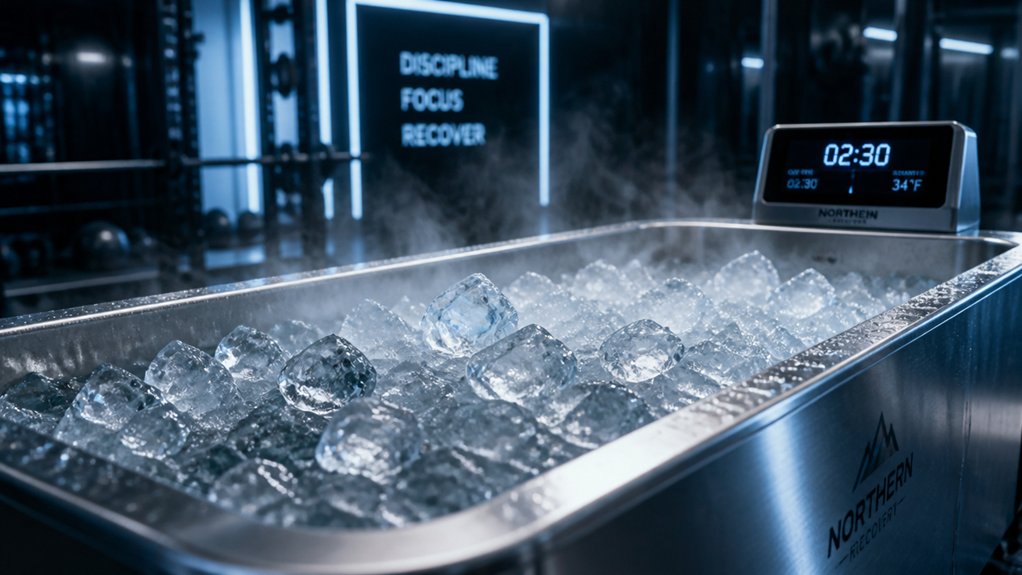
Timing your cold plunge is essential because when you do it at the right moments, you can maximize recovery or preserve muscle gains. Cold plunge alone isn’t enough; timing cold plunge sessions strategically impacts your performance gains.
For muscle recovery, delaying immersion 6-8 hours after resistance training helps maintain anabolic signaling and promotes muscle growth. If you want rapid recovery after endurance or competition efforts, immersing within 5-10 minutes at 10-12°C reduces inflammation and soreness effectively.
Pre-cooling 30-60 minutes before endurance events at 10-14°C lowers core temperature and delays fatigue but might reduce peak power. Using cold plunges on rest days or between high-frequency events guarantees recovery without compromising strength or hypertrophy, optimizing overall athletic performance.
How Cold Plunges Support Muscle Recovery and Reduce Soreness
Cold plunges support muscle recovery and reduce soreness by triggering vasoconstriction, which lowers inflammation and accelerates tissue repair. Immersing in 10-15°C water for 10-15 minutes after exercise helps diminish delayed onset muscle soreness (DOMS) by up to 25%. This process reduces inflammatory markers and creatine kinase levels, speeding up recovery. Temperature therapy features can enhance the effectiveness of cold plunges by providing rapid cooling and heating adjustments to better suit recovery needs. Regular cold water immersion activates your sympathetic nervous system, releasing norepinephrine by up to 500%, which also enhances mental sharpness and stress resilience during recovery.
What Is the Best Temperature for Athletic Cold Plunges?
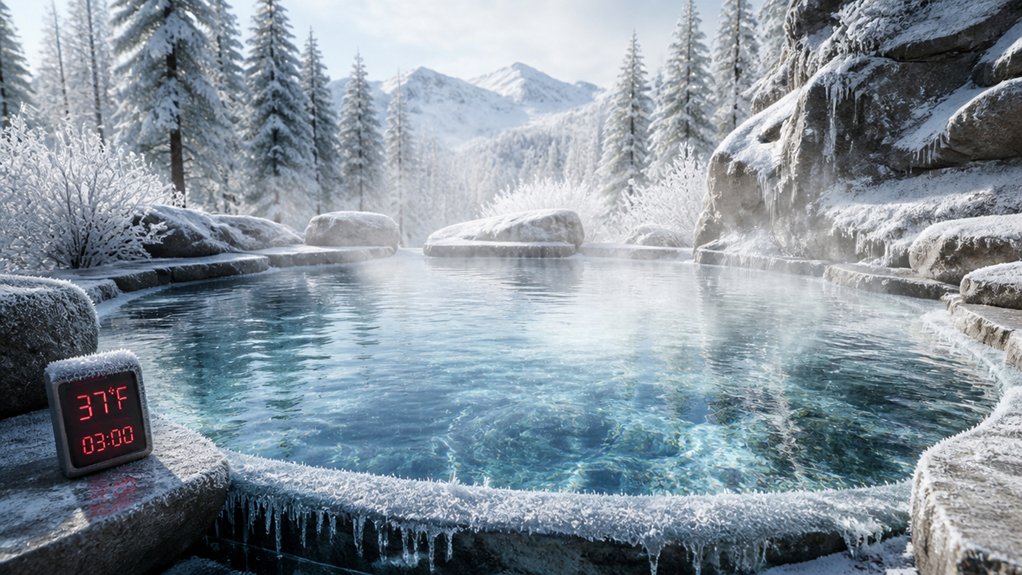
For ideal recovery, maintaining your cold plunge between 10-15°C is key. Temperatures around 10-12°C help reduce inflammation without risking cold shock, especially for beginners. Staying within this range maximizes benefits while keeping safety a priority. Using a high-powered chiller can ensure consistent and rapid cooling to your desired temperature.
Optimal Cold Temperature Range
Finding the ideal temperature for athletic cold plunges involves balancing effective recovery with safety. The best temperature typically falls between 10°C and 15°C (50°F to 59°F), ensuring cold water therapy maximizes benefits without risking cold shock.
Immersions within this range effectively induce vasoconstriction, reducing muscle soreness and inflammation, which accelerates recovery protocols. Temperatures below 10°C are generally avoided initially to prevent undue cardiovascular strain and discomfort during acclimation.
For in-season or competition recovery, sticking to 10-12°C helps rapidly decrease swelling and muscle soreness post-exercise. Maintaining water within this best temperature range also promotes norepinephrine release, supporting mental sharpness and stress resilience—key factors in athletic performance.
Staying within these bounds optimizes recovery while ensuring safety during cold plunges. Additionally, selecting tubs with accurate temperature control features can help maintain the water within the ideal range more consistently.
Effects of Temperature Variations
Temperature variations in athletic cold plunges play a crucial role in determining both recovery outcomes and safety. For best results, keep the water between 10°C and 15°C (50°F to 59°F).
Immersing at 10-12°C (50-55°F) post-exercise helps reduce muscle soreness and swelling while minimizing cold shock risks and cardiovascular strain.
Longer plunges within this range—8 to 15 minutes—deliver anti-inflammatory benefits essential for recovery and muscle repair, ultimately improving athletic performance. Shorter dips around 10°C can boost mental resilience through norepinephrine release but aren’t as effective for deep muscle recovery.
Temperatures below 10°C increase the risk of hypothermia and cardiovascular stress, especially for beginners, making them less suitable for routine athletic cold plunges aimed at recovery and performance gains. Incorporating ultra-low temperature controls can help tailor cold exposure precisely for optimal results and safety.
How Long Should You Stay in the Cold Plunge for Optimal Benefits?
The ideal time you should spend in a cold plunge depends on your experience level and goals.
Staying submerged for 2-3 minutes is recommended for beginners, while more advanced athletes can extend sessions up to 15 minutes for deeper benefits. Longer immersions can boost recovery but also increase risks, so knowing the right duration is essential. Choosing an appropriately sized ice bath tub with sufficient capacity and insulation can help maintain optimal water temperature and safety during extended sessions.
Optimal Session Duration
For best benefits, most athletes should aim to stay in the cold plunge for 5 to 10 minutes, balancing anti-inflammatory effects with safety. This duration maximizes recovery, reduces soreness, and supports overall performance without risking hypothermia. Beginners should start with 2-3 minutes at 10-15°C, gradually increasing sessions over time. Effective durations fall within the 5-10 minute range to trigger muscle flushing and inflammation reduction. Staying beyond 15 minutes can lead to nerve damage and unsafe core cooling. Keep these key points in mind: – Cold plunge duration impacts muscle recovery and soreness reduction – Shorter sessions boost mental clarity and norepinephrine levels – Longer sessions aid deeper inflammation flushing – Proper water treatment and water quality maintenance are vital for safe and hygienic immersions preventing bacterial growth and ensuring a healthy cold plunge experience. Always prioritize safety and avoid excessive immersion times for peak training results.
Effects of Extended Immersion
Extending your cold plunge beyond the typical 5-10 minutes can amplify recovery benefits, but it requires careful consideration to avoid potential health risks. An ideal cold plunge immersion duration of 8 to 15 minutes at 10-15°C can greatly enhance anti-inflammatory effects and reduce muscle soreness. Using a high-quality chiller with efficient insulation and quiet operation can support longer sessions by maintaining consistent water temperature without excessive noise. Longer immersion durations allow for deeper flushing of cytokines and lactic acid, which speeds up muscle repair and strengthens recovery. However, immersing for more than 15 minutes isn’t recommended, as it increases the risk of hypothermia and nerve damage. If you’re a beginner, start with shorter sessions of 2-3 minutes and gradually increase your immersion time by one minute each session. Regular use of 10-15 minutes, 3-4 times weekly, offers measurable recovery improvements.
How Often Should Athletes Do Cold Plunges During Training?
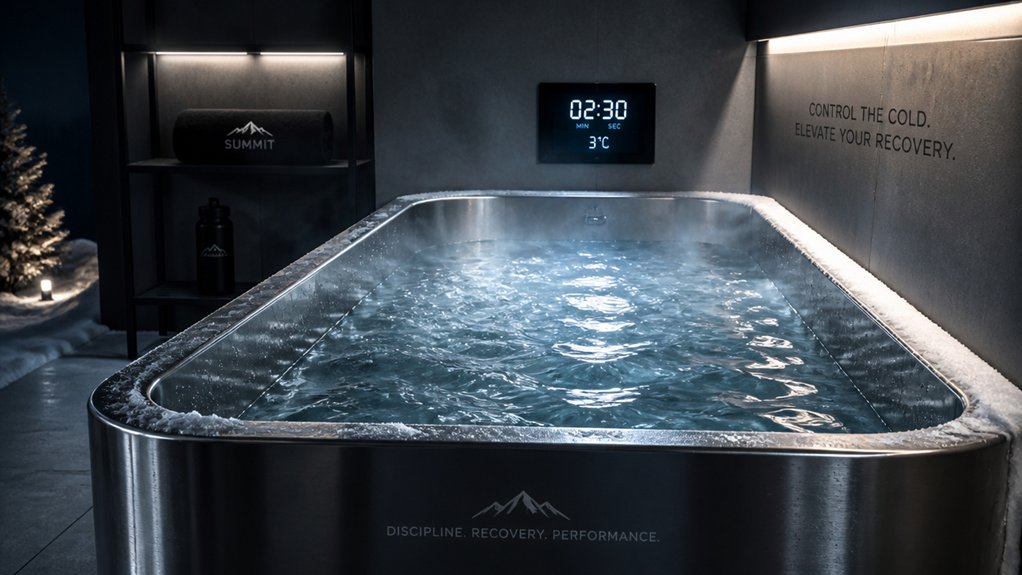
How often you should do cold plunges depends on your training goals and phase, but generally, 3 to 4 sessions per week offer the best balance for recovery and anti-inflammatory benefits. This frequency helps athletes optimize muscle recovery without hindering adaptations. During high-load training or competitions, increasing sessions can speed recovery, while during hypertrophy phases, fewer sessions prevent blunting muscle growth. Endurance athletes may benefit from weekly or bi-weekly cold plunges to manage inflammation. To maximize benefits, schedule your cold plunge on non-lifting days or at least 6-8 hours after resistance training. Additionally, incorporating water care and maintenance practices can help prolong the water quality and ensure safe, effective sessions. – Maintain consistent, evenly spaced sessions – Adjust frequency based on training intensity – Balance recovery and adaptation needs – Incorporate cold plunge cautiously during different training phases
Step-by-Step Guide to a Safe and Effective Cold Plunge Routine
To guarantee you get the maximum benefits from your cold plunge while staying safe, follow a structured routine that emphasizes gradual adaptation and proper timing. Start with water between 10-15°C (50-59°F), immersing for 2-3 minutes while controlling your breathing. Progress by adding one minute per session, aiming for 10-15 minutes based on your tolerance. Always enter and exit slowly to prevent dizziness and stress. Avoid plunging after heavy meals or alcohol. Afterward, dry off immediately and warm up gradually with dry clothes and hydration—avoid hot showers. Schedule sessions 3-4 times weekly, spreading them evenly across your training week for prime muscle soreness relief and recovery.
| Step | Action |
|---|---|
| Initial immersion | 2-3 minutes at 10-15°C, start gradually |
| Duration increase | Add 1 minute per session, up to 10-15 minutes |
| Post-plunge care | Dry off, warm gradually, hydrate; avoid rapid temperature changes |
When Is the Best Time to Cold Plunge Around Your Workouts?
Timing your cold plunges can greatly impact your recovery and training gains. You’ll want to take into account how soon after your workout you plunge, balancing recovery with muscle adaptation.
Understanding the best windows for post-workout recovery, pre-workout cooling, and contrast sessions helps you maximize benefits.
Post-Workout Recovery Timing
When deciding the best time to cold plunge after your workout, it’s important to take into account your training goals. For muscle growth and strength, delay the cold plunge by 6-8 hours post-training to avoid blunting muscle protein synthesis and mTOR signaling, which are essential for gains.
Immediate cold plunging can be useful for rapid recovery, especially for in-season athletes, by reducing swelling and soreness. Endurance athletes may benefit from cold plunges 6-24 hours after hard workouts to lower inflammation and support muscle power restoration without hindering adaptation.
If you’re a beginner, start with shorter sessions (2-3 minutes) and avoid exceeding 15 minutes. Remember, timing is critical to optimize recovery without compromising training adaptations.
- Cold plunge timing influences muscle protein synthesis
- Post-Workout cold plunges should be timed around 6-8 hours after training for muscle growth
- Reduce inflammation effectively without impairing recovery
- Adapting duration is key for beginners to avoid negative effects
Pre-Workout Cooling Benefits
Cooling down with a cold plunge before your workout can offer significant benefits, particularly for endurance athletes exercising in hot conditions.
Pre-cooling with a cold plunge 30-60 minutes beforehand at 10-14°C (50-57°F) lowers your core body temperature, reducing thermal stress and delaying fatigue. This pre-workout cold plunge improves perceived exertion and enhances endurance performance by lessening heat stress during activity.
However, it can impair peak power output by 3-5% because of increased muscle stiffness and reduced contractile function, making it less suitable for high-intensity, power-focused sports.
For endurance efforts in heat, targeted pre-cooling via cold plunge can optimize performance, but avoid immediately before strength training to prevent hindering muscle growth and anabolic responses.
Optimal Contrast Sessions
Determining the ideal moments for cold plunge sessions around workouts can greatly influence recovery and adaptation. Contrast therapy, involving alternating hot and cold exposure, boosts circulation and reduces soreness when timed properly.
To maximize benefits, use cold plunge recovery tools immediately after training during competitions to quickly address muscle soreness. For hypertrophy or strength workouts, delay cold plunge therapy by 6-8 hours to avoid hindering muscle growth.
Peak contrast sessions typically occur 3-4 times per week, spaced evenly around training. The best temperature range for cold plunges is 10-15°C, with immersion durations gradually increasing as tolerated.
Consistent scheduling guarantees you gain anti-inflammatory and mental resilience benefits without compromising muscular adaptation or performance gains.
How to Choose the Right Cold Plunge Protocol for Strength, Endurance, and Recovery
Choosing the right cold plunge protocol depends on your specific athletic goals—whether you’re aiming to build strength, improve endurance, or enhance recovery.
For strength gains, delay cold plunges until 6-8 hours post-workout, using water temperatures of 10-12°C and immersing for 5-10 minutes, to avoid blunting muscle growth signals.
Endurance athletes benefit from cold plunges immediately after exercise or 30-60 minutes before competition, with temperatures of 10-14°C for 5-10 minutes, helping reduce thermal strain and speed up recovery.
In-season athletes should do cold plunges right after workouts at 10-12°C for 5-10 minutes to minimize swelling and maintain muscle power.
Starting with 2-3 minute sessions at 10-15°C and gradually increasing helps tailor the protocol to your needs for peak results.
Common Mistakes in Timing Cold Plunges: and How to Avoid Them
Many athletes skip warming up before their cold plunges, which can increase the risk of cold shock and injury.
Overextending your immersion time can cause nerve damage and cardiovascular stress. To maximize safety and benefits, stick to gradual acclimation and limit your session to around 15 minutes.
Skipping Warm-Up Procedures
Skipping warm-up procedures before cold plunges is a common mistake that can greatly compromise your safety and performance. Without a proper warm-up, your body is less prepared for the rapid temperature change, increasing the risk of cold shock and cardiovascular strain.
A gradual acclimation with slow immersion and controlled breathing helps prevent dizziness and sudden blood pressure spikes. Failing to warm up also reduces the effectiveness of cold exposure, impairing muscle readiness and increasing injury risk.
To maximize benefits, make certain you’re prepared with warm towels and clothing for immediate post-plunge recovery. Proper warm-up routines boost norepinephrine levels, promoting mental sharpness and better recovery.
Avoid rushing into the cold plunge to protect your health and optimize performance gains.
- Reduces cardiovascular strain during immersion
- Improves muscle readiness and reduces injury risk
- Enhances norepinephrine release for mental focus
- Guarantees a safer, more effective cold plunge experience
Overextending Session Duration
While proper warm-up routines set the stage for a safe cold plunge, paying attention to session duration is equally important. Overextending your cold plunge can lower your core temperature too much, risking hypothermia, nerve damage, and delayed muscle soreness recovery.
Staying in the water beyond 15 minutes amplifies these dangers and strains your cardiovascular system. Additionally, prolonged exposure diminishes the norepinephrine boost that enhances alertness and stress resilience. This reduction can blunt the mental clarity and immunity benefits you aim for.
To avoid these pitfalls, start with 2-3 minute sessions and gradually increase your duration as your body adapts. Keeping your cold plunge within recommended time limits guarantees you gain the maximum benefits without risking overexposure or impairing muscle recovery.
Adjusting Your Cold Plunge Routine for Your Athletic Goals
How you adjust your cold plunge routine hinges on your specific athletic goals, as different strategies optimize recovery, strength gains, or performance.
Tailor your cold plunge routine to your athletic goals for optimal recovery, strength, or performance benefits.
For hypertrophy or strength athletes, delay cold plunge sessions by 6-8 hours after resistance training at 10-12°C for 5-10 minutes; this prevents blunting muscle growth and enhances recovery.
In-season athletes benefit from immediate plunges post-exercise to quickly reduce inflammation and soreness, speeding up performance recovery.
Endurance athletes should pre-cool 30-60 minutes before events with 10-14°C water for 5-10 minutes, lowering core temperature without impairing muscle power.
- Use cold plunge on rest days for recovery.
- Adjust temperature based on goals.
- Avoid plunging immediately after resistance training.
- Gradually increase session duration.
Should You Combine Cold Plunges With Sauna or Contrast Therapy?
Combining cold plunges with sauna or contrast therapy can amplify recovery benefits by harnessing the body’s natural vascular responses. Contrast therapy, alternating between cold plunge at 10-15°C and sauna use at 66-91°C, induces vasoconstriction and vasodilation, which boosts circulation and accelerates muscle recovery through a vascular pumping effect.
These sessions, lasting around 30-45 minutes, performed 2-3 times weekly, optimize the balance between repair and long-term strength gains. The sequence of cold plunge followed by sauna activates anti-inflammatory responses and heat shock proteins, supporting muscle repair and improving cardiovascular health.
As an athlete, you’ll notice reduced soreness, better endurance, and heightened mental clarity by integrating contrast therapy into your routine.
How to Track Your Recovery and Performance Gains From Cold Plunging
Tracking your recovery and performance gains from cold plunging is essential to understanding its benefits and optimizing your routine.
You should monitor muscle soreness levels before and after sessions, aiming for a 15-25% reduction over 3-4 weeks. Use recovery questionnaires or subjective readiness scores to gauge improvements, targeting a 10-20% growth within a month.
Keep record of session frequency, water temperature (10-15°C), and immersion time (2-15 minutes) to maintain consistency. Tracking norepinephrine-related mood and mental resilience helps quantify mental benefits, with potential increases of up to 500% during cold exposure.
Regularly evaluating inflammation, sleep quality, and mood stability guarantees your cold plunge routine effectively enhances recovery and athletic performance.
Expert Tips for Beginners: Getting Started With Cold Plunge Timing
Starting cold plunges can feel intimidating, but establishing the right timing makes all the difference. For cold exposure, begin with short sessions of 2-3 minutes in water at 10-15°C. This helps your body build up gradually and reduces the risk of cold shock.
Consistency is key—aim for 3-4 times weekly to see muscle soreness improvements within a month. Avoid plunging immediately after resistance training; wait at least 4-6 hours to prevent blunting muscle growth and anabolic signals.
Use a reliable thermometer and timer to monitor water temperature and duration. Slow, controlled entry and steady breathing help manage initial discomfort.
As your tolerance improves, gradually extend immersion time by one minute per session, up to 10-15 minutes.
Final Tips for Integrating Cold Plunges Into Your Training Plan
To effectively incorporate cold plunges into your training routine, timing is everything. Schedule your cold plunges 4-6 hours after resistance training to prevent up to 30% blunting of muscle protein synthesis while still benefiting from recovery.
Limit sessions to 10-15 minutes at 10-15°C, starting with 2-3 minutes for beginners and increasing gradually to maximize inflammation reduction and mental resilience.
Use cold plunges mainly on rest or competition days to reduce muscle soreness and enhance recovery, achieving up to 25% less delayed onset muscle soreness.
Avoid cold plunging immediately before or after heavy lifting to protect anabolic signaling and strength gains.
Track soreness levels and recovery readiness to optimize your routine:
- Prioritize off-days or low-intensity days
- Stick to 3-4 weekly sessions
- Monitor soreness to adjust timing
- Gradually increase immersion duration
Frequently Asked Questions
How Long Does Joe Rogan Stay in an Ice Bath?
You stay in an ice bath for about 10 to 15 minutes, similar to Joe Rogan. During this time, you focus on controlled breathing, maintain a temperature of 10 to 15°C, and follow recovery routines for peak benefits.
Do Cold Plunges Help Neuropathy?
Cold plunges can help neuropathy by reducing inflammation, improving blood flow, and modulating pain perception. However, you should seek medical advice first, as safety is essential due to potential circulatory and sensory impairments caused by neuropathy.
Is 20 Minutes in an Ice Bath Too Long?
Yes, 20 minutes in an ice bath is too long. It increases risks like hypothermia, nerve damage, and diminished muscle gains. Keep sessions between 8-15 minutes at 10-15°C for safe, effective recovery and performance benefits.
How Long Do Athletes Stay in a Cold Plunge?
You should stay in a cold plunge for 5 to 15 minutes, depending on your experience. Beginners start with shorter durations, around 2-3 minutes, gradually increasing to avoid cold shock, hypothermia, and cardiovascular stress, ensuring effective recovery.