
To use plunge therapy for social anxiety, start with short sessions like face splashes or cold showers, focusing on slow, deep belly breathing to stay calm. Gradually increase exposure time as you feel more comfortable and monitor how your body responds. Pair cold plunges with mindfulness and stress reduction techniques to enhance relaxation. Consistency builds resilience, and safety is key—if you keep exploring, you’ll discover effective ways to incorporate cold therapy into your anxiety management.
What Is Cold Plunge Therapy and How Can It Help With Social Anxiety?
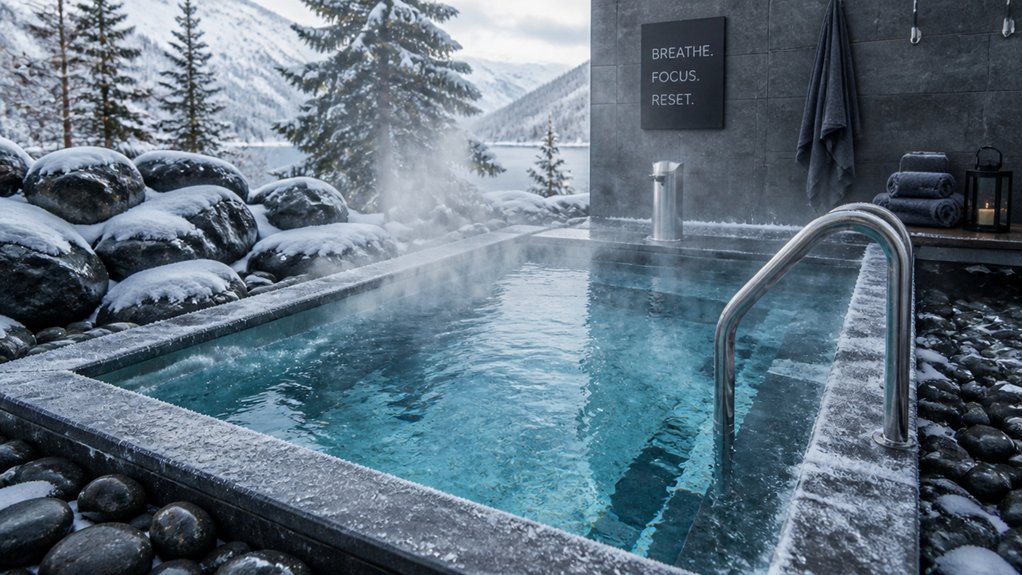
Have you wondered how cold plunge therapy might help with social anxiety? A Cold Plunge involves immersing your body briefly in cold water, which stimulates your vagus nerve. This activation triggers the parasympathetic nervous system, helping to reduce heart rate and ease anxiety symptoms.
It also triggers the diving reflex, redirecting blood flow to essential organs and decreasing the fight-or-flight response often heightened in social anxiety disorder. Regular cold plunge sessions improve vagal tone and emotional regulation, making you more resilient to anxiety triggers. Choosing the right high-powered chiller can ensure rapid cooling and more effective sessions.
When combined with deep breathing and mindfulness, cold plunges help you stay grounded and shift focus away from anxious thoughts during social situations. Always consult with your healthcare provider if you have conditions like Raynaud’s or slow COMT genes before starting.
How to Prepare Your Body and Mind Before Cold Water Practice
To prepare your body and mind for cold water practice, start with mindful breathing techniques to activate your calm response. Gradually expose yourself to colder temperatures, increasing exposure time as you feel comfortable, and set clear intentions to focus on grounding and anxiety reduction. Reminding yourself that discomfort signals engagement, not danger, helps you stay centered and ready. Incorporating resistance adjustment techniques using specialized breathing tools can further enhance your respiratory control and mental resilience before plunging.
Mindful Breathing Techniques
How can you effectively prepare your body and mind before plunging into cold water? Practice mindful breathing to activate your parasympathetic nervous system, helping reduce anxiety.
Start with slow, deep belly breaths—inhale for 4 seconds and exhale for 6 seconds—to calm your nervous system. Focus your attention on each breath’s sensations and your body to ground yourself, easing anticipatory stress.
Incorporate breath-holding techniques, such as holding your breath for 1–2 minutes while splashing cold water on your face, to stimulate calming vagus nerve responses. Use rhythmic breathing to regulate your heart rate and muscle tension, making you more resilient to the cold shock.
Regular mindful breathing before cold exposure enhances vagal tone and emotional control, gradually helping reduce social anxiety symptoms over time.
Gradual Cold Exposure
Before diving into full cold water immersion, it’s essential to gradually prepare your body and mind to reduce shock and anxiety. Start with brief cold exposure sessions of about 30 seconds, gradually increasing the duration to help your nervous system adapt without overwhelming you. Incorporate water treatment solutions such as cold plunge cleansers or mild treatments to ensure the water quality feels comfortable and non-irritating. Pair this practice with slow, controlled breathing—inhale for 4 seconds, exhale for 6 seconds—to activate your parasympathetic nervous system and promote calmness. Preparing your mind through mindfulness and focusing on physical sensations during exposure can ground you and lessen fear responses. Begin with milder methods like cold face splashes or cold compresses on the neck or sternum before progressing to full immersion for safer acclimation. Always monitor your signals and consult a professional if needed.
- Build tolerance gradually to prevent overwhelm
- Focus on breathing to control nervous system responses
- Use mindfulness to stay grounded during exposure
- Start with milder methods for safer adaptation
- Respect your body’s signals and avoid pushing too hard
Setting Clear Intentions
Setting a clear intention before stepping into cold water helps anchor your mind and prepares your body for the experience. Focus on calming the nervous system and help reduce anxious thoughts by visualizing a sense of calm and stability.
Use deep, controlled breathing—inhale for four seconds, exhale for six—to activate your parasympathetic nervous system, promoting relaxation. Gentle warm-up movements or stretching can warm your muscles and increase circulation, reducing shock during initial immersion.
Practice mindfulness by focusing on physical sensations and your breath, which enhances grounding and presence during cold exposure. Incorporating proper insulation and durable materials can ensure a more comfortable and consistent experience, as well-maintained water temperature helps support your calming practice.
Start with short intervals, around 30 seconds, and remind yourself that the cold shock is temporary, supporting emotional regulation and resilience over time.
Clear intentions set a purposeful, calming foundation for your plunge therapy.
How to Safely Start Cold Plunge Therapy for Social Anxiety
Begin by gradually exposing yourself to cold water, starting with just your hands or feet for 2–3 minutes to avoid overwhelming your nervous system. Pair the exposure with deep belly breathing—inhale for 4 seconds and exhale for 6—to activate your calming nervous system. Keep initial sessions short, mindful, and consistent to build resilience safely while paying attention to your body’s signals. Consider using a portable cold plunge tub with insulation and temperature control features for more consistent and effective therapy sessions.
Gradual Cold Exposure
Starting cold plunge therapy gradually helps your body adapt safely and effectively, especially when addressing social anxiety. To begin, focus on short exposures such as 30 seconds of cold water foot or hand dips before progressing to full immersions.
Incorporate breathing techniques, like inhaling for 4 seconds and exhaling for 6 seconds, to activate your parasympathetic nervous system and reduce anxiety symptoms. You can also try cold face splashes or applying cold compresses on your sternum or neck for 1–2 minutes as manageable steps.
Consistency is key: practice these gradual cold exposures multiple times a week, paying close attention to physical sensations to build tolerance. Always prioritize safety, consult a healthcare professional if needed, and increase duration as your body adapts.
Pair With Breathing Techniques
Pairing cold plunge therapy with controlled breathing techniques can greatly enhance its calming effects, especially when managing social anxiety. In cold water immersion, mindful breathwork—such as inhaling for 4 seconds and exhaling for 6 seconds—activates the parasympathetic nervous system, reducing anxiety.
A structured adaptogen regimen may also support resilience and stress regulation during cold exposure, further enhancing your calming responses. Focus on bodily sensations and your breath during cold exposure to stay grounded and increase body awareness for anxiety management. If full plunges trigger a fight-or-flight response, start with hand or foot ice baths, practicing 10-30 second dips combined with deep belly breathing. Always listen to your body and stop if discomfort becomes overwhelming.
Using breathwork alongside cold water immersion helps you manage anxiety more effectively, making cold plunge therapy safer and more beneficial as part of your social anxiety reduction strategy.
How to Use Breathing Techniques to Stay Calm During Cold Exposure

When you immerse yourself in cold water, controlling your breathing becomes essential to stay calm and avoid panic. Use slow, controlled breathwork—inhale for 4 seconds and exhale for 6 seconds—to activate your parasympathetic nervous system. Focus on the sensations of your breath to stay present and counteract the body’s initial cold shock. Incorporating guided meditation devices with visual cues can help synchronize your breathing patterns more effectively during cold exposure. Pairing breathwork with cold water immersion enhances vagus nerve stimulation, helping reduce anxiety and stabilize your heart rate. Consistent practice at cold plunges of just 30 seconds builds resilience and grounding over time. Avoid rapid, shallow breathing, which heightens panic. Instead, embrace deep belly breaths for effective stress management that keeps you centered in intense cold moments.
Control your breath with slow inhalations and longer exhalations to stay calm during cold water immersion.
- Deepen your calm with mindful breath control
- Reinforce resilience with consistent practice
- Focus on breath sensations to maintain presence
- Use slow inhales and longer exhales to activate relaxation
- Prioritize deep belly breaths to reduce anxiety
Designing a Personalized Cold Exposure Routine for Social Anxiety
Creating a personalized cold exposure routine tailored to your social anxiety involves understanding how different techniques and durations can build your tolerance gradually.
Start with brief cold exposure methods, like cold face splashes for 1–2 minutes or end-of-shower cold bursts lasting 30 seconds to 2 minutes. These activate your parasympathetic nervous system and help manage anxiety in social situations.
Incorporate breathwork—such as a 4-second inhale and 6-second exhale—to enhance vagus nerve stimulation and deepen calming effects. As you progress, gradually increase exposure duration from 30 seconds to prevent overwhelm and strengthen your resilience.
Using cold compresses or hand/foot dips with ice for 2–5 minutes offers alternative options, providing better control and grounding during social anxiety episodes. Pair these practices with mindfulness for improved emotional regulation.
Additionally, utilizing cold plunge thermometers with timers can help you monitor and gradually extend your exposure sessions safely.
What Are Common Challenges With Cold Therapy, and How Can You Handle Them?
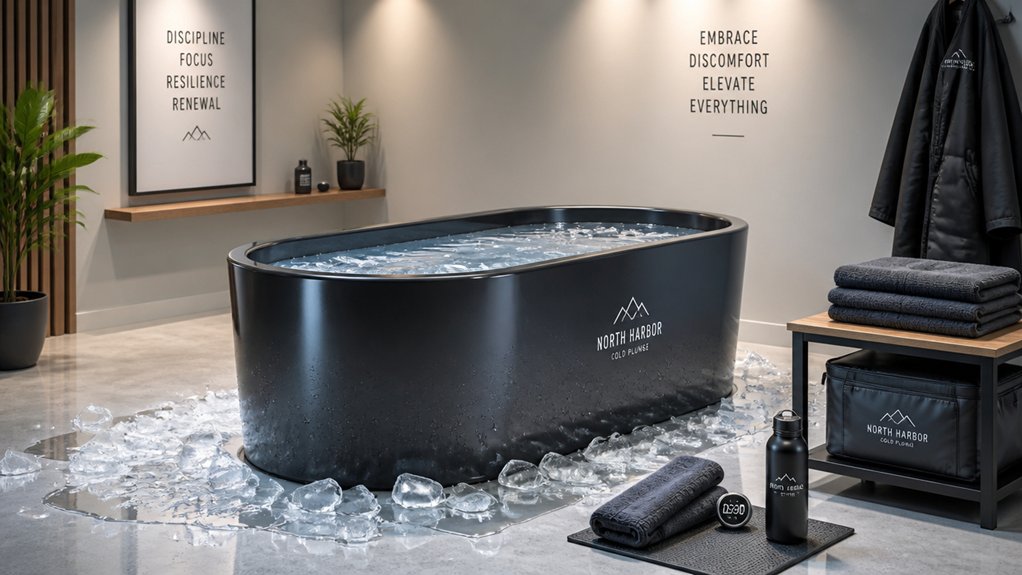
What’re the common challenges faced when practicing cold therapy, and how can you overcome them? Many people experience initial cold shock and discomfort, triggering anxiety or a fight-or-flight response.
To handle this, start with short exposures (about 30 seconds) and gradually increase duration, focusing on controlled breathwork (inhale 4, exhale 6). This promotes relaxation techniques and activates your parasympathetic nervous system.
Some individuals with conditions like Raynaud’s syndrome or certain genetic factors may find cold therapy worsens anxiety, so consulting a healthcare professional first is essential.
How to Track Your Progress and Know When to Adjust Your Practice
Tracking your progress effectively is essential to see how your cold therapy and social anxiety improve over time. You can help measure your mental well-being by rating avoidance levels on a 0–10 scale and noting how quickly anxiety subsides after social situations.
Monitoring changes in your willingness to initiate social interactions and the frequency of last-minute cancellations also serve as valuable indicators of progress. Keep a consistent journal after each plunge, recording physical sensations, emotional responses, and cognitive shifts.
Use this feedback to adjust your practice, scaling the duration or intensity based on whether anxiety spikes remain manageable or lead to avoidance or panic. Regular tracking helps you identify when to gradually increase exposure steps, fostering sustained anxiety reduction.
Who Should Avoid Cold Plunge Therapy and What Safety Tips Should You Follow?
Are cold plunge sessions suitable for everyone? If you have certain health conditions or anxiety disorders, they mightn’t be safe for you. Specifically, individuals with Raynaud’s syndrome or slow COMT gene variants linked to high dopamine should avoid cold plunges because it could worsen anxiety symptoms or cause adverse reactions.
Always start with brief exposure—10 to 30 seconds—and gradually increase as you adapt, to prevent undue stress or panic. Pair your immersion with deep belly breathing and mindful focus to activate your parasympathetic nervous system safely.
- If you have cardiovascular or circulatory issues, consult your healthcare provider first
- Stop immediately if you experience numbness, excessive shivering, or signs of vasospasm
- Never ignore persistent discomfort during therapy
- Follow medical advice to prevent complications
- Prioritize safety over intensity to avoid harm
How to Combine Cold Therapy With Other Strategies to Reduce Social Anxiety
Combining cold therapy with other anxiety-reducing strategies can amplify their calming effects and help you manage social anxiety more effectively.
During a cold shower or face splash, try deep belly breathing—inhale for four seconds, exhale for six—to activate your parasympathetic nervous system and lessen social anxiety symptoms. Use cold exposure as a grounding tool before social interactions to refocus on your body, supporting mindfulness.
Integrate cold therapy with CBT techniques to increase tolerance for discomfort during exposure exercises, reinforcing your calming skills. Pair regular cold showers with lifestyle changes such as exercise, relaxation techniques, and stress management to bolster emotional resilience.
Always monitor your response to cold therapy, especially if you have conditions like Raynaud’s, and seek professional support for severe social anxiety.
Frequently Asked Questions
How to Improve Social Anxiety?
You can improve social anxiety by practicing deep breathing, gradually exposing yourself to social situations, using plunge therapy techniques, and pairing them with mindfulness practices to stay grounded, calm, and build confidence over time.
What Is the 3 3 3 Rule in Therapy?
The 3-3-3 rule helps you manage anxiety by focusing on your senses—notice three things you see, hear, and move three body parts. It keeps you grounded, calming your mind during stressful social situations or therapy sessions.
Is Fluoxetine Good for Social Anxiety?
Yes, fluoxetine is effective for social anxiety as it increases serotonin, helping stabilize mood and reduce anxiety. You might need a few weeks for results, and combining it with therapy often enhances overall benefits, but always consult a doctor first.
Is Social Anxiety Disorder Neurodivergent?
Social anxiety disorder isn’t considered neurodivergent since it’s an anxiety condition caused by brain function changes, not inherent neurological differences. You experience fear and social avoidance, but it’s treatable and distinct from lifelong neurodevelopmental variations like autism or ADHD.