Preseason plunges help you recover faster by reducing inflammation, muscle soreness, and swelling, so you’re ready for intense training. They boost circulation and metabolic response, enhancing nutrient delivery and waste removal. Cold water immersion also strengthens your immune system and builds mental resilience, improving focus and stress management. Plus, they support injury prevention and muscle freshness. Keep exploring to discover how to maximize these benefits safely and effectively for your season.
What Is Preseason Ice Bath Therapy and Why Is It Important for Athletes?
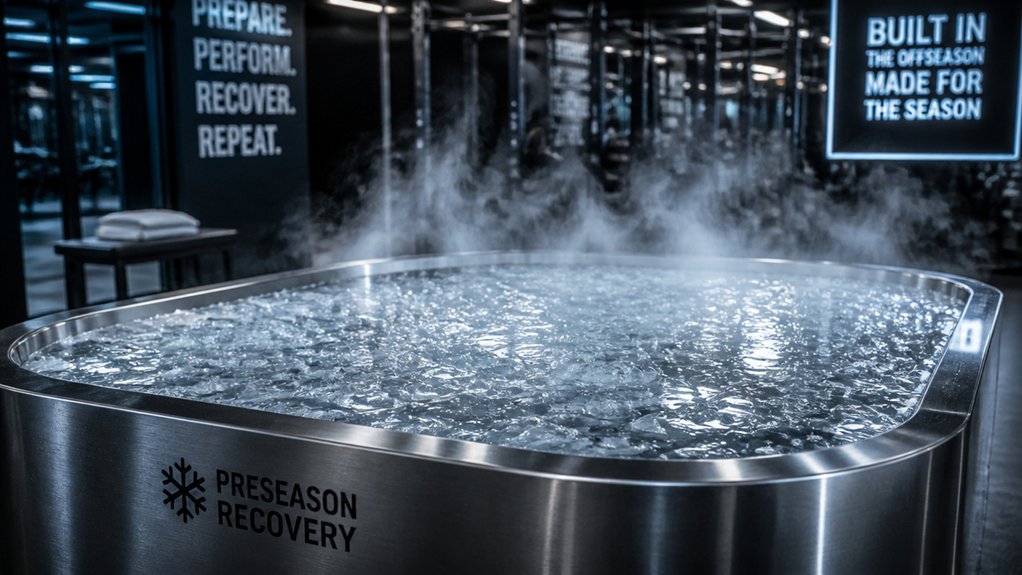
What exactly is preseason ice bath therapy, and why do athletes consider it a vital part of their training?
It involves cold water immersion, typically at 50-60°F, to prepare your body ahead of the season. This technique helps reduce inflammation and muscle soreness caused by intense training sessions, allowing you to recover faster and stay consistent with preseason workouts.
Cold water immersion constricts blood vessels, which flushes metabolic waste and prepares your muscles for upcoming activity. Additionally, ice baths can boost dopamine levels, sharpening your focus and mental clarity—essential for peak performance.
When done properly, managing temperature and duration, preseason ice baths build your cold tolerance safely, making this recovery method an integral part of your preparation strategy insulation and durability.
How Cold Plunges Help Accelerate Muscle Recovery Before the Season
Cold plunges trigger vasoconstriction, which helps reduce inflammation and muscle swelling after intense preseason workouts. By immersing your entire body in cold water (50-60°F), you flush out metabolic waste products, decreasing muscle soreness and boosting your readiness for the next training session.
Incorporating cold plunges into your routine supports faster recovery by managing inflammation and muscle fatigue. To maximize benefits, consider:
- Regular cold plunge sessions after intense workouts
- Gradually building cold tolerance for better adaptation
- Staying in cold water until you feel a significant cooling effect
- Combining cold plunges with proper rest to enhance muscle repair
These factors help you recover faster, maintain high-performance levels, and prepare confidently for the season ahead.
Using Cold Water Immersion to Reduce Inflammation and Swelling
Cold water immersion causes your blood vessels to constrict, which helps limit fluid buildup and reduce swelling after intense training. This process also minimizes the inflammatory response that can lead to soreness and delays recovery. Using cold plunges regularly supports your therapeutic water temperature management, keeping your training consistent and injury-free.
Reduces Blood Vessel Dilation
Immersing your body in cold water causes blood vessels to constrict rapidly, which helps reduce inflammation and swelling after intense workouts. This vasoconstriction limits blood flow, decreasing the dilation of blood vessels and preventing excessive fluid build-up in muscles and joints. Materials and insulation in cold plunge tubs are designed to maintain consistent temperatures, ensuring effective vasoconstriction during recovery sessions. By maintaining a temperature between 50-60°F, you guarantee uniform vessel constriction, making recovery more effective. Here’s what happens when you use cold, and blood vessels constrict:
- Inflammation is minimized, easing discomfort.
- Swelling in muscles and joints is reduced.
- Fluid accumulation in tissues decreases.
- Waste products in muscles are limited, speeding recovery.
This process keeps your muscles fresh and ready for activity, making cold water immersion an essential preseason tool.
Limits Fluid Accumulation
When blood vessels constrict during cold water immersion, it directly limits fluid build-up in your muscles and joints. This vasoconstriction reduces blood flow to stressed tissues, preventing excess fluid from accumulating and decreasing inflammation.
Submerging in cold water at 50-60°F helps to decrease swelling caused by microtrauma from intense preseason training. By minimizing edema, cold plunges promote faster recovery and reduce soreness and stiffness.
Limiting fluid buildup through this method guarantees your muscles stay less swollen, which supports better mobility and reduces the risk of prolonged inflammation. Proper timing of cold immersion helps you manage inflammation early, keeping soft tissue swelling in check and maintaining your training consistency and readiness for the upcoming season. Insulation efficiency plays a significant role in sustaining the cold temperature longer, enhancing these recovery benefits.
Enhances Inflammatory Response
Accelerating your recovery process hinges on effectively managing inflammation, and cold water immersion plays an essential role in this. It helps reduce inflammation by causing blood vessels to constrict, which controls the flow of blood and limits swelling.
Short cold plunges (30 seconds to 1 minute at 50-59°F) not only curb exercise-induced muscle damage but also lower tissue temperature and metabolic activity. This process helps manage the inflammatory responses triggered after intense activity, preventing chronic inflammation from repetitive strain.
To optimize benefits, combining cold plunges with warm water therapy can further enhance recovery and prepare your body for upcoming training.
Here are four key benefits:
- Reduce inflammation quickly
- Minimize swelling after exercise
- Control inflammatory responses
- Support faster muscle recovery
How Cold Plunges Boost Circulation and Metabolic Response in Preseason
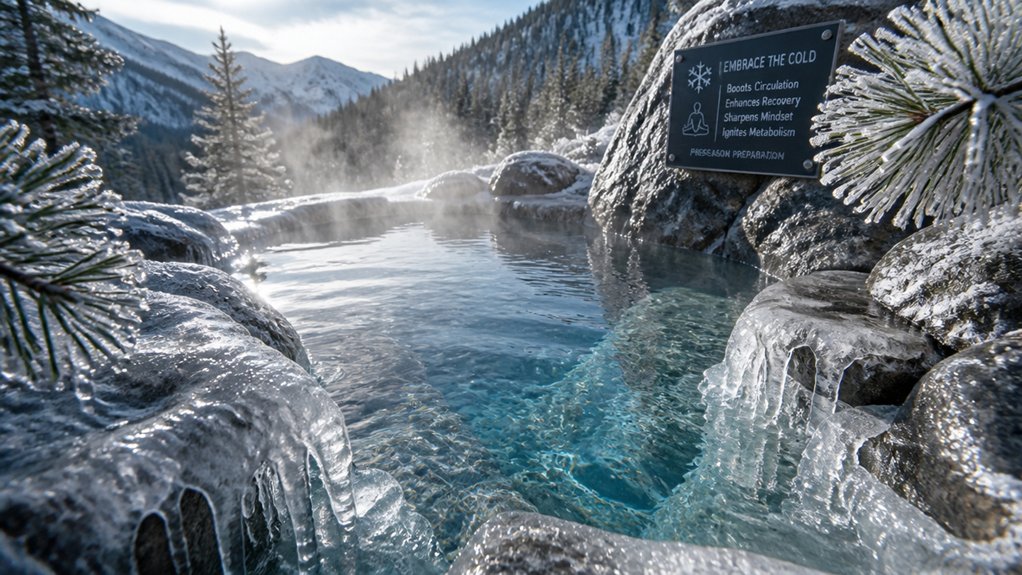
Cold plunges cause your blood vessels to constrict, then expand, which boosts circulation and speeds up nutrient delivery during recovery. A multi-chamber design ensures comprehensive coverage, enhancing these effects. This process activates your metabolism and releases hormones that improve your mood, focus, and energy. As a result, your muscles recover faster, and your body becomes more resilient during intense preseason training.
Vasoconstriction and Blood Flow
Vasoconstriction, triggered by cold plunges, causes blood vessels to narrow rapidly, which temporarily reduces blood flow. This process helps decrease inflammation and muscle swelling during preseason training.
After cold exposure, vasodilation occurs, reopening blood vessels and boosting circulation. This cycle:
- Enhances nutrient delivery to muscles
- Aids in flushing out metabolic waste
- Supports quicker muscle recovery
- Improves oxygenation and toxin removal
Enhanced Metabolic Activation
When you immerse yourself in cold water, your body responds by activating the sympathetic nervous system, which increases your metabolic rate. Cold plunging stimulates your body’s fight-or-flight response, boosting metabolic activity to meet the sudden cold stress. This process enhances energy expenditure, helping you become more physically prepared for preseason training.
Additionally, the cold shock prompts vasoconstriction followed by vasodilation, improving circulation and nutrient delivery to muscles. The increased blood flow helps flush out metabolic waste products, speeding recovery and reducing fatigue. High-quality thermal insulation in chillers maintains consistent water temperatures, maximizing these benefits while minimizing energy use.
Cold exposure also triggers hormonal responses, like increased dopamine, which sharpen focus and mental clarity during intense workouts. Regular cold plunges build tolerance to cold stress, supporting cardiovascular efficiency and metabolic resilience for peak performance throughout preseason.
Faster Recovery Signals
The circulatory responses triggered by cold plunges play a key role in speeding up muscle recovery during preseason training. When you immerse yourself in cold water, vasoconstriction temporarily reduces blood flow, decreasing inflammation and muscle swelling. Then, vasodilation boosts circulation, helping your body efficiently remove metabolic waste. This process supports your return to training faster and with less soreness. Additionally, cold exposure stimulates hormonal responses that improve focus and energy, essential during intense preseason moments. Enhanced circulation also promotes nutrient delivery, aiding muscle repair. Finally, these metabolic reactions strengthen your immune system, keeping you healthier and reducing downtime. Incorporating cold plunges signals your body to recover quickly, so you stay ahead in the preseason game. Effective recovery can be further enhanced when paired with tools like percussion massagers, which deliver deep-tissue stimulation to facilitate faster healing.
Preparing Your Body for Intense Training With Cold Exposure
Incorporating cold exposure into your preseason routine can greatly enhance your body’s readiness for demanding training sessions. A cold plunge at temperatures around 50-60°F helps reduce inflammation and muscle soreness, so you can train harder and more consistently.
Regular cold water immersion improves circulation by causing blood vessel constriction and dilation, boosting recovery capacity. It also sharpens your focus, mental clarity, and reduces stress, preparing you psychologically for intense workouts. Controlled cold plunges help minimize delayed onset muscle soreness (DOMS), allowing you to maintain peak training volume and intensity.
Gradually adapting to cold water immersion builds your tolerance to cold shock, decreasing discomfort and anxiety during recovery. This combination of physiological and mental benefits primes you for an effective, injury-free preseason.
Additionally, adaptogens like Rhodiola and Ashwagandha may support your stress response and resilience, enhancing your ability to recover from cold exposure stress resilience, and optimize your mental and physical performance during demanding training phases.
Optimizing Muscle Repair to Prevent Injuries During Preseason
Enhancing muscle repair during preseason is crucial for preventing injuries and maintaining peak performance. Ice baths can help by reducing inflammation and muscle swelling, which accelerates recovery.
When you immerse in cold water around 50°F, it decreases delayed onset muscle soreness (DOMS), letting you stay consistent with training. Cold water immersion also helps flush out metabolic waste products after intense sessions, supporting faster muscle repair.
Additionally, regular cold plunges improve circulation through alternating vasoconstriction and vasodilation, delivering essential nutrients for recovery. To maximize benefits, consider:
- Consistently using cold water immersion after workouts
- Keeping water temperature around 50°F for best results
- Combining cold treatments with proper nutrition
- Listening to your body to avoid overexposure
This approach helps reduce injury risk during intense preseason training.
Boost Focus and Clarity With Cold Plunges Before Practice
Building on the recovery benefits of cold plunges, taking a quick dip before training can considerably enhance your mental clarity and focus. A cold plunge at 50-60°F stimulates your body, triggering cold shock responses that sharpen alertness and reduce anxiety.
This process increases dopamine levels, boosting your mood and concentration. Cold exposure activates your sympathetic nervous system, providing a surge of energy and readiness for training. Gradually incorporating cold plunges helps you manage stress better, allowing you to start practice sessions with improved emotional control.
The mental clarity gained from cold immersion also fine-tunes your decision-making and reaction times, giving you a competitive edge during training and games. Overall, pre-practice cold plunges prepare both your mind and body for peak performance.
How Cold Immersion Can Strengthen Your Immune System in Preseason
Cold immersion boosts your circulatory response, helping to improve blood flow and oxygen delivery. It also strengthens your stress resilience by activating your body’s natural defenses.
Regular cold plunges can, as a result, make your immune system more robust and better prepared for the season ahead.
Boosts Circulatory System Response
Immersing yourself in cold water during preseason activates your circulatory system in powerful ways that can boost your immune defenses. This process triggers vasoconstriction followed by vasodilation, enhancing overall blood flow and helping reduce the risk of illness.
Regular cold plunges around 50-60°F stimulate white blood cell production and support lymphatic drainage, further strengthening your immune response. The cold shock response also elevates dopamine and norepinephrine levels, which help reduce inflammation and promote resilience.
- Improves blood flow, facilitating nutrient delivery.
- Supports lymphatic drainage, helping reduce toxins.
- Boosts immune cell activity for better resistance.
- Trains your system to respond more efficiently, enhancing overall circulation.
Enhances Stress Resilience
Engaging in cold immersion during preseason can greatly strengthen your stress resilience by training your body to respond more effectively to physical and mental challenges. Water helps activate controlled cold shock responses, which gradually build your body’s resilience to stress and help reduce anxiety.
Regular cold plunges can boost immune function by stimulating increased circulation and activating metabolic and hormonal responses that enhance your natural defenses. Exposure to cold water also raises dopamine levels, improving your mood and mental clarity under pressure.
Starting with brief cold plunges—30 seconds to 1 minute at 50-60°F—helps you safely build tolerance, reducing the risk of cold-induced anxiety. Over time, these immersion practices help your body adapt better to stress, supporting overall resilience during rigorous athletic training.
Best Practices for Incorporating Cold Plunges Into Your Preseason Routine
To maximize the benefits of cold plunges during preseason, it’s important to incorporate them gradually and strategically into your routine. Start with water around 68°F and immersion times of 30 seconds to 1 minute to build tolerance safely.
Begin with 68°F water for 30 seconds to 1 minute, gradually building your cold tolerance safely.
Avoid cold plunges immediately after strength training, as cold exposure can reduce inflammation but may hinder muscle adaptations and strength gains if done too soon. Instead, incorporate cold plunges following intense endurance or conditioning sessions to help decrease inflammation, muscle soreness, and speed up recovery.
Use controlled breathing techniques during immersion to minimize cold shock and anxiety, making the process more comfortable.
Additionally, combine cold plunges with post-immersion warm-up routines like towel drying and light movement to optimize circulation and recovery during preseason training.
1. Start with mild temperatures and short durations
2. Time cold plunges after endurance, not strength, training
3. Focus on controlled breathing to reduce cold shock
4. Follow with warm-up routines to enhance circulation
Safety Tips for Cold Water Immersion: Avoiding Risks and Enhancing Benefits
While cold plunges can offer significant recovery benefits, safety should always come first. When starting a cold plunge, gradually build your tolerance by beginning with water around 68°F and limiting immersion to 30 seconds to 1 minute.
Avoid icy rivers or lakes, as strong currents and drowning hazards pose risks, so choose a controlled environment instead. Keep your full-body immersion time between 5–10 minutes, and steer clear of water below 40°F to prevent hypothermia and frostbite.
Prepare warm clothing, towels, and a post-plunge warm-up routine to help your body restore its temperature safely. If you have cardiovascular issues or risk factors, consult a healthcare professional before attempting cold water immersion to confirm it’s safe for you.
Cold Plunge vs. Other Recovery Methods: Which Works Best?
Have you ever wondered which recovery method offers the most benefits after intense exercise? Cold plunge is highly effective because it provides uniform, full-body cold exposure, leading to vasoconstriction which reduces inflammation and muscle soreness more efficiently than cold showers or partial limb immersion.
Here’s how it compares:
- Cold plunge offers consistent, whole-body recovery benefits by decreasing inflammation and boosting circulation.
- Cold showers and localized ice baths provide less uniform exposure, making their benefits more limited.
- Cold plunges can lessen muscle soreness and improve recovery faster than alternative methods.
- Combining cold plunge with other recovery techniques like massage can maximize overall athlete recovery.
If inflammation is your focus, a cold plunge might be your best option for effective, targeted recovery.
When and How Long Should You Do Cold Water Immersions During Preseason?
Wondering when and how long to do cold water immersions during preseason? The best time is after intense endurance training sessions or games, not immediately after strength training, to avoid hindering muscle adaptations.
Best time for cold water immersions is after intense endurance sessions, not immediately after strength training.
Start with shorter sessions, taking a cold plunge of 30 seconds to 1 minute at temperatures between 50°F and 59°F. As your body adapts, gradually increase the duration up to 5 to 10 minutes.
The frequency depends on your response and comfort, but regular immersions after heavy training help support recovery. Controlling your breathing during cold plunges can help you cope with cold shock and maximize benefits like reduced muscle soreness.
Patience and gradual exposure are key for safe, effective preseason cold water therapy.
Expert Tips: How Coaches Use Cold Plunges to Help Athletes Peak
Ever wondered how coaches strategically incorporate cold plunges to help athletes reach their peak performance? Cold water immersion is a key tool used during preseason to reduce inflammation and muscle soreness, speeding up recovery.
Coaches typically have athletes undergo cold plunges at around 50°F after endurance workouts to restore physical performance and prepare for the next day’s practices. Here are some expert tips:
- Use cold plunges after conditioning sessions, avoiding resistance workouts that benefit from strength adaptations.
- Implement gradual exposure protocols to help athletes adapt safely to cold shock and build stress resilience.
- Combine cold plunges with warm water therapy to enhance blood flow and promote relaxation.
- Schedule immersions strategically to optimize recovery without interfering with overall training goals.
These methods maximize recovery and performance readiness.
Frequently Asked Questions
Is Cold Plunging Good for Athletes?
Cold plunging is great for athletes because it reduces soreness, speeds recovery, and boosts mental clarity. It helps you perform better, recover faster, and stay focused, but remember to avoid it right after strength training to support muscle growth.
How Often Should an Athlete Do Cryotherapy?
You should do cryotherapy about 2-3 times a week during intense training phases. Start slowly with shorter sessions, monitor your response, and adjust frequency based on recovery needs, always avoiding overdoing it to prevent potential risks.
Does a Cold Plunge Actually Have Benefits?
Yes, cold plunges benefit you by speeding muscle recovery, reducing soreness, boosting mental focus, and lowering stress post-exercise. With gradual adaptation, you can safely enhance performance and overall well-being through regular cold immersion.
Do Cold Plunges Help Neuropathy?
Cold plunges might help neuropathy by reducing nerve inflammation, improving circulation, and easing pain temporarily. They may also lower stress, which can worsen symptoms, but always consult your healthcare provider before trying cold water therapy for neuropathy.