
You should avoid extreme water therapy because sudden changes in water temperature can trigger your asthma symptoms. Hot water increases heat and humidity, worsening airway inflammation, while cold water causes airway narrowing and bronchoconstriction. Both can lead to breathing difficulties or asthma attacks. Keeping your water temperature controlled and following safety tips helps prevent flare-ups. If you want a better understanding of how to stay safe during water therapy, there’s important information you need to know.
Why Hot and Cold Water Can Trigger Your Asthma Symptoms
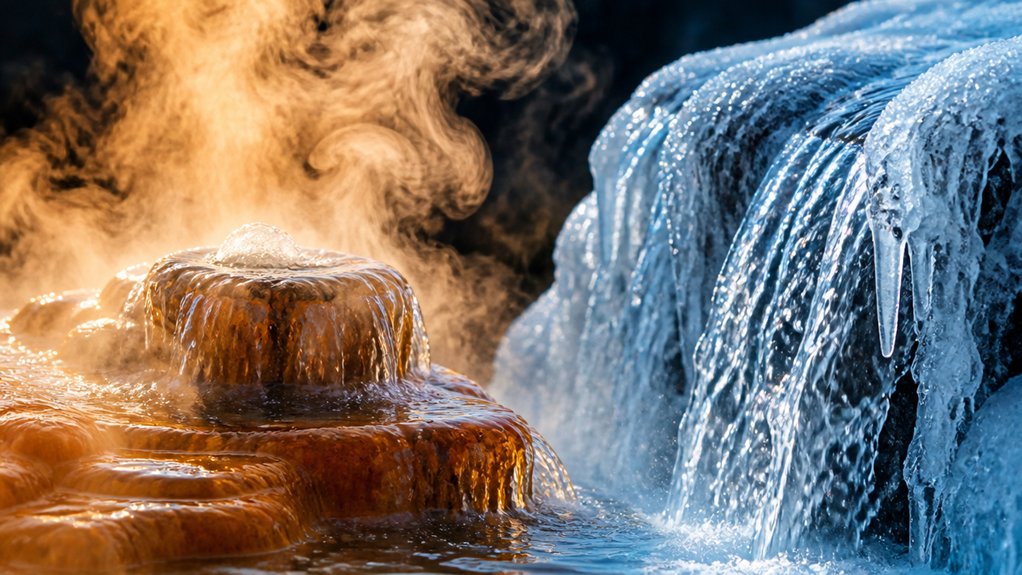
Hot and cold water can both trigger asthma symptoms because they cause your airways to react strongly to extreme temperatures.
Hot water increases heat and humidity, which can worsen air quality and promote inflammation in your airways. This environment encourages dust mites and mold, common asthma triggers, making breathing more difficult and leading to shortness of breath.
On the other hand, cold water causes airway narrowing through inflammation, triggering a quick constriction response. The cold can also provoke the dive reflex, leading to gasping and rapid breathing.
Both extremes can cause your airways to tighten and create respiratory distress. To avoid worsening your symptoms, steer clear of these triggers, especially during extreme water exposure, and maintain better control over your asthma. A strong understanding of emissivity adjustments in infrared thermometers can help ensure accurate temperature readings and prevent misjudging environmental conditions that might worsen symptoms.
How Hot Water Showers Might Worsen Your Asthma
While hot water showers may feel relaxing, they can actually worsen asthma symptoms in some people. The heat and humidity increase around your airways, which can trigger or intensify asthma flare-ups. The warm, moist environment promotes mold, dust mites, and bacteria growth, potential asthma triggers that worsen lung health. Steam might initially moisten airways and thin mucus, but it can also irritate sensitive lung tissue, leading to inflammation during an asthma episode. Heat exposure from hot showers can cause your airways to narrow, making it harder to breathe and increasing the risk of asthma attacks. There’s no scientific evidence that hot showers help manage your asthma; in fact, they may escalate respiratory distress, especially in those with chronic lung disease. Additionally, exposure to extreme temperatures can disrupt the skin barrier and respiratory tissues, further aggravating asthma symptoms.
What Cold Water Exposure Means for Your Breathing

Cold water exposure can greatly impact your breathing by causing airway inflammation and narrowing, which heightens your asthma symptoms and makes it harder to breathe. When exposed to cold water, your airway can become irritated, leading to increased mucus production and bronchoconstriction.
Cold water can worsen asthma by causing airway inflammation and increased mucus production.
This triggers airway inflammation, making managing asthma more difficult and risking breathing difficulty. Cold water may also activate the dive reflex, causing gasping and rapid breathing, which can worsen asthma attacks.
You should always review your asthma action plan before exposure to cold water. Be aware that cold water might trigger an asthma flare-up even if you’re unaccustomed to it.
Having your rescue inhaler nearby guarantees immediate relief if symptoms worsen, helping you protect your lung health.
Safety Tips for Using Water Therapy With Asthma
To use water therapy safely with asthma, it’s essential to take precautions that minimize the risk of triggering symptoms. Always have your quick-relief asthma medication nearby and avoid smoke or strong fumes. Steer clear of sudden temperature changes, like switching from hot to cold water abruptly, to prevent airway shock and reflex gasping breaths. Use steam or humidity carefully—moisten airways without creating excessive moisture that encourages mold and dust mite growth, which can worsen airway inflammation. Ensuring proper waterproof timer placement can also help you monitor timed sessions accurately and prevent overexposure.
How to Stay Safe When Managing Asthma and Water Therapy
Managing asthma safely during water therapy requires careful attention to your triggers and water temperatures. To prevent respiratory distress, steer clear of hot showers, as heat and humidity can worsen asthma symptoms by increasing airway inflammation.
Avoid hot showers to prevent asthma flare-ups caused by heat and humidity.
Cold showers may also trigger asthma attacks due to airway narrowing from shock reflexes. Instead, use lukewarm water, which minimizes airway irritation and helps prevent flare-ups.
Always keep quick-relief inhalers nearby and follow your asthma action plan to respond promptly to symptoms. Be vigilant about triggers, avoid extreme water temperatures, and listen to your body during water therapy. Incorporating temperature control features, like adjustable water temperature settings, can further enhance safety during water therapy sessions.
With proper precautions, you can safely enjoy water therapy while keeping asthma symptoms under control.
Frequently Asked Questions
What Is the 4 4 4 Rule for Asthma?
The 4 4 4 rule for asthma is a breathing technique where you inhale for 4 seconds, hold your breath for 4 seconds, then exhale slowly for 4 seconds. It helps improve breathing and reduce asthma symptoms.
Can Water Worsen Asthma?
Water can worsen your asthma if it’s too hot, causing humidity that triggers symptoms, or too cold, leading to airway inflammation. Sudden cold showers may induce rapid breathing, while humid environments boost mold and dust, aggravating your condition.
What’s the Worst Weather for Asthma?
The worst weather for asthma is hot, humid days with high pollution, or cold, windy conditions. You might experience worsened symptoms, increased airway narrowing, and higher sensitivity, which can trigger or intensify your asthma attacks considerably.
What Not to Do During an Asthma Attack?
During an asthma attack, don’t ignore your symptoms or delay using your inhaler. Avoid hot or cold showers, panicking, or trying home remedies. Seek emergency help if your breathing worsens or doesn’t improve promptly with medication.