
To relieve anxiety with plunge therapy, start by gradually exposing yourself to cold water, focusing on controlled breathing like slow nasal inhales and exhales to activate your relaxation response. Use safe techniques, listen to your body, and increase exposure time gradually. Incorporate mindfulness or heat therapy for added benefits. Consistency strengthens your nervous system, boosts mood, and builds resilience. Keep exploring ways to customize your routine for maximum calming effects.
How Can Cold Water Plunges Help Calm Anxiety?

How can cold water plunges help calm anxiety? Cold plunge therapy triggers a quick surge in norepinephrine, boosting your focus and inducing feelings of calm, which aid in anxiety reduction. The initial activation of your sympathetic nervous system is immediately balanced by parasympathetic stimulation via the vagus nerve, leading to a lower heart rate and a relaxed state. By focusing on controlled breathing and bodily sensations during the plunge, you interrupt anxious thought cycles and ground yourself in the present moment. Regular cold plunges also stimulate endorphin release, improving mood and easing emotional distress. Incorporating guided meditation devices with visual cues and sound options can further enhance relaxation and mindfulness during your cold water practice. Over time, this practice enhances nervous system resilience through hormesis, making it easier for you to recover from stress and manage anxiety more effectively.
What Happens in Your Brain During a Cold Plunge?
When you take a cold plunge, your brain responds swiftly to the shock of the cold water, triggering a cascade of chemical reactions. Cold water immersion causes a rapid surge of norepinephrine—up to 530%—boosting alertness, focus, and mood regulation. Simultaneously, dopamine levels can rise by 250%, enhancing motivation and feelings of well-being. The initial cold shock activates your sympathetic nervous system (“fight or flight”), then shifts to parasympathetic activation via the vagus nerve, calming you down. Endorphin release also occurs, inducing mild euphoria and pain relief, which helps reduce anxiety. As a result, cold plunges decrease systemic inflammation in your brain, improving emotional regulation and fostering a sense of calm. Incorporating adaptogen blends into your routine can further support your body’s resilience and stress response during and after cold therapy sessions.
How to Safely Use Cold Water Therapy for Anxiety Relief?
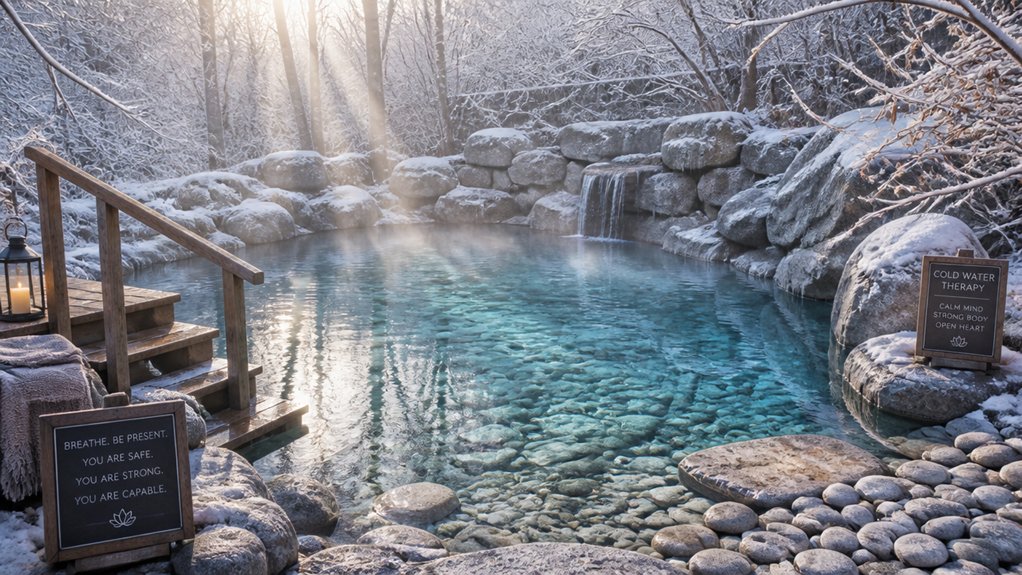
You can safely incorporate cold water therapy into your anxiety relief routine by starting with short, manageable sessions and paying close attention to your body’s signals.
Begin with cold exposure lasting 30–60 seconds at cooler temperatures, gradually increasing by 15–30 seconds as you build tolerance. Focus on controlled stress, using deep belly breathing—inhale for 4 seconds, exhale for 6—to activate your parasympathetic nervous system and reduce anxiety symptoms.
Always prioritize safety: use appropriate gear, never plunge alone if you have heart or circulation issues, and exit immediately if you feel dizzy, numb, or have difficulty breathing. For those sensitive to cold, start with face or hand submersion.
Limit sessions to 2–4 times weekly, and warm up gradually afterward to maintain safety and optimize anxiety management benefits. Incorporating proper water treatment practices ensures water quality and safety during your sessions.
How to Create a Cold Plunge Routine That Works for You?
Creating a cold plunge routine tailored to your needs starts with establishing a consistent approach that feels manageable. Begin with short sessions of 30–60 seconds at a comfortable temperature, gradually increasing by 15–30 seconds each time to build tolerance safely. Using a temperature control system can help maintain optimal water warmth and prevent sudden chills. Incorporate controlled deep belly breathing—inhale for 4 seconds, exhale for 6 seconds—during immersion to stimulate the vagus nerve and calm anxiety. Aim for 2–4 sessions per week, allowing rest days to support nervous system resilience and prevent overexposure. Pair your cold therapy with practices like mindfulness or heat therapy, such as a sauna, to enhance emotional balance. Always listen to your body, stopping if you experience dizziness, numbness, or discomfort, and consult a healthcare provider if needed.
Why Choosing the Right Equipment Matters for Consistent Cold Therapy?
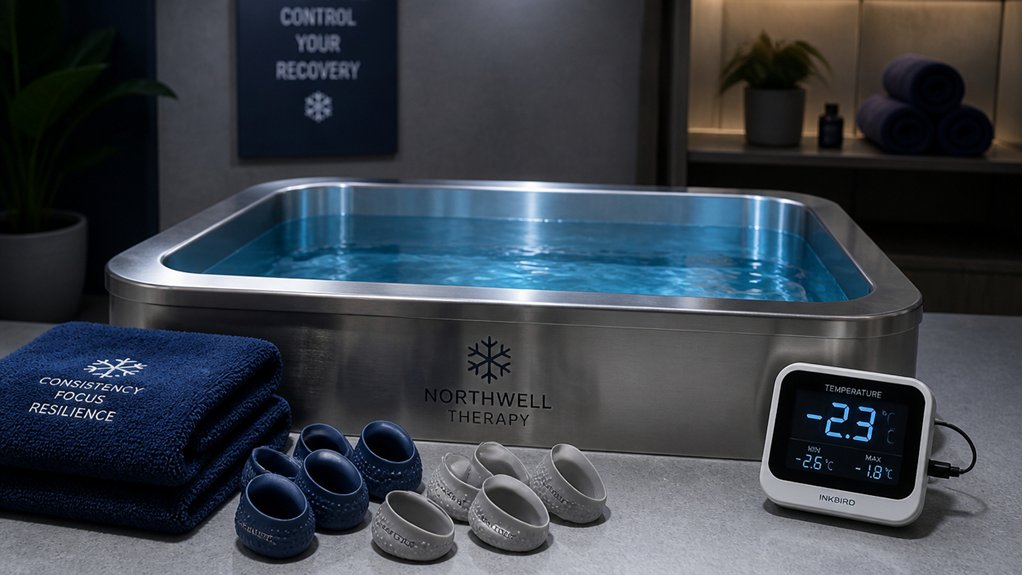
Choosing the right equipment guarantees your cold therapy sessions are safe, hygienic, and comfortable, making it easier to stick with your routine. Reliable, purpose-built tools maintain stable water temperatures and are easy to clean, reducing the risk of bacteria or discomfort. When your gear fits your needs, consistency becomes effortless, supporting better anxiety relief over time. Additionally, selecting tubs with appropriate materials and insulation can enhance durability and temperature stability, ensuring a more effective and enjoyable recovery experience.
Equipment Safety and Hygiene
Selecting the right equipment is essential because it directly impacts both safety and hygiene during cold therapy sessions. A quality ice bath or plunge system made with medical-grade, non-porous materials resists bacteria, making cleaning easier and supporting hygiene. Proper drainage systems and maintenance kits prevent mold and bacterial buildup, ensuring safe use over time.
Maintaining consistent water temperature (around 50–55°F) promotes effective cold stress without risking tissue damage or excessive discomfort. Good equipment design also encourages longer, regular sessions, vital for anxiety relief. Portable systems with easy-to-clean features help you stick to your routine and reduce health risks. Incorporating advanced temperature control features ensures precise adjustments, enhancing safety and comfort.
Ultimately, choosing the right equipment safeguards your health, supports mental well-being, and helps you achieve consistent, effective cold therapy sessions.
Comfort and Convenience
The right equipment makes it easier to stick with your cold therapy routine by prioritizing comfort and convenience. Purpose-built gear like the Ice Barrel maintains consistent cold temperatures (50–55°F / 10–13°C) and offers ergonomic support, helping you stay immersed longer for peak anxiety relief. Medical-grade, non-porous materials prevent bacterial buildup, making regular cold dips safer and hassle-free. Features like built-in drainage and maintenance kits simplify upkeep, encouraging regular sessions. The Ice Barrel’s upright design supports natural posture and stimulates the vagus nerve, amplifying calming effects. When your equipment is comfortable, reliable, and easy to use, you’re more likely to follow through, reducing stress and building long-term resilience against anxiety. Proper insulation and temperature control systems also help retain consistent water temperatures, further enhancing cold therapy effectiveness.
How Regular Cold Plunges Build Resilience and Ease Anxiety?
Regular cold plunges strengthen your nervous system’s ability to handle stress through hormesis, helping you recover faster from anxiety.
As you adapt, your body becomes more resilient to daily stressors, making you calmer over time.
With controlled breathing and routine cold exposure, you also boost your mood and develop mental toughness that eases anxiety symptoms.
Building Nervous System Resilience
When you immerse yourself in cold plunges consistently, you’re actively training your nervous system to handle stress more effectively. Exposure to this controlled, manageable stress acts as a form of therapy, strengthening your mental resilience.
Cold plunges boost the ability to handle anxiety by refining your nervous system’s response, helping you recover faster from stressors. Repeated cold exposure enhances the balance between your sympathetic and parasympathetic nervous systems, promoting quicker calmness after stress.
Additionally, cold plunges elevate norepinephrine levels by up to 530%, improving focus and reducing anxiety symptoms through better neurochemical regulation. Mastering this practice through consistency also builds mental toughness, confidence, and emotional resilience, making it easier for you to reframe and navigate stressful situations with greater ease.
Furthermore, understanding the sensor accuracy under cold stress helps ensure your physiological responses are monitored correctly during cold exposure, supporting safe and effective practice.
Enhancing Stress Adaptation
By exposing your nervous system to controlled stress through cold plunges, you actively train it to adapt more effectively to anxiety triggers. Contrast therapy, such as cold immersion, increases stress temporarily, prompting your body to adapt quickly.
Repeated exposure helps your body manage the fight-or-flight response better, switching smoothly between sympathetic and parasympathetic states. This process builds mental resilience, making you more capable of handling daily stresses and managing anxiety.
Cold plunges also stimulate norepinephrine production by up to 530%, boosting focus and mood stability. Mastering proper technique, including controlled breathing, further strengthens mental toughness.
Over time, this practice reframes discomfort as manageable, helping your nervous system develop resilience, which improves overall stress regulation and emotional stability.
What If You’re Sensitive to Cold? Tips for Customizing Your Ice Bath?
If you’re sensitive to cold, easing into ice baths requires careful customization to prevent discomfort or adverse reactions. Starting with brief cold exposure, like a cold shower or 15–30 second hand ice baths, helps build tolerance gradually.
During cold sessions, use controlled deep belly breathing—inhale for four seconds, exhale for six—to manage the initial shock and stay calm. Pay attention to your body’s signals and incrementally increase the duration by 15–30 seconds each session, stopping if you experience numbness or dizziness.
Consider ergonomic equipment like the Ice Barrel, which supports natural posture and aids vagus nerve activation. Always consult a healthcare provider if you have circulation issues or conditions that heighten cold sensitivity or anxiety risks.
How to Integrate Cold Water Therapy Into Your Overall Anxiety Management Plan?
Wondering how to effectively incorporate cold water therapy into your broader anxiety management routine? Start with controlled cold plunges two to four times weekly, lasting 1–3 minutes, to improve stress tolerance and emotional regulation.
During each immersion, practice mindful breathing—slow nasal inhales for four seconds and exhalations for six—to activate your parasympathetic nervous system and disrupt anxious thoughts.
Practice slow, mindful breathing during cold plunges to activate relaxation and ease anxious thoughts.
Combine cold plunges with heat therapy, like infrared saunas, to enhance mood, cortisol reduction, and nervous system balance as part of a holistic plan.
Begin gradually by increasing cold exposure time based on your comfort and tolerance, and maintain consistent practice to build resilience.
Always consult healthcare providers before starting, especially if you have health concerns, to safely integrate cold water therapy into your anxiety management strategy.
Frequently Asked Questions
What Is the 3 3 3 Rule for Anxiety?
The 3 3 3 rule helps you manage anxiety by naming three things you see, hear, and moving three parts of your body. It shifts your focus, calms your nervous system, and keeps you grounded in the present moment.
What Are the Holistic Treatments for Anxiety?
You can try holistic treatments like cold plunge therapy combined with heat therapy, controlled breathing, counseling, and practicing regular contrast therapy. These approaches help manage stress hormones, enhance your nervous system, and improve your emotional resilience over time.
How to Self Soothe Anxiety?
To self-soothe anxiety, focus on controlled deep belly breathing, such as inhaling for four seconds and exhaling for six. Engage in brief cold exposures, like ice baths, to calm your nervous system and build resilience over time.
How Did I Cured My Anxiety With a Vitamin?
You cured your anxiety with vitamins by supporting neurotransmitter production, boosting mood, reducing stress hormones, and improving adrenal function. Consistent intake of B vitamins, vitamin D, magnesium, and vitamin C gradually restored your neurochemical balance, easing anxiety symptoms effectively.