
Water immersion helps relieve depression symptoms by activating your body’s stress response and releasing mood-boosting chemicals like endorphins, dopamine, and serotonin. It also lowers stress hormones such as cortisol and stimulates your vagus nerve, which promotes relaxation and emotional regulation. Additionally, cold exposure boosts neural repair and resilience through cold shock proteins, supporting long-term mental health. Keep exploring to discover how this powerful technique can transform your mood and overall well-being.
What Is Cold Water Immersion and How Does It Help Mental Health?

Have you ever wondered how cold water immersion can boost your mental health? When you submerge your body in cold water between 50°F to 59°F for about 10 to 15 minutes, it triggers a powerful physiological response.
Cold water immersion stimulates cold receptors in your skin, sending electrical impulses to your brain that activate your sympathetic nervous system. This response releases mood-enhancing neurotransmitters like endorphins, dopamine, serotonin, and norepinephrine, which can lift your mood and improve mental clarity.
It also activates cold shock proteins like RBM3 that support neural repair and connections, beneficial for brain health. Moreover, regular exposure may lower cortisol levels, the stress hormone, helping you build resilience and stabilize your mood over time. Incorporating adaptogen benefits can further support the stress response and mental resilience during cold plunge routines.
How Cold Water Therapy Changes Brain Chemistry
When you immerse in cold water, your brain releases neurotransmitters like dopamine and serotonin that boost mood and combat depression. This process also activates neural pathways and triggers the production of cold shock proteins, which support brain repair and resilience.
As a result, your brain’s chemistry shifts to improve alertness, reduce stress hormones, and promote long-term mental well-being.
Neurotransmitter Release Enhancement
Cold water immersion (CWI) activates your sympathetic nervous system, prompting your brain to release key neurotransmitters like dopamine, serotonin, and norepinephrine. These chemicals are essential for mood regulation and are often low in depression.
The cold shock response triggers a surge of endorphins, natural opioids that reduce pain and boost emotional well-being, similar to a “runner’s high.” Increased dopamine during CWI enhances motivation, pleasure, and focus, helping combat anhedonia. Elevated serotonin contributes to mood stabilization and alleviates depressive symptoms by improving emotional balance.
Additionally, norepinephrine release enhances brain blood flow and alertness, supporting cognitive function and social behavior often impaired by depression. Together, these neurotransmitter responses make cold water immersion a powerful tool for mood enhancement and mental health. Cold Plunge Thermometers can help regulate water temperature for optimal neural benefits.
Activation of Neural Pathways
Immersing in cold water directly stimulates cold receptors in your skin, which send electrical signals to your brain, activating neural pathways involved in mood regulation and stress response. This activation leads to the engagement of the sympathetic nervous system (SNS), prompting the release of key neurotransmitters like dopamine, serotonin, and norepinephrine—crucial for battling depression. The surge of these chemicals enhances neuronal pathways that support emotional stability and cognitive function. Additionally, cold water immersion triggers the production of cold shock proteins like RBM3, which aid in neural repair and synaptic protection. Wavelengths can be used to target specific tissues and enhance recovery effects. Together, these effects optimize brain chemistry, promote resilience against stress, and facilitate improved mood regulation, illustrating how cold water therapy fundamentally alters brain activity to help alleviate depressive symptoms.
Cold Shock Protein Effects
Cold water therapy triggers the production of cold shock proteins like RBM3, which play a crucial role in protecting and repairing neurons. This cold shock response increases RNA Binding activity, especially RBM3, which enhances neural repair and neuroprotection.
Elevated RBM3 supports synaptic plasticity, helping maintain brain connectivity often compromised in depression. By promoting neural resilience, RBM3 helps shield neurons from stress-induced damage, enabling the brain to recover and adapt.
The upregulation of RBM3 during cold exposure may restore neural circuits involved in mood regulation, potentially easing depressive symptoms. Overall, cold shock proteins like RBM3 activate pathways that support structural brain repair, high-power chillers that can enhance overall brain health and resilience against depression.
How Cold Exposure Boosts Endorphins and Neurotransmitters
It also activates the sympathetic nervous system, increasing norepinephrine levels, which boost alertness and focus—crucial in combating depression. Additionally, cold exposure elevates dopamine, improving motivation and pleasure, while serotonin levels rise, helping stabilize mood. This combination of neurotransmitter boosts helps alleviate symptoms associated with depression.
Moreover, cold shock proteins like RBM3 are produced, supporting neural repair and potentially reversing brain connectivity issues linked to depression. In this way, cold exposure offers a powerful natural boost to your mood and mental health. Blood oxygen monitors can help track physiological responses during cold immersion sessions to optimize benefits.
How Water Immersion Can Lower Stress Hormones Like Cortisol

Building on the mood-enhancing effects of cold exposure, water immersion also plays a significant role in calming the body’s stress response by lowering cortisol levels. When you engage in cold water immersion, typically around 10°C for about 15 minutes, it activates your sympathetic nervous system and cold receptors.
This triggers physiological cascades that modulate the hypothalamic-pituitary-adrenal (HPA) axis, leading to decreased secretion of stress hormones like cortisol. Repeated cold exposure, such as winter swimming or cryotherapy over 12 weeks, gradually reduces your cortisol response, enhancing stress resilience. Additionally, using cold water immersion with appropriately rated smartwatches ensures sustained water resistance and accurate health monitoring during therapy.
Since cortisol is closely linked to depression, lowering its levels can help alleviate depressive symptoms associated with chronic stress, supporting your overall mental health and emotional balance.
How Activating the Vagus Nerve Can Ease Depression
Activating your vagus nerve through cold water immersion can boost your mood by promoting relaxation and reducing stress. When this nerve is stimulated, it helps release neurotransmitters like serotonin and dopamine that are essential for managing depression. Cold water therapy, in particular, can strengthen this connection, improving your brain’s ability to regulate emotions. Additionally, guided meditation devices with breathing modes and calming visual cues can further enhance vagus nerve activation and support mental well-being.
Vagus Nerve and Mood
The vagus nerve plays a crucial role in regulating mood by calming the body’s stress response. When you practice cold-water facial immersion, you activate the vagus nerve, stimulating the parasympathetic nervous system to promote a “rest-and-digest” state that can reduce depressive symptoms. This activation lowers heart and breathing rates, creating a calming effect that counters stress and anxiety. Additionally, stimulating the vagus nerve boosts mood-regulating neurotransmitters like serotonin and norepinephrine, helping stabilize emotions. The table below shows key effects of vagal activation:
| Effect | Benefit |
|---|---|
| Vagus nerve stimulation | Reduces depressive symptoms |
| Cold-water facial immersion | Activates parasympathetic response |
| Neurotransmitter production | Stabilizes mood |
| Inflammation reduction | Supports mental health |
| Enhanced brain connectivity | Improves emotion regulation and focus |
A better understanding of neoprene insulation can help optimize cold immersion practices for mental health benefits.
Cold Water’s Neural Impact
When cold water immersion stimulates the vagus nerve, it triggers the parasympathetic nervous system to promote a calming “rest-and-digest” response that can greatly ease depression. This activation lowers heart rate and breathing, fostering calmness and enhancing emotional regulation.
As the vagus nerve is stimulated by cold exposure, parasympathetic tone increases, supporting mood stability and stress resilience. Cold water therapy also influences brain function by modulating regions involved in emotion regulation, such as the prefrontal cortex and limbic system, which can improve neural connectivity related to depression.
Additionally, activating the vagus nerve through cold exposure may reduce inflammation and cortisol levels—both linked to depression’s pathophysiology—further supporting mental health and neural balance.
Can Ice Baths Promote Brain Repair With RBM3 Proteins?
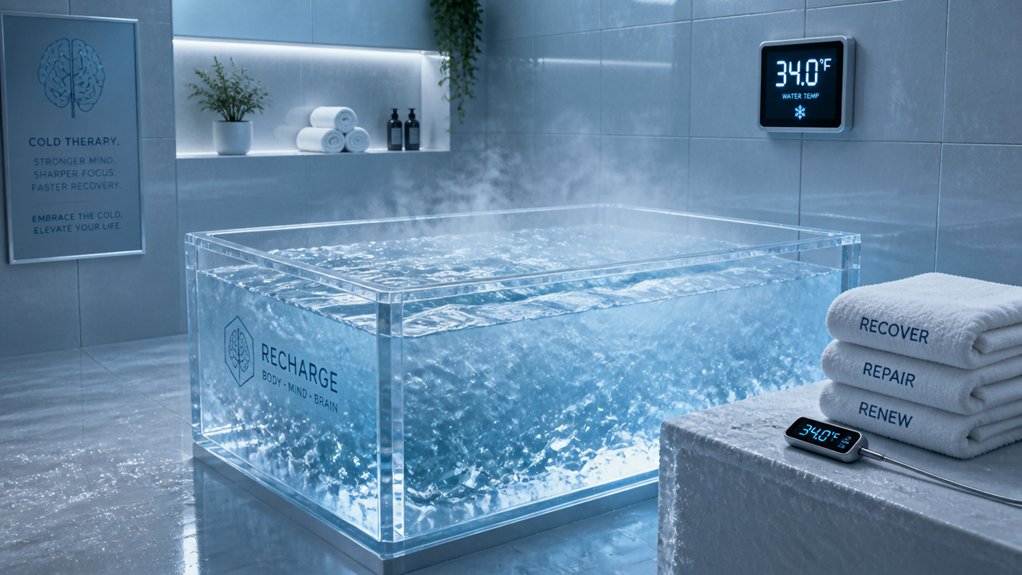
Could ice baths be a natural way to boost brain repair? Cold water immersion triggers the release of cold shock proteins like RBM3, which are essential for protecting neurons and supporting neural repair.
RBM3 has shown in animal studies the ability to prevent synaptic loss, highlighting its neuroprotective potential. Since depression often involves structural brain changes and reduced neural connectivity, stimulating RBM3 through ice baths may help mitigate these issues.
Regular cold water immersion promotes RBM3-mediated neural repair and synaptic regeneration, improving brain function. This activation offers a promising approach for brain health in depressive disorders, emphasizing how ice baths could support brain repair by harnessing the power of cold shock proteins like RBM3.
Real-Life Cases Show How Water Immersion Improves Mood
Many real-life stories demonstrate how water immersion lifts mood and reduces depression.
Scientific studies complement these experiences, showing that even brief water exposure triggers mood-enhancing chemicals in the brain.
These accounts and evidence together highlight water immersion as a promising tool for improving mental health.
Personal Success Stories
Have you ever wondered how water immersion can transform mental health? Many individuals find that cold water immersion (CWI) helps reduce depression and anxiety, leading to noticeable mood enhancement.
One woman from England stopped medication after four months of regular cold-water swimming and has stayed medication-free for over a year. People report feeling immediate emotional uplift, including increased mental clarity, motivation, and pride after ice baths.
Success stories highlight that gradual acclimatization and consistent practice are key to long-term benefits like reduced anxiety and better sleep. When combined with professional mental health support, cold water therapy can amplify mood improvements, providing a powerful tool for managing depression symptoms and achieving greater emotional wellbeing overall.
Scientific Evidence Highlights
Scientific evidence reveals compelling real-life cases demonstrating how water immersion can greatly improve mood. For example, a woman in England stopped depression and anxiety medication after four months of cold water immersion, remaining medication-free for over a year.
Single bouts of cold water immersion trigger endorphin release and neurotransmitter release, leading to immediate mood elevation and relief from depression symptoms. Research shows cold water therapy markedly decreases cortisol levels, which reduces stress and supports long-term mental health benefits.
Many individuals report increased alertness, self-esteem, and motivation, while negative emotions like tension and fatigue decrease. Combining cold water immersion with traditional treatments enhances overall mood stabilization and mental clarity, underscoring its role as an effective adjunct therapy for depression.
Cold Water Therapy Versus Traditional Depression Treatments
Cold water therapy offers an immediate and physiological approach to alleviating depressive symptoms, contrasting with traditional treatments that often rely on long-term biochemical adjustments.
When you do cold water immersion, it activates your sympathetic nervous system, prompting the quick release of mood-enhancing neurotransmitters like endorphins, dopamine, serotonin, and norepinephrine. This can instantly improve your mood and alertness. Unlike antidepressants that take weeks to work, cold immersion delivers rapid effects.
Additionally, it stimulates cold shock proteins such as RBM3, which may support neural repair and brain connectivity. Cold water therapy also boosts stress resilience by lowering cortisol levels.
To use it safely, follow protocols that include:
- Gradual exposure
- Short durations (10–15 minutes)
- Monitoring your response
- Maintaining proper temperatures
What Are the Risks of Cold Water Immersion and How to Stay Safe?
While cold water immersion can offer quick mood boosts and health benefits, it also presents certain risks that you need to understand and manage. The cold shock response can trigger involuntary gasping and hyperventilation, increasing drowning risk, so slow water entry and gradual acclimatization are vital. Prolonged exposure over 10-15 minutes risks hypothermia, especially during colder months. People with cardiovascular issues should consult a healthcare professional before attempting cold water therapy, as blood vessel constriction may cause heart stress or arrhythmias. Never immerse alone—having a companion is indispensable for open water safety and emergency help. Start with warmer water (~20°C/68°F) and short durations (~2 minutes) to safely build tolerance.
| Risk | Explanation | Safety Tip |
|---|---|---|
| Cold shock response | Involuntary gasping/hyperventilation | Slow water entry |
| Hypothermia | Body heat loss exceeds heat production | Limit duration, monitor temperature |
| Cardiovascular issues | Increased heart stress from constriction | Consult a doctor |
| Open water safety | Drowning risk without assistance | Never go alone |
| Gradual acclimatization | Builds tolerance safely | Start warm, increase gradually |
How to Practice Cold Water Immersion Safely at Home or a Facility
Practicing cold water immersion safely at home or a facility requires careful planning and attention to detail.
Practicing cold water immersion safely requires careful planning and attention to detail.
To minimize risks, follow these steps:
- Start gradually, entering the water slowly at around 20°C (68°F) for about 2 minutes. This helps your body adapt and prevents the cold shock response.
- Reduce the temperature gradually to 10-15°C (50-59°F) as your tolerance builds, extending immersion time up to 10-15 minutes.
- Never practice alone; always have a partner nearby to assist if needed, especially in open water or unfamiliar environments.
- Consult with a healthcare professional beforehand, especially if you have health concerns, to make certain cold water immersion is safe for you.
Simple Ways to Combine Water Therapy With Other Mental Wellness Strategies
Combining water therapy with other mental wellness practices can amplify its benefits and create a more holistic approach to emotional health. For example, after cold water immersion, practicing mindfulness or breathing exercises can improve alertness and reduce anxiety, supporting emotional resilience.
Pairing brief daily cold showers with journaling or gratitude practices strengthens mood regulation and cultivates positive mental habits. Incorporating aquatic activities like swimming or water aerobics alongside water therapy boosts endorphin release, enhancing overall well-being.
Gradually acclimating to cold exposure and combining it with progressive muscle relaxation maximizes stress response management and mood stabilization. Additionally, pairing cold face immersions with CBT techniques reinforces mindfulness and helps reframe negative thoughts, further promoting mental health and emotional balance through simple, effective routines.
Long-Term Benefits of Regular Cold Exposure for Resilience
Regular cold exposure can greatly enhance your resilience to stress and mood fluctuations over time. Cold water immersion stimulates the release of neurotransmitters like dopamine, serotonin, and norepinephrine, boosting mood regulation and cognitive function linked to depression. It also reduces cortisol levels, helping you better handle chronic stress.
Additionally, consistent cold exposure triggers cold-shock proteins such as RBM3, supporting neural repair and potentially preventing synaptic loss seen in mood disorders. Furthermore, repeated cold immersion strengthens your sympathetic nervous system’s adaptive response, leading to increased alertness, motivation, and emotional regulation.
Practicing regular cold exposure trains your body’s stress response, building resilience not just physically, but mentally — key for managing depressive symptoms and preventing relapse.
Troubleshooting Common Challenges When Starting Cold Therapy
Are you experiencing discomfort or uncertainty when starting cold therapy? To address common challenges, begin with cold water immersion (CWI) gradually.
Start with shorter sessions (around 2 minutes) in warmer water (~20°C/68°F) to build tolerance and reduce the cold shock response. Enter the water slowly to minimize the involuntary gasp reflex and hyperventilation, which activate the sympathetic nervous system (SNS).
Limit your sessions to 10-15 minutes to prevent hypothermia and cardiovascular stress, especially if you have pre-existing conditions. Always practice under safety supervision and avoid doing cold therapy alone.
It’s wise to consult with a healthcare professional first, particularly if you’re on medication or have health concerns, to guarantee safe participation and minimize risks.
Who Should Talk to a Doctor Before Trying Cold Water Immersion?
Wondering if you should consult a doctor before trying cold water immersion? If you have any of the following, it’s vital to speak with a healthcare professional first:
Consult a healthcare professional first if you have pre-existing conditions or experience adverse symptoms.
- Pre-existing heart conditions, to avoid cardiovascular stress from blood vessel constriction.
- Respiratory issues, as cold shock response can cause involuntary gasping or hyperventilation.
- Taking medication affecting blood pressure, circulation, or nervous system, to prevent adverse interactions.
- Pregnant women, to assess risks of hypothermia or stress response.
Additionally, if you’ve experienced fainting, seizures, or cold intolerance, getting evaluated guarantees safety.
Always talk to a healthcare professional before starting cold water therapy to avoid complications and confirm it’s appropriate for your health situation.
Tips and Resources to Incorporate Cold Water Therapy Into Your Routine
To safely incorporate cold water therapy into your routine, start gradually by immersing for 2 minutes in water around 68°F (20°C). As your tolerance builds, slowly lower the temperature and extend your immersion time, but limit each session to 10-15 minutes to prevent hypothermia. Using dedicated cold plunge tubs guarantees safe, consistent temperatures and hygiene. Incorporate cold facial immersion or cold showers daily to boost mood and stimulate endorphins. Always consult with a healthcare professional before starting cold water immersion, especially if you have mental health conditions or heart concerns, and never practice alone.
| Step | Tips | Resources |
|---|---|---|
| Starting with 2-minute immersions | Use warm water first, then cool down gradually | Healthcare provider consultation |
| Use dedicated tubs | Guarantee temperature control and hygiene | Cold plunge tubs manufacturers |
| Limit your sessions | No more than 15 minutes | Mental health support groups |
Frequently Asked Questions
Is Cold Water Immersion Good for Depression?
Cold water immersion can benefit your depression by boosting mood-related neurotransmitters, releasing endorphins, lowering stress hormones, and supporting neural repair. Regular sessions may improve emotional resilience and provide immediate mood boosts alongside traditional treatments.
What Is the Best Therapy for Depression?
The best therapy for depression combines medication and psychotherapy, like CBT, tailored to your needs. Incorporate physical therapies, such as water immersion, as adjuncts, while working closely with your mental health professional to monitor progress and adjust treatments accordingly.
What to Do on Days You Feel Depressed?
On days you feel depressed, try a cold shower or water immersion to boost your mood. Combine it with deep breathing, light exercise, or mindfulness, and remember to consult your healthcare provider for severe symptoms.
Why Do Baths Help Depression?
Baths help depression by releasing feel-good chemicals like endorphins, reducing stress hormones, and calming your nervous system. They activate alertness and emotional regulation, giving you a soothing, mood-boosting experience that can ease depressive symptoms.