The best home plunge setup balances affordability, durability, and safety. You can save money by building your own using insulated coolers, water chillers, and proper circulation pumps, or choose a commercial unit for easy controls and warranties—but at a higher cost. Focus on quality insulation, reliable filtration, and safety features like temperature controls and slip-resistant surfaces. Want to discover more about creating an effective and safe cold plunge at home? Keep exploring to find out how to optimize your setup.
Do You Need a Cold Plunge? Deciding Between DIY and Commercial Solutions
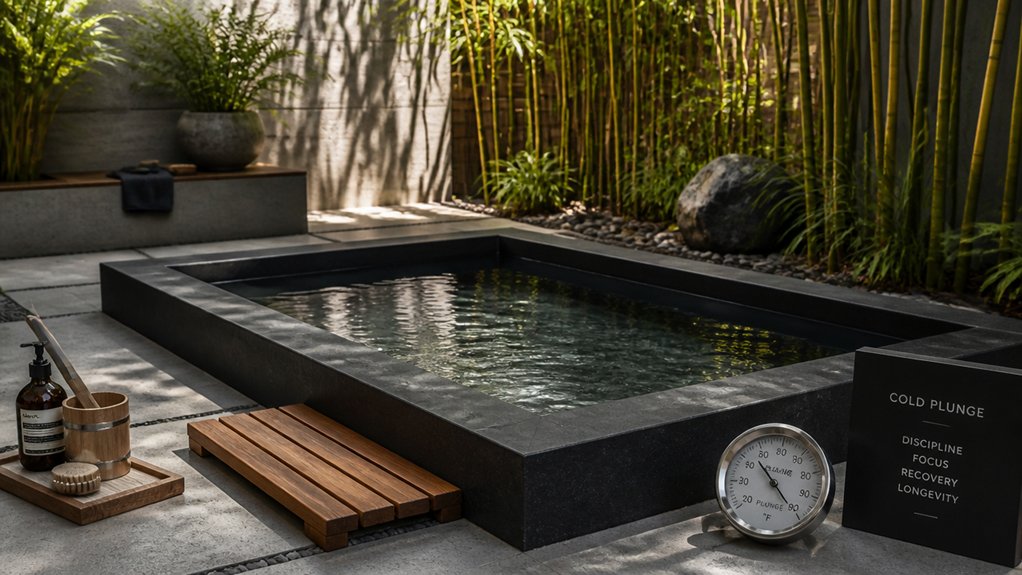
Are you wondering whether a cold plunge is a worthwhile addition to your wellness routine? If so, choosing between a DIY cold setup or a commercial option depends on your needs. A Portable Cold Plunge or Home Cold Plunge Pro offers temperature control, an integrated chiller, and filtration systems, making it easy to enjoy the benefits of muscle recovery, reduced inflammation, and mental clarity. DIY cold setups, like converted coolers or stock tanks with a water chiller, can save you over $1,000, but require effort in maintenance and sanitation. Commercial units come with smart controls, warranties, and ease of use, though their price tag can range from $2,700 to $15,000. Consider your space, budget, and maintenance capacity to decide the best solution for you. Properly selecting a tub with rugged construction and efficient insulation can enhance durability and performance over time.
Essential Parts of a Home Cold Plunge Setup: What You Need to Know
Setting up a home cold plunge involves assembling the right core components to guarantee it functions effectively and safely. First, select a Cold Plunge tub—like a stainless steel basin or insulated cooler—that can hold cold water securely.
A reliable water chiller, such as a compressor-based system, is essential to achieve a consistent temperature range between 32°F and 40°F. A water circulation pump with a built-in filtration system keeps your water clean, circulating it smoothly without frequent draining. Incorporating high-quality water treatment solutions ensures your water remains clear and free of contaminants. Proper plumbing—using insulated tubing, leak-proof connections with pipe thread sealant, and secure hose clamps—is critical for preventing leaks. For added convenience, include temperature controllers to maintain precise settings, and consider ozone sanitizing systems and insulated covers to conserve energy and secure safe, hygienic water.
Choosing the Best Water Chiller for Your Cold Plunge on a Budget
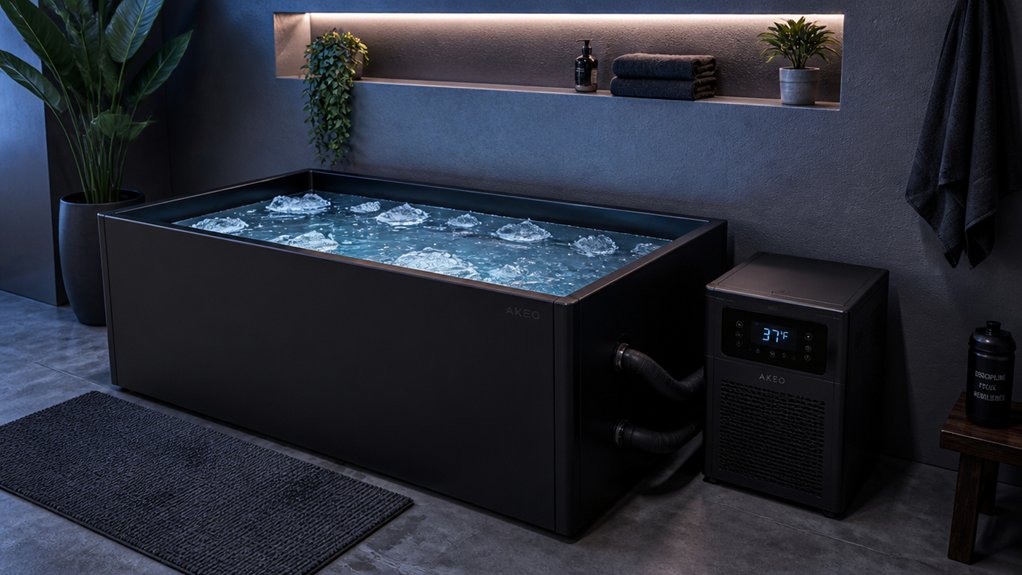
When selecting a water chiller for your home cold plunge on a budget, the Active Aqua 1/4 HP chiller stands out as an affordable yet effective option. It offers sufficient cooling power for an insulated cooler or large cold plunge tub without breaking the bank.
The Active Aqua 1/4 HP chiller is an affordable, effective option for home cold plunge setups.
To maximize efficiency, consider these tips:
- Use a large insulated cooler like the Grizzly 450 to reduce heat transfer.
- Add a reliable filtration system such as the Culligan HF-360B to keep water clean and cut down on water changes.
- Connect the chiller with 3/4″ PVC tubing and fittings to guarantee leak-free circulation.
- Install a temperature controller like the Inkbird WiFi ITC-308 to automate cooling cycles and optimize energy efficiency.
This setup helps maintain water temperature and creates an energy-efficient DIY cold plunge.
How to Insulate and Maintain Your Cold Plunge for Long-Term Use
To guarantee your cold plunge stays efficient and effective over time, proper insulation and maintenance are essential. Use a high-quality insulated cooler like the Grizzly 450 quart to minimize heat loss and reduce energy use by up to 70%. Seal all bulkhead fittings with pipe thread sealant or JB Weld Water Weld to prevent leaks and preserve insulation. Regularly clean and replace filters, and sanitize water weekly with hydrogen peroxide or chlorine granules to maintain water quality and system health. Keep an insulated lid on when not in use to retain cold and prevent contamination, extending water change intervals. Consider adding a temperature controller to automate climate control and improve energy efficiency. Additionally, choosing liners with multi-layer insulation options can significantly enhance thermal retention and overall plunge longevity.
Safety Tips and Best Practices for Using Your Home Cold Plunge
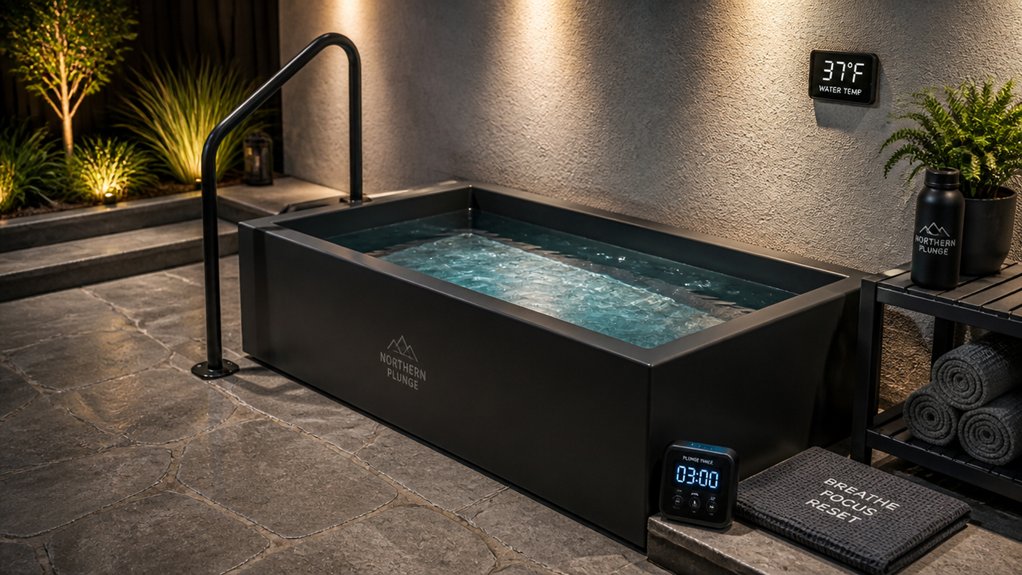
Using your home cold plunge safely begins with understanding how to control the water temperature and duration to prevent cold-related injuries. Start with shorter sessions at temperatures above 39°F, gradually decreasing both time and temperature.
Following these safety tips is essential:
- Guarantee your Cold Plunge tub has reliable temperature control and sanitation systems like filtration or ozone to keep water clean.
- Limit immersion time to no more than 10-15 minutes, especially at near-freezing temperatures, to avoid hypothermia.
- Use non-slip mats and ensure stable footing around the plunge area for safer entry and exit.
- Always consult a healthcare professional before beginning cold water immersion, especially if you have cardiovascular, respiratory, or circulation concerns.
- Be aware of portability and setup features, such as quick-inflate mechanisms and support accessories, to ensure safe and comfortable use.
Frequently Asked Questions
What Is the Best at Home Cold Plunge?
The best at-home cold plunge is the HomePlunge H3. It’s space-efficient, affordable, easy to install, quiet, and offers precise temperature control, making it ideal for muscle recovery, inflammation reduction, and mental clarity right in your home.
What Does Joe Rogan Use for Cold Plunge?
Joe Rogan uses the Sun Home Cold Plunge Pro for his cold plunge sessions, a durable, stainless steel tub with Wi-Fi controls, spacious interior, advanced filtration, and capable of cooling water to 32ºF, fitting users up to 6’7”.
Does Cold Plunge Help With Cortisol?
Cold plunges help with cortisol by triggering norepinephrine release, reducing inflammation, and improving stress resilience. You activate your sympathetic nervous system, which balances cortisol levels, accelerates recovery, and promotes better hormonal health with regular cold water immersion.
How to Set up a Cold Plunge at Home?
To set up a cold plunge at home, choose a suitable tub, place it on a stable surface near an outlet, install the chiller, fill with water, add sanitizer, and use app controls to adjust temperature and scheduling for ideal use.