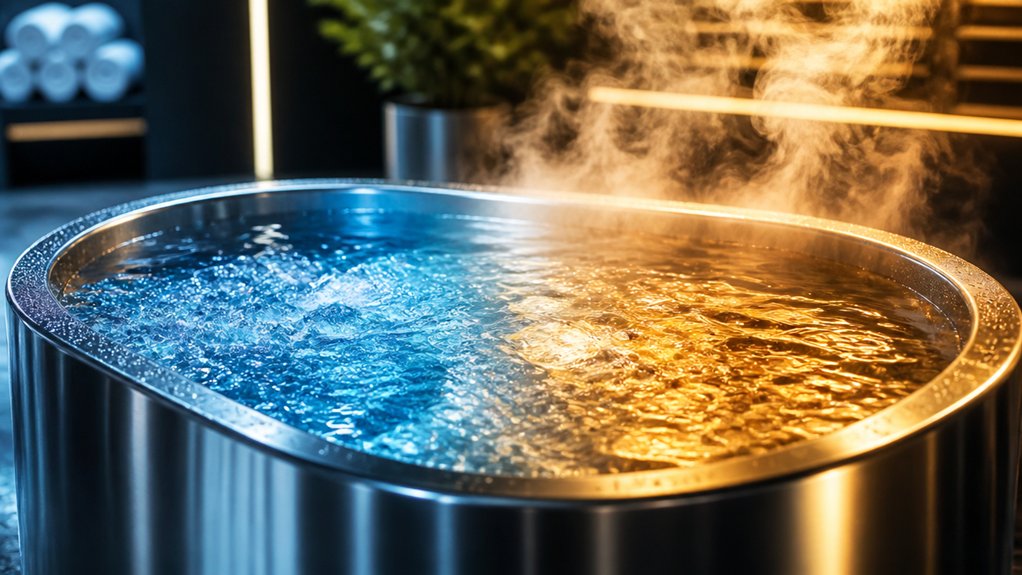
To boost your vascular health, try alternating hot and cold immersions. Start with 3–5 minutes in warm water (98–104°F) to cause vasodilation and increase blood flow. Follow with 1–3 minutes in cold water (50–60°F) to induce vasoconstriction, helping improve vascular tone. Repeat these cycles for 10–20 minutes, adjusting duration based on comfort and experience. With proper technique and safety precautions, you’ll support circulation and vascular resilience—discover how to optimize this approach further.
Understanding Contrast Therapy for Vascular Health
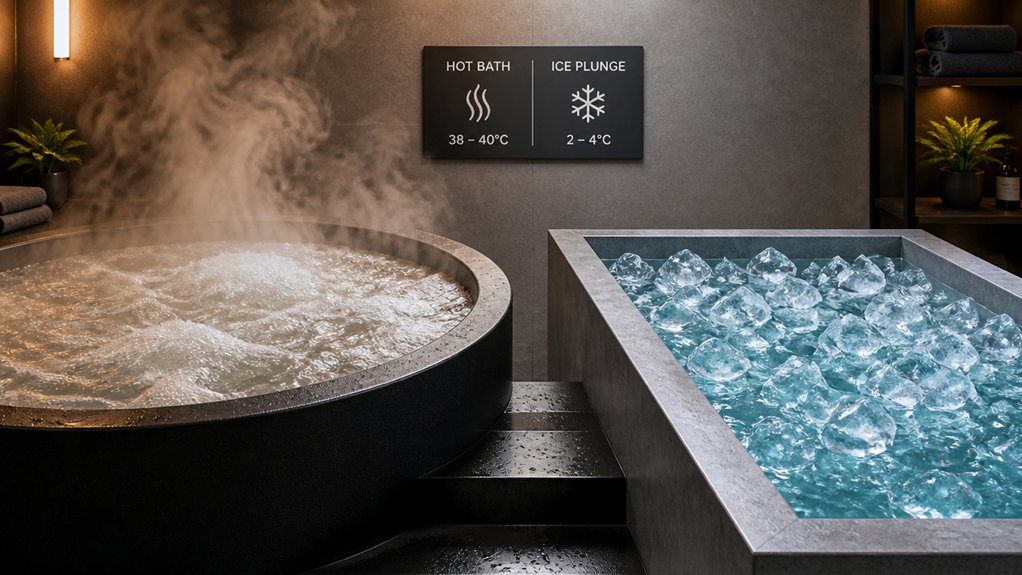
Understanding contrast therapy for vascular health involves recognizing how alternating between hot water and cold water immersion exposes your blood vessels to cyclical vasodilation and vasoconstriction. This process enhances blood flow and supports vascular function by stimulating these natural responses.
During hot water sessions, your vessels expand, while cold water prompts them to contract. These repeated cycles increase shear stress on your blood vessel walls, promoting endothelial health and overall cardiovascular function.
Cycles typically last from 30 seconds to several minutes, with water temperatures ranging from 98–104°F for hot water and 50–60°F for cold water. This method improves vascular responsiveness more effectively than cold water alone, making contrast therapy a powerful tool for boosting vascular health and supporting recovery.
How Hot Water Helps Your Blood Vessels Dilate and Boost Circulation
When you immerse yourself in hot water, your blood vessels naturally expand through a process called vasodilation, which increases blood flow throughout your body. Hot water immersion relaxes the smooth muscles in vessel walls, reducing peripheral resistance and lowering blood pressure. A high-quality hot tub or immersion device with temperature control can optimize these benefits by maintaining consistent warm conditions.
This widening of blood vessels enhances circulation, allowing more oxygen and nutrients to reach tissues while speeding up the removal of metabolic waste. Improved circulation also accelerates muscle recovery and repair.
Additionally, alternating hot water immersion with cold exposure—a contrast therapy—stimulates vascular adaptability by promoting repeated dilation and constriction.
Sustained hot water immersion creates shear stress on blood vessel linings, supporting endothelial function and contributing to long-term cardiovascular health. This natural process helps maintain a healthy, resilient vascular system.
How Cold Water Constricts Blood Vessels to Improve Vascular Tone
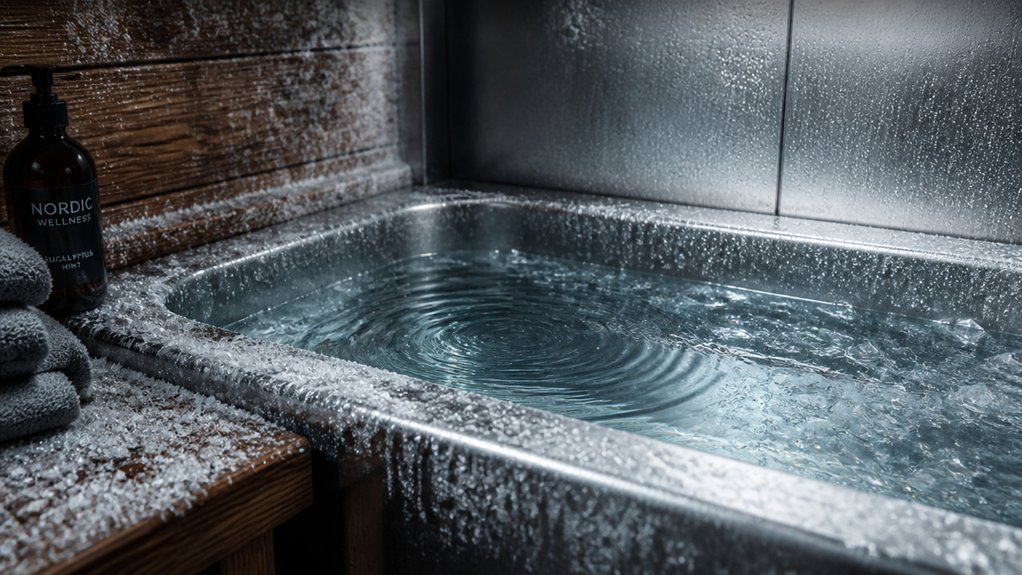
When you expose your body to cold water, your blood vessels tighten, or vasoconstrict, which boosts vascular tone. This constriction increases shear stress on vessel walls, promoting healthier endothelial function. Using cold plunge tubs with precise temperature control can further optimize these effects. Over time, repeated cold immersion can improve your vessels’ elasticity and responsiveness.
Vasoconstriction Mechanism Activation
Cold water immersion triggers an immediate constriction of blood vessels by causing the smooth muscles in their walls to contract. This vasoconstriction reduces blood flow to the skin, helping regulate body temperature.
When exposed to cold, your body activates the sympathetic nervous system, releasing norepinephrine, which sustains vascular tightening. As a result, blood vessels become more responsive and elastic over repeated cold immersions, improving vascular tone.
This mechanism not only lowers blood flow but also reduces shear stress on vessel walls, enhancing endothelial function. The constriction increases blood pressure temporarily, but with regular cold exposure, it can lead to better blood pressure regulation and cardiovascular health. Efficient circulation systems work in tandem to maintain this response, supporting overall vascular resilience.
Over time, this process helps strengthen your blood vessels, supporting overall vascular health and resilience.
Enhancing Vascular Flexibility
Cold water immersion causes blood vessels to constrict, which increases vascular tone and makes arteries more flexible. This constriction boosts shear stress on vessel walls, stimulating endothelial function and supporting cardiovascular health. Using insulated tubs can help maintain consistent water temperature, maximizing these benefits. Regular cold immersion, especially with water temperature around 50°F (10°C), helps condition your blood vessels to become more adaptable and resilient.
Here are key points:
- Cold immersion prompts vasoconstriction, enhancing vascular flexibility.
- Alternating hot-to-cold cycles improve vessel responsiveness through repeated constriction and dilation.
- Constriction promotes nitric oxide release, crucial for vessel dilation and tone regulation.
- A 15-minute cold plunge can greatly reduce heart rate and blood pressure, reflecting better vascular function.
The Science Behind Alternating Hot and Cold for Vascular Resilience
Switching between hot and cold water causes your blood vessels to repeatedly relax and tighten, known as vasodilation and vasoconstriction, which boosts circulation.
These thermal shifts create shear stress on vessel walls, stimulating endothelial function and increasing nitric oxide availability for better vascular health.
Vasodilation and Vasoconstriction Cycles
Alternating hot and cold water immersion stimulates a natural cycle of vasodilation and vasoconstriction, which enhances the flexibility and responsiveness of your blood vessels.
During heat exposure, vasodilation occurs, expanding vessels and increasing blood flow. When you switch to cold, vasoconstriction narrows the vessels, redirecting blood flow and reducing inflammation.
This contrast water therapy trains your vascular system to regulate tone more effectively, boosting resilience.
Here are key points:
- The cycle promotes elastic, adaptable blood vessels.
- Repeated vasodilation and vasoconstriction improve shear stress on vessel walls.
- Regular contrast water therapy strengthens endothelial function.
- These processes help support healthier blood pressure regulation and circulation.
Enhanced Blood Flow Dynamics
The dynamic process of hot and cold immersion directly influences blood flow by repeatedly changing the diameter of your blood vessels. Cold immersion causes vasoconstriction, while heat prompts vasodilation, creating cyclic shifts that enhance blood flow dynamics. A recent trend in infrared sauna sessions leverages this concept, utilizing low-EMF technology to maximize safety and health benefits during contrast therapy. These temperature changes increase shear stress on arterial walls, stimulating endothelial function and boosting nitric oxide production. Alternating between hot and cold temperatures promotes circulation by rapidly adjusting blood vessel diameter, helping to remove metabolic waste and deliver oxygen and nutrients more efficiently.
Studies show that this contrast water therapy can improve microcirculation and reduce swelling, supporting faster recovery. Additionally, these cycles challenge your cardiovascular system, training it to adapt quickly, which may lower blood pressure and enhance overall heart health.
This process truly enhances blood flow dynamics through controlled temperature shifts.
Step-by-Step Guide to Starting Hot-to-Cold Contrast Therapy Safely
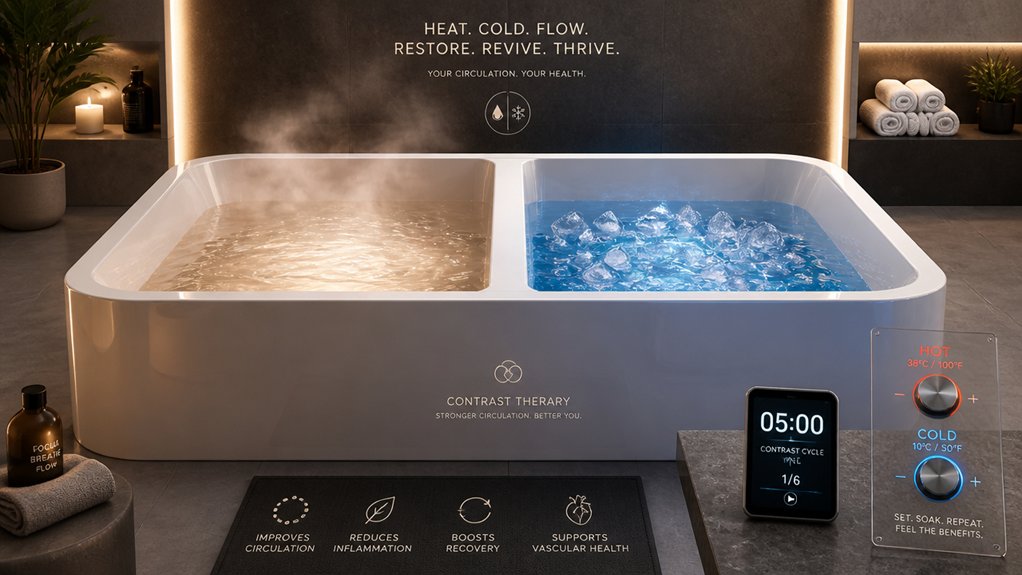
Starting hot-to-cold contrast therapy safely requires knowing the proper sequence and duration for each stage. Begin with warm water immersion at 98–104°F (37–40°C) for 3–4 minutes to boost blood flow without overstressing your cardiovascular system.
Next, shift to cold water immersion at 50–60°F (10–15°C) for 30 seconds to 1 minute, gradually increasing cold exposure as tolerated. Repeat these cycles 2–4 times, but keep the total cold immersion under 5 minutes to avoid hypothermia.
Always finish with cold immersion to promote vascular constriction, then rest without towel drying to extend metabolic effects. Monitor your body’s response continuously, and avoid contrast therapy if you have cardiovascular concerns or consult a healthcare provider beforehand. Effective water circulation and temperature stability, supported by appropriate chiller systems, can enhance your experience and safety throughout the process.
What Temperatures and Durations Work Best?
What temperatures and durations yield the best results for hot-to-cold contrast therapy? Typically, warm water ranges from 98-104°F (37-40°C), promoting vasodilation, while cold water is around 50-60°F (10-15°C), inducing constriction.
Cold immersion sessions usually last 1 to 5 minutes, enough to stimulate blood vessel shear stress without risking hypothermia or discomfort. Warm immersion periods generally last 3 to 5 minutes, allowing your vessels to dilate and blood flow to improve.
For peak benefits, aim for 2-4 cycles of hot and cold water immersion over 10-20 minutes. Keep in mind, gradual adaptation and caution are key, especially if you’re new to contrast therapy, to prevent excessive cardiovascular stress.
How Contrast Therapy Enhances Blood Flow and Reduces Inflammation
Contrast therapy works by actively stimulating your blood vessels through alternating hot and cold immersions, which repeatedly promote dilation and constriction. This cycle boosts blood flow and speeds up tissue recovery.
Alternating hot and cold immersions stimulate blood vessels, enhancing circulation and accelerating tissue recovery.
Here’s how it works:
- The hot phase (98–104°F) causes vessels to dilate, increasing blood flow and warming muscles.
- The cold phase (50–59°F) constricts vessels, helping reduce inflammation and swelling.
- Repeated cycles create shear stress on vessel walls, improving endothelial function and vascular health.
- Enhanced circulation flushes metabolic waste out of muscles, reducing soreness and inflammation.
What Benefits Can You Expect From Regular Contrast Therapy?
Have you ever wondered how regular contrast therapy can boost your overall health and recovery? This practice, involving alternating hot and cold water immersion, enhances blood flow by repeatedly causing vasodilation and vasoconstriction.
As a powerful recovery tool, contrast therapy helps reduce inflammation, swelling, and delayed onset muscle soreness (DOMS) after intense workouts. It also improves vascular function by stimulating shear stress in blood vessels, supporting endothelial health and cardiovascular benefits.
Plus, the temperature shifts activate your autonomic nervous system, helping to reduce muscle spasms and promote relaxation. When used consistently, contrast therapy can be a proactive way to manage chronic conditions, speed up healing, and support your body’s natural ability to recover more efficiently. Proper temperature measurement with the right infrared thermometers is essential for safe and effective cold plunges and contrast therapy sessions.
Common Mistakes to Avoid During Contrast Sessions
To maximize the benefits of contrast therapy, you need to avoid common mistakes that can reduce its effectiveness or cause discomfort.
First, don’t stay too long in hot water, as over 10 minutes can cause overheating and diminish vascular benefits. Second, avoid abrupt temperature changes; always shift gradually to prevent cardiovascular strain.
Third, skip the cool-down phase after cold immersion to maintain the metabolic effects like enhanced circulation and shear stress. Fourth, don’t perform contrast immersion immediately after resistance training, since cold exposure within four hours can blunt muscle growth.
Finally, avoid huddling, towel drying, or crossing your arms after cold exposure, as these actions end shivering prematurely and reduce cold-induced vascular and metabolic benefits. Recognizing the importance of cold retention duration can help ensure prolonged therapeutic effects.
Tips for Beginners: Starting Slow and Monitoring Your Response
Starting slow is essential when you’re new to contrast therapy, as it helps your body adapt safely and comfortably. Begin with short cold immersions of about 30 seconds to 1 minute, gradually increasing to 5-10 minutes as your tolerance grows. Choose water around 50-60°F (10-15°C) to reduce cold shock and promote gradual adaptation.
During each cold plunge, closely observe your heart rate, breathing, and overall comfort to prevent adverse effects like cold shock or hypothermia. Always have warm clothing and towels nearby for post-immersion, and avoid crossing your arms or huddling to allow beneficial shivering and metabolic responses.
Starting in controlled environments like bathtubs or cold-plunge centers is recommended, and consult a healthcare professional if you have cardiovascular concerns.
Maximizing Your Vascular Benefits With Contrast Therapy
By alternating hot and cold water, you boost blood flow and improve vessel flexibility, which enhances overall circulation.
Paying attention to your temperature cycles—about 1 to 3 minutes each—maximizes these benefits and promotes vascular resilience. Consistently practicing this can help your body respond better to stress and support healthier arteries.
Enhancing Blood Flow Dynamics
Contrast therapy enhances blood flow dynamics by cycling your body through hot and cold water immersion, which stimulates vasodilation in heat and vasoconstriction in cold. This alternating process boosts circulation and shear stress, essential for vascular health.
Repeating these cycles activates endothelial function and improves vascular elasticity by increasing blood vessel responsiveness. To maximize benefits, follow these steps:
- Use hot water around 100-104°F (38-40°C) for 1-3 minutes.
- Shift to cold water at 50-59°F (10-15°C) for 1-3 minutes.
- Repeat the hot-cold cycle for 2-4 rounds.
- Maintain proper timing to optimize shear stress and nitric oxide release.
This method accelerates recovery, reduces inflammation, and enhances nutrient delivery, supporting overall cardiovascular health through improved blood flow dynamics.
Optimizing Temperature Cycles
Optimizing your temperature cycles during contrast therapy involves fine-tuning the duration and sequence of hot and cold immersions to maximize vascular benefits. Effective temperature cycling enhances vascular function and circulation by alternately dilating and constricting blood vessels.
Typically, you’ll spend 3-4 minutes in hot water, followed by 1 minute in cold, repeating for 3-5 cycles. This pattern stimulates endothelial function, improving vessel elasticity and reducing arterial stiffness.
Carefully adjusting the timing guarantees you get the most out of contrast therapy, promoting better blood flow and flushing metabolic waste. By mastering temperature cycling, you’ll amplify the benefits of contrast therapy, accelerating recovery, reducing inflammation, and supporting overall cardiovascular health.
Properly optimized cycles secure consistent vascular improvements with each session.
Consult Your Healthcare Provider Before Trying Contrast Therapy
Before trying contrast therapy, it’s essential to consult your healthcare professional, especially if you have cardiovascular issues. This therapy involves water immersion at different temperatures, which impacts blood vessel constriction and dilation.
A medical consultation helps you understand potential risks and personalizes your approach.
Consider these steps:
- Seek medical advice before starting contrast therapy if you have high blood pressure or heart disease.
- Ask your healthcare provider about safe water temperatures and immersion times.
- Discuss any medications to guarantee contrast therapy doesn’t interfere with your treatment.
- Get a professional assessment to identify contraindications and tailor the water immersion routine for your vascular health.
Consulting a healthcare professional guarantees safe, effective use of contrast therapy and optimizes its benefits.
Frequently Asked Questions
Does Cold Water Boost Blood Circulation?
Yes, cold water boosts your blood circulation by causing vasoconstriction followed by vasodilation, which improves blood vessel elasticity and flow. Alternating hot and cold immersions further enhance circulation through contrasting constriction and dilation cycles, supporting your vascular health.
What Is the 1 10 1 Rule in Cold Water?
The 1 10 1 rule involves starting with one minute of cold immersion, then warming up for ten minutes, followed by another one-minute cold exposure. It helps improve blood flow while keeping your cold exposure safe and effective.
What Happens to the Body After 30 Days of Cold Shower?
After 30 days of cold showers, your body improves circulation, with better vessel constriction and dilation. You boost alertness, lower resting heart rate and blood pressure, and develop mental resilience, metabolism, and enhanced cardiovascular health.
Does Cold Water Lower Cortisol?
Yes, cold water lowers cortisol levels promptly by activating your body’s stress response, which then reduces cortisol, helping you feel calmer, improve mood, and support cardiovascular health. Regular cold plunges can enhance these benefits over time.