To boost sleep with hot-to-frozen recovery rituals, start with a 15-20 minute hot soak at 101-102°F to relax muscles and reduce stress. Cool down with a cold plunge or shower, finishing 60-90 minutes before bed to signal your body to cool naturally. Incorporate mindful breathing or meditation to enhance relaxation. Adjust temperatures seasonally, avoid overdoing it, and stick to a consistent routine. Keep exploring for more tips to optimize your sleep and recovery routines.
Why Hot-to-Cold Rituals Boost Your Sleep and Recovery
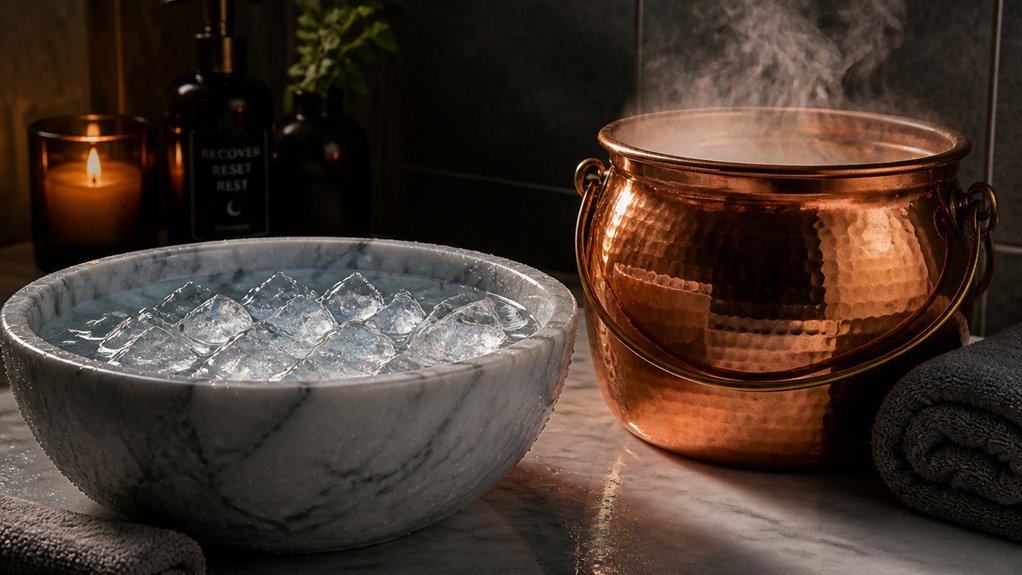
Hot-to-cold rituals enhance sleep and recovery by actively signaling your brain to prepare for rest. When you start with a 15-20 minute hot tub soak at 100-102°F, passive body heating relaxes muscles, reduces soreness, and lowers stress hormones.
Afterward, cooling down 60-90 minutes before bed triggers your body’s natural recovery systems, helping regulate your circadian rhythms. This gradual cooling boosts sleep depth by 13% and shortens sleep onset time by 36%. Incorporating infrared sauna therapy into your routine can further enhance circulation and muscle recovery, supporting overall sleep quality.
Alternating hot hydrotherapy with cold exposure stimulates circulation, activates lymphatic flow, and balances your nervous system. Regularly practicing hot-to-cold recovery rituals as part of your evening routine improves sleep patterns over 1-2 weeks, promoting relaxation, temperature regulation, and mental wind-down without screen time.
How to Build Your Hot-to-Cold Bedtime Routine
To build an effective hot-to-cold bedtime routine, focus on a gradual temperature shift that signals your body to prepare for sleep. Consistency is key, so stick to the same timing each night to help regulate your circadian rhythm. Using a properly sized chiller ensures you achieve and maintain the optimal plunge temperatures comfortably. Keep your soak within 15-30 minutes and finish at least an hour before bed to optimize relaxation and recovery.
Gradual Temperature Transition
Building a successful temperature shift ritual involves starting with a relaxing hot soak to gently elevate your body temperature, signaling to your brain that it’s time to wind down. Afterward, allow your body to cool naturally over 60-90 minutes, prompting sleep signals through a temperature drop. To enhance this process, incorporate gradual cold exposure, like a brisk cold plunge or a cool shower, to stimulate circulation and nervous system recovery. It’s essential to control your water temperature carefully; keep the hot soak between 101-102°F for best effect. During this adjustment, avoid screens and blue light, which can suppress melatonin. Adhering to a consistent routine helps your body learn the change, reinforcing your sleep-ready state night after night. Incorporating temperature control options, such as water chillers or external cooling devices, can help fine-tune your routine for optimal results.
Timing and Consistency
Establishing a consistent evening routine is key to making your hot-to-cold shift effective and reliable. To support your sleep, plan hot tub soaks 60-90 minutes before bed, allowing your body’s cooling phase to signal sleep onset naturally.
Keep your hot tub sessions at 100-102°F for 15-30 minutes, gradually increasing duration from 10-15 minutes to build tolerance. Consistency is essential: perform these soaks nightly, even during seasonal changes, to help regulate your circadian rhythms and improve sleep quality over time.
During and after your soak, avoid screens and blue light, which can hinder melatonin production. By sticking to a regular schedule, you’ll enhance your body’s ability to shift smoothly into restful sleep, making your hot-to-frozen routine more effective and dependable. Incorporating proper water treatment practices ensures the water remains clean and safe, supporting your health and routine consistency.
When’s the Best Time to Use Hot and Cold Therapy Before Sleep?
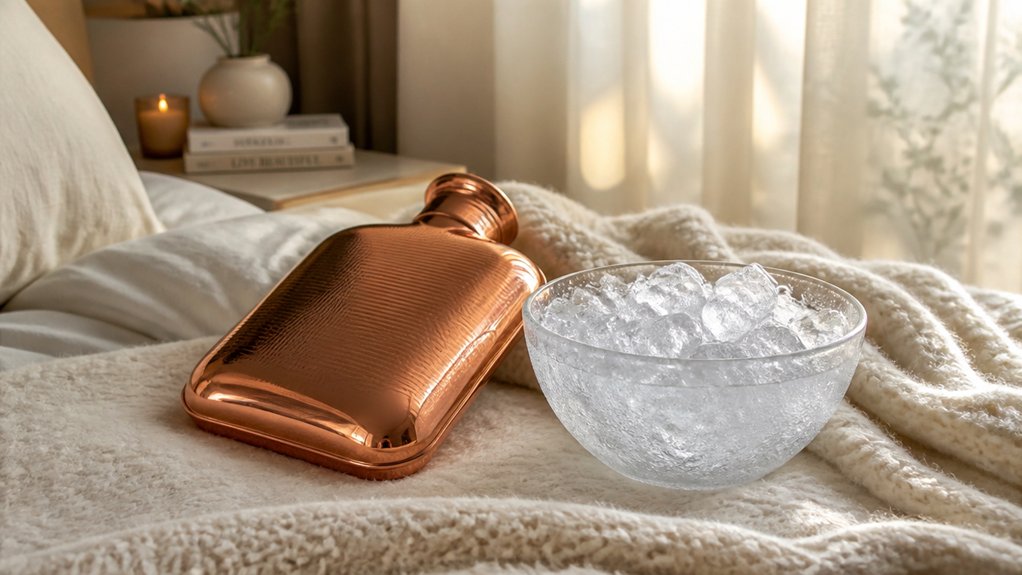
Wondering when to incorporate hot and cold therapy into your evening routine for ideal sleep? Using a hot tub about 60-90 minutes before bed is most effective. Soaking in a hot tub at 101-102°F for 15-20 minutes relaxes muscles and promotes passive body heating, which helps signal your body to cool down naturally. Avoid exceeding 30 minutes to prevent overheating, which can disrupt your sleep cycle. Incorporating the proper heat settings ensures safety and comfort during your relaxation routine. Cold therapy, like cryotherapy, is better earlier in the evening or post-workout, not immediately before bed, as it energizes and reduces inflammation. Combining hot soaking followed by a gradual cool-down period prepares your circadian rhythm, encourages melatonin release, and enhances sleep quality. Timing is key for maximizing the benefits of hot and cold therapies before sleep.
Choosing the Right Temperatures for Better Sleep
Choosing the right temperature is key to enhancing your sleep; sticking to the 100-102°F range helps you relax without overheating. Maintaining safe temperatures and soaking time prevents disruptions in your body’s cooling process, promoting better rest.
Optimal Temperature Range
To optimize your sleep recovery rituals with a hot tub, selecting the right temperature range is essential. Hot water at 100°F to 102°F promotes relaxation and prepares your body for sleep by supporting a natural temperature drop afterward. Staying within this range allows for effective muscle recovery and comfort, while avoiding overheating. Using adjustable heating levels can help tailor the temperature precisely to your comfort needs. For longer, relaxing soaks, temperatures near 98°F work well, whereas higher temperatures close to 102°F suit shorter sessions focused on calming and warming your body. Keep hot tub sessions between 15 to 30 minutes to trigger your body’s cooling process, signaling sleep readiness. Cooling down gradually 60-90 minutes after soaking enhances melatonin production, improving sleep onset and quality.
Temperature-Related Recovery Benefits
Selecting the right temperatures for your recovery routines directly impacts how effectively your body prepares for restful sleep. Hot water, particularly in hot tubs between 100-102°F, optimizes passive body heating that encourages sleep onset and better sleep quality.
Soaking for 15-30 minutes at these temperatures triggers a beneficial body temperature drop 60-90 minutes later, signaling your brain it’s time to sleep. Combining hot water soaks with cooler therapies like cryotherapy or cold plunges further enhances recovery by stimulating circulation and your nervous system.
Gradually cooling your body after a hot soak supports your circadian rhythm, helping reinforce consistent sleep patterns and deeper sleep phases. Striking the right balance between hot and cold exposure maximizes both muscle recovery and sleep benefits. Incorporating temperature control features such as digital or WiFi-enabled systems can help maintain precise and safe recovery temperatures for optimal results.
Safe Temperature Practices
Guaranteeing you use the right temperature during your recovery routines is essential for maximizing sleep benefits while avoiding potential risks. When using hot water, aim for a temperature between 100°F and 102°F to promote muscle relaxation without overheating.
Soak for 15-30 minutes to balance effective passive heating with safe exposure. Ending your hot water session 60-90 minutes before bed helps your body cool down naturally, signaling the brain to initiate sleep.
If you’re sensitive to heat, start with shorter soaks of 10-15 minutes at lower temperatures and gradually increase. Be cautious not to exceed 104°F, as higher temperatures can cause excessive strain and disrupt sleep.
Proper temperature control guarantees comfort, safety, and peak sleep recovery.
Simple Hot-and-Cold Rituals for Stress Relief and Restful Sleep
Incorporating simple hot-and-cold rituals into your evening routine can greatly reduce stress and promote better sleep. Start with a hot water soak, ideally lasting 15-20 minutes at 101-102°F, to relax muscles and calm your mind. This passive heating activates your body’s temperature regulation, signaling the brain to prepare for rest.
Follow your hot water soak with a gradual cool-down 60-90 minutes before bed; you can do this by taking a cold plunge or lowering the room temperature. Alternating hot and cold treatments reduces muscle soreness, lowers stress hormones, and relaxes your nervous system.
To enhance these benefits, avoid screens and blue light, and consider mindful meditation or gentle social interaction during your ritual. Consistency, practiced 1-2 times weekly, helps entrain your circadian rhythm for improved sleep.
Incorporate Mindfulness and Breathing for Deep Relaxation
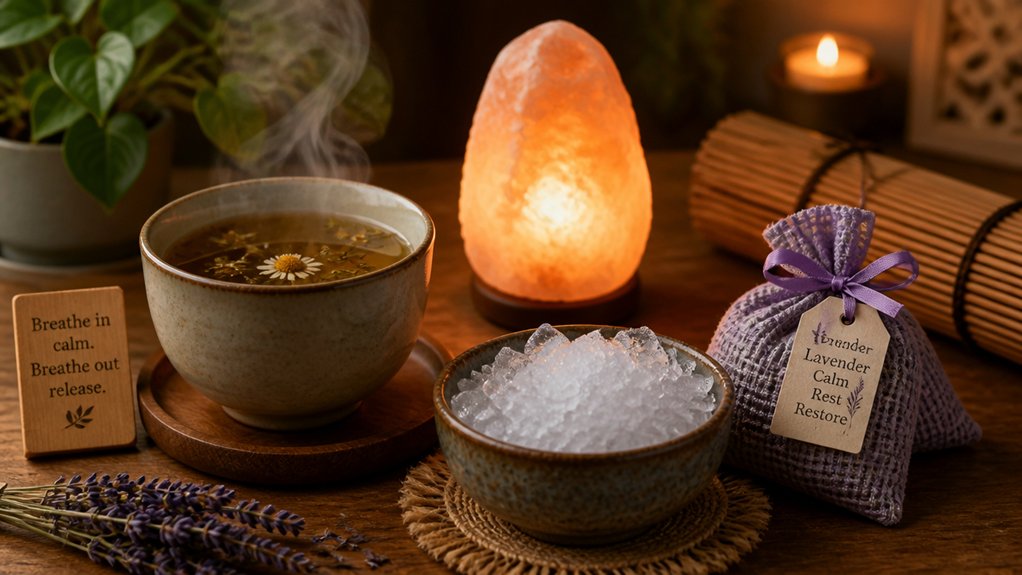
Focusing on your breath control during your soak helps calm racing thoughts and signals your body to relax.
Practicing mindful presence keeps you anchored in the moment, easing your shift into sleep.
Using guided meditation can deepen this relaxation, making it easier to fall asleep faster and enjoy restorative rest.
Focus on Breath Control
Practicing mindful breath control during your evening routines can greatly enhance deep relaxation and prepare your body for restorative sleep. Focused breathing activates your parasympathetic nervous system, helping you unwind and reducing stress.
When you perform deep breathing exercises during a water soak at 101–102°F, your heart rate lowers, promoting 13% deeper sleep. During a 20-30 minute mindful meditation in a quiet environment, focusing on your breath calms racing thoughts, speeding up sleep onset by up to 36%.
Additionally, breath control improves oxygen flow and encourages a gentle body temperature drop after soaking, signaling your brain to initiate sleep cycles within 60-90 minutes. Integrating these breathing techniques into your nightly routines maximizes stress relief and promotes sustainable sleep improvements.
- Activates the parasympathetic nervous system
- Lowers heart rate for better sleep quality
- Calms racing thoughts efficiently
- Supports natural sleep cues within an hour
Practice Mindful Presence
Engaging in mindful presence during your evening routines can deepen relaxation and prepare your body for restful sleep. A mindfulness practice during your hot tub soak helps calm your nervous system and reduces stress hormones, making it easier to unwind.
Focus on physical sensations, the heat of the water, and the sounds around you to enhance mental clarity. By paying attention to these details, you lower racing thoughts and foster a peaceful mental state.
Incorporate deep, deliberate breathing to activate your parasympathetic nervous system, which promotes relaxation. This combination of mindfulness and breathing in your hydrotherapy routine not only relaxes your body but also aligns with your circadian rhythm.
Ultimately, practicing mindful presence primes your mind and body for a swift shift into restful, restorative sleep.
Use Guided Meditation
After establishing mindfulness during your hot tub experience, guided meditation can deepen your sense of relaxation and help quiet a busy mind. By focusing on breathing and surroundings, guided meditation activates your parasympathetic nervous system, promoting recovery and easing you into sleep.
This practice reduces racing thoughts, lowers stress hormones, and relaxes mental chatter, making it easier to fall asleep. Spending 20-30 minutes on mindful meditation after your soak can improve sleep quality and decrease anxiety sensitivity.
To maximize the benefits, avoid screens and concentrate on controlled breaths and sensory awareness. Incorporating guided meditation into your nighttime routine creates the ideal physiological environment for restful sleep.
- Focus on deep, controlled breathing during meditation
- Eliminate distractions like screens to enhance melatonin production
- Use visualization techniques to deepen relaxation
- Maintain awareness of your surroundings to reinforce mindfulness
Common Mistakes to Avoid When Preparing for Bed
Preparing for bed without careful planning can easily negate the benefits of your evening rituals. One common mistake is soaking in the hot tub for too long, exceeding 30 minutes, which can cause overheating and disrupt sleep quality.
Avoid using devices or exposing yourself to blue light during your evening rituals, as this suppresses melatonin and hinders your natural sleep cycle. Also, don’t start hot tub soaks too close to bedtime; aim to finish 60-90 minutes before sleep to allow your body to cool down and promote sleep onset.
Don’t expect immediate results—sleep improvements from hot-tub routines typically occur after consistent practice over 1-2 weeks. Finally, stay hydrated before and after soaking to prevent dizziness and maintain recovery benefits.
Adjust Your Rituals for Seasons and Personal Needs
Adapting your sleep recovery rituals to seasonal changes and personal needs guarantees they remain effective year-round. By modifying your Recovery Rituals, you confirm they support peak relaxation and sleep quality regardless of weather or stress levels.
- Adjust your hot tub temperature seasonally between 100-102°F for comfort and benefits.
- Shorten soak times during warmer months to prevent overheating, starting with 10-15 minutes.
- Include cooling phases 60-90 minutes before bed to promote body temperature drops, aiding sleep onset.
- Tailor evening activities—like meditation or gentle stretching—to your stress levels and personal preferences.
Regularly reviewing and adapting your rituals will keep them effective, helping you maintain restful sleep and peak recovery throughout the year.
FAQ: Cold Exposure and Nighttime Recovery Tips
Curious about maximizing your nighttime recovery with cold exposure? To optimize benefits and avoid disruption, finish cold therapy sessions 60-90 minutes before bed, allowing your body temperature to drop naturally and trigger sleep. Cold exposure, like cryotherapy or plunges, helps reduce inflammation and muscle soreness but can overstimulate if done too late. After cold exposure, incorporate warming rituals like hot tubs at 100–102°F for 15–20 minutes to promote circulation and nervous system calming.
| Cold Exposure Tips | Warming Techniques |
|---|---|
| Start with brief sessions to monitor response | Use hot tubs or blankets to warm up |
| Finish cold therapy early enough for body cooling to occur | Delay sleep until body feels warm |
| Balance cold exposure with gradual warming | Avoid prolonged late-night cold exposure |
Combine Hot and Cold Treatments for Optimal Sleep and Recovery
Combining hot and cold treatments creates a powerful recovery protocol that enhances sleep quality and accelerates muscle repair. After a 15-20 minute hot tub soak at 100-102°F, gradually cooling 60-90 minutes before bed helps regulate your body temperature and signals your brain for deeper sleep.
Alternating between hot treatments like infrared saunas or hot tubs and cold therapies such as cryotherapy or cold plunges boosts circulation, reduces inflammation, and promotes faster recovery. Incorporate a sequence of cryotherapy (10 min), compression (20 min), and red light or infrared therapy (15 min) to activate your body’s natural recovery systems.
Regular sessions twice a week support your nervous system, lower stress, and improve sleep over time, making hot-to-frozen rituals essential for peak rest.
Frequently Asked Questions
How Long Should You Hot Tub for Recovery?
You should hot tub for recovery between 15 to 30 minutes, starting with shorter sessions if you’re sensitive to heat, and ending at least an hour before bed to promote better sleep. Avoid exceeding 30 minutes.
What Are the Rituals for Stress Relieving?
You can relieve stress with a hot soak, mindful meditation, or social wind-down. Keep lights dim, avoid screens, and focus on deep breathing, calming thoughts, or positive conversations, fostering relaxation and reducing mental tension before sleep.
How to Use a Hot Tub for Recovery?
You soak in a hot tub at 100-102°F for 15-20 minutes after workouts, hydrate well, then cool down 60-90 minutes before bed to relax muscles, improve circulation, and promote faster recovery and better sleep.
Does a Hot Tub Improve Recovery?
Yes, a hot tub improves recovery by increasing blood flow, reducing muscle soreness, easing joint pressure, and promoting restful sleep through passive heating. It helps your body relax, recover faster, and establish a healthy sleep routine.