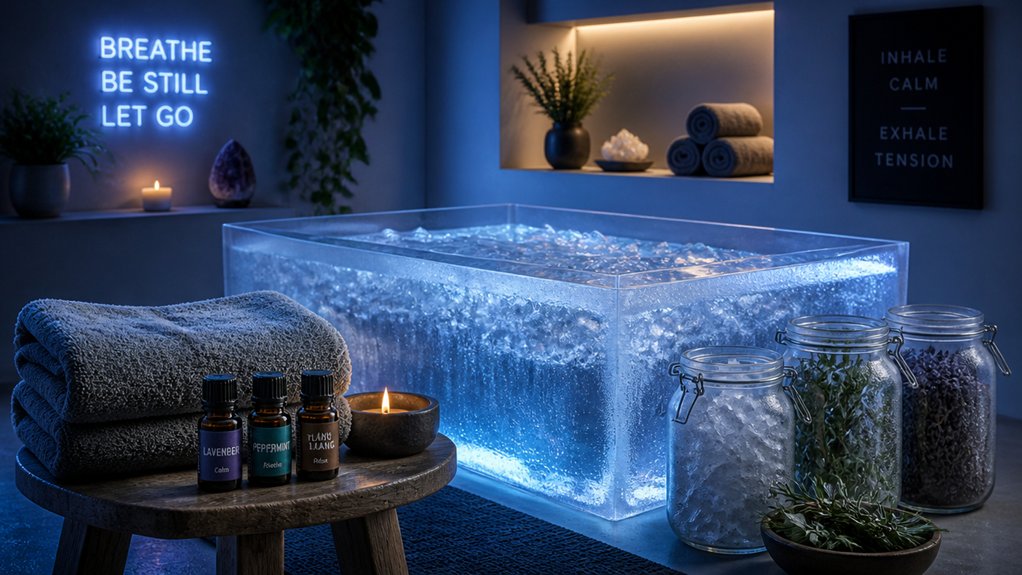
To improve sleep with ice baths, try techniques like 4-7-8 breathing, box breathing, diaphragmatic (belly) breathing, and physiological sighs to calm your nervous system. Focus on slow, deep breaths to activate your vagus nerve and reduce stress hormones. Using Wim Hof breathing beforehand can help lower inflammation and nervousness. Mastering these methods helps you stay relaxed during cold dips and prepares your body for restorative sleep—discover more ways to optimize your cold and breath routine.
How Cold Exposure Helps You Sleep Better
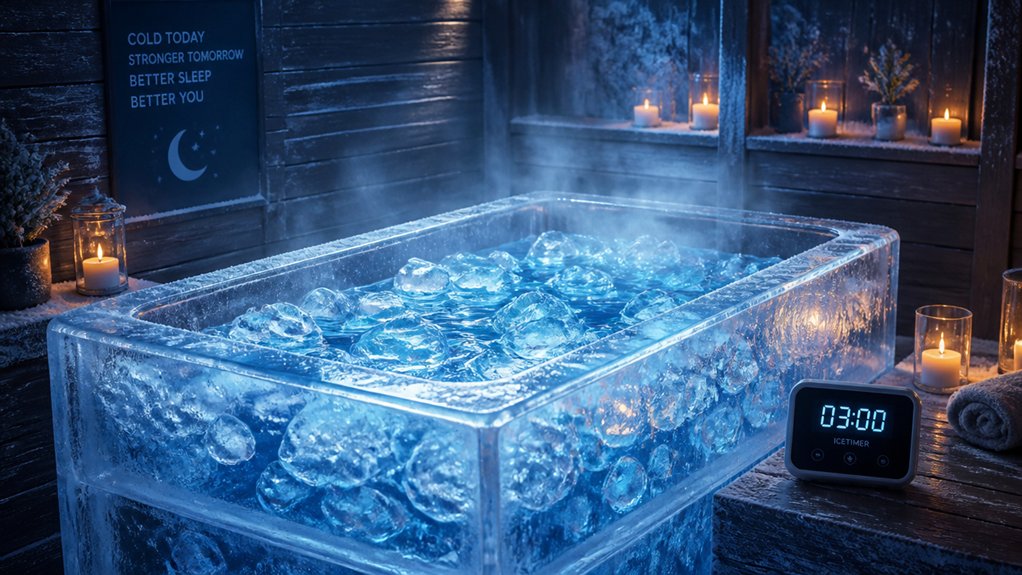
Cold exposure can greatly improve your sleep quality by triggering the body’s relaxation responses. When you immerse yourself in ice baths, it stimulates your parasympathetic nervous system via vagus nerve activation, easing stress and promoting calm.
This response helps lower your core body temperature, a key factor in initiating and sustaining deep sleep. Cold exposure also reduces inflammation and stress hormones, which can interfere with restful sleep.
Additionally, it encourages the release of anti-inflammatory chemicals and natural painkillers, easing discomfort that might otherwise keep you awake. When you combine cold exposure with deep breathing, your heart rate slows, and your nervous system calms further, making it easier to shift into restorative sleep. Incorporating adaptogens like stress resilience into your routine can further support your body’s ability to adapt to stress and improve sleep quality.
These processes work together to help you rest better and wake refreshed.
Why Breath Control Is Key to Relaxation During Cold Dips
Controlling your breath during cold dips is essential for activating the parasympathetic nervous system, which helps you relax and shift smoothly into restful sleep. When you practice controlled breathing, especially slow, deep breaths, you reduce the cold’s fight-or-flight response. This lowers your heart rate and calms your nervous system, making the adjustment to sleep easier. Adopting specific breathing techniques with adjustable resistance tools can further enhance your ability to maintain calm during cold exposure. Maintaining rhythmic breathing patterns like box or 4-7-8 breathing during a cold dip enhances vagus nerve activation, boosting relaxation. Controlled breathing also helps manage stress hormones and reduces anxiety caused by cold shock.
Best Breathing Techniques to Calm Your Nervous System Before Bed
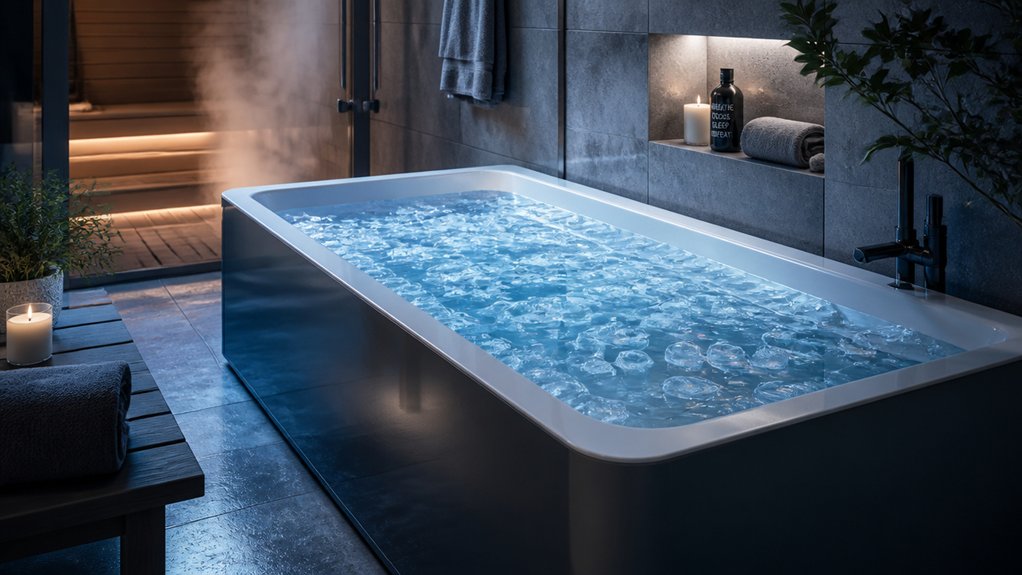
Practicing intentional breathing techniques before bed can greatly calm your nervous system and prepare you for restful sleep. Deep breathing techniques to help activate your parasympathetic nervous system are especially effective after an ice bath or exposure to cold water.
The 4-7-8 technique, with slow inhalations for four seconds, holds for seven, then exhalations for eight, promotes relaxation through controlled breath regulation. Box breathing, which involves equal four-second phases of inhale, hold, exhale, and hold, creates a calming rhythm that resets your nervous system. Diaphragmatic or belly breathing emphasizes slow nasal inhales and complete exhales, reducing stress quickly.
Additionally, physiological sighs—two quick inhales followed by a long exhale—help rapidly lower tension, easing the shift into sleep after cold water exposure. Using guided meditation devices with rhythmic light guidance and calming sounds can further enhance your relaxation process for stress relief.
How to Practice Breathing Before Your Cold Plunge
Start by taking slow, deep breaths through your nose for 5-10 minutes to calm your nervous system. Focus on building a steady rhythm, like 4-7-8 or box breathing, to relax your mind and body. Incorporate pulse oximeter feedback during your practice to monitor your oxygen levels and ensure you’re maintaining optimal breathing patterns. This preparation helps you stay centered and breathe more effectively during your cold plunge.
Prepare With Deep Breaths
Before you dip into the cold plunge, take a moment to prepare your body with deep, intentional breaths. This helps activate your relaxation response and enhances your cold plunge experience.
Using deep breathing techniques to help you stay calm is essential, especially before an ice bath. Focus on diaphragmatic breathing, expanding your belly with each inhale and gently contracting on the exhale, to maximize oxygen intake and reduce stress.
Incorporate slow, controlled breaths, such as practicing box breathing (inhale, hold, exhale, hold for 4 seconds each), to establish a calming rhythm. Avoid hyperventilation—steadiness is key.
These techniques will help you build cold tolerance safely, clear your mind, and prepare your body for the intense sensations of the ice bath. Recognizing how recovery tracking apps provide real-time feedback can further support your safe and effective cold exposure.
Relax and Focus
To effectively prepare your mind and body for your cold plunge, focus on calming your breathing to establish a sense of control and focus.
Deep breathing techniques to help include slow, deep belly breaths—inhale through your nose for three seconds, then exhale through your mouth for six seconds—to induce relaxation and calm your nervous system.
Using the 4-7-8 technique, inhale for four seconds, hold for seven, then exhale for eight seconds to steady your heart rate.
Incorporate box breathing with four-second intervals to sharpen focus.
You can also practice Wim Hof breathing cycles, combining deep breaths with controlled holds to increase oxygen and mental clarity.
Closing with physiological sighs—two quick inhales followed by a long exhale—further relaxes you before your ice bath.
Including temperature regulation techniques during breathing exercises can also enhance your preparedness for cold immersion.
Build Breath Rhythm
Building a steady breath rhythm before your cold plunge prepares your nervous system for exposure and helps you stay calm. Focusing on breath control primes your body for the ice bath, reducing shock and hyperventilation.
Start by taking slow, deep breaths: inhale through your nose for 3-4 seconds, then exhale slowly through your mouth for 6 seconds. Incorporate box breathing—inhale, hold, exhale, and hold each for 4 seconds—to further regulate your nervous system.
Engage in diaphragmatic breathing by expanding your abdomen on each inhale and contracting on the exhale to maximize oxygen intake. Practice multiple rounds of Wim Hof Method breathing, involving rhythmic deep breaths and breath holds, to build resilience against the cold and promote relaxation. Additionally, paying attention to pressure levels and employing zone-specific breathing techniques can enhance your preparedness and comfort during cold exposure.
Tips to Stay Calm and Breath-Controlled During Ice Baths
To stay calm during an ice bath, focus on controlled breathing techniques like slow, deep belly breaths and box breathing to keep your mind steady.
Concentrate on exhaling fully and gently, which activates relaxation responses and reduces anxiety.
A focused mindset combined with consistent breath control will help you maintain composure and enjoy the benefits of cold exposure.
Incorporating adaptogens like Reishi mushrooms into your routine can further support stress management and overall mental well-being during cold thermogenesis.
Master Controlled Breathing
Ever wondered how to stay calm and breathe steadily during an ice bath? Mastering controlled breathing helps you stay composed and avoid panic.
Use deep breathing techniques to help activate the vagus nerve, calming your nervous system. Start with 3-4 controlled deep breaths—inhale through your nose for 3 seconds, exhale for 6 seconds—to prepare your body.
Focus on steady, rhythmic breathing patterns, like box breathing or 4-7-8 breathing, to stabilize your response and prevent dizziness. Consistent breathing exercises before and during the ice bath can boost your cold tolerance and mental resilience.
- Practice slow, diaphragmatic breathing for relaxation
- Use equal-phase box breathing to stabilize nerves
- Begin with controlled breaths to reduce cold shock
- Maintain steady, rhythmic inhalations and exhalations
- Engage in ongoing breathwork to build tolerance
Focused Mindset Techniques
Maintaining a focused mindset during an ice bath is essential for remaining calm and keeping your breathing controlled. You can achieve this by practicing deep breathing techniques to help manage your response to the shock.
Focus on the sensation of breath expanding your ribs or belly, known as superman breathing, to keep your mind centered. Using box breathing with equal inhale, hold, exhale, and hold phases (around 4 seconds each) helps regulate your response to the cold and stabilizes your emotions.
Concentrating on your breath reduces distracting thoughts and prevents hyperventilation. Staying mindful of your breath allows you to resist the urge to hold your breath or panic.
Developing a focused mindset guarantees a steady breath pattern, making the experience less stressful and promoting better sleep afterward.
Using Breathwork to Manage Cold Shock and Improve Sleep
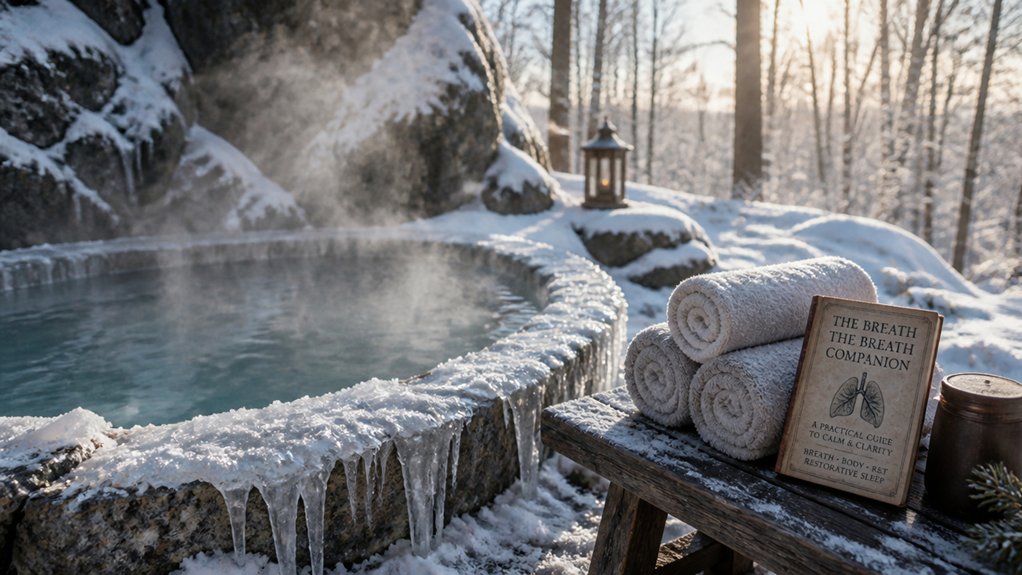
Managing the intense cold shock response during ice baths is essential for both safety and sleep quality, and controlled breathwork offers an effective solution.
When you focus on your breath, you can lower hyperventilation risks and calm your nervous system. Techniques like deep breathing techniques to help activate your parasympathetic state reduce the fight-or-flight response caused by cold exposure.
- Practice 4-7-8 breathing to promote relaxation and reduce stress hormones
- Use slow, belly breaths during the ice bath to decrease anxiety
- Implement Wim Hof Method breathing to trigger painkillers and lessen inflammation
- Use rhythmic control such as box or triangle breathing for vagal tone
- Focused breathwork helps you better manage cold shock and enhances sleep recovery after ice baths
Combining Cold Exposure and Breathing for Restorative Sleep
Combining cold exposure with intentional breathing techniques creates a powerful synergy that enhances restorative sleep.
When you take an ice bath and practice deep breathing, you activate your parasympathetic nervous system, helping your body relax. Techniques like 4-7-8 breathing or box breathing during and after the ice bath calm your nervous system, lowering stress hormones and easing your shift into sleep.
Cold exposure stimulates the vagus nerve, which, paired with controlled breathwork, improves heart rate variability—a marker of sleep quality.
Practicing the Wim Hof Method before an ice bath reduces nervousness and inflammation, supporting faster sleep onset. Incorporating longer exhalations after your ice bath sustains relaxation, promoting deeper, more restorative sleep cycles.
Frequently Asked Questions
What Is the 4-7-8 Technique for Sleeping?
The 4-7-8 technique helps you sleep by inhaling quietly through your nose for 4 seconds, holding your breath for 7 seconds, then exhaling loudly through your mouth for 8 seconds. This calms nerves and promotes relaxation.
Do Ice Baths Make You Sleep Better?
Yes, ice baths can improve your sleep by lowering your core temperature, reducing muscle soreness, and activating relaxation responses. Incorporate controlled breathing during recovery to enhance calming effects, but avoid cold exposure close to bedtime for best results.
Should You Breathe Before or After an Ice Bath?
You should breathe both before and after an ice bath. Before, it calms your nervous system and prepares you, while after, it helps regulate your body, promotes relaxation, and enhances sleep by activating your parasympathetic response effectively.
Can Ice Baths Help With Lipedema?
Ice baths might help with lipedema by reducing inflammation, swelling, and discomfort. You may experience improved circulation and lymphatic flow, but always consult your healthcare provider before trying cold therapy, as individual responses vary and risks exist.