
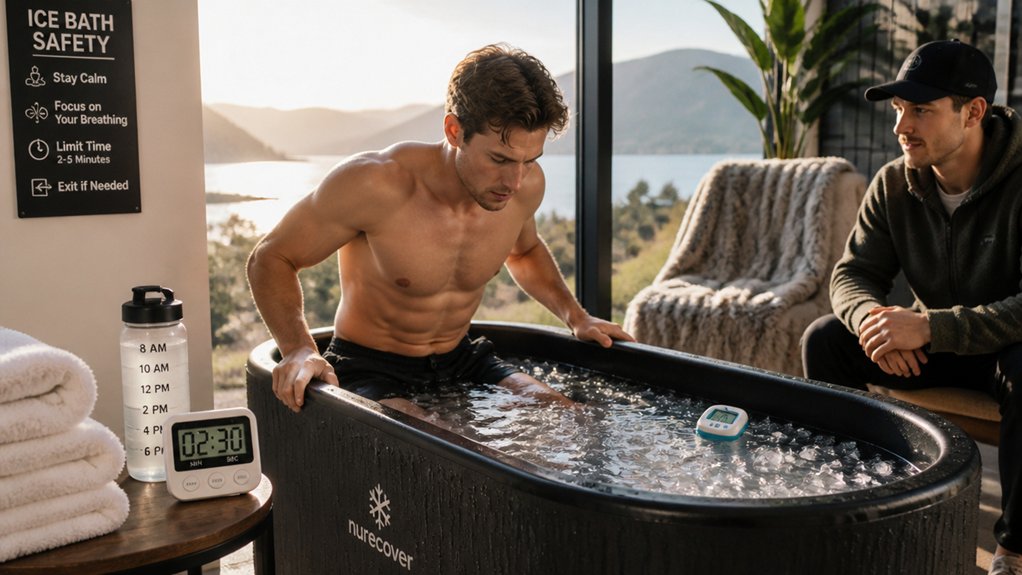
Start with a 60°F shower for a minute, then lower the temp and time gradually, aiming for a 2–5‑minute dip at 50‑59°F. Choose a non‑slip, well‑lit spot and keep a buddy nearby to watch for shivering, dizziness, numbness, or chest pain—exit immediately if any appear. Use box breathing or counted exhalations to calm the nervous system. After the plunge, dry off, dress warmly, sip a hot drink, and move gently to rewarm. If you keep going, you’ll discover more detailed guidance.
Set Water Temperature & Time for an Ice Bath
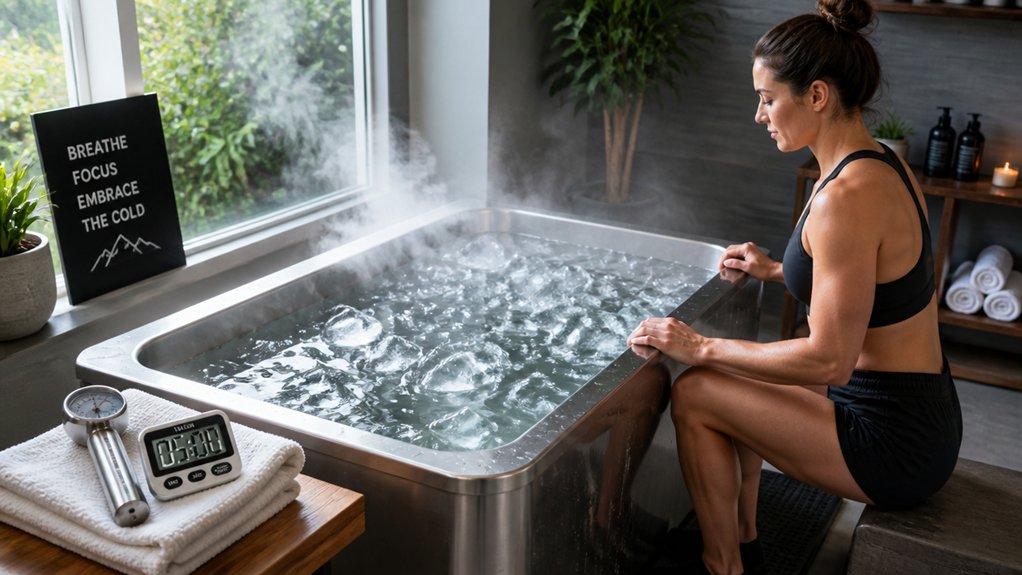
How do you set the perfect temperature and duration for an ice bath without triggering anxiety? Start with water at about 60°F (15.5°C) and gradually lower it into the cold immersion sweet spot of 50–59°F (10–15°C).
Start at 60 °F, gradually cool to 50‑59 °F, and increase immersion time by 15‑second increments, up to 2‑5 minutes.
Begin with an immersion time of 30–60 seconds, then extend by 15‑second increments as you feel comfortable, aiming for a maximum of 2–5 minutes once tolerance builds.
Keep breathing slow and steady to calm your nervous system and support anxiety management.
Stop immediately if you feel dizzy, numb, or start shivering excessively—these signs mean you’ve crossed the safe threshold. Thermometer capabilities
Create a Safe Spot & Get a Buddy
After you’ve set the right temperature and time, make sure the space around your ice bath is safe and that a buddy is on hand. Choose a non‑slip, stable spot with good lighting and clear pathways, and keep warm clothes and a warm‑up area nearby. Ensure the setup includes a dedicated, easily accessible emergency plan and a reliable way to call for help if needed non-slip setup. Position a phone or emergency alert device within reach so help arrives instantly if dizziness or anxiety spikes. Tell your buddy the exact temperature and how long you plan to stay, so they can watch for signs of distress. Their presence lets you focus on the cold without fearing fainting, and they can intervene if you feel light‑headed. A well‑planned, safe environment and a trusted companion turn ice baths into a controlled, anxiety‑reducing routine.
Use Simple Breathing Tricks to Stay Calm

You can start with boxmatic breathing, inhaling for four seconds and exhaling for six, to tame the cold shock. Counted exhalations keep your rhythm steady, while mindful breath pauses let you stay present and stop panic from spiraling.
Together these tricks anchor you, preventing dizziness and keeping anxiety at bay.
Boxmatic Breathing
Ever wonder how a simple breathing rhythm can keep you steady when the water’s ice‑cold? Try boxmatic breathing: inhale for four seconds, hold, exhale for four, hold again. This equal timing steadies your heart, curbs the stress response, and keeps panic at bay.
By focusing on each phase, you shift attention from the shock to your breath, which activates the parasympathetic nervous system. The vagus nerve fires, cortisol drops, and you feel calmer.
Practice the pattern before stepping in, then repeat it while submerged. Consistent use maintains steady oxygen flow, reduces hyperventilation, and helps your body acclimate gradually. You’ll notice less trembling, smoother temperature tolerance, and a more relaxed mind throughout the icy session.
Introductory practice helps you build familiarity with the rhythm, and a steady grip on the moment becomes easier during use.
Counted Exhalations
Counting exhalations—like a six‑second exhale followed by a four‑second inhale—anchors your focus and triggers the parasympathetic nervous system, dampening the cold‑shock response. You’ll notice that counted exhalations shift attention from icy discomfort to a steady rhythm, cutting panic and racing thoughts. By lengthening each exhale you stabilize breathing, avoid hyperventilation, and keep dizziness at bay. Practice the pattern before stepping in, then repeat it during immersion to train your body’s stress response and improve emotional regulation under cold stress.
| Step | Action | Duration |
|---|---|---|
| 1 | Inhale | 4 seconds |
| 2 | Exhale | 6 seconds |
| 3 | Pause (optional) | 2 seconds |
Use this simple table as a mental metronome; the repeated counted exhalations keep the parasympathetic nervous system engaged, soothing the cold shock and preserving calm.
A practical cue to enhance your setup is to keep a compact, lightweight clip-on cooler nearby to remind you to pace your breaths during the bath sessions.
Mindful Breath Pauses
When the icy water bites, pause briefly after each exhale and hold the breath for a couple of seconds; that moment is a mindful breath pause that signals your body to calm. By holding the breath for two to three seconds you stimulate the vagus nerve, which flips on parasympathetic activity and eases the cold‑shock response. Inhale for four seconds, exhale for six, then pause—this rhythm steadies heart rate and keeps oxygen levels even. The pause also anchors your mind to the present, pulling attention away from anxiety. Start with 30‑second immersions, practice the pause pattern, and gradually extend the time. Consistent breath control builds confidence, reduces panic, and makes each icy session more manageable. Adding deliberate battery‑of‑calm cues, like steady posture and a consistent breathing cadence, can further support your calm during cold exposure mindful breath pauses.
Acclimate Gradually With Progressive Ice‑Bath Steps
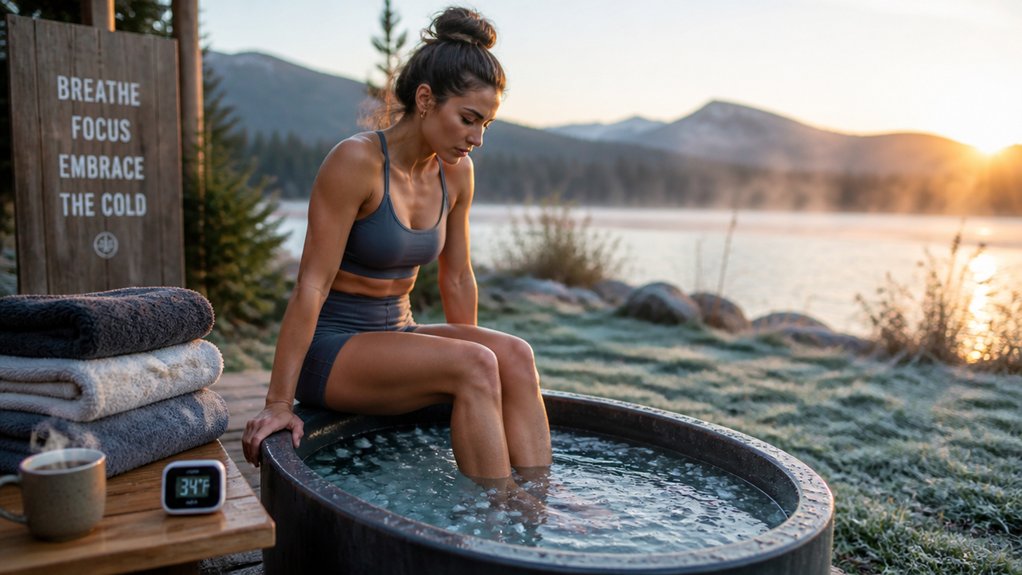
You’ll start with cool showers to get your body used to the cold, then add a few seconds each time you submerge. As you lengthen each session, keep an eye on how you feel—numbness, dizziness, or sharp discomfort mean it’s time to back off. For safety, consider using a structured approach similar to gradual exposure with controlled progression and set limits to prevent overdoing it during each session. battery life and charge time
Start With Cool Showers
If you start with cool showers—around 60 °F (15‑16 °C) for just a minute or two—you give your body and mind a gentle introduction to cold, setting the stage for later ice‑bath sessions.
Begin with a steady stream, keep the water at this temperature, and focus on slow, controlled breathing to calm the cold shock response.
This brief exposure jump cold exposure without overwhelming you, allowing body adaptation to happen gradually. Notice how your skin tingles, then eases, and pay attention to any dizziness or prolonged numbness; stop immediately if those appear.
Over several days, lower the temperature a few degrees and add a few seconds each time, building tolerance safely before you move to full immersion. Adaptation progression
Increase Duration Incrementally
Even a short 30‑second dip in 60 °F water jump‑start your tolerance, and adding just 15–30 seconds each session lets your nervous system adapt without overwhelming anxiety. Begin with 30‑second immersions, then extend by 15‑second increments until you reach a comfortable minute.
Watch the increase in blood flow as your skin turns pink, a sign that circulation is improving. If you feel a sudden cold shock response, pause, breathe deeply, and resume when calm.
Consistently managing stress through controlled breathing helps you stay relaxed as the duration climbs. Over weeks, aim for 2‑5 minutes, but never sacrifice comfort for length; the goal is steady acclimation, not forced endurance.
Monitor Body Responses Carefully
When you step into the ice bath, keep a vigilant eye on your body’s signals—shivering, dizziness, numbness, or breathlessness are immediate cues to exit and reassess. You must monitor body responses carefully, using each session to fine‑tune your tolerance.
Start with 30‑60 seconds in cool water (~60°F) and notice how you feel before lengthening exposure. If any warning signs appear, leave the bath, warm up, and try again later.
- Check for shivering – a sign your core temperature is dropping too fast.
- Watch for dizziness – indicates reduced circulation or breath control issues.
- Assess breathlessness – if you can’t maintain slow, controlled breathing, exit immediately.
Progressive steps—limb immersion, cold showers, then full‑body dips—let you adapt safely while staying attuned to each cue.
Watch for Warning Signs and Exit Early
While you’re in the ice bath, stay alert for any sign that your body is reacting too strongly—prolonged numbness, dizziness, fainting, shortness of breath, intense psychological distress, persistent shivering after you try to warm up, or sudden heart palpitations or chest pain all mean you should get out immediately.
If you notice prolonged numbness, exit the ice bath right away; it can signal nerve irritation or tissue damage. Dizziness or light‑headedness also demands an immediate exit, as it may precede fainting or cardiovascular strain. Watch for shortness of breath, overwhelming anxiety, or any chest discomfort—these are red flags. Trust your instincts, and don’t hesitate to leave the moment a warning appears. This rapid response protects you from severe complications.
Warm Up After the Plunge to Prevent Hypothermia
If you step out of the ice bath, gently dry yourself with a towel and put on insulating clothing to lock in heat. Move quickly to avoid rapid temperature loss, but keep actions gentle to support gradual rewarming.
A warm drink, like herbal tea, will raise your core temperature from the inside while you stay wrapped in layers. Light activity—walking around the room or doing a few stretches—boosts circulation without shocking your system.
- Wrap in a fleece blanket and sip a warm drink.
- Do 5‑minute low‑intensity movement (march in place, gentle arm swings).
- Check for lingering shivering or numbness; if it persists, seek help.
These steps keep you safe, comfortable, and ready for the next session.
Check With a Doctor If You Have Health Concerns
Before you plunge into ice‑bath therapy, get clearance from a healthcare professional—especially if you have heart disease, asthma, hypertension, circulatory problems, chronic illness, or are taking medication—so you can avoid serious complications and guarantee the practice fits safely into your anxiety‑management plan.
You should consult a healthcare professional if you have any heart conditions or are on meds, because personalized advice protects your personal well‑being. A doctor can assess whether your circulatory system can tolerate sudden cold stress and can adjust your anxiety‑treatment regimen accordingly.
Pregnant women and children need explicit clearance to prevent hypothermia and developmental strain.
If you ever feel dizzy, faint, chest‑pain, or severe breathlessness during or after a session, seek immediate medical attention.
Frequently Asked Questions
How to Stay Calm During an Ice Bath?
Focus on slow, controlled breathing—inhale four seconds, exhale six—while you gradually submerge limbs first. Keep upright, stay present with the cold sensations, and stop if distress rises.
What Is the 3 3 3 Rule for Anxiety?
You practice the 3‑3‑3 rule by naming three things you see, three sounds you hear, and moving three body parts, which grounds you, eases anxiety, and redirects focus instantly.
Are Ice Baths Good for Anxiety?
Yes, ice baths can help reduce anxiety for many people, but they’re not a universal cure. You’ll likely feel a brief mood boost, yet you should consult a doctor first, especially if you have heart issues.
Can You Cold Plunge if You Have Raynaud’s?
You shouldn’t plunge into ice water if you have Raynaud’s without medical guidance; the extreme cold can trigger painful vasospasms, numbness, and tissue damage, so consult a professional and consider milder, controlled exposure instead.
In Summary
By following these steps—setting a safe temperature, timing your session, having a buddy, breathing steadily, easing in gradually, watching for red flags, warming up afterward, and consulting a doctor when needed—you’ll keep your icy‑bath routine effective and secure. Stay disciplined, listen to your body, and enjoy the calming, rejuvenating benefits without risking your health.