To recover effectively from ice baths, keep the temperature between 50°F and 59°F and limit sessions to 8-10 minutes. Prepare your body with gradual immersion, starting with limbs and practicing controlled breathing to reduce shock. Build your tolerance slowly, increasing time as you feel comfortable. Combine cold plunges with other recovery methods like heat therapy, hydration, and rest. Pay attention to your body’s signals to avoid risks—more helpful tips await as you continue.
What’s the Best Temperature and Duration for Safe Ice Baths
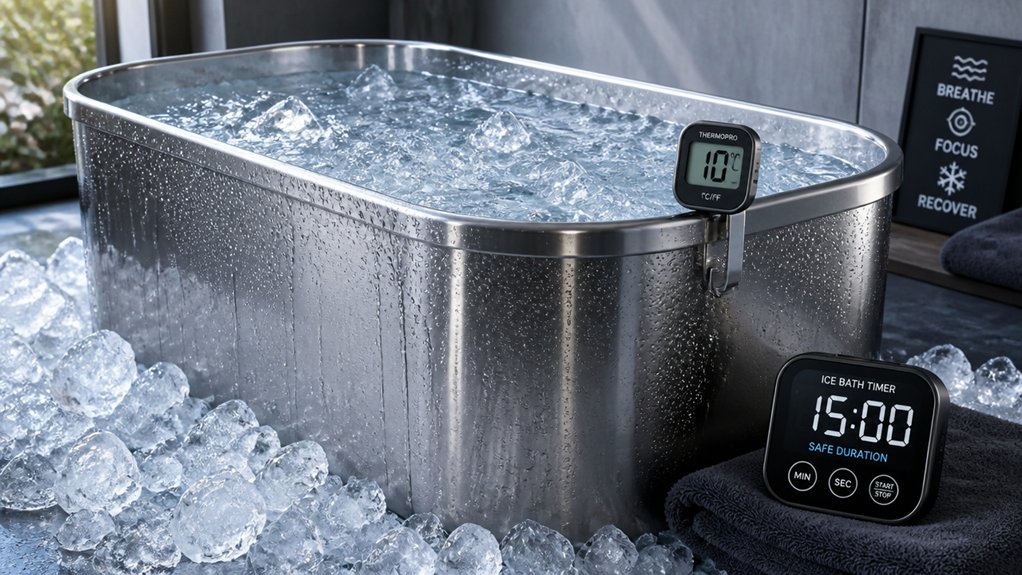
What’s the best temperature and duration to guarantee safe ice baths?
For effective Cold Water Immersion, aim for an Ideal Temperature between 50°F and 59°F (10°C to 15°C).
For effective cold water immersion, target 50°F to 59°F (10°C to 15°C).
Beginners should start with shorter sessions of around 5 minutes at roughly 55–59°F, gradually increasing Immersion Time as they build tolerance.
Typically, experienced users can enjoy 8 to 10-minute sessions to maximize Recovery and reduce Muscle Soreness effectively.
To minimize Cold Shock and Hypothermia Risk, always use a Gradual Entry, starting with limbs and keeping the head above water.
In addition to temperature, consider using proper insulation and reliable chillers to maintain consistent cold water conditions safely.
Don’t exceed 15 minutes to secure safety. Staying within these guidelines helps you get the benefits of Ice Baths without risking adverse effects.
How to Prepare Your Body and Environment for Cold Plunges
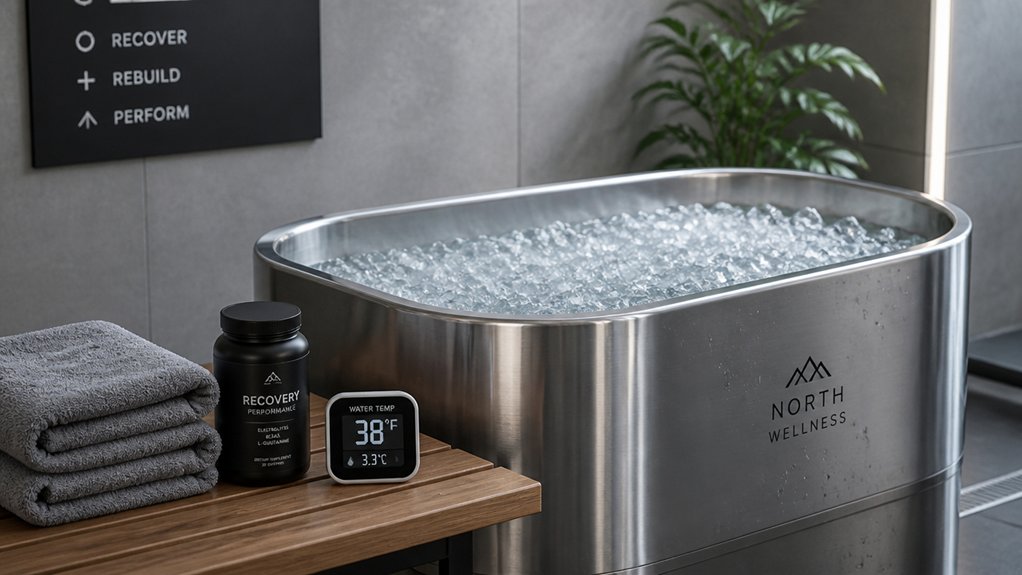
Preparing your body and environment properly can greatly enhance the safety and effectiveness of your cold plunges. Start with water temperatures between 50–59°F (10–15°C) and gradually immerse by wetting your legs first, keeping hands and head above water to reduce the cold shock response. Use controlled breathing or meditation to manage gasping during immersion and maintain calm. Keep a timer, warm towel, and dry clothes nearby to support your recovery routine after exiting. Have safety supervision if you’re new, and avoid hot showers immediately afterward, letting your body rewarm naturally over 10–15 minutes. Proper water treatment solutions help keep water clarity and safety, ensuring a more hygienic experience. Visualize your setup with this imagery:
| Water Temperature | Equipment Needed | Focus During immersion |
|---|---|---|
| 50-59°F | Timer, towel, clothes | Controlled breathing |
| Gradual immersion | Safety supervision | Managing cold shock |
| Post-plunge warmth | Water, relaxation | Recovery |
| Natural rewarming | Environment readiness | Cold plunge safety |
How to Gradually Build Tolerance to Cold Water
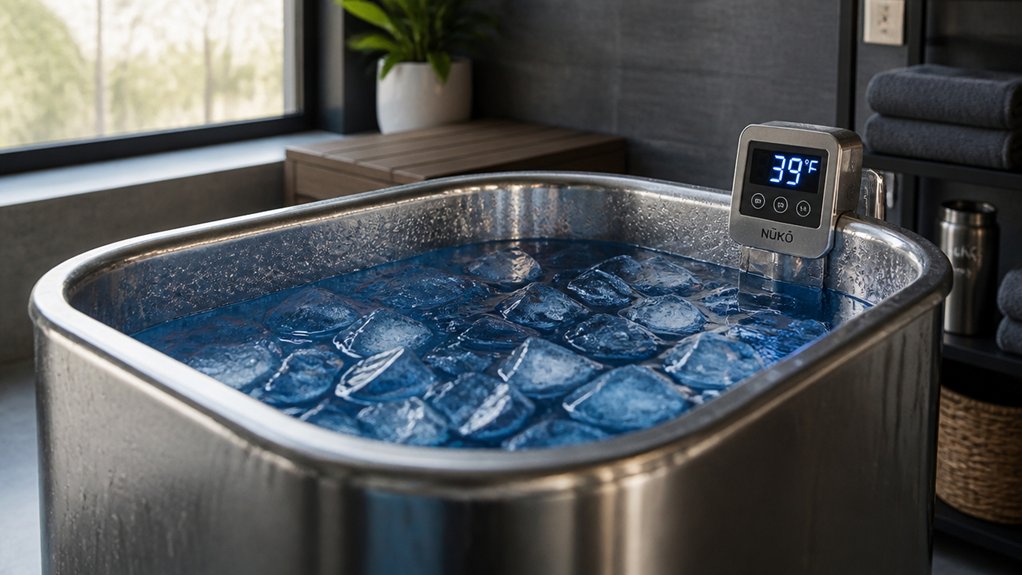
Building tolerance to cold water begins with gradual exposure, allowing your body to adapt safely over time. Start with short immersions of 30 seconds to 1 minute in cold water around 55–59°F (13–15°C), focusing on initial acclimatization without excessive cold shock.
To reduce response severity, begin with partial immersion, like soaking your legs or keeping your hands and head above water, then progress to full-body submersion as comfort improves. Each session, gradually increase duration by 1–2 minutes over several weeks, aiming for 5–10 minutes as your tolerance grows. Incorporate controlled breathing techniques to manage the cold shock response and maintain calm. Regularly track sensations and recovery quality, adjusting water temperature and immersion time to optimize your cold water therapy journey. Cold retention duration is essential for prolonging therapeutic effects and deep tissue impact.
How Cold Plunges Work With Other Recovery Methods
Combining ice baths with other recovery methods can greatly enhance your overall results by targeting different aspects of muscle repair and inflammation.
When you pair cold therapy with strategies like contrast therapy or active recovery, you maximize circulation through vasoconstriction and vasodilation, speeding up blood flow and reducing inflammation. Consider these approaches:
- Use ice baths within 30 to 60 minutes post-exercise to optimize inflammation control.
- Alternate ice baths with heat, like sauna sessions, to boost vascular recovery and relax muscles.
- Incorporate infrared light therapy alongside cold plunges to penetrate deep tissues and accelerate healing.
- Complement cold plunges with proper hydration, protein intake, and sleep for cumulative benefits over 4–6 weeks.
Together, these methods improve muscle recovery, decrease soreness, and support physiological balance between the sympathetic and parasympathetic nervous systems.
How to Listen to Your Body and Know When to Stop
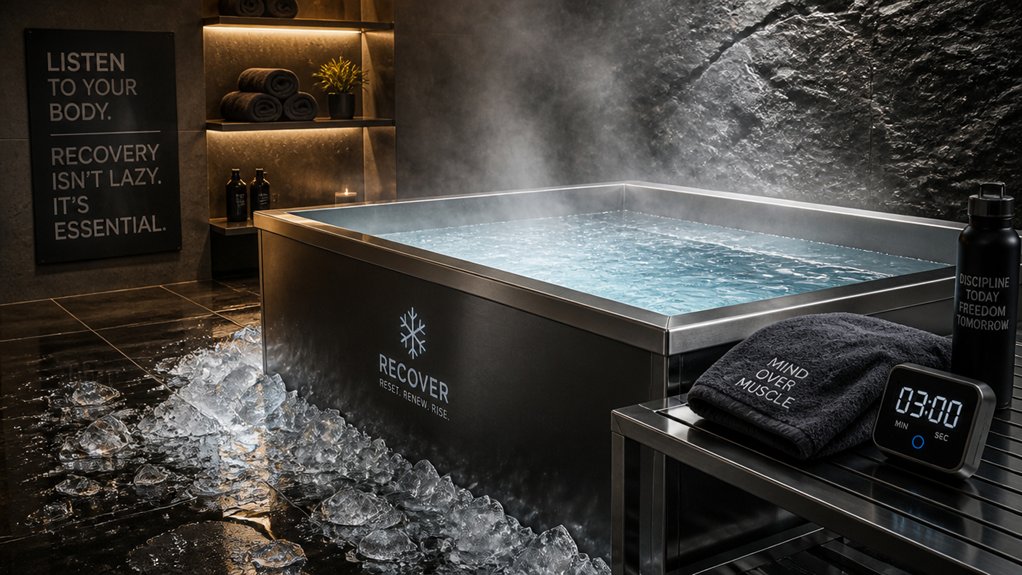
Listening to your body is essential during ice baths because it lets you recognize signals indicating whether to continue or stop. Pay attention to discomfort levels—if you experience intense shivering, numb pain, or confusion, stop immediately to prevent hypothermia.
Persistent soreness or fatigue can also signal overuse; if these symptoms occur, consider reducing your session duration or frequency. Be mindful of your body’s response—dizziness, chest pain, or unusual breathing are signs to exit safely.
Never exceed recommended durations of 5-15 minutes, as prolonged immersion raises risks without benefits. Gradually adapt by starting with shorter sessions and increasing only if your body responds well.
Always prioritize safety by monitoring your sensations and stopping at any signs of distress to avoid harm. Incorporating water quality checks and proper treatment can help maintain a safe and healthy environment for your recovery.
Frequently Asked Questions
Are There Any Specific Contraindications for Ice Bath Recovery?
Yes, you should avoid ice baths if you have cardiovascular issues, poor circulation, open wounds, or cold hypersensitivity. Always consult a healthcare professional before starting cold therapy, especially if you’re pregnant or have underlying health conditions.
How Can I Tell if My Cold Bath Is Too Cold?
You can tell your cold bath is too cold if you experience intense shivering, numbness, or pain. The water should feel comfortably cool, around 50-59°F (10-15°C). Adjust the temperature if discomfort persists.
What Are Signs of Hypothermia During an Ice Bath?
If you start shivering uncontrollably, feel numbness or weakness, confusion, or slow heart rate, these are signs of hypothermia. Immediately exit the bath, warm up, and seek medical attention if symptoms worsen or persist.
Can Ice Baths Cause Skin Damage or Frostbite?
Yes, ice baths can cause skin damage or frostbite if you expose your skin to extreme cold for too long. Keep sessions brief, avoid direct contact with ice, and monitor your skin closely to prevent injury.
How Do I Safely Rewarm After an Ice Bath?
You should rewarm gradually by removing yourself from the cold environment, wrapping in warm clothes, sipping warm liquids, and avoiding sudden heat like hot showers. Take your time to allow your body to slowly regain normal temperature.