
Meditation and immersion practices help boost your mental health by reducing stress, calming your nervous system, and rewiring brain areas that regulate emotion and focus. Techniques like mindfulness, loving-kindness, movement-based meditations, and sensory immersions strengthen resilience, improve emotional regulation, and enhance brain plasticity. These methods can lower anxiety, depression, and negative thoughts, leading to greater clarity and balance. Keep exploring to discover how incorporating these practices into your routine can transform your mental well-being.
What Is Meditation and How Can It Help Your Mental Health?
Have you ever wondered how simply calming your mind can benefit your mental health? Meditation is a practice that uses techniques like deep breathing, mantra repetition, or mindful awareness to promote relaxation and reduce stress.
Regular meditation helps you manage stress and enhances emotional regulation by fostering self-awareness and staying present. Mindfulness meditation, backed by research from the APA and Johns Hopkins, effectively lowers negative emotions and stress responses, such as elevated heart rate and blood pressure.
It also changes brain circuits involving the amygdala and prefrontal cortex, which control stress and emotions. With consistent practice, meditation builds resilience against mental health challenges, improving your ability to cope, reducing anxiety and depression, and promoting overall emotional well-being.
Additionally, using guided devices with visual cues, calming sounds, and breathing patterns can further enhance your meditation experience and help maintain focus during practice.
Which Meditation Styles Are Best for Reducing Stress and Anxiety?
Focused attention techniques like mindfulness and breath awareness quickly calm your mind and interrupt stress.
Movement and walking practices combine physical activity with meditation, reducing anxiety while boosting mood. Both styles are effective options you can easily incorporate into your routine to ease stress and improve mental clarity.
Focused Attention Techniques
Focused attention techniques are some of the most effective meditation styles for reducing stress and anxiety, as they help anchor your mind and calm racing thoughts. Practices like body scan and walking meditation build sensory awareness, directly addressing overactivation of the sympathetic nervous system. By tuning into physical sensations or mindful steps, you slow mental chatter and foster relaxation. The table below highlights the emotional benefits of these techniques:
| Technique | Emotional Impact |
|---|---|
| Body Scan | Deep relaxation, grounding yourself |
| Walking Meditation | Calm, centered energy |
| Sensory Awareness | Clarity, absence of overwhelm |
These methods provide accessible ways to activate your parasympathetic response, easing stress and promoting mental clarity. Incorporating guided Breathing Exercises can further enhance calming effects by regulating breath and heart rate.
Movement and Walking Practices
Movement and walking practices are highly effective meditation styles for reducing stress and anxiety because they engage your body in the present moment while calming your nervous system. Movement-based meditation, like walking meditation, promotes mindful awareness by syncing your breath with each step, helping you stay grounded in the present. Incorporating adaptogenic herbs into your routine can further enhance resilience and emotional balance during these practices. Styles such as tai chi and yoga blend physical movement with breathwork, improving emotional regulation and lowering cortisol levels linked to anxiety. Walking meditation, especially in natural settings, boosts mental clarity and relaxation, enhancing mood and easing stress. These practices help interrupt the fight-or-flight response, supporting calmer nervous system activity and reducing amygdala overactivity. Incorporating gentle movement meditations into your daily routine provides an accessible, effective way to manage stress and anxiety naturally.
How Do Different Meditation Techniques Support Emotional Balance?
How do different meditation techniques support emotional balance? Each method uniquely promotes mental health and helps manage stress levels.
- Mindfulness meditation encourages present-moment awareness, reducing anxiety and negative emotions by fostering a nonjudgmental attitude.
- Loving-kindness meditation boosts positive emotions and empathy, strengthening emotional regulation and resilience.
- Body scan meditation heightens awareness of physical sensations linked to emotions, helping you identify and release stress-triggered feelings.
- Incorporating motivational posters into your space can reinforce positive affirmations and mental resilience, supporting your meditation practices.
Using these meditation techniques, you enhance emotional balance by calming your nervous system and restructuring negative thought patterns, leading to better mental health.
Whether practicing mindfulness or visualization, you create a foundation for sustained emotional well-being and improved stress management.
The Science Behind Meditation: How Brains Change With Practice
When you practice meditation regularly, your brain undergoes measurable changes in its structure and connections. These include increased grey matter, stronger neuronal links, and adaptations in key emotional and sensory regions. Additionally, these changes can support mental clarity and calmness, helping you maintain focus and resilience under stress. As a result, you may notice improved emotional regulation, sharper focus, and diminished stress reactivity.
Brain Structure Changes
Regular meditation practice leads to tangible changes in the brain’s structure, enhancing regions involved in attention, emotion regulation, and sensory processing. These changes strengthen your prefrontal cortex, hippocampus, and reduce activity in the amygdala.
You’ll notice:
- Increased gray matter density in key areas, boosting focus and clarity.
- Enlarged hippocampus, improving memory and learning ability.
- Reduced amygdala activity, lowering stress responses and promoting calm.
– Additionally, incorporating recovery tracking tools after cold plunge sessions can optimize these mental health benefits by ensuring proper physiological recovery and minimizing stress overload. Recovery tracking tools
These neurostructural modifications reflect enhanced brain plasticity, allowing your brain to adapt and grow stronger over time.
Meditation encourages better emotional regulation, helping you handle negative emotions more effectively. As your brain reshapes through consistent practice, you’ll experience a profound transformation in mental resilience and overall well-being.
Neural Connectivity Enhancement
Meditation actively strengthens the connections between neurons, creating more efficient and resilient neural pathways. This increased neural connectivity supports better brain function, especially in regions responsible for sensory processing, focus, and emotional regulation. As you practice regularly, your brain undergoes morphometric changes in the amygdala, hippocampus, and prefrontal cortex, enhancing your ability to process emotions and respond to stress more effectively. These neural improvements can lead to sharper attention, better memory, and mood stability.
| Brain Region | Effect of Meditation | Benefits |
|---|---|---|
| Amygdala | Reduced size and reactivity | Less emotional reactivity, stress resilience |
| Hippocampus | Increased volume | Improved memory, emotional regulation |
| Prefrontal Cortex | Enhanced connectivity | Better decision-making and focus |
Emotional Regulation Improvement
Building on the neural changes meditation fosters, it greatly enhances your ability to regulate emotions. Meditation strengthens the prefrontal cortex and hippocampus, key areas that improve emotional regulation by sharpening focus and managing stress response. It also reduces amygdala activity and cortisol levels, decreasing the intensity and frequency of fight-or-flight reactions caused by negative emotions.
As you meditate regularly, neuroimaging shows denser brain tissue and stronger connections in regions responsible for managing feelings and reducing emotional reactivity. This helps you:
- Better control emotional responses like fear, anger, and grief
- Calm the stress response quickly in challenging moments
- Foster mindful awareness, giving you space before reacting to negative emotions
Ultimately, meditation rewires your brain to handle emotions more effectively.
Can Meditation Reduce Depression and Calm the Mind?
| Benefit of Meditation | Explanation |
|---|---|
| Reduces stress | Lowers cortisol, calming the stress response |
| Enhances mood | Improves emotional regulation |
| Prevents relapse | Supports ongoing depression management |
| Supports skin recovery | Promotes overall wellness, including faster skin barrier recovery after stress or exposure to extreme temperatures pH-balanced formulations help maintain healthy skin. |
How Immersive Practices Like Cold Plunge and Yoga Boost Mental Clarity
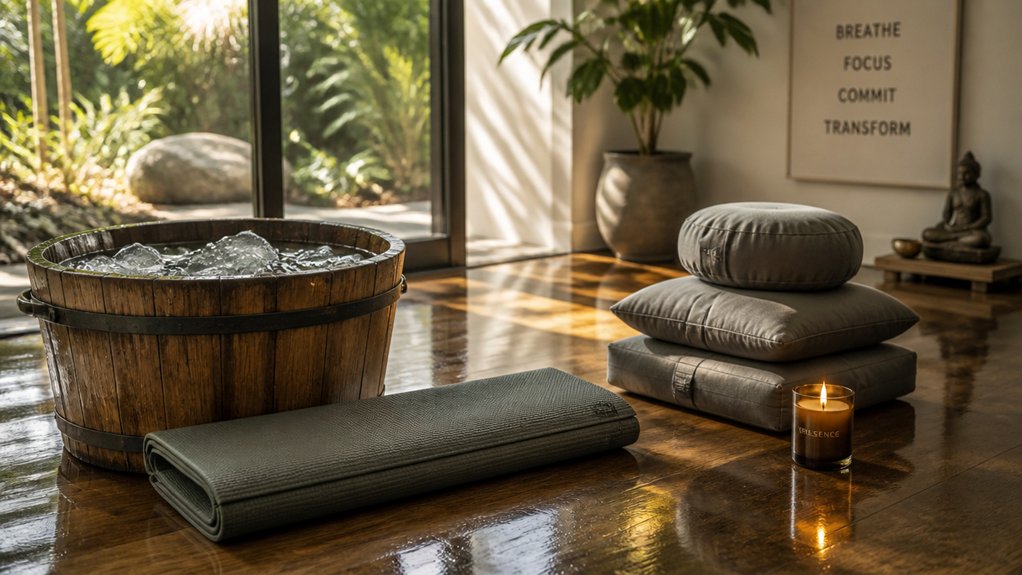
Practicing cold plunges and yoga activates your parasympathetic nervous system, helping you relax and clear your mind. These immersive activities boost focus and emotional stability by calming the stress response. A well-maintained water treatment process ensures the water remains hygienic and odor-free, further supporting mental clarity and overall well-being. Over time, they can reduce anxiety and enhance your overall mental clarity.
Enhanced Focus and Calm
Immersive practices like cold plunge and yoga have powerful effects on your mental clarity by activating the parasympathetic nervous system, which promotes relaxation and reduces cortisol levels. This enhances your focus and helps sustain a calm mental state, essential for effective meditation.
When you incorporate these practices, you:
- Improve prefrontal cortex activity, boosting your ability to concentrate and make sound decisions.
- Increase connectivity in brain regions responsible for cognitive control, sharpening your attention span.
- Train your stress response, building resilience for everyday challenges and supporting longer periods of sustained focus.
Together, these effects foster a state of mental calm and clarity, enabling you to stay present and centered even amid distractions. This foundation enhances your overall mindfulness and well-being.
Stress Reduction Benefits
Engaging in activities like cold plunges and yoga activates your parasympathetic nervous system, which is key to reducing stress and enhancing mental clarity. These immersive practices amplify meditation’s stress reduction effects by lowering cortisol levels and decreasing amygdala overactivity, helping you better regulate your fight-or-flight response.
Cold plunge immersion triggers controlled stress responses, promoting relaxation and resilience. Meanwhile, yoga combines mindful breathing and physical movement to improve focus, lower blood pressure, and balance emotional states. The deep breathing and body awareness foster present-moment focus, strengthening mindfulness that reduces anxiety and information overload.
Regularly practicing these immersive techniques supports neuroplasticity, boosting brain areas responsible for attention and emotional regulation, ultimately leading to greater stress reduction and clearer mental states.
What Are the Best Meditation Tips to Get Started and Stay Consistent?
Wondering how to start and stick with meditation? The key is establishing simple, consistent habits.
First, explore different meditation styles like mindfulness, guided, or mantra meditation to find what resonates with you. Second, schedule daily, short sessions in a calming space, making it easier to manage your mental health.
Discover your preferred meditation style and set aside brief daily sessions in a peaceful space to support mental well-being.
Third, remember that mind wandering is normal—gently guide your attention back to your focal point to enhance effectiveness. Using guided meditation apps or local classes can provide structure and support as you begin.
Be open to experimenting with techniques and adjusting your practice to find what helps you feel calm and engaged. With patience and consistency, meditation can become a valuable daily tool for managing stress and boosting your well-being.
Common Challenges in Meditation and How to Overcome Them
Many beginners find meditation challenging because their minds tend to wander or they struggle to find a comfortable position. During a meditation session, this difficulty can cause frustration or distraction, but gently guiding your focus back helps build concentration and reduces self-judgment.
If sitting still is uncomfortable, try walking meditation or reclining to find what works best. Environmental distractions can be minimized by creating a quiet space or using noise-canceling headphones.
Remember, consistency is essential; meditation skills improve gradually. Starting with short sessions and setting realistic goals keeps you motivated and reduces impatience.
Overcoming these challenges involves patience and adapting your practice, enabling you to deepen your mindfulness and enjoy longer, more effective meditation sessions.
What Environment and Accessories Make Meditation More Effective?
Creating an ideal environment for meditation can greatly enhance its effectiveness. A quiet, distraction-free space allows you to focus fully on deep breathing and tranquility, reducing external interruptions.
An undisturbed, tranquil space deepens meditation and promotes centered relaxation.
To deepen your practice, consider these accessories and setup tips:
- Use meditation cushions or mats to support a comfortable posture, helping you sit longer and relax fully.
- Create a calming atmosphere with soft lighting or gentle background sounds, or try guided meditation to stay immersed.
- Maintain a calm setting that encourages relaxed, deep breathing, which lowers your heart rate and cortisol levels.
How Can You Track Your Mental Health Improvements From Meditation?
Tracking your mental health improvements from meditation is essential for understanding its impact and staying motivated. Monitoring progress involves regularly evaluating changes in stress, anxiety, and mood using self-report scales or mental health apps. These tools help you identify patterns, such as reduced anxiety or improved emotional regulation over time.
Physiology-based indicators, like lower resting heart rate, blood pressure, and better sleep, provide objective evidence of mental health gains. Journaling your emotional states before and after meditation sessions is also useful for noticing trends and mood shifts.
Additionally, many mindfulness or meditation apps feature built-in progress tracking, measuring consistency, session length, and perceived relaxation. For a more all-encompassing view, periodic evaluations with healthcare providers can validate your subjective progress and refine your meditation practices, ensuring continuous mental health improvement.
Why Combining Meditation With Other Practices Enhances Resilience
Building on the benefits of meditation for mental health, combining it with other practices can greatly boost resilience. When you integrate meditation with activities like yoga, mindful walking, or breath-focused exercises, you enhance stress reduction and emotional regulation.
Integrating meditation with yoga and mindful activities enhances stress relief and emotional resilience.
These practices help strengthen neuroplasticity, supporting your brain’s ability to adapt and recover from adversity. Specifically:
- You develop better stress management skills through immersive guided meditation and movement-based techniques.
- You reframe negative thinking patterns with mindfulness-based cognitive therapy, fostering mental toughness.
- You preserve prefrontal cortex function by practicing complementary medicine, reducing the impact of chronic stress.
How to Incorporate Meditation and Immersive Techniques Into Your Daily Routine
To effectively integrate meditation and immersive techniques into your daily routine, start by selecting a consistent, quiet time each day—just 5 to 10 minutes initially—to establish a habit.
During your daily meditation, use guided apps like Headspace or Calm, which incorporate immersive audio or visual elements to keep your focus sharp and reduce mind wandering. You can also combine movement-based meditation, like walking or yoga, with immersive nature sounds or environments to boost present-moment awareness and relaxation.
Experiment with different styles, such as mindfulness or mantra repetition, paired with sensory inputs like breathing exercises or tactile sensations. Incorporating immersive elements helps deepen your mental engagement, supporting your mental health and reducing stress in everyday life.
Final Tips and Resources to Support Your Mindfulness Journey
Starting on a mindfulness journey becomes more manageable when you utilize available resources and create supportive environments.
To strengthen your mental health, consider these final tips:
- Use guided meditation apps like Headspace or Calm to support meditation helps, reducing symptoms of depression and anxiety.
- Dedicate a quiet, comfortable space each day, making meditation into their daily routine for long-term stress management.
- Explore different styles—mindfulness, mantra, or movement—to personalize your practice and enhance mental health benefits.
Additional online courses or local resources can reinforce your skills and provide tailored guidance.
Frequently Asked Questions
How Long Does It Take to Notice Mental Health Benefits From Meditation?
You can start noticing mental health benefits from meditation within a few days to weeks. Consistent practice helps reduce stress, improve focus, and increase overall well-being, with noticeable changes becoming clearer as you develop regular habits.
Are There Age-Specific Meditation Techniques for Mental Health?
Yes, you can use age-specific meditation techniques for better mental health. For children, focus on simple breathing exercises, while adults might explore mindfulness or guided imagery. Tailoring methods helps optimize benefits for your age group.
Can Meditation Replace Medication for Mental Health Issues?
No, meditation can’t fully replace medication for mental health issues. It complements treatment, reduces stress, and improves well-being. Always consult your healthcare provider before making changes to your mental health plan.
How Does Meditation Affect Sleep Quality and Patterns?
You sleep better and more soundly when you meditate regularly because it calms your mind, reduces stress, and helps regulate your sleep patterns, making it easier to fall asleep and enjoy restorative rest throughout the night.
Are Online or App-Based Meditation Programs Effective for Mental Health?
Yes, online or app-based meditation programs can be effective for mental health. They offer convenient access, personalized guidance, and consistency, helping you reduce stress, improve focus, and enhance overall well-being when used regularly and with commitment.