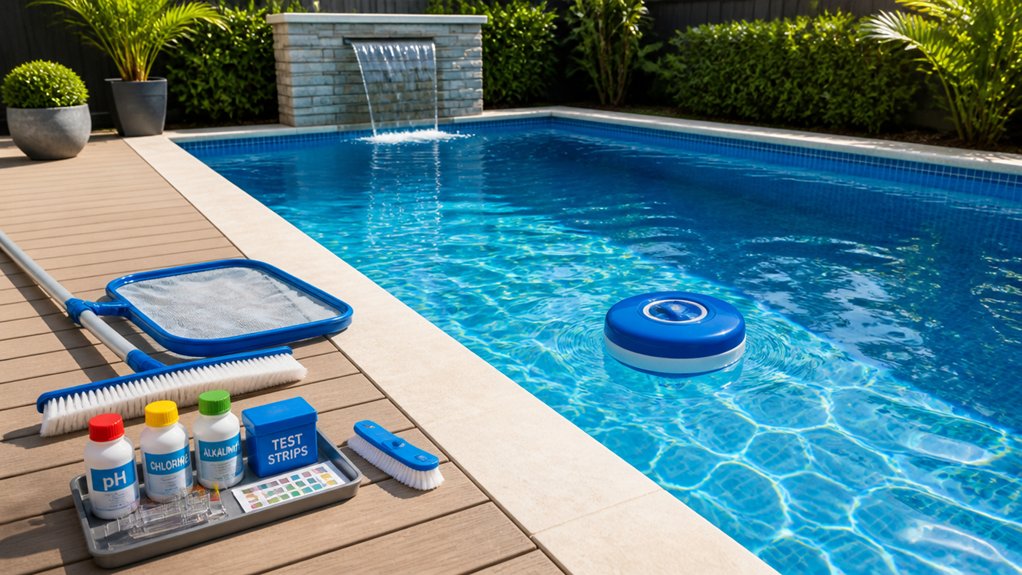
To keep your plunge water clean and safe, regularly monitor water chemistry, including pH, alkalinity, and sanitizer levels, adjusting chemicals carefully and in the right order. Guarantee proper filtration by running the pump at least 4 hours daily and cleaning filters every 2-3 weeks. Maintain water clarity by cleaning surfaces, draining periodically, and using advanced sanitation like UV or ozone systems. Consistent upkeep prevents issues like cloudiness or odors, so continue exploring tips for best results.
Understand Your Cold Plunge Water Chemistry and Why It Matters
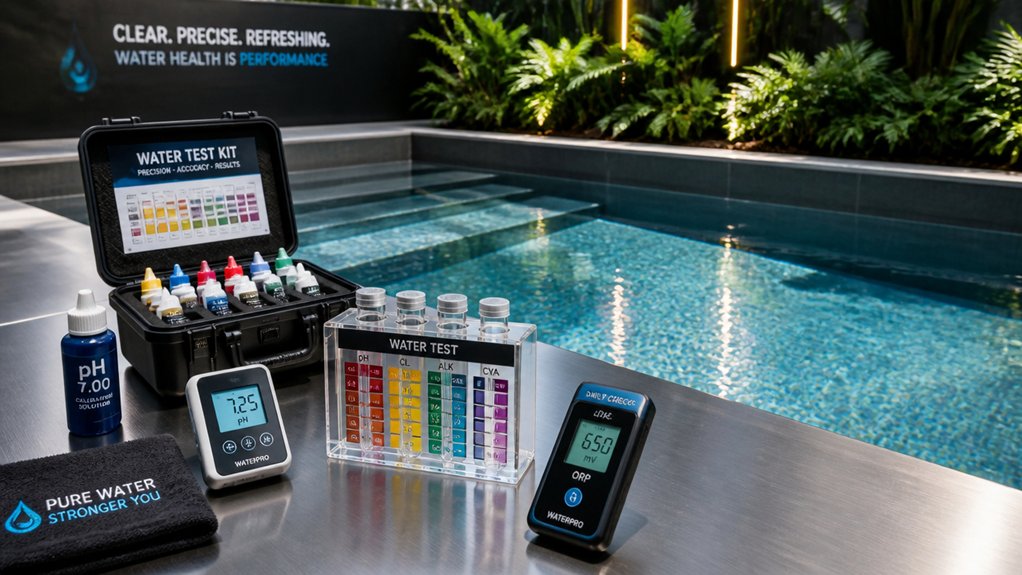
Why does understanding your cold plunge water chemistry matter? It’s essential for keeping your water safe, clean, and functioning properly. Monitoring water chemistry helps prevent corrosion and guarantees sanitizer works effectively.
You should check key water parameters every 1-2 weeks or with each water change—focusing on pH, total alkalinity, sanitizer levels, and calcium hardness. Maintaining the pH between 7.2 and 7.8 keeps the water balanced and prevents damage to components.
Adjust chemicals in the right order—alkalinity, pH, calcium hardness, then sanitizer—and allow circulation between steps. Because cold water and small volume require precise chemical dosing, regular maintenance is crucial.
Proper water chemistry management not only improves your plunge experience but also extends the lifespan of your equipment.
Test Your Water Regularly and Know What Results Mean
Regularly testing your plunge water helps you catch issues early and keep it safe. Learn to interpret the results so you can make quick adjustments to maintain balanced chemistry.
When you understand what the test numbers mean, you’ll guarantee a clean, enjoyable plunge every time. Monitoring water chemistry parameters ensures that sanitizer levels stay effective without causing irritation or damage to your tub.
Interpreting Test Results
To keep your plunge water safe and inviting, it’s essential to understand what your test results mean. Regular testing helps you stay on top of water maintenance, ensuring your water remains clean and balanced.
If your test shows pH levels below 7.2 or above 7.8, you’ll need to adjust to prevent corrosion or sanitizer inefficiency. Low alkalinity can cause pH fluctuations, so aim for 80-120 ppm.
Check sanitizer levels—chlorine at 1-3 ppm or bromine at 3-5 ppm—to effectively disinfect without overdoing it. Additionally, monitor calcium hardness at 100-250 ppm to prevent pump damage and scaling.
Interpreting these results accurately helps you take quick action, maintaining healthy plunge water and extending the life of your water system. Proper pH control is crucial for water safety and user comfort.
Adjusting Water Chemistry
Consistently testing your plunge water guarantees you can catch and correct imbalances before they become problems. Regularly check key parameters like pH, alkalinity, sanitizer levels, and calcium hardness every 1-2 weeks or with each water change.
Keep your plunge water’s pH between 7.2 and 7.8 to prevent corrosion and make certain the sanitizer works effectively. Maintain total alkalinity within 80-120 ppm to stabilize pH fluctuations. Make certain sanitizer levels stay within recommended ranges: 1-3 ppm for chlorine or 3-5 ppm for bromine; ozone systems may require less.
When adjusting water chemistry, add chemicals in sequence—start with alkalinity increaser, then pH, calcium hardness, and sanitizer—with 20-30 minutes of circulation between each step. Proper clarifier use and regular monitoring also help maintain water clarity and reduce debris buildup.
Proper testing and adjustments keep your plunge water safe and balanced.
Add Chemicals Safely: Step-by-Step Guidelines
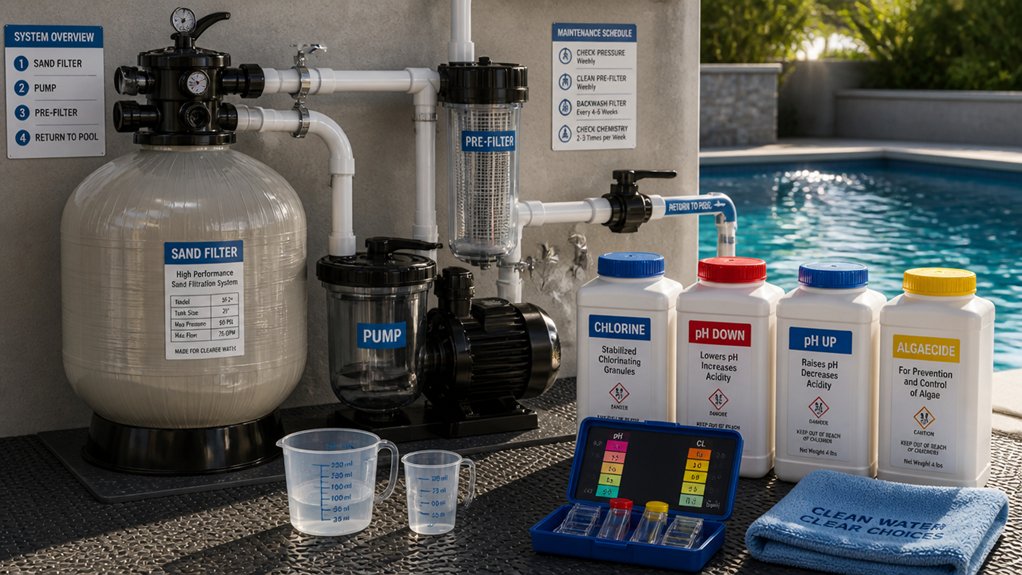
To add chemicals safely, start by testing your water to confirm the pH and alkalinity are within the recommended range. A slow-dissolving bromine tablet can help maintain steady sanitation over several days, reducing the need for frequent adjustments. Follow the correct order—alkalinity increaser, pH adjuster, calcium hardness, then sanitizer—allowing time for proper circulation between each step. Use precise measurements to avoid overdoing it, and keep the cover off during addition to prevent gas buildup.
Proper Chemical Sequencing
Proper chemical sequencing is essential for safe and effective water balancing in your plunge tub. Start by adding the alkalinity increaser, like sodium bicarbonate, to stabilize water pH levels first.
Next, adjust the pH as needed, then add calcium hardness to prevent corrosion or scaling. Finally, introduce your sanitizer to disinfect the water.
Allow 20-30 minutes of circulation between each addition to guarantee thorough mixing and accurate adjustments; wait longer if larger changes are necessary. Keep the tub cover off during chemical addition to prevent gas buildup and unpleasant odors.
Remember to measure chemicals precisely, as small errors can greatly disrupt water chemistry in your 100-gallon plunge tub. Regular maintenance and proper water treatment protocols help maintain clean, safe, and balanced water.
Accurate Measurement Techniques
Accurate measurement of chemicals is essential to maintaining safe and balanced water in your plunge tub. To measure chemicals precisely, use test strips or liquid test kits designed for water chemistry testing. Small dosing errors can greatly affect your tub’s water quality, so follow the instructions carefully.
When adding chemicals, follow the recommended sequence: start with alkalinity increaser, then adjust pH, followed by calcium hardness, and finally add sanitizer. After each addition, circulate the water for 20-30 minutes to guarantee proper mixing before proceeding.
Keep the cover off to prevent gas buildup and odors that may interfere with dosing accuracy. Always handle chemicals safely, and consider food-grade hydrogen peroxide as a safe sanitizer alternative. Additionally, selecting materials that meet safety standards helps ensure your water remains free of harmful contaminants.
Precise measurement helps keep your plunge tub’s water clean, safe, and enjoyable.
Keep Water Clear With Effective Filtration and Circulation
Maintaining clear, inviting water in your cold plunge hinges on effective filtration and circulation. You should run the circulation pump and filtration system for at least 4 hours daily to keep the water fresh and debris-free. Proper pump configuration ensures even flow, eliminates cold spots, and stabilizes water temperature, further supporting water clarity. Regular filter maintenance is essential; clean your filters every 2-3 weeks by rinsing, soaking in a cleaner or bleach solution, then drying and reinstalling. Replace filters only when they show visible damage or the media starts breaking down—proper maintenance extends their lifespan. High-quality filtration removes particles as small as 5-20 microns, preventing cloudiness and buildup. If you notice cloudy water or uneven temperatures, it’s a sign to increase pump run time or check and clean your filters promptly, ensuring your cold plunge tub remains in peak condition.
How to Clean and Maintain Your Cold Plunge for Longevity
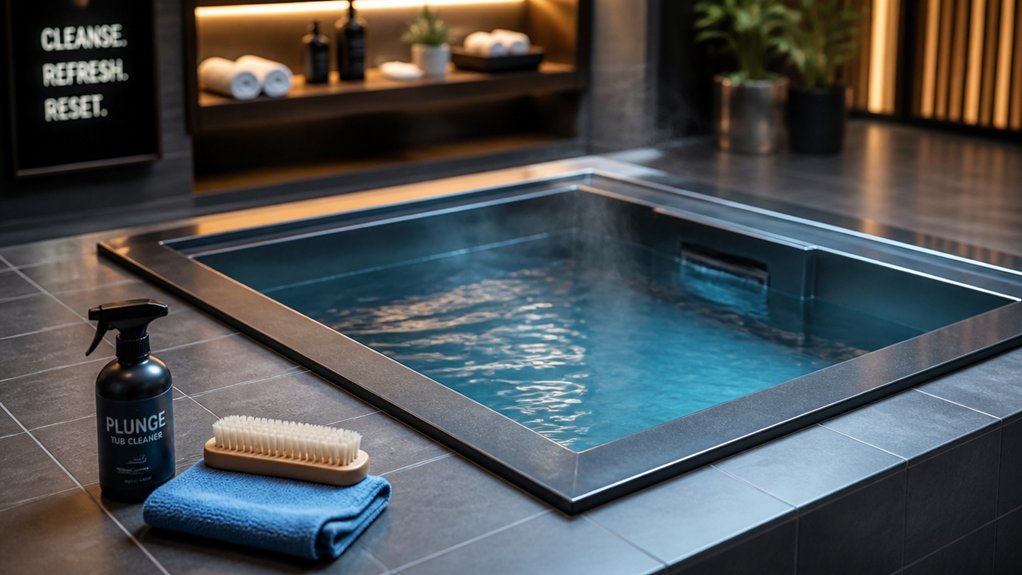
Keeping your cold plunge in top condition involves regular cleaning and vigilant maintenance. To guarantee properly maintained, clean water, clean the interior and exterior of your tub with a mild detergent and a soft-bristled brush. Rinse thoroughly and dry immediately to prevent moisture buildup and protect the finish. Using covers with dew-resistant materials can also help reduce condensation and condensation-related issues. Drain and refill the water every 3-4 weeks to keep water fresh, prevent mineral buildup, and reduce contamination that can harm plumbing. Regularly inspect and clean or replace filters every 2-3 weeks to maintain proper water circulation and clarity.
When not in use, cover your plunge to block debris and conserve water temperature. Additionally, remove calcium and mineral buildup in the drain and plumbing using vinegar, baking soda, or a commercial descaler to prolong the lifespan of your tub and guarantee it remains properly maintained.
Troubleshoot Common Water Problems : Cloudiness, Odors, and More
Are you noticing cloudiness, odors, or foam in your cold plunge? These problems often signal water in your cold is out of balance.
To clear cloudiness, improve filtration and extend your circulation pump run time. Performing a non-chlorine shock treatment can also help eliminate contaminants.
Persistent odors usually mean your sanitization isn’t enough, so adjust sanitizer levels, shock treat the water, and regularly clean or replace clogged filters.
Foam or froth can be controlled by using a defoamer and ensuring the tub surface is clean; remind users to shower and wipe their feet before entering.
If irritation occurs, check and adjust the pH within 7.2–7.8, and keep sanitizer levels in recommended ranges.
Regular water testing and routine filter cleaning prevent ongoing issues with water in your cold.
Use Advanced Sanitation: Ozone and UV Systems Explored
Advanced sanitation systems like ozone and UV technology offer powerful ways to keep your cold water safe and clear without relying solely on traditional chemicals.
Ozone and UV systems enhance water safety, reducing chemical dependence and maintaining crystal-clear, healthy cold plunge water.
Ozone generators efficiently kill 99.99% of microorganisms in your plunge water, leaving no chemical residue—just oxygen. UV sanitation systems damage the DNA of microbes, preventing their reproduction, but they require proper filtration and don’t eliminate odors.
Using ozone or UV can greatly reduce or even eliminate the need for chemical sanitizers, making maintenance simpler. Keep in mind, ozone systems may emit a pungent smell, so proper ventilation around your water source is essential for comfort.
These advanced methods complement traditional chemical treatments, boosting overall water quality and safety in your cold plunge, all while keeping your water clean and healthy.
Frequently Asked Questions
How Often Should I Replace the Water in My Cold Plunge?
You should replace the water in your cold plunge every 4 to 6 weeks to maintain cleanliness and water quality. Regularly test and treat the water to reduce bacteria, algae, and odor, ensuring a safe and invigorating experience.
What Are Signs That My Filtration System Needs Repair?
You should repair your filtration system if you notice cloudy water, strong odors, or decreased water flow. Regularly inspect for leaks, listen for unusual noises, and guarantee filters are clean to catch issues early and maintain peak function.
Can I Use Household Cleaning Products to Disinfect My Plunge?
You shouldn’t use household cleaning products to disinfect your plunge because they can damage the surfaces or interfere with the water chemistry. Instead, use products specifically designed for spas or hot tubs to guarantee proper cleaning and safety.
How Do Temperature Fluctuations Affect Water Quality and Equipment?
Temperature fluctuations can cause water to develop bacteria and algae, leading to contamination. They stress equipment, shortening its lifespan. You should monitor and maintain a consistent water temperature, and top up or drain as needed to guarantee quality and safety.
What Safety Precautions Should I Take During Routine Maintenance?
During routine maintenance, you should turn off the power, wear gloves and eye protection, read instructions carefully, and make certain the area is dry and clear. Always follow manufacturer guidelines to prevent injuries and keep your plunge safe and effective.