To boost endurance with ice baths, focus on cold water immersion protocols like maintaining water temps between 10-15°C and limiting sessions to 8-10 minutes. Use cold water before exercise to reduce heat stress and improve power, and after workouts to speed recovery without harming gains. Stay consistent, never submerge your head, and listen to your body. Keep exploring these strategies further to reveal even more performance benefits.
How Cold Water Immersion Boosts Endurance and Performance
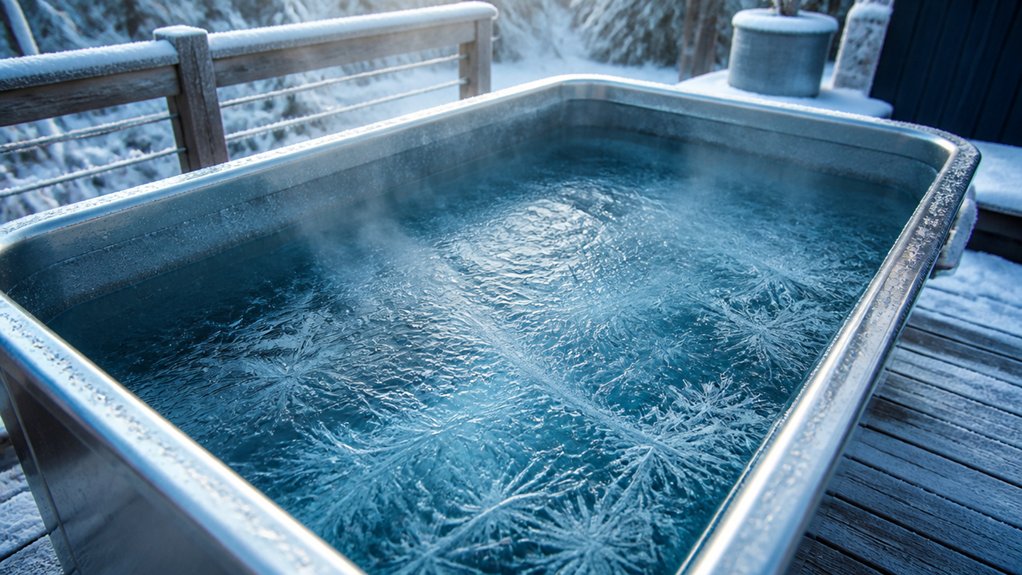
Cold water immersion before exercise can greatly boost your endurance and performance, especially in hot conditions. By doing cold plunges, you effectively reduce core body temperature, which supports better thermoregulation and delays overheating during activity. This allows you to maintain an ideal “temperature zone” for longer periods.
Cold water immersion also triggers norepinephrine release, sharpening your focus and alertness, which can improve motivation and sustained effort. Regular cold adaptation through multiple sessions enhances mitochondrial efficiency, making your muscles more efficient at producing energy. Using high-quality water treatments can help maintain water clarity and hygiene, ensuring a safe and effective immersion experience.
Additionally, cooling helps reduce muscle inflammation, preventing fatigue and speeding recovery. These combined effects improve aerobic capacity and endurance performance, helping you perform better in challenging conditions. Cold water immersion, when integrated correctly, becomes a powerful strategy to elevate your athletic potential.
Designing Effective Cold Plunge Protocols: Temperature, Time, and Timing
To maximize the benefits of cold water immersion for endurance, it’s important to design your protocols thoughtfully, considering ideal temperature, duration, and timing. Maintain a cold plunge temperature between 10-15°C (50-59°F) to optimize metabolic efficiency without risking discomfort. Immerse for 8-10 minutes to effectively reduce core and muscle temperature, delaying heat stress during endurance activity. Performing cold plunges shortly before exercise enhances performance and muscle recovery. Repeated cold sessions (2-3 times weekly) promote cold adaptation, boosting endurance through improved cardiovascular efficiency. Ensure the chiller used maintains consistent plunge temperatures cooling capacity to achieve desired results. Avoid overly cold (<10°C) or prolonged immersions before intense efforts to prevent joint stiffness or impaired muscle power. Use this table as a guide:
| Temperature | Time | Timing |
|---|---|---|
| 10-15°C | 8-10 minutes | Pre-activity, ideally shortly before endurance events |
Using Cold Water Before Exercise to Delay Heat Stress and Improve Power
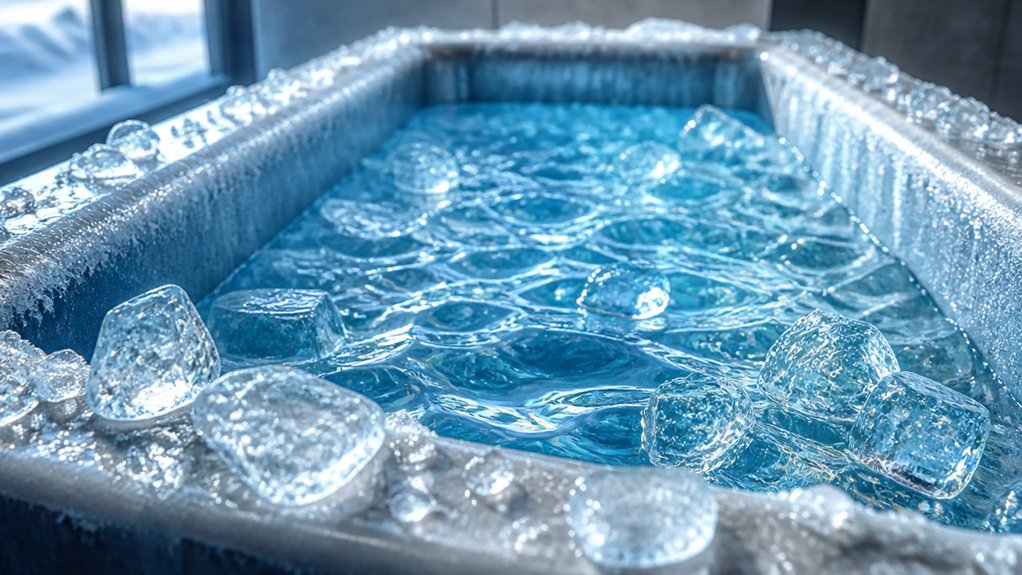
Pre-exercise cold water immersion can be an effective strategy to delay heat stress and enhance performance, especially in hot conditions. By doing a cold plunge at 10–15ºC for 8–10 minutes, you lower core and muscle temperatures, helping you stay within the best “temperature zone” for muscle function. This technique, when paired with proper chiller selection, ensures consistent and rapid cooling to achieve optimal results.
This cooling benefits endurance performance and aerobic capacity, allowing you to sustain effort longer. Cold water immersion pre-exercise reduces perceived exertion and delays heat stress onset.
Remember these key points:
- Cold plunges lower core and muscle temperatures quickly.
- Pre-cooling improves aerobic capacity and prolongs endurance.
- Short immersions (<10 minutes) optimize heat dissipation.
- Maintaining an ideal temperature zone enhances muscle function and reduces fatigue.
Post-Workout Cold Baths: Speed Up Recovery Without Hurting Gains
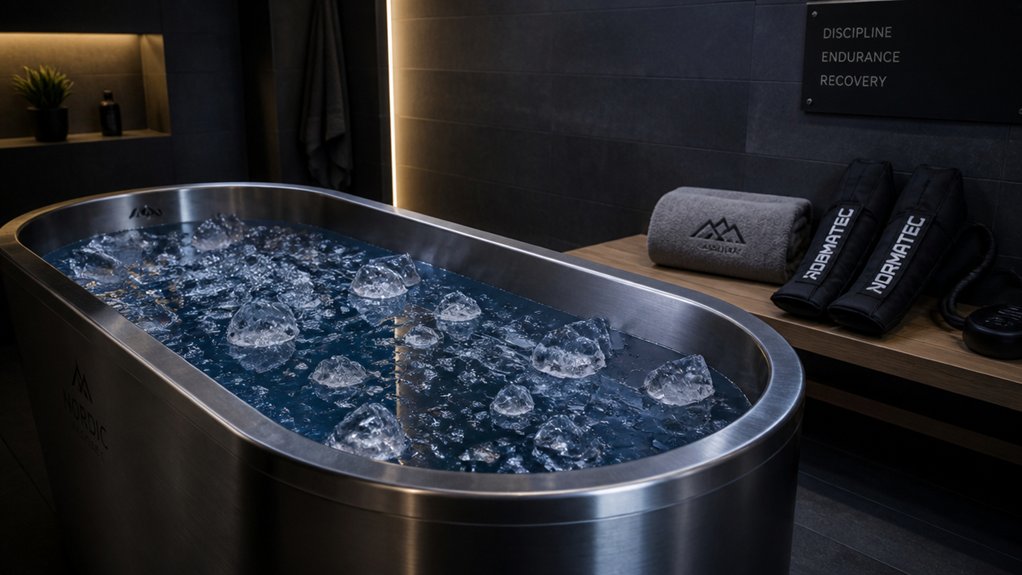
After completing your workout, immersing in a cold bath at 10-15°C for 10-15 minutes can greatly accelerate recovery by reducing muscle soreness and fatigue. Ice baths or cold water immersion help lower inflammation and decrease levels of muscle damage markers like creatine kinase, supporting quicker recovery. Using a well-designed cold plunge tub can enhance the overall experience and ensure consistent, effective cold therapy. Immediate post-workout cold exposure induces vasoconstriction, followed by vasodilation, which flushes metabolic waste and reduces delayed onset muscle soreness (DOMS). To avoid impairing long-term muscle strength gains, delay ice bath use by at least 2 hours after resistance training aimed at muscle hypertrophy. Regular cold water immersion, 2-3 times weekly, benefits endurance athletes by minimizing muscle fatigue and preserving recovery, without hindering adaptations or resistance training progress.
Staying Safe During Cold Water Immersion: Tips for Consistency and Safety
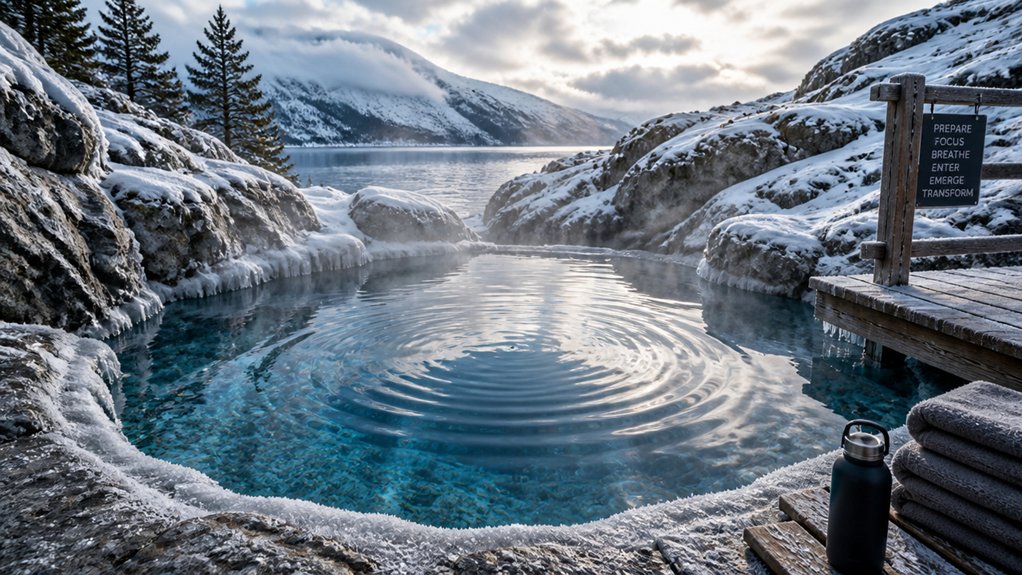
Maintaining safety during cold water immersion is essential for consistent practice and maximizing benefits while minimizing risks. When starting ice baths, keep water temperatures between 50-59°F (10-15°C) to prevent hypothermia and frostbite.
Prioritize safety with proper temperatures, gradual immersion, and supervised practice to maximize benefits and minimize risks.
Limit initial immersion to 1-2 minutes, gradually increasing to 10-15 minutes to allow safe physiological adaptation and avoid cold shock response. Remember, never submerge your head to reduce drowning risk.
Use slow, deep breathing techniques during the first 60-90 seconds to control the cold shock reflex. Always have supervision or safety support during immersion sessions.
Follow these key tips:
- Monitor water temperatures diligently
- Gradually increase immersion duration
- Avoid rapid temperature changes or hot showers afterward
- Prioritize safety support and supervision
- Ensure your cold plunge setup has proper insulation and drainage features to maintain safe and consistent water temperatures.
Frequently Asked Questions
How to Get the Best Results From an Ice Bath?
To get the best results, you should immerse yourself in an ice bath at 10-15°C for 8-10 minutes within 30-60 minutes after exercise, ideally using intermittent dips, and avoid cooling immediately before your strength or speed workouts.
Are Ice Baths Good for Endurance Athletes?
Yes, ice baths benefit you as an endurance athlete by improving performance, delaying heat fatigue, reducing soreness, and speeding recovery. Use them at 10–15°C for 8–10 minutes, ideally 30–60 minutes post-exercise, for peak results.
Does Ice Bath Increase Stamina?
Ice baths can boost your stamina by delaying heat buildup, activating brown fat, and improving mitochondrial function, helping you sustain performance longer. However, using them immediately after training might blunt strength gains, so timing matters.
Is 20 Minutes in an Ice Bath Too Long?
Yes, 20 minutes in an ice bath is too long. It increases risks like hypothermia and frostbite without added benefits, and sticking to 8-15 minutes at recommended temperatures helps you recover safely and effectively.