Contrast therapy involves alternating heat and cold to reduce inflammation, boost blood flow, and speed recovery. Start with 10–15 minutes in a hot source like a sauna, then switch to a cold plunge for 2–3 minutes. Repeat the cycle 2–3 times, ending with cold. Be cautious with fresh injuries and gradually adjust durations to suit you. Keep exploring for detailed steps and safety tips to maximize your benefits effectively.
What Is Contrast Therapy and Why Should You Use It
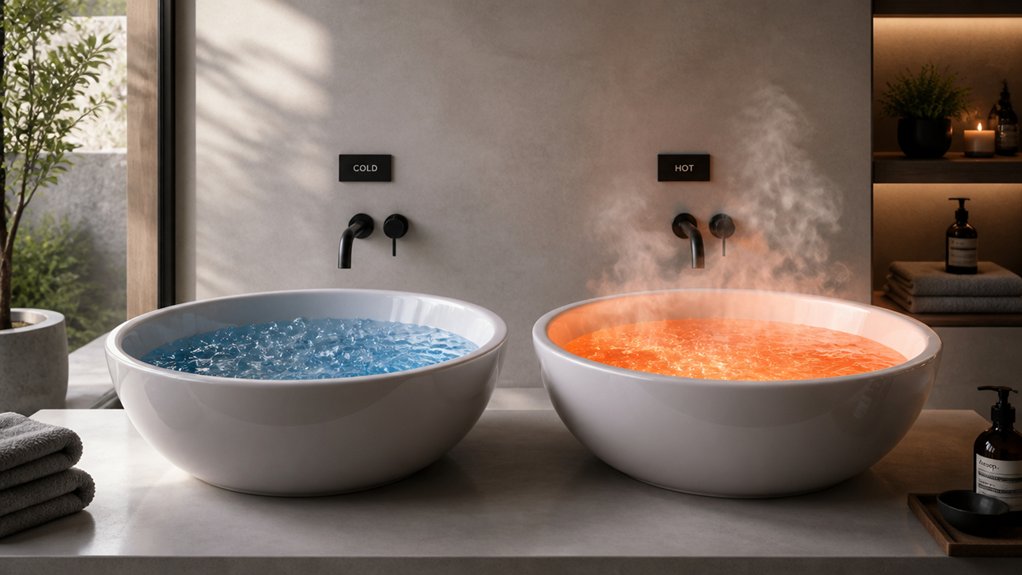
Are you curious about contrast therapy and how it can benefit you? Contrast therapy involves alternating heat and cold exposure to maximize blood flow and reduce inflammation.
When you use heat, your blood vessels undergo vasodilation, relaxing muscles and delivering essential nutrients. Cold exposure causes vasoconstriction, which helps calm inflammation and reduce swelling. This cyclical process creates a circulatory “pump,” flushing out metabolic waste from your muscles and speeding up recovery.
Alternating between heat and cold not only alleviates muscle soreness but also activates your nervous system, improving mental clarity and stress resilience. Repeating this cycle 2-3 times enhances circulation and provides anti-inflammatory benefits, making contrast therapy a powerful tool for physical recovery and overall well-being. Incorporating infrared sauna sessions, especially when combined with cold plunges, can further amplify these effects.
How to Perform Contrast Therapy Safely and Effectively
Performing contrast therapy safely and effectively requires following specific guidelines to maximize benefits while minimizing risks.
Start with a heat source, like a hot tub or sauna, for 10–15 minutes at 160–195°F to dilate blood vessels and relax muscles. Then, immediately submerge in a cold plunge or ice bath at 45–55°F for 2–3 minutes; this constricts blood vessels, reducing inflammation. Repeat the cycle 2–3 times, finishing with cold to extend anti-inflammatory effects.
Always phase into contrast therapy gradually, especially if you’re new, by starting with shorter durations and warmer temperatures. Avoid prolonged heat or cold exposure and monitor your response. Never apply heat on fresh injuries, and consult a healthcare professional if necessary, ensuring you perform contrast therapy safely and effectively. Chiller Compatibility
How to Personalize Your Contrast Therapy Routine
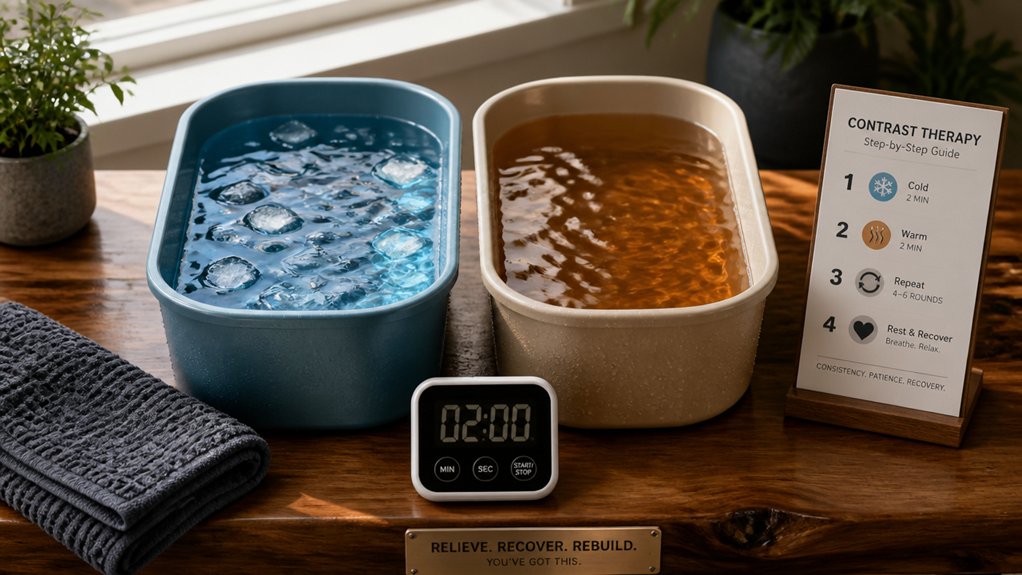
Personalizing your contrast therapy routine involves adjusting temperature, duration, and cycle count to suit your individual needs and goals.
To tailor your sessions, consider these steps:
- Set your sauna temperature between 160–195°F (71–90°C) and cold plunge at 45–55°F (7–13°C), lowering temperatures if you’re a beginner to match your tolerance.
- Start with heat durations of 8–15 minutes and cold exposure of 1–3 minutes, then gradually increase to 3–5 minutes as your comfort improves.
- Determine cycles per session (1–3 rounds) and frequency (2–4 sessions weekly) based on your recovery needs and soreness reduction goals.
Monitoring how your body responds helps you refine timing, temperature, and exposure for best results in your contrast therapy routine, especially considering factors like tub material durability and insulation quality that affect overall comfort and safety.
Common Mistakes to Avoid and Safety Tips
To maximize safety and effectiveness during contrast therapy, it’s vital to avoid common mistakes that can compromise your health or reduce benefits. Don’t apply heat on fresh, actively inflamed injuries, as it can worsen inflammation and swelling. Instead, start with cold to reduce muscle soreness and control blood flow.
Limit cold exposure to 10 minutes per session using a barrier like a towel to prevent skin damage. Always stay within recommended times for heat (10-15 minutes) and cold (2-3 minutes) phases to prevent tissue injury.
Make sure to alternate between heat and cold with minimal intervals to maintain vasodilation and vasoconstriction, supporting healthy blood flow. Incorporating proper water treatment and maintenance practices can help ensure your cold plunge remains hygienic and safe, optimizing your recovery process. If you experience dizziness or discomfort, stop immediately and seek medical advice to guarantee safe contrast therapy practice.
How to Incorporate Contrast Therapy Into Your Wellness Plan
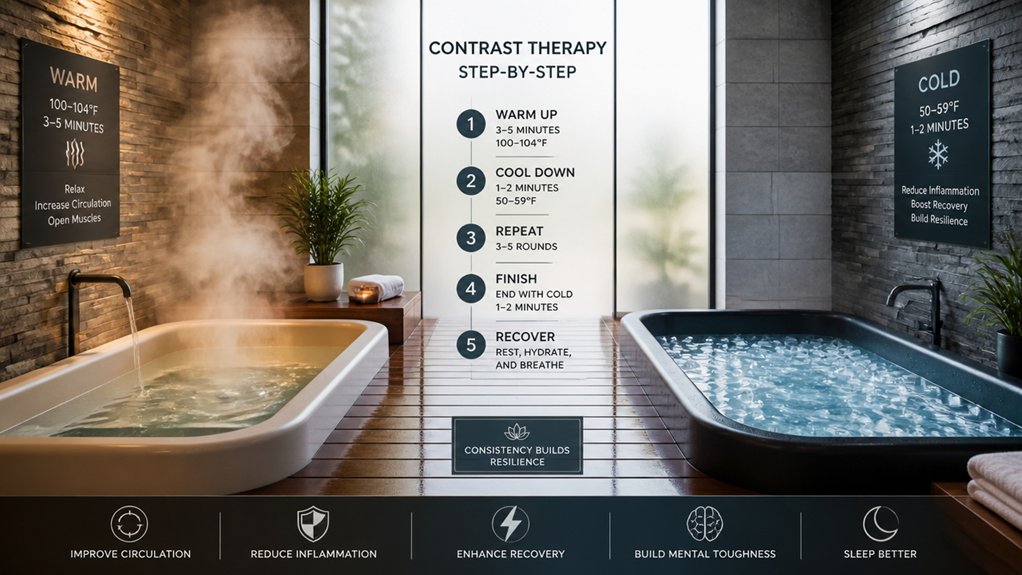
Incorporating contrast therapy into your wellness routine can boost recovery, flexibility, and relaxation when done thoughtfully. To get started:
- Spend 10-15 minutes in a sauna or hot tub to relax muscles and increase blood flow, helping to flush out metabolic waste.
- Shift to 2-3 minutes in a cold plunge or ice bath, which reduces inflammation and swelling by constricting blood vessels.
- Complete 2-3 heat and cold cycles, ending with cold exposure to maximize anti-inflammatory benefits and aid muscle recovery.
Adjust temperature and duration based on your comfort and fitness level. If you’re new, start with lower temperatures and shorter cold switch-to cold phases. Incorporating high-quality cold plunge equipment can enhance the effectiveness and safety of your contrast therapy sessions.
Incorporate contrast therapy 2-4 times weekly alongside yoga or Pilates to enhance muscle soreness relief and overall wellness.
Frequently Asked Questions
How Does Contrast Therapy Reduce Inflammation?
You reduce inflammation through contrast therapy by alternating hot and cold, which stimulates blood flow, constricts swelling, and promotes waste removal. This process trains your circulation to handle inflammation better and accelerates healing, especially when ending with cold therapy.
How to Do Contrast Therapy for Beginners?
To do contrast therapy as a beginner, start with 10-15 minutes in a hot source, then immerse in cold water for 1-2 minutes. Repeat 2-3 times, ending with cold, and breathe steadily throughout each cycle.
In What Order Should I Do Contrast Therapy?
You should start with heat to relax muscles and increase circulation, then switch to cold to reduce inflammation, repeating 2-3 times. Finish with cold to maximize anti-inflammatory effects and promote recovery, adapting the order based on your goals.
How Do You Do Contrast Therapy?
You start contrast therapy with 10–15 minutes in heat, then 2–3 minutes in cold, repeating 2–3 times. Always finish with cold to calm inflammation, and adjust temperatures based on your comfort and experience levels.