
Ice baths shrink post‑delivery swelling by causing vasoconstriction, which limits fluid buildup and cuts inflammatory cytokine release. The cold numbs perineal nerves, easing pain from tears or episiotomies, while rewarming afterward boosts oxygen‑rich blood flow for faster tissue repair. Vagus‑nerve activation during the chill also tempers inflammation and lowers bleeding risk. Plus, the endorphin surge lifts mood and improves sleep. Keep going and you’ll discover how to combine these sessions with compression, sitz baths, and herbal teas for ideal recovery.
What Are Postpartum Ice Baths and Why Use Them?
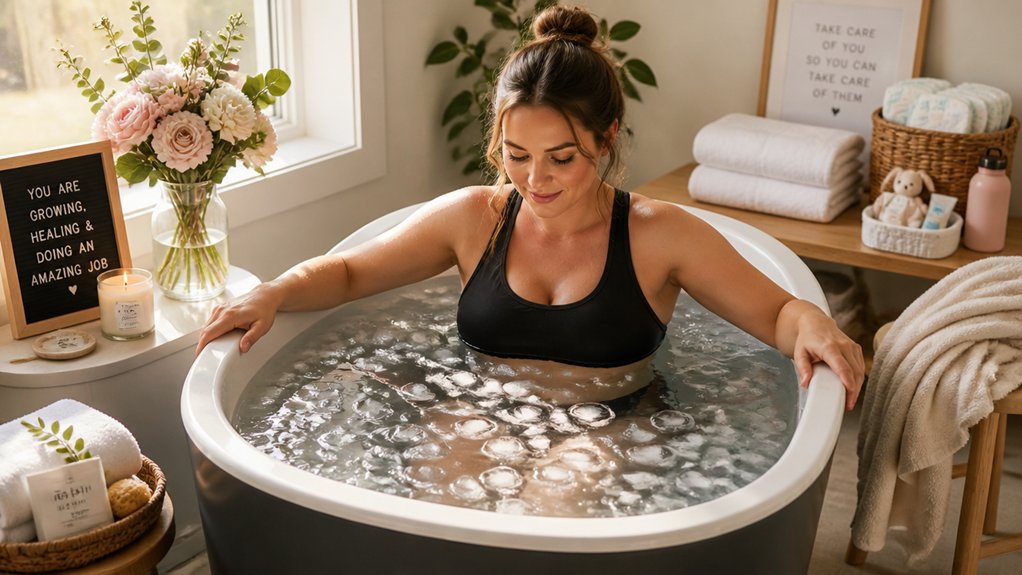
Ever wondered how a simple cold soak can speed up your postpartum healing? You dip your perineal and pelvic area into water around 50‑59°F (10‑15°C) and let the chill work its magic.
Ice baths numb nerve endings, easing pain from tears or episiotomies while constricting blood vessels to curb bleeding and water retention. The cold triggers vasoconstriction, then rewarming sparks fresh circulation, flooding tissues with oxygen and nutrients for faster repair of pelvic floor and abdominal muscles.
Integrated into a holistic care plan—hydration, rest, compression garments, and medication—these sessions help you reduce swelling, control inflammation, and accelerate overall recovery. You’ll notice less discomfort and a smoother return to daily activities. Anti-static/ESD
How Ice Baths Reduce Postnatal Inflammation & Swelling
You’ll notice that the cold constricts your blood vessels, cutting down the flood of inflammatory cytokines that fuel swelling. The reduced temperature also boosts lymphatic drainage, helping excess fluid clear out of the pelvic and abdominal areas.
As your body alternates between cold and gentle rewarming, circulation improves, delivering oxygen and nutrients that speed recovery.
Vascular Constriction
When you step into an ice bath, the cold triggers vascular constriction, narrowing the blood vessels in your perineal and pelvic regions and instantly curbing the swelling that often follows delivery. This rapid narrowing reduces inflammation by limiting blood flow to the injured tissue, so excess fluid and immune cells can’t flood the area.
As the vessels constrict, you also experience a numbing effect on nerve endings, easing soreness and pain. After a few minutes, you exit and rewarm, prompting a rebound dilation that drives fresh blood, oxygen, and nutrients into the same sites. The cycle of constriction and re‑dilation accelerates tissue repair while keeping postnatal bleeding and edema under control. Type-C fast charging
Cytokine Production Suppression
Because the cold triggers vasoconstriction, ice baths sharply cut the release of pro‑inflammatory cytokines that drive postpartum swelling. You’ll notice less pain and faster tissue repair as cytokine production drops, letting natural healing pathways take over. Additionally, the targeted cooling can help maintain a calm inflammatory response in the pelvic area non-slip while supporting consistent recovery routines.
Lymphatic Drainage Enhancement
Although the cold shrinks blood vessels, it also triggers lymphatic vessels to contract, boosting the flow of interstitial fluid toward the lymph nodes.
In practice, cold immersion creates vasoconstriction that limits excess fluid in the pelvic and perineal regions, while simultaneously prompting lymphatic drainage to clear inflammatory buildup. As the vessels contract, interstitial fluid moves more efficiently into lymph nodes, reducing edema and accelerating postpartum healing of muscle strain, tears, and episiotomies.
When you finish the ice bath, rewarming dilates vessels, enhancing circulation that supports the lymphatic system’s waste‑removal function. Keep sessions brief, controlled, and approved by a healthcare provider to guarantee safety and maximize the anti‑inflammatory benefits of cold immersion. Additionally, choosing a setup with safe, controlled temperature ranges aligns with equipment options described in lighting and installation guidelines cable management.
How Cold Therapy Numbs Perineal Tear Pain
You’ll feel the swelling ease as cold water constricts the vessels around the tear, while the numbing effect on nerve endings cuts the burning and stinging. Bluetooth connectivity can assist you in monitoring accessory sensors during recovery.
Vascular Constriction Reduces Swelling
When you step into an ice bath, the cold triggers rapid vascular constriction, shrinking the tiny blood vessels around your perineal area and instantly curbing swelling and inflammation from tears.
Cold therapy forces blood flow to narrow, which limits excess fluid buildup and eases the pressure that makes the region feel tight and hot. As the vessels constrict, the inflammatory cascade slows, so you notice less throbbing and a calmer healing environment.
After a short immersion, your body warms, re‑opening vessels to deliver oxygen and nutrients while keeping swelling under control.
- Vascular constriction reduces fluid leakage.
- Inflammation drops, easing tissue pressure.
- Swelling diminishes, accelerating comfortable.
Adding targeted cooling can support the initial reduction in swelling when used alongside gentle healing practices 3D LUT export and professional color management tools.
Nerve Endings Numbed for Pain Relief
If you dip into an ice bath, the sudden chill drops the temperature of the skin and deeper tissues around the perineum, slowing the nerves that carry pain signals and giving you immediate relief from tearing or episiotomy discomfort.
Cold therapy works by lowering tissue temperature, which dampens nerve endings and delays the transmission of sharp or burning sensations. Within a minute, you’ll feel numb pain spreading across the perineal area, making the sting of a tear or incision far more tolerable. Additionally, using non-liquid, quick-drying, VR-specific cleaning principles from maintenance guidance can help you ensure the area stays clean and free from irritants during recovery streak-free maintenance.
Limit each session to one or two minutes to avoid skin damage while still achieving the analgesic effect. By desensitizing sensory nerves, you reduce reliance on medication and can move more comfortably during early postpartum recovery. Regular, careful care of the perineal area mirrors best practices for using non-abrasive tools and addressing hard-to-reach spots to prevent irritation.
Faster Tissue Repair Through Reduced Inflammation
Cold immersion quickly narrows blood vessels around the perineum, cutting down swelling and creating a cleaner environment for tissue repair. You’ll feel the sting fade as ice baths constrict the micro‑circulation, limiting fluid buildup and curbing bleeding.
The cold numbs nerve endings, so the burning and stinging from perineal tears recedes, letting you focus on healing. When you step out, the rewarming surge boosts oxygen and nutrients, accelerating tissue repair.
Postpartum ice baths also engage the vagus nerve, which modulates inflammation and speeds muscle and skin recovery.
- Constricts vessels → less edema
- Numbs pain → immediate comfort
- Stimulates rebound flow → enhanced nutrient delivery
How Postpartum Ice Baths Boost Tissue Repair
Because ice baths trigger blood‑vessel constriction, they immediately curb postpartum swelling and limit excess bleeding, setting the stage for efficient tissue repair. You’ll feel the cold numb perineal nerves, easing pain from tears or episiotomies, while the subsequent rewarming sparks vasodilation that rushes oxygen and nutrients into damaged tissue. The vagus nerve response dials down inflammation, cutting infection risk and accelerating healing. In your postpartum recovery routine, short, controlled ice immersions prime your body’s repair mechanisms, letting you bounce back faster.
| Benefit | How it works |
|---|---|
| Swelling reduction | Vessel constriction limits fluid buildup |
| Pain relief | Nerve endings numbed by cold |
| Faster nutrient delivery | Rewarming triggers vasodilation |
| Inflammation control | Vagus nerve activation |
| Lower infection risk | Decreased inflammatory response |
How Cold Therapy Lowers Post‑Delivery Bleeding Risks

When you step into a chilled immersion after delivery, the sudden drop in temperature triggers vasoconstriction, which narrows blood vessels in the pelvic area and curtails blood flow. Cold therapy in the postpartum period immediately tightens blood vessels, limiting excess bleeding and supporting natural clot formation at perineal tears or episiotomy sites.
Cold immersion post‑delivery induces vasoconstriction, reducing pelvic blood flow and supporting clot formation at perineal tears.
It also curbs inflammation, keeping swelling low and preventing secondary bleed risks. By regulating circulation, you balance oxygen and nutrient delivery without encouraging further loss, allowing tissue repair to progress smoothly.
- Vasoconstriction reduces arterial pressure in the uterus.
- Swelling control minimizes pressure on fragile vessels.
- Enhanced clotting accelerates healing of incision sites.
How Ice Baths Improve Mood & Sleep Quality
If you step into an ice bath after delivery, the sudden chill sparks a surge of endorphins that lift your mood and ease postpartum anxiety. The cold water activates your vagus nerve, calming the nervous system and smoothing emotional spikes that often accompany new‑mom stress.
Noradrenaline floods your bloodstream, sharpening focus while dampening worry, so you feel steadier throughout the day. As night falls, the lingering relaxation lowers restlessness, helping you drift into deeper, more restorative sleep.
Your body’s temperature drop also signals the brain to release melatonin, further enhancing sleep quality. In short, ice baths give you a natural, drug‑free boost to mood and sleep, supporting a healthier postpartum recovery.
Safe Ice‑Bath Temperatures (50‑59°F) & Session Lengths
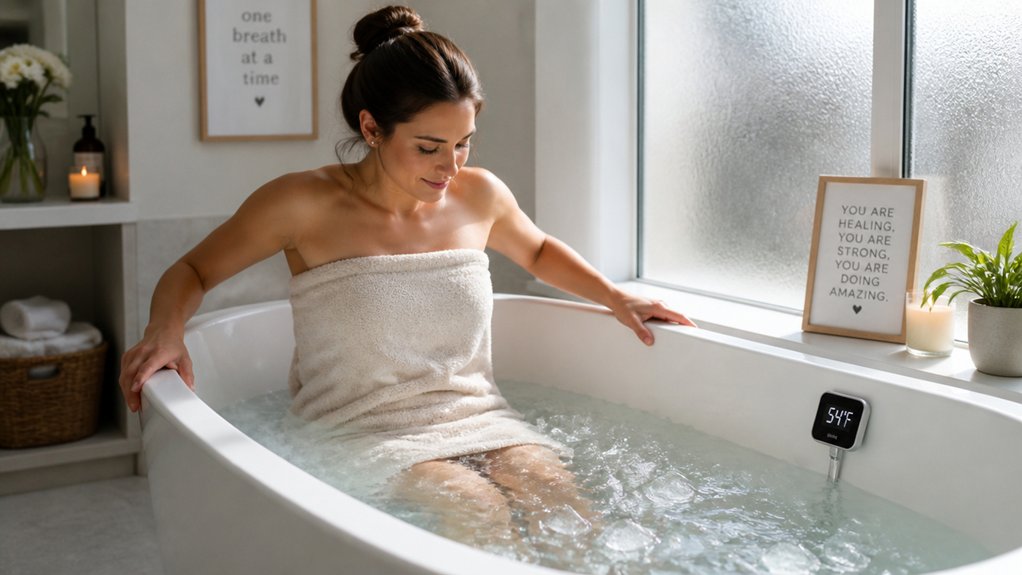
You’ll want to keep the water between 50°F and 59°F to stay within the ideal therapeutic window while avoiding cold‑related injury.
Start with 1‑2‑minute sessions and only extend up to 5 minutes if you feel comfortable and have medical clearance.
This range and duration balance safety with the healing benefits you’re seeking.
Optimal Temperature Range
Because the goal is to soothe inflammation without risking cold injury, keep the water temperature between 50 °F and 59 °F (10 °C–15 °C).
In postnatal recovery, cold water therapy works best when you stay within this narrow band; it reduces swelling while protecting delicate postpartum tissues from frostbite or hypothermia. You’ll notice that the body’s natural vasoconstriction response is strongest at these safe ice bath temperatures, helping you feel refreshed without over‑cooling.
- Set the thermostat – Aim for 55 °F if you’re new; adjust by a degree or two based on comfort.
- Monitor time – Begin with 1–2 minutes, then extend gradually up to 5 minutes as tolerance builds.
- Check sensations – Numbness or shivering signals you should exit immediately.
Maximum Safe Duration
Wondering how long you can safely stay in a 50‑59 °F ice bath after birth? You should start with just one to two minutes, letting your body adjust to the cold before you consider longer sessions.
As you gain tolerance, you can extend the time, but never exceed five to ten minutes per session. This limit protects you from hypothermia and skin damage while still delivering the anti‑inflammatory benefits that aid postpartum recovery.
Enter the water gradually, watch for shivering, numbness, or dizziness, and stop immediately if anything feels off. Always check with your healthcare provider before incorporating ice baths into your routine, so the duration and temperature match your individual health needs.
Step‑by‑Step Guide to Your First Post‑Ice Bath
If you’re ready for your first post‑ice bath, start with a brief 1–2‑minute dip in water that’s 50°F‑59°F (10°C‑15°C) to let your body acclimate gradually.
Begin with a 1–2‑minute dip at 50‑59°F (10‑15°C) to gently acclimate your body.
Warm up afterward with light stretching or a gentle postnatal yoga flow, then hydrate and rest.
Keep a physical therapist’s advice handy to tailor duration and temperature to your recovery needs.
- Set the scene – Fill a tub with the target temperature, test it, and make certain you’re hydrated and rested.
- Dive in – Enter slowly, stay for 1–2 minutes, monitor shivering or numbness, and breathe steadily.
- Exit & recover – Step out, warm up with stretching or a warm shower, and note any discomfort for future adjustments.
Warning Signs & When to Stop Postpartum Ice‑Bath Sessions
After your first post‑ice bath, stay alert for any red flags that signal you should stop the session. If you notice increased redness, foul odor, fever, or unusual perineal discharge, quit immediately—these are infection signs.
Excessive numbness, persistent tingling, skin discoloration, or any frostbite symptoms on exposed skin also demand you halt the therapy. Dizziness, faintness, uncontrollable shivering, rapid heartbeat, or breathing difficulty are warning cues to stop and rest.
Pain that worsens instead of eases, or delayed healing of stitches or tears, means you should discontinue. For any underlying conditions—especially cardiovascular issues—or if you’re unsure, contact your healthcare provider right away.
These precautions for new postpartum mothers protect safety and recovery progress.
How to Pair Ice Baths With Compression Garments
You’ll notice that slipping into a compression garment right after a brief ice‑bath helps your pelvic tissues stay supported while the cold reduces swelling.
The gentle pressure keeps blood flowing, which speeds up healing and eases pain. Pairing the two with proper hydration and rest maximizes the benefits without over‑compressing your skin.
Support Compresses Pelvic Tissues
While you soak in an ice bath, slipping on a well‑fitted compression garment keeps pelvic tissues snug and aligned, curbing swelling and locking in the anti‑inflammatory benefits of the cold. The garment’s gentle pressure constricts vessels, so fluid accumulation stays low while the cold numbs pain.
This synergy sustains the reduction in tissue fluid buildup, letting you reap the full anti‑inflammatory power of ice baths for faster postpartum healing.
- Choose a garment that fits snugly without cutting off circulation;
- Wear it for 20‑30 minutes after each ice session, then gradually increase wear time;
- Adjust the tightness as swelling eases, ensuring consistent support for perineal and abdominal muscles.
Enhances Circulation and Healing
When you combine an ice bath with a well‑fitted compression garment, the cold‑induced vasoconstriction reduces swelling while the garment’s steady pressure sustains that effect and primes the tissues for a rapid rebound of blood flow during rewarming.
The brief restriction from ice baths triggers a surge of oxygen‑rich blood once you step out, and the compression garments keep the vessels open longer, boosting circulation to the pelvic floor and abdominal muscles. This coordinated approach helps clear metabolic waste, delivers nutrients faster, and supports tissue regeneration after perineal tears or a C‑section incision.
To maximize benefit, stay in the ice bath for 5‑10 minutes, then immediately slip on the compression garment for at least an hour. Repeat daily for consistent circulation and healing.
Reduces Swelling and Pain
If you step into an ice bath for just a few minutes and then slip on a well‑fitted compression garment, the cold‑induced vasoconstriction and the garment’s steady pressure work together to shrink swelling and dull pain in the perineal and pelvic regions.
You’ll feel the per and faster recovery as the ice baths limit inflammation while the compression maintains gentle pressure, preventing fluid buildup. Pairing them correctly maximizes postpartum comfort and reduces the ache from tears or episiotomies.
- Timing – Enter the ice bath first, then apply the garment while still cool.
- Duration – Limit ice exposure to 5–7 minutes; wear compression for 30 minutes to 2 hours.
- Hydration – Drink water before and after to support circulation and avoid skin irritation.
How to Combine Ice Baths, Sitz Baths & Herbal Teas
Integrating ice baths, sitz baths, and herbal teas gives you a balanced postpartum routine that alternates soothing heat with invigorating cold while supporting internal healing.
Start by soaking in a sitz bath with witch hazel or Epsom salts for 10‑15 minutes to ease perineal soreness and boost circulation. After drying, shift to a brief ice bath—about 3‑5 minutes at 50‑60 °F—to constrict vessels, reduce swelling, and numb pain.
Follow the cold exposure with a warm cup of raspberry leaf or chamomile tea, sipping slowly to calm nerves, aid digestion, and sustain anti‑inflammatory effects. Alternate this sequence daily, listening to your body and adjusting durations as needed.
Always get your provider’s okay first to guarantee safety and personalize the plan.
Real‑World Success Stories From New Moms
Moms who’ve tried the ice‑bath routine report noticeable relief within days: perineal swelling shrinks, stinging from episiotomies eases, and mobility improves. You’ll hear stories of new mothers who, after a brief 5‑minute plunge, felt the burning fade and could sit up for feeding without wincing.
Moms report perineal swelling shrinking, stinging easing, and mobility improving after just five minutes in an ice bath.
Their confidence rises as endorphins lift mood, and they notice less anxiety during those sleepless nights. Combining ice baths with proper rest, hydration, and compression garments accelerates healing, while medical guidance guarantees safe, gradual exposure.
1. Reduced swelling and faster tissue repair.
2. Lowered pain and stinging after episiotomies.
3. Improved mood and reduced postpartum anxiety.
Frequently Asked Questions About Postpartum Ice Baths
Ever wonder how a quick, cold soak can ease your postpartum discomfort? You might ask if ice baths are safe. The answer: yes, if you keep sessions to 1‑2 minutes at 50‑59°F and check with your doctor first.
Many wonder how long to stay in—short bursts are enough to constrict vessels, reduce swelling, and numb pain. Others worry about skin damage; staying within the temperature range prevents injury.
You may also ask whether ice baths help the healing process. After rewarming, circulation spikes, accelerating tissue repair of tears or episiotomies. Pair the soak with hydration, rest, compression garments, and gentle exercise for peak recovery.
What to Look for When Picking a Home Cold Plunge
If you want a home cold plunge that truly supports postpartum recovery, start by checking that it can keep water between 50 °F and 59 °F (10 °C–15 °C). A reliable system lets you fine‑tune temperature control, so each session stays within the therapeutic range for cold plunge therapy without risking over‑cooling.
Look for a tub that’s easy to clean, compact enough for your space, and built with durable, non‑porous materials that won’t harbor bacteria. Safety features like timers and insulation keep exposure time safe while preserving consistent cold temperatures essential for tissue healing and postpartum recovery.
- Precise temperature control panel with digital readout
- Gradual immersion and adjustable depth for comfort
- Integrated safety timer and insulated construction
Frequently Asked Questions
Are Ice Baths Good for Postpartum?
Yes, ice baths can help you recover postpartum by easing swelling, numbing pain, boosting circulation, and lifting mood, just keep sessions short, stay hydrated, and follow safety guidelines.
Do Ice Baths Actually Help With Recovery?
Yes, ice baths can aid your recovery. They shrink swelling, numb pain, boost circulation when you warm up, and trigger endorphins. Just make sure you stay hydrated, rest, and consult your doctor first.
How Long Should You Stay in an Ice Bath for Recovery?
You should stay in an ice bath for about one to two minutes at first, then, if you tolerate it and your doctor approves, you can gradually extend sessions up to five minutes maximum.
What Does a 3 Minute Ice Bath Do?
You’ll constrict vessels, numb pain, boost circulation, cut swelling, limit bleeding, and trigger endorphins—all in three minutes—so you recover faster, feel calmer, and reduce infection risk.
In Summary
Embrace ice baths as a simple, powerful tool for postnatal recovery. The cold reduces inflammation, eases perineal pain, curbs bleeding, and accelerates tissue repair, letting you bounce back faster. Pair them with sitz baths and soothing teas for a holistic routine, and choose a reliable plunge that fits your space. Trust the science, listen to your body, and let the chill support your healing journey.