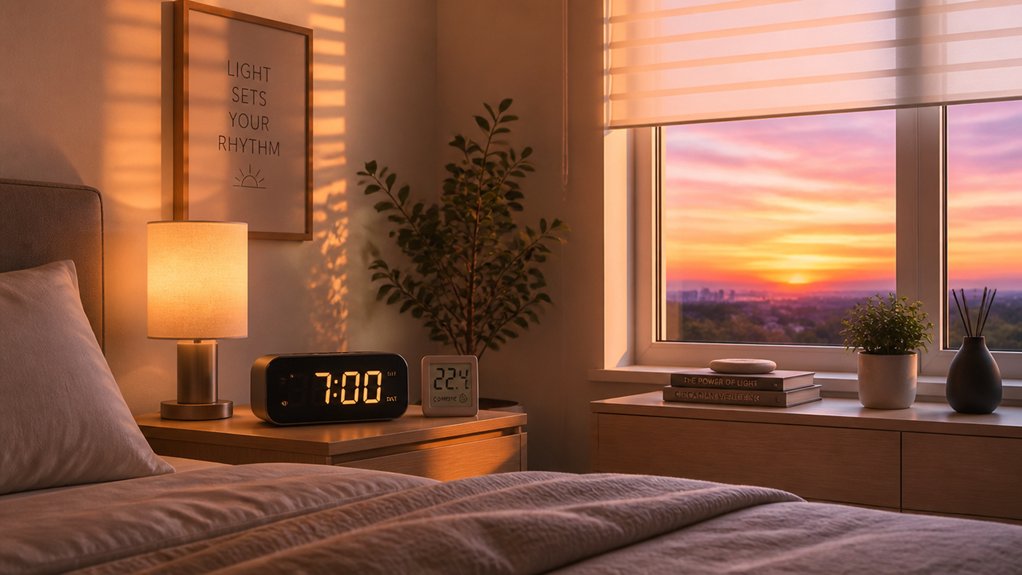
To reset your circadian rhythm with exposure therapy, start by getting bright light (~10,000 lux) within 30-60 minutes after waking, for 30-90 minutes. Gradually shift your sleep schedule by 15-30 minutes every few days, maintaining consistency daily. In the evening, dim indoor lights and avoid screens to promote melatonin production. Strategic light timing and environment adjustments help realign your internal clock; keep exploring to learn more about optimizing your sleep schedule.
Understanding How Light Exposure Regulates Your Circadian Rhythm
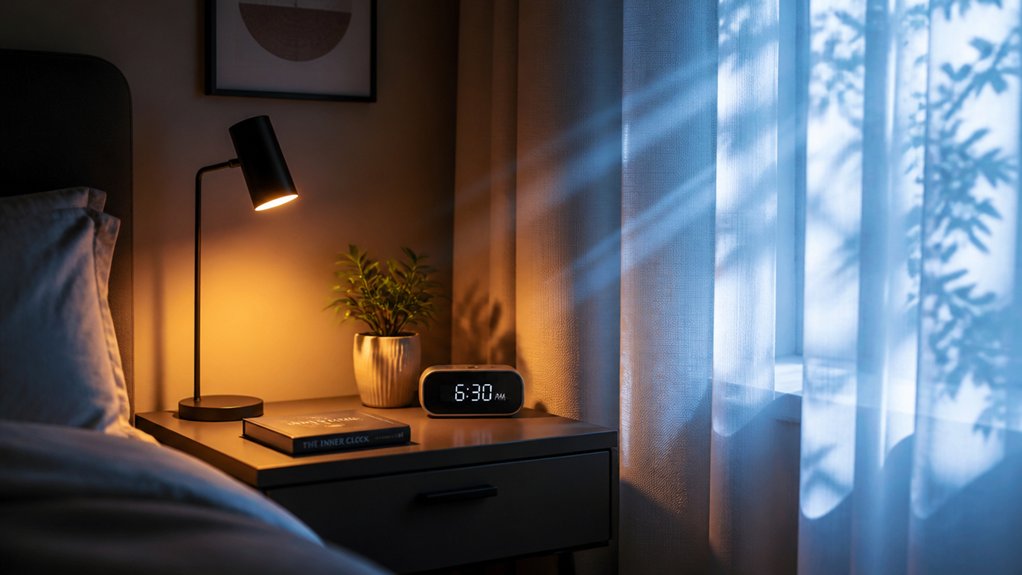
Light exposure plays a fundamental role in regulating your circadian rhythm because it serves as the body’s primary environmental cue. When you get morning light exposure, especially from bright natural sunlight or high-quality light therapy boxes, you help reset your internal clock. This process involves the suprachiasmatic nucleus, which processes light signals through your eyes, influencing your hormones and sleep-wake cycle. Bright light suppresses melatonin production, a hormone that promotes sleep, signaling daytime alertness. Conversely, exposure to blue light in the evening can delay sleep by inhibiting melatonin and shifting your circadian rhythm later. Timing, intensity, and duration of light are essential for an effective circadian rhythm reset, aligning your activity and sleep patterns with natural sunlight cues. Incorporating light therapy devices into your routine can help simulate natural light and support this synchronization, especially during months with limited sunlight.
How to Pick the Best Timing and Methods for Light Therapy
Determining the ideal timing and methods for light therapy depends on understanding your specific sleep challenges and goals. For delayed sleep phase syndrome (DSPS), you should use bright light therapy (10,000 lux) within 30–60 minutes after spontaneous awakening, ideally for 30–90 minutes, to advance your circadian rhythm. Morning light exposure—either natural sunlight or a light therapy box—effectively helps reset your internal clock and promote circadian alignment. Be cautious with evening light therapy, as it can delay your sleep onset if not carefully timed, especially with blue light, which can suppress melatonin. Incorporating devices with rhythmic LED pulses can enhance the effectiveness of your light therapy by supporting natural breathing rhythms and calming the nervous system. Consistency is key; maintain your wake time daily and continue morning bright light exposure to sustain rhythm shifts and keep your internal clock aligned.
How to Gradually Shift Your Sleep Schedule for Better Rest

Adjusting your sleep schedule gradually makes it easier for your body to adapt without causing unnecessary fatigue or sleep loss. Change your sleep and wake times by no more than 15 to 30 minutes every few days, helping your circadian rhythm realign smoothly.
Gradually shift your sleep and wake times by 15-30 minutes to help your body adapt smoothly.
Maintain consistent sleep and wake times daily, including weekends, to reinforce your internal clock. Get morning bright light exposure within 30-60 minutes of waking to help advance your sleep phase.
Avoid blue light from screens and artificial lighting for at least 60-90 minutes before bedtime, preventing delays in sleep onset. Shift meal times along with your sleep changes — eat breakfast soon after waking and finish your last meal 2-3 hours before bed.
Additionally, sensor latency considerations can impact the effectiveness of your adjustments, as delayed signals may affect the accuracy of environmental cues influencing your circadian rhythm. These strategies support a gradual adjustment for better, more restorative rest.
Creating an Evening Environment That Promotes Melatonin Production
You can boost melatonin production by dimming your indoor lights in the evening and avoiding bright overhead lighting.
Limiting screen time before bed reduces blue light exposure, which can interfere with your natural sleep hormones. Switching to warm, amber, or red-toned lighting and keeping your environment dark and cool creates an ideal setting for restful sleep. Incorporating pH-balanced cleansing agents into your post-evening routine can also help maintain your skin’s natural barrier, supporting overall relaxation.
Dim Lighting Settings
Creating an evening environment that promotes melatonin production starts with paying attention to your lighting. You want to create a dim lighting setting that signals to your brain it’s time to wind down.
Here are key tips:
- Switch to warm-colored, low-intensity bulbs in your bedroom to minimize blue light exposure during the evening.
- Keep overhead lighting minimal after sunset to support your circadian rhythm.
- Power down electronic devices at least 60–90 minutes before bed to prevent artificial light from suppressing melatonin.
- Maintain bedroom lighting below 10 lux in the pre-sleep period to encourage drowsiness and facilitate earlier sleep onset.
- Consider using specialized infrared heat lamps with adjustable temperature controls to gently warm the room without disrupting your melatonin production, especially in colder months.
This approach helps optimize sleep quality and supports your body’s natural sleep-wake cycle.
Minimize Blue Light
Minimizing blue light exposure in the evening is key to supporting your body’s natural melatonin production. Blue light from screens—phones, computers, TVs—suppresses melatonin release, disrupting your circadian rhythm and delaying sleep onset.
To promote better sleep, avoid screen use at least 60–90 minutes before bed. Instead, opt for warm, dim evening lighting to create a cozy environment that encourages melatonin production.
While night mode settings on devices reduce blue light, they aren’t as effective as entirely limiting screen exposure before sleep. Keep ambient lighting low with dim, warm-colored bulbs or lamps.
This approach is especially important if you’re over 40, as natural melatonin production declines with age and sensitivity to blue light increases. Using motivational posters and prints, such as calming or resilience-themed visuals, can also create a soothing environment that supports your circadian health.
How Meal Timing and Lifestyle Habits Support Your Sleep Clock

Your sleep clock benefits when you eat breakfast within a couple of hours of waking and keep your meal times consistent throughout the day. Avoid heavy dinners late at night and limit caffeine later in the day to prevent disrupting your circadian rhythm. Regular exercise earlier in the day also helps reinforce a healthy sleep-wake cycle. Incorporating breathing exercises into your routine can further support relaxation and improve sleep quality.
Timed Eating Promotes Rhythm
Timing your meals plays a crucial role in maintaining a healthy sleep-wake cycle. Proper meal timings help synchronize your circadian rhythm and support a consistent sleep-wake schedule.
To optimize this:
- Eat breakfast within 1–2 hours of waking to advance your circadian phase.
- Stick to regular meal times daily to stabilize metabolic rhythms and reinforce your biological clock.
- Avoid late-night meals, especially heavy foods after 8 PM, to prevent delays in your circadian rhythm and metabolic disruptions.
- Finish your last meal 2–3 hours before bed to aid digestion and boost melatonin production, promoting better sleep.
- Incorporating meal timing strategies such as intermittent fasting can further enhance your circadian alignment and overall sleep quality.
Consistent Habits Enhance Sleep
Establishing consistent habits throughout the day plays a vital role in reinforcing your circadian rhythm. Regular exposure to natural light in the morning helps reset your internal clock, indicating when to wake and sleep.
Consistent meal times, especially eating within 1–2 hours of waking and avoiding late-night eating after 8 PM, support a stable metabolism and prevent circadian disruption. When your meal patterns are predictable, your body’s digestion and insulin sensitivity stay aligned with your sleep-wake cycle, promoting more restorative sleep.
Limiting caffeine earlier in the day also helps maintain melatonin production and keeps your circadian rhythm in sync. By integrating these habits, you strengthen your internal clock, making it easier to achieve consistent, quality sleep.
When and How to Seek Professional Help for Sleep Disruptions
Wondering when it’s time to seek professional help for sleep disturbances? You should consider it if persistent sleep disturbances interfere with your daily life or don’t improve after adjusting sleep patterns and using light therapy devices.
Sleep specialists can diagnose circadian rhythm sleep disorder and customize exposure therapy timing and intensity based on your symptoms and lifestyle.
Ask yourself:
- Are my sleep issues ongoing despite self-help efforts?
- Do I experience chronic sleep disruption affecting my health?
- Have I tried light therapy but still face sleep struggles?
- Do I’ve underlying medical or hormonal issues impacting my sleep?
Seeking professional help guarantees a tailored, integrated treatment plan, addresses risks linked to chronic sleep disruption, and assures safe use of light therapy devices for your circadian rhythm health.
Frequently Asked Questions
What Is the Fastest Way to Reset a Circadian Rhythm?
The fastest way to reset your circadian rhythm is to get bright natural light or a light therapy box within 30–60 minutes of waking, followed by gradually shifting your sleep schedule, avoiding screens and late meals, and limiting caffeine and alcohol.
What Is the 3 3 3 Rule for Sleep?
The 3 3 3 Rule for sleep involves avoiding screens for three hours before bed, dimming lights during that time, and getting three minutes of morning sunlight. It helps regulate your circadian rhythm for better sleep quality.
Can Light Exposure Reset My Circadian Rhythm?
Yes, light exposure can reset your circadian rhythm. By getting bright light in the morning within 30-60 minutes of waking, you suppress melatonin and signal wakefulness, helping your body set a consistent sleep-wake cycle.
What Organ Is Cleansing at 3am?
At 3 AM, your liver is actively cleansing and detoxifying your body. It metabolizes toxins and waste products, supporting overall health. To optimize this process, guarantee consistent sleep and proper light exposure, aiding your liver’s natural circadian activity.