After a cold plunge, you can prevent hypothermia by drying off completely, changing into dry, layered clothes, and insulating yourself with warm blankets or mats. Drink warm, non-caffeinated beverages and snack on easy-to-digest carbs for internal heat. Keep your environment at a steady, comfortable temperature, and move gently to boost circulation without overexerting. Avoid hot showers, which can cause shock, and stay alert for signs that need urgent care—more tips follow to keep you safe.
What Is Afterdrop and Why Is It Dangerous?
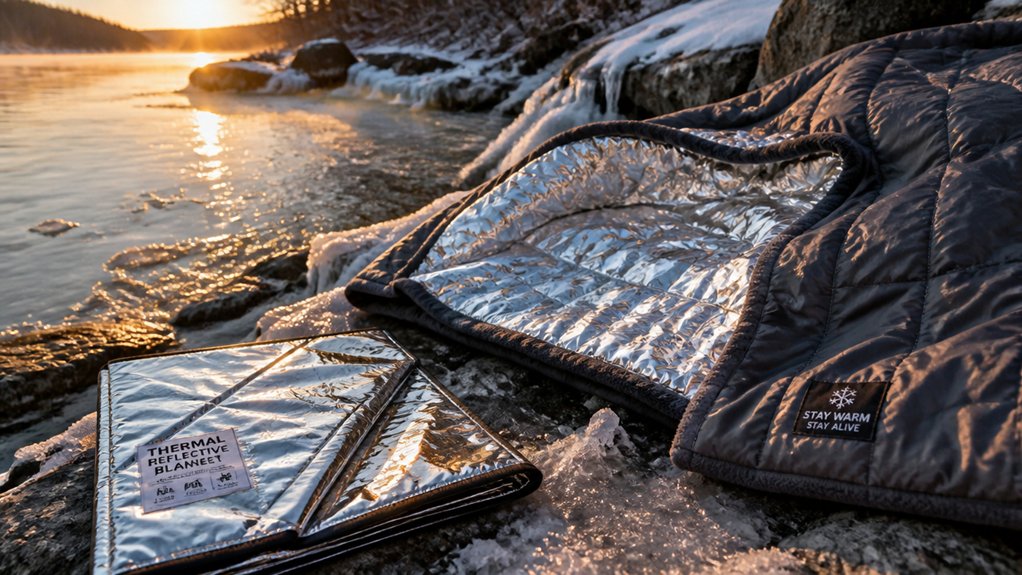
Have you ever heard of afterdrop and wondered why it’s dangerous? Afterdrop is the continued decline in core temperature that happens after you leave cold water immersion.
When you’re immersed, your body constricts blood flow to the skin to conserve heat, but once out of the water, cooled blood from the skin and muscles rushes back to the core, causing a temperature drop. This process can lead to hypothermia if not managed properly. Symptoms include persistent shivering, feelings of fatigue, and worsening unwellness.
Afterdrop may last up to 30 minutes as your circulation stabilizes. Without effective warming strategies, this sudden drop in core temperature can become severe, making early intervention and proper post-immersion warming vital to prevent dangerous hypothermia. Implementing appropriate methods like cold therapy techniques can help maintain safe body temperature during recovery.
How to Dry Off and Get Warm Quickly
Start by removing all wet clothing immediately to prevent further heat loss and dry your skin thoroughly, especially on your head, hands, and feet. Use dry, layered clothing with insulation and wind resistance to trap heat quickly, and stand on insulating surfaces to protect your feet. Avoid direct heat sources at first; instead, warm up gradually with the right clothing and sheltered surfaces. Incorporate quick-dry towels or fabrics to help wick away moisture faster and stay dry longer, which can aid in maintaining your core temperature.
Immediate Drying Techniques
Once you’ve emerged from the cold water, immediate efforts to dry your skin and warm up are essential to prevent rapid heat loss. First, immediately remove wet clothing to stop evaporative cooling. Use a towel to thoroughly dry your skin, paying close attention to the head, hands, and feet—areas prone to significant heat loss. To truly warm up, put on a layered clothing system: a moisture-wicking base layer, insulation like fleece, and an outer wind-resistant shell. Don’t forget warm socks, a hat, and gloves to protect your extremities. Stand on warm, insulating surfaces like mats or towels to prevent conductive heat loss. These quick actions help maintain body heat and prevent hypothermia, keeping your core temperature stable.
Warm Clothing and Surfaces
After exiting the cold water, quickly changing into dry, layered clothing is essential to restore your body heat. Wet clothes promote evaporative cooling, increasing heat loss, so removing all wet clothing immediately prevents further temperature drop.
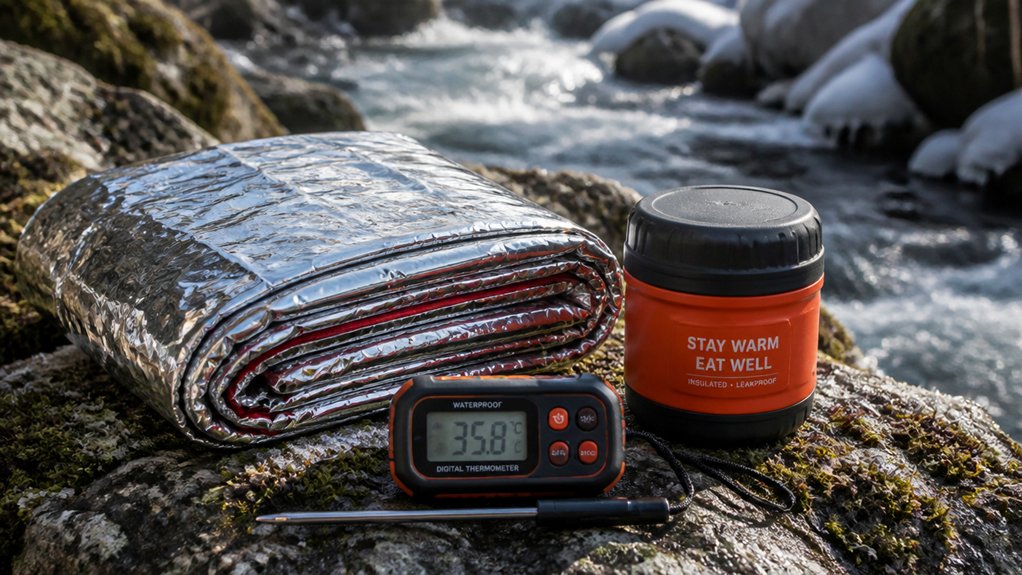
Towel off thoroughly, focusing on extremities like your head, hands, and feet, which lose heat rapidly. Dress in a layering system: start with a wool or synthetic base layer, add insulating fleece or down, and finish with a wind-resistant outer layer to trap heat effectively. Put on warm, dry socks, a hat, and gloves right after drying to protect your extremities from cooling.
Standing on insulating surfaces like mats or towels instead of cold floors reduces conductive heat loss, helping you warm up faster and prevent hypothermia.
Warm Drinks and Snacks to Support Rewarming
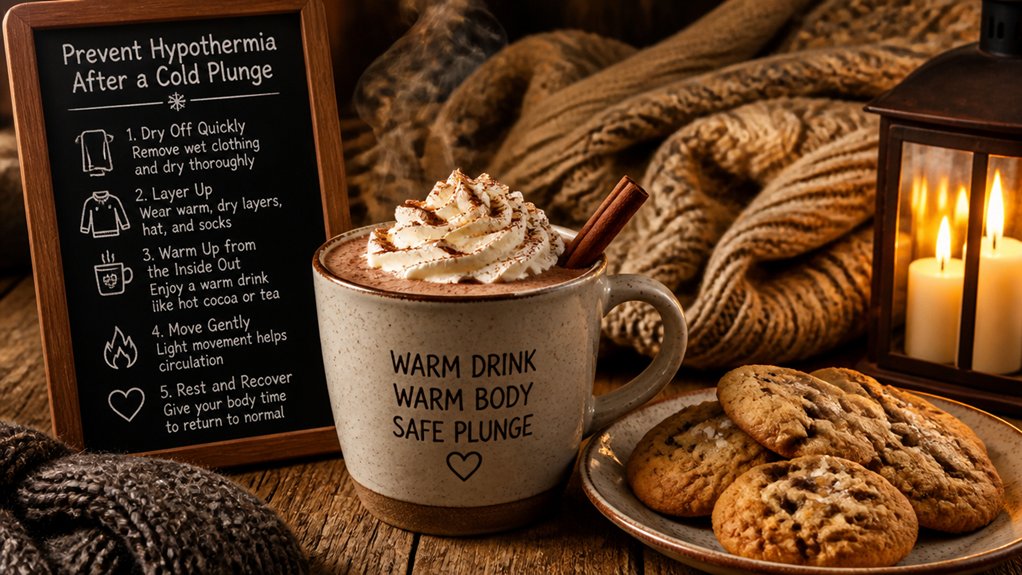
Choosing warm, hydrating drinks like herbal teas or lemon water helps raise your core temperature safely and supports recovery.
Opt for small, easy-to-digest snacks such as fruit or dark chocolate to fuel your body’s warmth processes. Avoid alcohol and caffeine, as they can increase heat loss and dehydration during rewarming.
Choose Hydrating Beverages Wisely
Opting for warm, non-caffeinated beverages like herbal tea or warm lemon water can gently raise your core temperature without shocking your system. Sip a warm beverage slowly to promote internal warming and support rewarming efforts.
Avoid alcohol and caffeine, as they cause vasodilation and dehydration, which worsen heat loss after cold exposure. Instead, consider warm electrolyte drinks to help maintain hydration and support fluid balance, especially if you’ve experienced prolonged cold exposure.
Consuming small, easily digestible warm or room-temperature snacks rich in simple carbs—like fruit, honey, or dark chocolate—can supply glucose needed for metabolic heat production. These measures promote mild hypothermia prevention by encouraging gradual internal warming, often matching the effectiveness of blankets or shivering alone.
- Feel the warmth restore your energy
- Protect against dehydration and further cold damage
- Support your body’s natural rewarming process
- Incorporating electrolyte balance can further enhance hydration and recovery during rewarming efforts.
Opt for Warm, Easy Snacks
Warm, easy snacks can play an essential role in supporting your body’s rewarming process after cold exposure. Opting for warm snacks and drinks helps raise your core body temperature gradually, preventing shocks to your system.Consuming warm or room-temperature snacks like fruit, honey, or dark chocolate supplies simple carbohydrates, fueling metabolic heat production and boosting body temperature. Warm drinks like herbal tea or lemon water also aid hydration and promote internal warming without causing vasodilation. Here’s a quick guide:
| Snack Type | Benefits |
|---|---|
| Warm drinks | Increase core temperature, rehydrate |
| Simple carbohydrate snacks | Boost metabolic heat, energy |
| Room-temperature foods | Aid digestion, prevent further cooling |
Including protein-rich options can further support muscle recovery during this rewarming phase. Choosing the right warm, easy snacks supports effective rewarming and stabilizes your core temperature.
Avoid Alcohol and Caffeine
While it might be tempting to reach for an alcohol or caffeine-rich beverage after cold exposure, doing so can hinder your body’s rewarming efforts. Avoid alcohol because it causes vasodilation, which increases heat loss and raises hypothermia risk. Caffeine can also impair rewarming by causing dehydration and raising your heart rate, making it harder for your body to recover. Instead, sip warm herbal teas or warm lemon water slowly—they provide gentle internal heat and support gradual core temperature recovery. Warm electrolyte drinks help replenish fluids and minerals without shocking your system. Remember, small, warm snacks like fruit or honey supply energy for heat generation and shivering, boosting your body’s natural rewarming processes. Incorporating pH-balanced cleansers, which help maintain optimal skin health during recovery, can further support your body’s efforts to rebalance after cold exposure. Prioritize steady, controlled warming to prevent complications.
Set Up Your Space for Safe, Gradual Rewarming
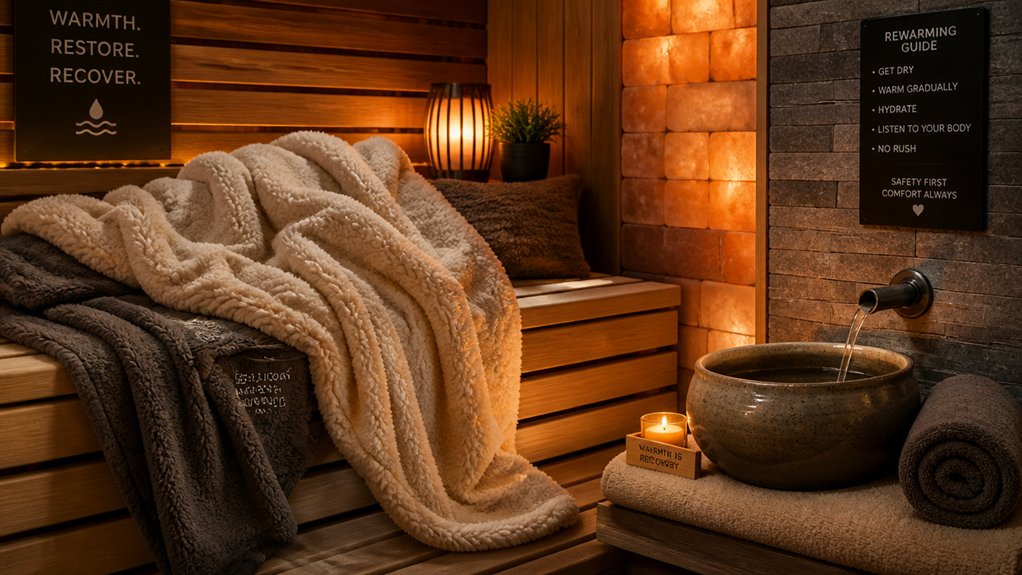
To guarantee a safe and effective rewarming process after a cold water plunge, set up a cozy, controlled space that promotes gradual temperature recovery. Ensure the room stays between 68-72°F to facilitate gentle rewarming, minimizing abrupt temperature changes that could stress the body or trigger hypothermia. Prepare a comfortable, quiet resting area with easy access to warm blankets and layered dry clothing like wool or synthetic base layers. Use low-setting heating pads on the torso—avoiding extremities—to aid internal warming without risks. Keep warm beverages and snacks nearby to support internal heat. This controlled environment helps your body gradually increase its core temperature, ensuring safe, steady recovery from immersion in cold water. Additionally, maintaining temperature regulation is crucial to prevent rapid heat loss and ensure your body’s natural rewarming process remains safe.
Gentle Movement and Rest to Boost Recovery
After a cold water plunge, gentle movement can play a key role in supporting your recovery. It helps boost circulation and encourages the body to gradually restore heat without overstressing your muscles or increasing hypothermia risk.
Light activities like slow walking or marching in place promote muscle recovery and prevent afterdrop, when body temperature dips further after exiting cold water. Incorporate brief stretches targeting major muscle groups to enhance blood flow and ease stiffness.
Always monitor for dizziness, nausea, or pain—stop immediately if symptoms arise. Rest in a warm, comfortable environment, combining rest with gentle movement to support your body’s natural recovery process:
- Feel empowered as your body gradually warms
- Reduce the risk of ongoing hypothermia
- Support safe recovery without strain
Why You Should Avoid Hot Showers or Hot Tubs After Cold Plunge
Jumping into a hot shower or hot tub immediately after a cold plunge can be risky because it causes rapid peripheral vasodilation, which can dangerously lower your blood pressure. This sudden change stresses your cardiovascular system, increasing the risk of fainting or shock.
Hot showers and hot tubs may also exacerbate afterdrop, prolonging the cooling of your core body temperature for up to 30 minutes. Instead, focus on gradual warming methods like layering dry clothing and sipping warm drinks. These actions support your body’s thermoregulatory system without overwhelming it.
Controlled rewarming in a warm environment guarantees safer recovery from cold exposure and lowers hypothermia risk, unlike abrupt heat exposure, which can impair your body’s natural response to cold.
How to Recognize Signs That Emergency Help Is Needed
Recognizing the signs that emergency help is needed is essential for ensuring safety after a cold plunge. Watch for symptoms indicating severe hypothermia or a dangerous situation. If you notice:
- Uncontrollable severe shivering, a sign that hypothermia is worsening
- Confusion, disorientation, or difficulty speaking, signaling a medical emergency
- Slow or irregular breathing, impaired consciousness, or if the person becomes unresponsive
These signs require immediate action. Loss of coordination or severe weakness are red flags, and if someone becomes unresponsive or unconscious, call emergency medical help immediately.
Swift recognition can prevent serious complications and save lives. Staying alert to these symptoms helps you respond quickly and get the care needed to stop hypothermia from becoming life-threatening.
Frequently Asked Questions
What Is the 50 50 50 Rule for Hypothermia?
The 50 50 50 rule advises you to prevent your core temperature from dropping below 50°F within 50 minutes after cold exposure. Act quickly by warming up, drying off, and monitoring your temperature to avoid hypothermia.
How to Warm up After a Cold Plunge?
You should immediately dry off thoroughly, change into warm, layered clothing, and sip warm non-alcoholic beverages slowly. Rest in a moderately warm environment, engage in gentle activity, and avoid rapid heating methods to safely raise your core temperature.
How Can Hypothermia Be Prevented?
You can prevent hypothermia by promptly drying off, layering with insulating and wind-resistant clothes, sitting on warm surfaces, sipping warm beverages slowly, and avoiding rapid warming methods like hot showers to guarantee gradual rewarming and safety after cold exposure.
Can You Get Hypothermia From a Polar Plunge?
Yes, you can get hypothermia from a polar plunge if you stay in cold water too long or don’t warm up properly afterward. Watch your exposure time, dry quickly, and warm up promptly to reduce the risk.