To optimize heat adaptation, try alternating 10-15 minute low-EMF sauna sessions with 1-5 minute cold immersions daily for about a week. Gradually increase heat exposure and keep cold dips consistent to improve circulation and tolerance. Track your core temperature and comfort levels to make safe adjustments. Incorporating these protocols consistently can enhance recovery and cardiovascular health—keep exploring for more effective strategies that suit your needs.
Why Use Hot–Cold Alternating Protocols for Heat Adaptation?
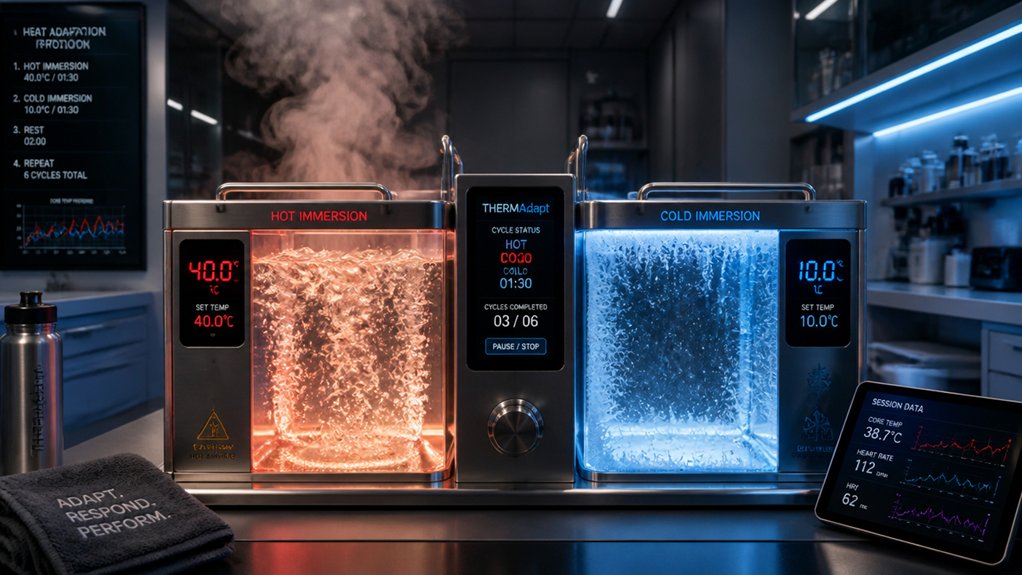
Have you ever wondered why alternating hot and cold exposure can boost heat adaptation? It’s because alternating hot-cold protocols accelerate heat acclimation by promoting beneficial physiological adaptations.
Alternating hot and cold exposure accelerates heat adaptation through beneficial physiological changes.
When you experience heat exposure, your body adjusts thermoregulatory control, reducing cardiovascular strain over time. Cold immersion following heat sessions enhances recovery, decreases inflammation, and boosts circulation, helping your body handle heat stress more efficiently.
These contrasting stimuli stimulate vascular responsiveness and strengthen your body’s ability to regulate temperature. Using hot-cold protocols enables more frequent heat exposure with less risk of overreaching or adverse effects, making it safer and more effective.
Additionally, cold immersion encourages the expression of heat shock proteins, which contribute to better heat tolerance while supporting overall recovery.
Temperature regulation is further optimized through these protocols, improving your body’s resilience to heat stress.
How to Design an Effective Hot–Cold Cycling Routine
Designing an effective hot–cold cycling routine involves balancing duration, frequency, and recovery to optimize both heat acclimation and safety. You should start with heat exposure sessions lasting 10-15 minutes in a hot environment, gradually increasing to 20-30 minutes to boost physiological adaptation, like increasing sweat rate and improving skin blood flow. Incorporating low EMF sauna sessions can further enhance safety during frequent contrast therapy. Repeated exposure over consecutive days enhances heat tolerance and recovery efficiency. Immediately following heat sessions, cold immersion for 1-5 minutes helps reduce cardiovascular strain and reinforces thermoregulatory responses. Incorporate cold plunges often enough—about 7 days straight—to accelerate heat acclimation, but allow enough recovery to avoid overstressing your body. Proper hydration and electrolyte management are vital for consistent heat stress without risking injury or fatigue.
What Are the Best Cold Exposure Techniques for Recovery and Adaptation?
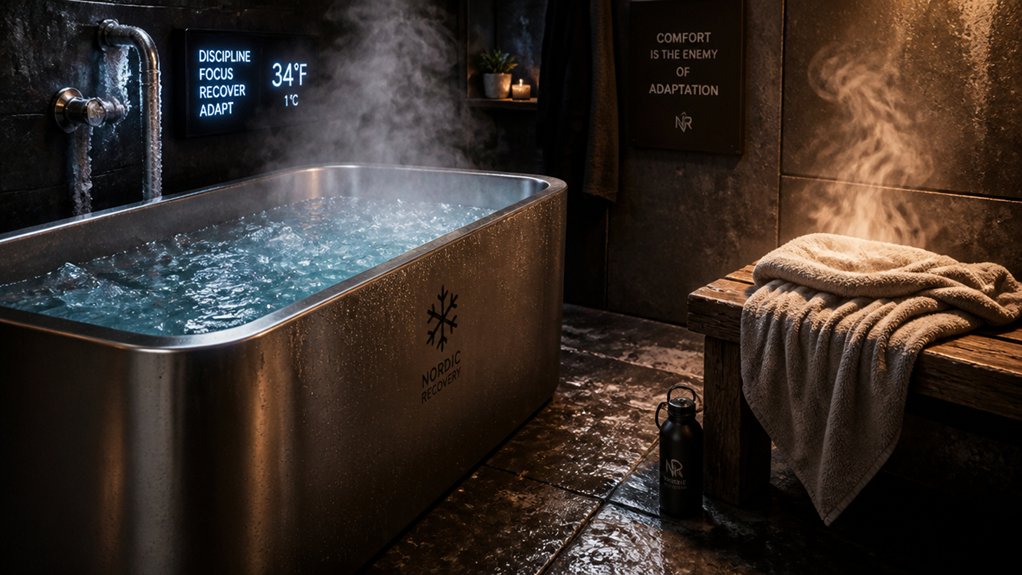
What’re the most effective cold exposure techniques for supporting recovery and adaptation? Short cold plunges or ice water immersion after heat sessions help reduce inflammation, muscle soreness, and physiological strain. These exposures, lasting 1–5 minutes, rapidly lower core temperature and stimulate vasoconstriction, promoting efficient circulatory dynamics.
Cold therapy enhances recovery of cardiovascular parameters like heart rate and blood pressure by promoting vasodilation after initial vasoconstriction, maximizing circulatory responses. Additionally, cold exposure supports heat acclimatization by managing thermal stress and improving overall tolerance to hot-cold training.
Consistent application of these techniques accelerates recovery, strengthens cardiovascular resilience, and enhances heat and cold adaptation. To maximize benefits, incorporate cold immersion post-exercise or sauna for peak recovery and physiological adaptation.
- Ice water immersion for rapid core temperature reduction
- Cold plunges after heat sessions
- Short duration cold showers
- Controlled cryotherapy sessions
- Cold bath protocols aligned with heat exposure
How to Monitor Your Hot–Cold Protocol and Make Adjustments
To effectively monitor your hot–cold protocol, paying close attention to key physiological and subjective responses is essential. Track your core temperature and heart rate during hot exposures to guarantee safe heat stress levels, aiming for steady elevations without excessive strain. A well-calibrated temperature control system can help maintain precise and consistent thermal conditions throughout your sessions. Observe sweat onset timing and volume; earlier sweating and increased output indicate progress in heat acclimatization. After cold plunges, assess perceived exertion, thermal comfort, and recovery quality to prevent overtraining. Regularly check hydration status and fluid balance, adjusting fluid intake and electrolyte replacement as needed. Modify the duration and intensity of heat and cold exposures based on these responses, progressing gradually—no more than 20% increase per session—to optimize adaptation while maintaining safety.
How to Incorporate Hot–Cold Protocols Into Your Overall Heat Acclimation Plan
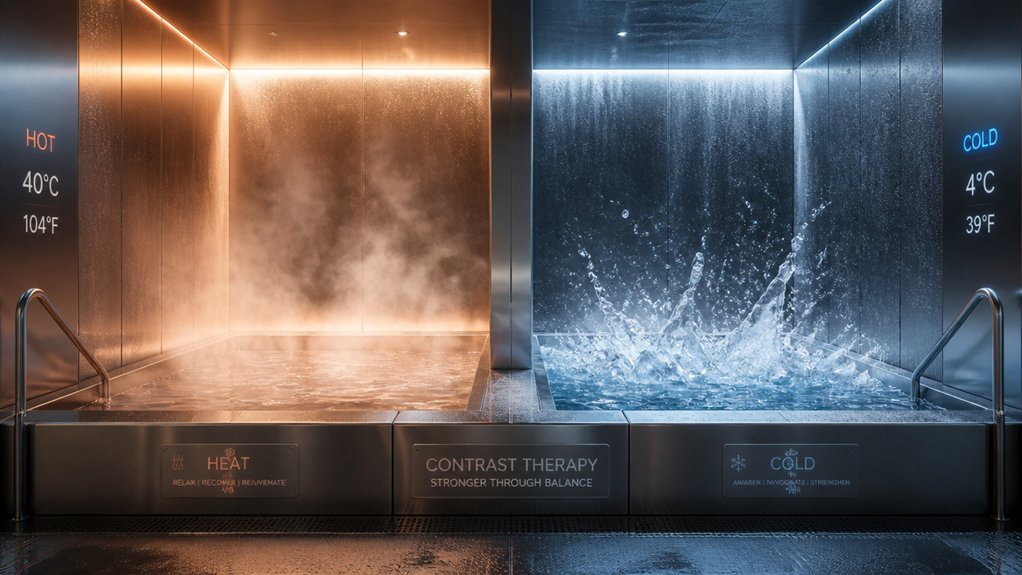
Incorporating hot–cold protocols into your heat acclimation plan can substantially enhance your physiological adaptations. End each heat session—such as sauna or hot water immersion—with a cold plunge of 1-5 minutes to boost recovery and extend euphoria effects for up to an hour. Schedule alternating hot and cold exposures daily over 7-14 days to optimize thermoregulation and cardiovascular function.
Use cold plunges after heat exposure to reduce inflammation, support fluid balance, and sustain consistent heat exposure. Gradually increase heat duration up to 30 minutes while keeping cold immersion times steady, balancing thermal stress and recovery. These protocols serve as a supportive tool to enhance sweat response, accelerate adaptation, and improve subjective comfort during heat stress.
- Enhance recovery through cold plunges after heat exposure
- Sequence hot and cold sessions daily for adaptation
- Gradually extend heat exposure to improve thermoregulation
- Use cold immersion to support cardiovascular stability
- Maintain consistent cold durations for balanced thermal stress
Frequently Asked Questions
What Is the 20 Rule for Acclimatization in Hot Conditions?
The 20 Rule for acclimatization in hot conditions advises that new workers start with no more than 20% of full heat exposure on day one, then increase by 20% daily, helping your body adapt safely over about a week or two.
How to Acclimate to Cold Faster?
You can acclimate faster by gradually increasing cold exposure duration, practicing repeated short immersions at 10–15°C, incorporating sauna sessions afterward, and maintaining consistent, moderate cold stress daily or every other day, reducing thermal discomfort and boosting cold tolerance efficiently.
What Is the Heat Acclimation Protocol?
You should train in heat daily for 7 to 14 days, gradually increasing session duration and intensity. Use active or passive methods, and include cold exposure afterward to boost recovery and sustain adaptation benefits safely and effectively.
How Long Does It Take Your Body to Acclimate to Cold Weather?
Your body typically acclimates to cold weather within 1 to 2 weeks of consistent exposure, with full adaptations developing over 3 to 6 weeks. Regular cold exposure improves blood flow, shivering, and overall cold tolerance.