
For women, the recommended cold plunge temperature range is between 50ºF and 59ºF (10ºC to 15ºC). This range helps activate metabolism and support hormonal balance safely. Beginners should start around 55ºF to 59ºF, immersing for 1–2 minutes, and gradually reduce the temperature as they adapt. Avoid plunges below 50ºF, which can cause excessive stress and disrupt hormones. Staying within this safe zone maximizes benefits while minimizing risks—learn more about optimizing your cold plunge routine.
What Are the Best Cold Plunge Temperatures for Women?
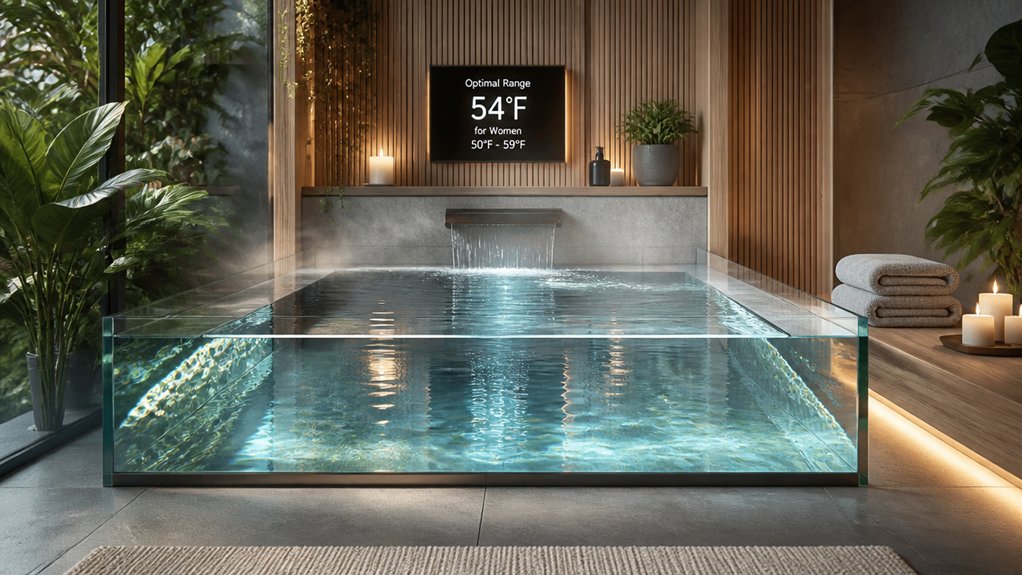
What’re the best cold plunge temperatures for women? For a safe and beneficial women cold plunge, aim for a temperature range of 50ºF to 59ºF (10ºC to 15ºC). This moderate temperature balances metabolic activation without causing excessive stress or hormonal disruption. Additionally, choosing a tub with durability features can help maintain consistent temperatures and ensure safety during use. During the luteal phase of your cycle, you might notice increased cold sensitivity, so it’s wise to prefer slightly warmer plunges around 55ºF to 59ºF or limit immersion time. Avoid plunges below 39ºF (4ºC) to prevent cortisol spikes and hormonal imbalance. Typically, a women’s cold plunge protocol involves immersing for 2–5 minutes at about 57–59ºF, three to four times weekly. Be mindful of how your body responds, especially during different cycle phases.
How Do Women’s Bodies Respond to Different Cold Temperatures?
When exposed to cold, your body responds quickly by constricting blood vessels, which can cause your core temperature to drop more rapidly than men’s. Hormones like estrogen and progesterone influence this process, making your reaction vary depending on your cycle phase. Cooler temperatures trigger stress responses, potentially disrupting your hormones and appetite for longer or intense plunges. Incorporating adaptogens into your routine may help support your body’s resilience to cold stress and stabilize hormonal fluctuations.
Vasoconstriction and Temperature Drop
Women respond to cold exposure by vasoconstricting their blood vessels more quickly than men, which reduces blood flow to the skin and helps conserve core temperature. During a cold plunge, this rapid vasoconstriction limits heat loss but also causes a sharper drop in core temperature, especially in certain phases of the menstrual cycle. In the luteal phase, when baseline temperature is higher by 0.5–1°F, women experience even greater core temperature fluctuations. Extreme cold near 4°C (39°F) activates the sympathetic nervous system intensely, raising cortisol levels and increasing stress. Moderate cold immersion at around 15°C (59°F) maintains a balance, promoting thermogenesis without excessive vasoconstriction or core cooling. Additionally, the use of high-powered chillers that rapidly cool water to under 50°F can impact how effectively these physiological responses occur. These responses highlight how women’s bodies adapt uniquely to varying cold exposures.
Hormonal Response Variations
Cold exposure triggers complex hormonal responses in women that vary with temperature intensity and menstrual cycle phase. During cold exposure, especially with more extreme temperatures around 4°C (39°F), your sympathetic nervous system activates sharply, leading to a cortisol spike that increases stress.
If you’re in the luteal phase, your body responds with faster vasoconstriction and a greater drop in core temperature. Moderate cold immersion at 14–15°C (57–59°F) helps balance norepinephrine release and thermogenesis without excessive hormonal stress.
But very cold plunges can elevate cortisol levels further and potentially suppress thyroid function, risking menstrual cycle disruptions with repeated use. Your estrogen and progesterone levels influence how your body reacts, affecting cold tolerance and recovery depending on your menstrual cycle phase. Additionally, the use of adaptogenic support may help modulate these hormonal fluctuations during cold exposure.
What Are Safe Starting Temperatures for Newcomers to Cold Plunging?

Are you wondering where to start with cold plunging to guarantee a safe and comfortable experience? For women new to cold plunges, it’s best to begin at warmer temperatures, around 55°F to 59°F (13°C to 15°C). These are considered the ideal cold plunge temperature range to help your body adjust safely without excessive stress. Starting with water treatments that maintain water quality and clarity can further enhance your comfort and safety during initial immersions.
Start with immersion durations of just 1 to 2 minutes to allow your body to adapt gradually. Staying within this moderate cold water temperature helps avoid sharp stress responses linked to colder water below 50°F (10°C).
How Can Women Adjust Cold Water Temperatures During Their Menstrual Cycle?
During different phases of your menstrual cycle, adjusting cold water temperatures can help optimize comfort and benefits. In the follicular phase, tolerating colder water—around 45ºF to 55ºF—boosts blood flow and supports neuroendocrine responses. During the luteal phase, warmer temperatures—55ºF to 59ºF—may reduce cortisol spikes and prevent thyroid suppression. Mid-menstrual phase, sticking to around 50ºF for 1-2 minutes, can relieve cramps and inflammation. To personalize your cold plunge, consider this guide:
| Menstrual Phase | Temperature Range | Duration |
|---|---|---|
| Follicular | 45ºF–55ºF | Up to 3 minutes |
| Mid-menstrual | Mid 50ºF | 1-2 minutes |
| Luteal | 55ºF–59ºF | Up to 2 minutes |
| Post-menstrual | Return to usual | As comfortable |
Adjust temperatures based on how your body responds, aiming for balanced neuroendocrine responses and sustained benefits. Enhancing your understanding of insulation and temperature retention can further optimize your recovery.
What Temperatures Offer the Best Balance of Benefits and Safety?
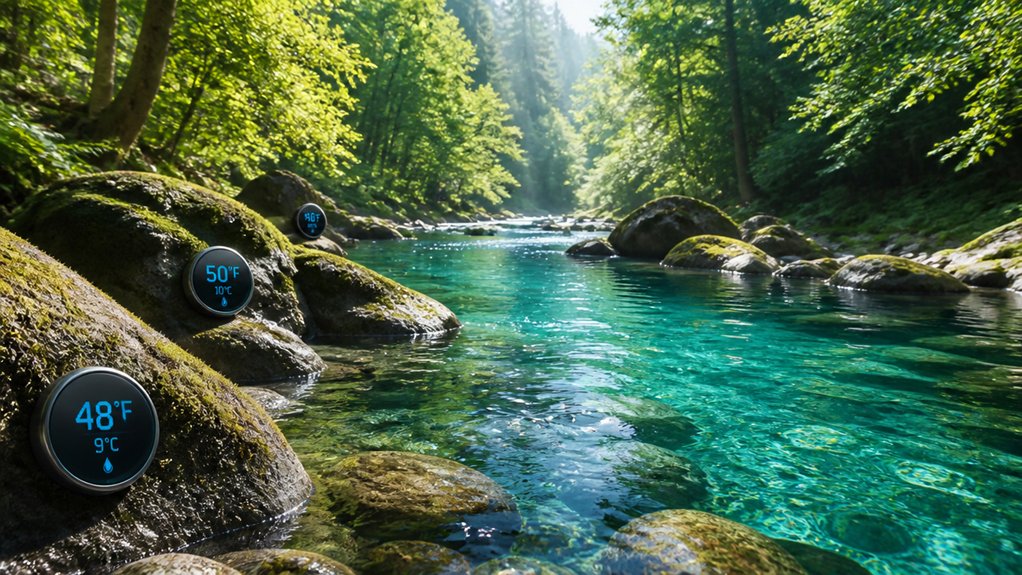
Finding the ideal temperature for a cold plunge involves balancing the physical and hormonal benefits with safety concerns. For women, the best range is typically between 50°F to 59°F (10°C to 15°C). This zone activates brown fat, boosts norepinephrine release, and enhances metabolic benefits without causing excessive stress.
Temperatures in this range also help avoid sharp cortisol spikes and thyroid suppression that occur at near-freezing levels. Women often prefer the warmer end of this spectrum, especially during their luteal phase, when increased core temperature makes cold stress more tolerable. Sessions of 2–5 minutes at these temperatures maximize benefits like recovery and thermogenesis, while minimizing risks such as hormonal disruption or intense sympathetic activation.
Additionally, a proper insulation in budget tubs helps maintain these temperatures more consistently, making cold plunging safer and more effective.
How Do You Recognize When Cold Is Too Cold for You? Signs to Watch For
Knowing when the cold is too cold for you is essential to safe cold plunge practice. Signs include uncontrollable shivering, which indicates your body is struggling to cope and the session should end immediately to prevent hypothermia.
Numbness, dizziness, confusion, or clumsiness during or after a cold plunge reveal excessive cold stress and signal it’s time to warm up.
Women may experience an exaggerated cortisol spike and sharper sympathetic activation at water temperatures below 50°F (10°C), pointing to overexposure.
Feeling intensely cold in the extremities or noticing your core temperature dropping rapidly, especially during the luteal phase, suggests the cold is too intense.
Persistent irritability, fatigue, or sleep issues following a plunge also indicate you’ve exceeded your individual tolerance limit.
How to Safely Acclimate to Colder Water Temperatures Over Time
To safely adapt to colder water, start with moderate temperatures around 55ºF to 59ºF for 1–2 minutes. Keep a close eye on how your body responds and gradually extend your time and lower the temperature as comfort and tolerance increase. Consistent practice, about 3–4 times weekly, helps your body adjust safely without overtaxing your system. Incorporating proper water treatment and ensuring your plunge setup is well-insulated can also support safer cold exposure routines.
Gradual Temperature Reduction
Easing into colder water gradually helps your body adapt safely and effectively. Begin with a warm cold plunge around 55ºF to 59ºF (13ºC to 15ºC) for 1–2 minutes to build initial tolerance.
Then, gradually lower the temperature in small steps of 1–2ºF over several sessions, paying close attention to how your body responds. If you attempt colder temperatures below 50ºF (10ºC), shorten your session to 1–2 minutes to limit stress and avoid sharp cortisol spikes.
Consistency matters; aim for moderate cold immersion around 14–15ºC, 3–4 times weekly, gradually increasing tolerance over time. Adjust the timing and temperature based on your menstrual cycle, and listen to your body to avoid excessive hormonal or stress responses during cold plunge practices.
Monitor Body Responses
How can you guarantee safe acclimation to colder water over time? Women report closely monitoring their body responses during cold plunging.
Starting with moderate cold around 55ºF to 59ºF (13ºC–15ºC) for 1–2 minutes allows your body to adjust gradually. Pay attention to signs like shivering, dizziness, or numbness, which indicate your stress response is increasing too much.
As you lower the temperature to 50ºF to 55ºF (10ºC–13ºC), increase your duration carefully up to 3–5 minutes to build tolerance without overstressing your system.
Be mindful of your menstrual cycle, reducing exposure during the luteal phase. Consistent, moderate cold plunging 3–4 times weekly helps you adapt safely while avoiding hormonal disruptions.
Consistent Practice Approach
Establishing a consistent practice routine is key to safely acclimating your body to colder water over time. When doing a cold plunge, focus on a gradual progression in temperature and duration.
Start with moderate temps around 55°F to 59°F (13°C to 15°C) for 1–2 minutes to build a foundation. Consistently repeat the cold plunge 3–4 times weekly, which helps develop cold tolerance safely.
As your body adapts, slowly lower the temperature to 50°F to 55°F (10°C to 13°C), increasing session time up to 3–5 minutes. Maintaining this consistent schedule encourages hormonal balance and metabolic benefits while minimizing stress.
Remember to listen to your body and adapt your routine based on how you feel, ensuring a safe and effective acclimation process.
Why Should Women Avoid Cold Plunges Below 50°F (10°C)? Risks and Precautions
Exposing women to cold plunges below 50°F (10°C) can pose significant health risks because their nervous system reacts more intensely to extreme cold. This heightened response triggers a sharper sympathetic activation and cortisol spikes, increasing stress levels.
Women face greater risks below 50°F due to heightened nervous system responses and stress hormone spikes.
Additionally, extreme cold exposure can cause:
- Faster vasoconstriction and greater core temperature drops, leading to physiological strain.
- Disruption of hormonal balance, especially during the luteal phase, when cortisol levels are already elevated.
- Potential thyroid suppression and menstrual cycle disturbances due to neuroendocrine sensitivity.
Because of these risks, women need to avoid plunges below 50°F (10°C) to prevent excessive stress, hormonal imbalance, and discomfort. Staying within moderate ranges guarantees safety while still reaping cold plunge benefits.
Tips for Maintaining Safe and Effective Cold Plunge Temperatures
To guarantee you get the benefits of cold therapy safely, maintaining a consistent and appropriate plunge temperature is essential.
When engaging in cold-water immersion, aim for a cold plunge between 50°F and 59°F (10°C to 15°C), which helps prevent excessive cortisol spikes. Using controlled chilling systems or tubs with steady temperature control guarantees you avoid fluctuations that could increase stress or risk.
Keep your immersion time between 2 to 5 minutes, stopping before shivering becomes uncontrollable.
During different phases of your menstrual cycle, adjust the temperature or duration—warmer or shorter plunges during the luteal phase help minimize hormonal disruptions.
Avoid near-freezing water below 39°F (4°C), as it can trigger sharp sympathetic activation and thyroid suppression, compromising safety and results.
Frequently Asked Questions
Is 42 Degrees Too Cold for a Cold Plunge?
Yes, 42°F is too cold for a cold plunge if you’re a woman, especially without prior acclimatization. It can cause hormonal stress and health risks, so start with warmer temperatures around 55°F to 59°F for safety.
What Temperature Is Joe Rogan’s Cold Plunge?
Joe Rogan’s cold plunge is usually set around 38°F to 40°F, which is quite cold. You’re exposing yourself to intense physiological stress, rapid vasoconstriction, and mental focus, but it’s not generally recommended for women due to potential risks.
Are Cold Plunges Good for Females?
Yes, cold plunges can be good for women when kept at moderate temperatures around 50–59°F. They help with inflammation, menstrual comfort, and metabolic health, but you should avoid extreme cold and tailor sessions to your hormonal cycle.
Can You Overdo Cold Plunges?
Yes, you can overdo cold plunges if you exceed recommended durations or go too cold, causing hormonal imbalances, hypothermia risk, and blunted recovery signals. Limit your plunges to moderate temps and durations for safety and benefits.