To reduce inflammation, aim for cold plunge temperatures between 50-59°F, which safely maximize vasoconstriction and decrease swelling. Staying within this range helps you avoid frostbite and other injuries caused by colder water below 50°F or prolonged exposure. Limit sessions to 1-5 minutes to get the benefits without risking hypothermia. Proper techniques and gradual acclimation are key. Keep exploring for detailed tips on creating a safe, effective cold therapy routine.
What You Need to Know Before Trying Cold Plunges

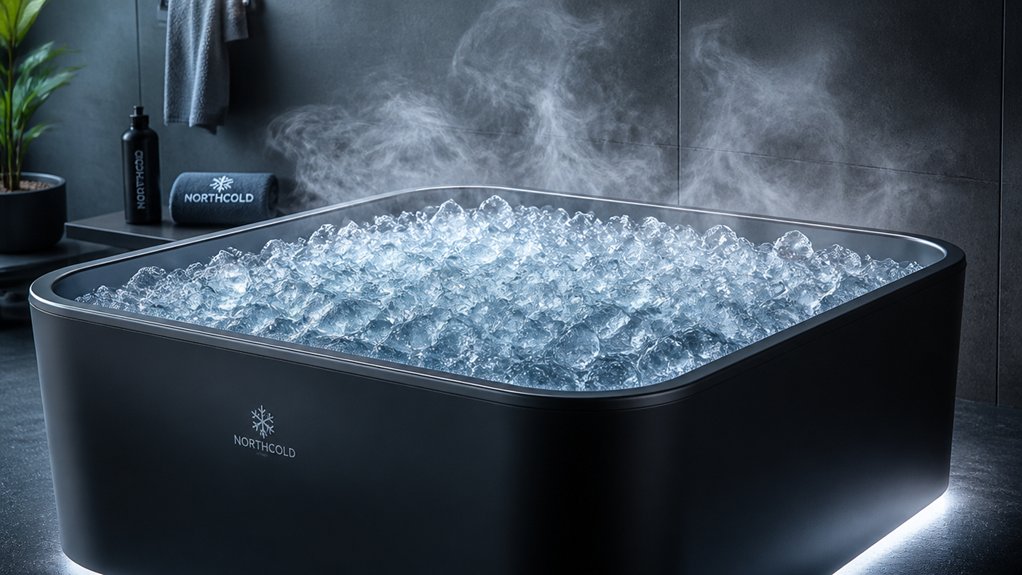
Are you considering trying cold plunges to reduce inflammation? Cold water immersion can constrict blood vessels and decrease swelling, but knowing the right approach is essential. Using a properly insulated cold plunge tub can help maintain consistent temperatures and improve safety during your sessions. The ideal water temperature for reducing inflammation is between 50-59°F (10-15°C). Going colder increases risks like hypothermia, frostbite, and nerve damage, especially if you stay submerged for over 5 minutes. Beginners should start with shorter sessions of 1-3 minutes at higher temperatures to safely adapt.
If you have heart issues, high blood pressure, or circulation concerns, consult your health care provider before trying cold plunges. Proper timing and temperature are key—missteps can negate benefits or cause harm. Always prioritize safety and listen to your body during cold water immersion.
Benefits of Cold Water Immersion for Muscle Recovery and Inflammation
Cold water immersion helps reduce muscle soreness after workouts by limiting inflammation and swelling. When you immerse in cold water, blood vessels constrict, which minimizes tissue damage and speeds up recovery. Regularly using cold plunges can lower inflammation markers, helping you bounce back faster and feel less sore. Incorporating consistent water treatment solutions can enhance water quality, further supporting muscle recovery and reducing skin irritation.
Reduces Muscle Soreness
Immersing yourself in cold water after intense exercise can greatly reduce muscle soreness by constricting blood vessels and lowering inflammation. Cold-water immersion at temperatures between 50-59°F (10-15°C) is effective in decreasing muscle soreness and speeding recovery.
By reducing inflammation, cold water helps minimize delayed onset muscle soreness (DOMS) and limits exercise-induced muscle damage. Keep immersion sessions between 1-5 minutes to maximize benefits and avoid risks like hypothermia or frostbite.
Using cold water in this way decreases blood flow and inflammatory responses in affected muscles, which lessens swelling and discomfort. Additionally, proper preparation with tools like foam rollers can optimize muscle flexibility and aid in recovery before cold immersion. Regular cold-water immersion after workouts can enhance recovery, allowing you to return to training faster with reduced soreness and improved muscle function.
Limits Inflammation Response
After reducing overall muscle soreness with cold water immersion, you also benefit from its ability to limit the body’s inflammation response. Cold water causes blood vessels to constrict, effectively reducing blood flow to affected areas and decreasing inflammation.
Immersing in cold water between 50-59°F (10-15°C) for 1 to 5 minutes is ideal for managing post-exercise inflammation without increasing the risk of cold-related injuries like frostbite. Going below this temperature threshold offers no significant extra benefits and may elevate risks.
Regular cold plunge therapy can help decrease muscle damage and inflammation, supporting faster recovery. Remember to warm up afterward to restore normal circulation and optimize the anti-inflammatory effects while avoiding adverse cold exposure reactions.
What Is the Best Cold Water Temperature for Cold Plunges?

Have you ever wondered what temperature is best for cold plunges to effectively reduce inflammation? The ideal cold water temperature ranges between 50°F and 59°F (10°C to 15°C). Water within this range effectively constricts blood vessels, which helps lower swelling and muscle inflammation.
Proper refrigeration systems, like the smart cooling features found in premium tubs, ensure consistent and precise water temperatures for optimal benefits.
If the water gets colder than 50°F, risks like hypothermia and frostbite increase, especially with longer exposure. For beginners, starting at the warmer end of the range—around 55°F to 59°F—allows safe adaptation to cold therapy.
Maintaining these temperatures for 1 to 5 minutes maximizes the anti-inflammatory effects without compromising your safety. Sticking within this optimal range guarantees you gain the benefits of cold water immersion while avoiding potential hazards.
How Cold Water Causes Blood Vessel Constriction and Reduces Swelling
When you expose your body to cold water between 50-59°F (10-15°C), it triggers vasoconstriction, which is the narrowing of blood vessels. Cold water constricts your blood vessels, slowing blood flow to the affected areas. This constriction reduces inflammation by limiting fluid leakage into surrounding tissues. As blood vessels constrict, swelling decreases because less inflammatory fluid escapes into the tissues. Lowering tissue temperature through cold exposure also helps limit the inflammatory response, reducing the activity of immune cells and metabolic processes. This process effectively minimizes swelling and accelerates recovery. Measuring surface temperature helps ensure optimal cold exposure and safe, effective treatment. Once rewarming begins, blood vessels reopen, aiding the removal of inflammatory byproducts. Overall, cold water constricts blood vessels, which plays a key role in reducing inflammation and swelling after injury or intense activity.
How to Start Cold Water Immersion Safely and Gradually

Starting cold water immersion safely involves easing your body into the experience gradually to prevent shock or discomfort. If cold plunges are unsafe for you, don’t push past your limits. Begin with short durations of 30 seconds to 1 minute, and gradually increase to a maximum of 5 minutes as your tolerance improves. Use water temperatures in the beginner range of 50-59°F (10-15°C) to minimize risks like hypothermia. Start by submerging limbs first, allowing your body to adapt safely to the cold stimulus. Pay close attention to how you feel, and exit the water immediately if you experience intense discomfort, dizziness, or numbness. Incorporate proper insulation and a stable setup to maintain consistent temperatures (materials and insulation are crucial). Rewarm slowly afterward, avoiding hot tubs or saunas right after to prevent shock, and keep your core body temperature stable.
How Starting Warm Can Help Your Body Tolerate Cold Temperatures
Beginning your cold water immersion at slightly warmer temperatures, around 55–60°F (13–15°C), helps your body adjust more comfortably to colder conditions. This gradual warm-to-cold progression allows your nervous system to better regulate blood vessels, reducing shock during exposure to cold water. Adding the use of insulation layers further enhances thermal retention and comfort during initial immersions. Starting with limbs first before submerging your entire body eases the shift and enhances your overall cold tolerance. It also helps to lower your core body temperature gradually, preventing sudden stress responses. Shorter immersions at warmer temperatures build confidence and allow your body to adapt safely. Over time, this approach minimizes hyperventilation and cardiovascular strain, making colder plunges more tolerable. With patience, your body learns to handle colder water more efficiently, aiding in inflammation reduction and overall recovery.
Ideal Duration for Cold Plunges to Reduce Inflammation
To effectively reduce inflammation through cold plunges, aim for a duration between 1 to 5 minutes. This exposure maximizes the cold plunge benefits without risking hypothermia or frostbite.
For beginners, starting with shorter immersion times, like 30 seconds to 1 minute, helps gradually build tolerance. As you adapt, gradually increase your immersion to 3 to 5 minutes to optimize inflammation reduction safely.
Longer sessions beyond 5 minutes may impair muscle recovery and lead to numbness or impaired motor control. Remember, immediate rewarming after your cold plunge is essential to restore body temperature and maximize anti-inflammatory effects. Consistent cold exposure can also promote cold therapy efficiency, enhancing overall joint recovery.
Following these guidelines guarantees you get the most out of your cold immersion without unnecessary risks.
How Contrast Therapy Works: Alternating Hot and Cold Water
Contrast therapy works by alternating between hot and cold water immersions to manipulate your blood vessels and enhance recovery. The hot water causes vasodilation, increasing blood flow and relaxing muscles, while cold water induces vasoconstriction, reducing inflammation and swelling. This cycle creates a “vascular workout” that promotes better blood flow regulation and speeds muscle recovery. When you switch between hot and cold, your blood vessels expand and contract, stimulating circulation. This process helps flush out metabolic waste and brings fresh nutrients to tissues. Use the table below to understand the effects:
| Hot Water | Cold Water |
|---|---|
| Dilates blood vessels | Constricts blood vessels |
| Promotes relaxation | Reduces inflammation |
| Boosts blood flow | Limits swelling |
Signs Your Body Is Reacting Negatively to Cold Water
If your body reacts negatively to cold water, you’ll notice clear signs that your exposure could be harmful. Persistent numbness or tingling in your limbs indicates excessive blood vessel constriction and nerve irritation.
Numbness or tingling in your limbs signals potential cold exposure danger and requires immediate attention.
If your skin turns pale, blue, or blistered, it signals frostbite or skin damage, requiring immediate exit. Dizziness, lightheadedness, or fainting are warning signs that your cardiovascular and respiratory systems are stressed, and you should get out promptly.
Uncontrolled or rapid breathing suggests the body is struggling to regulate oxygen levels. Additionally, if you experience muscle cramps or impaired motor control, it indicates negative neuromuscular responses.
Recognizing these signs helps prevent serious issues like hypothermia or tissue damage, ensuring safe cold water exposure.
Safety Tips for Cold Water Immersion Outdoors
When planning an outdoor cold plunge, choose a safe, still water location away from currents or hazards.
Always monitor water temperature and keep it between 50-59°F, and have warm clothing and emergency supplies nearby.
Stay alert to your body’s signals and exit immediately if you feel numbness, dizziness, or distress to prevent cold-related injuries.
Choose Safe Locations
Choosing a safe location for cold water immersion is essential to prevent accidents and guarantee a positive experience. When cold plunging, pick spots free from strong currents, underwater hazards, and slippery entry points. Confirm easy and quick exit routes to avoid being trapped or swept downstream, reducing risks to your blood vessels and lowering the chance of hypothermia.
Always measure the water temperature beforehand, aiming for safe plunge temperatures between 50-59°F (10-15°C), especially for beginners. Never plunge alone in isolated areas—having a supervision partner can make a critical difference. Prepare warm clothing and towels nearby to rewarm immediately after exiting.
Prioritizing safety assures that cold plunging remains beneficial without unnecessary hazards or discomfort.
- Avoid areas with strong currents or underwater hazards
- Check water temperatures before plunging
- Use locations with easy, quick exit routes
- Don’t go alone; have a supervision partner
- Keep warm clothing nearby to prevent hypothermia
Monitor Water Temperature
Did you know that accurately monitoring water temperature is essential for a safe and effective cold plunge outdoors? When immersing in icy water, measuring the water temperature helps protect your blood vessels and prevent frostbite.
Aim for a temperature between 50-59°F (10-15°C) to reduce inflammation safely. Avoid plunging into water colder than 40°F (4°C), as it can lead to excessive body heat loss and damage to skin or nerves.
Use a waterproof thermometer to get precise readings, especially in natural water bodies where conditions fluctuate. Keep a close eye on your body’s reactions—stop immediately if you experience numbness, intense shivering, or dizziness.
Proper monitoring guarantees you stay safe while enjoying the benefits of cold water immersion outdoors.
Prepare for Emergencies
Preparing for emergencies is essential before you undertake outdoor cold water immersion. Knowing how to respond quickly can prevent serious injuries like frostbite or hypothermia.
Keep your immersion time short, ideally 1-5 minutes, and watch for signs like numbness, shivering, or disorientation, which signal you should exit immediately. Always check the water temperature; avoid plunging into water below 50°F (10°C) to reduce risk.
Never immerse alone—having a companion is vital for safety if you feel dizzy or faint. Keep warm clothing, towels, and a dry shelter nearby to rewarm quickly after exiting.
Stay clear of areas with strong currents or icy surfaces, which increase the chance of injury during your outdoor cold water immersion.
When to Consult a Healthcare Professional Before Cold Water Therapy
Knowing when to consult a healthcare professional before starting cold water therapy is essential, especially if you have underlying health conditions.
If you have blood pressure issues, heart disease, diabetes, or poor circulation, you should definitely speak with a healthcare provider first. Cold water therapy can elevate blood pressure and strain your heart, which might be risky for vulnerable individuals. Pregnant women or those with autoimmune or respiratory conditions should also seek medical advice to avoid adverse effects.
A healthcare professional can advise on safe plunge temperatures, usually between 50–59°F for beginners, and warn against going below 40°F.
If you experience symptoms like dizziness, hyperventilation, or excessive shivering, stop immediately and consult a healthcare provider to guarantee safety.
Common Mistakes That Lead to Cold-Related Injuries
Ignoring safe temperature limits or stretching your session too long can quickly lead to frostbite or hypothermia. If you don’t pay attention to early warning signs like numbness or dizziness, you risk serious injury.
It’s essential to follow recommended guidelines to avoid these common mistakes.
Ignoring Temperature Limits
Failing to adhere to recommended temperature limits can lead to serious cold-related injuries during cold therapy. When you ignore safe temperature ranges, you risk prolonging exposure to cold, which increases the chance of frostbite or hypothermia.
Staying too long in an ice bath below 40°F accelerates body heat loss, causing numbness and nerve damage. Using icy water without monitoring duration often results in impaired motor control and dizziness, elevating accident risk.
Overstepping temperature boundaries also suppresses your body’s warning signals, making injuries more likely. Be cautious of the following mistakes:
- Immersing in water below 40°F
- Staying longer than 5 minutes at unsafe temperatures
- Ignoring your body’s discomfort signals
- Skipping immediate exit upon discomfort
- Failing to monitor water temperature during cold therapy
Overextending Session Duration
Exceeding the recommended duration for cold plunge sessions can quickly lead to serious injuries. Overly long ice baths, especially beyond 5 minutes, heighten the risk of hypothermia, frostbite, and nerve damage. Staying in the water too long impairs circulation, causing numbness, muscle cramps, and reduced motor control, increasing injury chances during or afterward. Additionally, prolonged exposure can trigger hyperventilation or dizziness, risking fainting or drowning. Always follow beginner protocols: start with 30 seconds to 1 minute. To visualize, consider this table:
| Cold Exposure | Potential Risks |
|---|---|
| Overly long sessions | Frostbite, hypothermia |
| Low temperatures | Nerve damage, skin injury |
| Extended duration | Dizziness, muscle cramps |
Know your limits to stay safe during cold plunges.
Creating a Safe and Effective Cold Plunge Routine at Home
Creating a safe and effective cold plunge routine at home involves careful planning and monitoring to maximize benefits while minimizing risks. To do so, maintain water temperatures between 50-59°F (10-15°C), as cold water can lower inflammation and soreness effectively without risking frostbite.
Start with plunges lasting 1-3 minutes for beginners, gradually increasing to 5 minutes as your tolerance improves. Always use a thermometer to check water temperature, ensuring it stays above 50°F. After each session, dry thoroughly and put on warm clothes to rewarm safely, preventing prolonged cold exposure.
Limit your plunges to 1-2 times per week initially to reduce cardiovascular stress and allow your body to adapt. Consistency and careful monitoring are key for safe, effective results.
Combining Sauna and Cold Plunge: Safe Temperature Strategies
Combining sauna sessions with cold plunge therapy can effectively reduce inflammation, but it’s crucial to follow safe temperature strategies.
Keep sauna temperatures between 150°F and 180°F to avoid overheating while promoting circulation. After the sauna, submerge in a cold plunge with water temperatures ideally between 50°F and 59°F. Limit cold plunge immersion to 1-3 minutes to prevent hypothermia and frostbite, especially for beginners.
Start with warmer cold plunge temperatures around 55-59°F and gradually lower as your cold tolerance improves. Avoid water below 50°F, as extreme cold can strain your cardiovascular system and cause tissue damage.
Always rewarm gradually after each session to help your body stabilize, ensuring an effective anti-inflammatory response without risking shock or injury.
Final Tips for a Safe and Effective Cold Water Therapy Practice
To guarantee your cold water therapy is both safe and effective, it’s important to follow key final tips. First, always maintain cold plunge water temperature between 50-59°F (10-15°C) to reduce inflammation safely.
Limit immersion duration to 1-5 minutes, especially for beginners, to prevent hypothermia and avoid plunges that may cause frostbite. Gradually acclimate by starting with limb submersion before full-body immersions.
Keep a close eye on your body’s reactions—if you experience discomfort, dizziness, or numbness, exit immediately. Rewarm slowly afterward, avoiding hot tubs or saunas right away to support safe temperature regulation.
- Use only cold-water plungers designed for safety
- Never exceed recommended immersion time
- Monitor water temperature regularly
- Start with shorter, controlled plunges
- Rewarm gradually after each session
Frequently Asked Questions
What Temperature Is a Cold Plunge for Inflammation?
A cold plunge for inflammation should be between 50–59°F (10–15°C). Stay within this range to effectively reduce swelling, but avoid going lower to prevent hypothermia or frostbite, especially if you’re new to cold plunges.
What Does a 30 Second Cold Shower Do?
A 30-second cold shower constricts your blood vessels, reduces inflammation, and boosts your immune response. It also lowers stress hormones, increases alertness, and enhances mood by raising dopamine levels, all while helping your body adapt gradually.
What Is Better for Inflammation, Sauna or Cold Plunge?
Cold plunges are better for immediate inflammation reduction because they constrict blood vessels and lower swelling quickly. Saunas improve circulation over time, helping with long-term recovery, but aren’t as effective for rapid inflammation relief.
What Temperature Is Joe Rogan’s Cold Plunge?
Joe Rogan’s cold plunge is typically around 39-41°F (4-5°C). You should know it’s much colder than beginner ranges, requiring short 1-3 minute sessions to prevent hypothermia, and he gradually acclimates for safe, effective recovery.