To optimize recovery without impairing muscle growth, aim for cold water immersion 3-5 times a week at 10-15°C for 10-15 minutes, especially after endurance training or intense workouts. It’s best to do it within 1-2 hours post-exercise, but avoid immediate immersion after hypertrophy-focused sessions to prevent blunting gains. Adjust the frequency based on your soreness, fatigue levels, and training goals—keep learning how to fine-tune your routine for best results.
What Are the Benefits and Risks of Cold Water Immersion?
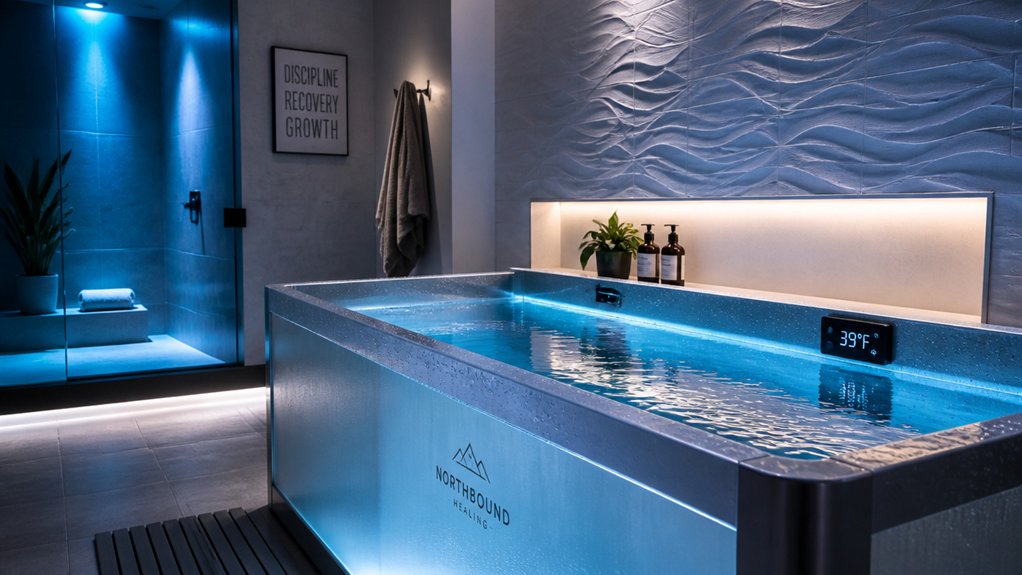
Have you ever wondered if cold water immersion (CWI) truly speeds up recovery or if it might hold you back? CWI at 10-15°C for 10-15 minutes after exercise helps reduce inflammation, muscle soreness, and supports recovery by causing vasoconstriction and slowing metabolism.
Cold water immersion at 10-15°C for 10-15 minutes can aid recovery by reducing inflammation and muscle soreness.
It can considerably lower delayed onset muscle soreness (DOMS) between 24-96 hours post-workout, easing pain by decreasing nociceptor activity and nerve conduction velocity.
However, frequent use of CWI, especially after resistance training, may blunt muscle protein synthesis and hypertrophic gains, mainly in non-elite athletes. Elite athletes often experience less interference, making CWI a useful recovery strategy during intense periods.
Be aware that individual responses vary, so personalize your cold water immersion routine to maximize benefits and minimize risks. Additionally, considering the materials and insulation of your cold plunge tub can help maintain consistent temperatures for optimal recovery.
What Factors Affect How Often You Should Use Cold Plunges?
Your ideal cold plunge frequency depends on several factors, including how your body responds to cold water and your specific training goals. The intensity and timing of your workouts also influence how often you should use cold plunges. By adjusting these variables, you can optimize recovery without hindering progress. Additionally, considering the water treatment solutions and maintenance routines can help ensure consistent water quality and safety for ongoing use.
Individual Response Variability
Since individual responses to cold water immersion (CWI) vary widely, it’s essential to customize your recovery plan based on your physiology and goals. Factors like body composition, such as higher subcutaneous fat or surface area to mass ratio, can influence how your body responds to cold plunges and how often you should use them.
Athletes, especially those in different training phases, may tolerate higher frequency, while non-athletes might need to reduce immersion sessions to avoid impairing muscle strength or hypertrophy. Player position and physical profile further impact responsiveness.
Your recovery goals—whether reducing soreness or boosting muscle growth—also shape ideal frequency. Recognizing individual variability guarantees you optimize benefits without risking adverse effects, tailoring cold water immersion to fit your unique needs.
Training Intensity and Goals
The frequency of cold water immersion (CWI) sessions largely depends on the intensity of your training and your specific goals. High-intensity training phases, for example, benefit from 3-5 sessions per week to effectively manage inflammation and reduce muscle soreness, aiding post-exercise recovery and minimizing recovery time.
If your focus is on hypertrophy, it’s wise to limit immediate post-resistance CWI or wait 4-6 hours to avoid blunting muscle protein synthesis. For endurance or sports performance goals, more frequent CWI can support in-season recovery without impairing adaptation.
Keep in mind that:
- High training intensity demands more frequent recovery strategies.
- Goals like hypertrophy may require delaying CWI to optimize muscle growth.
- Endurance training allows for increased use of cold water immersion without performance setbacks.
- Proper water treatment and hygiene maintenance, such as enzyme-based stabilizers and UV sanitation, ensure safe and effective recovery sessions with appropriate water quality.
Recovery Timing and Duration
Several factors influence how often you should use cold plunges for recovery, including the timing and duration of each session. Cold water immersion is most effective when performed within 1-2 hours post-workout, lasting 10-15 minutes at 10-15°C to optimize inflammation reduction and muscle soreness relief.
During the recovery phase, limiting immersion duration helps prevent potential interference with muscle adaptation, especially after resistance training aimed at hypertrophy. Additionally, the choice of recovery products, such as magnesium-based or arnica-containing creams, can enhance post-immersion muscle relief product ingredients, supporting optimal recovery routines.
For consistent recovery, most healthy individuals can safely perform cold plunge sessions 3-5 times weekly, with daily use during intensive training periods. Individual response and training goals also impact recovery timing; for example, athletes in-season may increase frequency, while those focused on muscle growth should delay cold immersion to avoid blunting anabolic signaling.
What Is the Optimal Frequency for Cold Water Immersion?
What’s the best frequency for cold water immersion (CWI) to maximize recovery without hindering progress? Generally, 3-5 sessions weekly strike a balance between reducing muscle soreness and inflammation while supporting muscle adaptations. Too frequent immersion, like daily sessions, may dampen protein synthesis and slow hypertrophy. To optimize benefits, schedule CWI within 1-2 hours after exercise for quick inflammation relief and soreness reduction. Incorporating temperature therapy capabilities into recovery routines can further enhance the efficacy of combined treatments. Consider these guidelines: 1. Use 3-5 sessions per week during intense training periods. 2. Avoid daily immersion if muscle hypertrophy is a primary goal. 3. Gradually increase session duration up to 15 minutes, especially during preseason.
How Do You Create a Weekly Cold Plunge Schedule for Recovery?
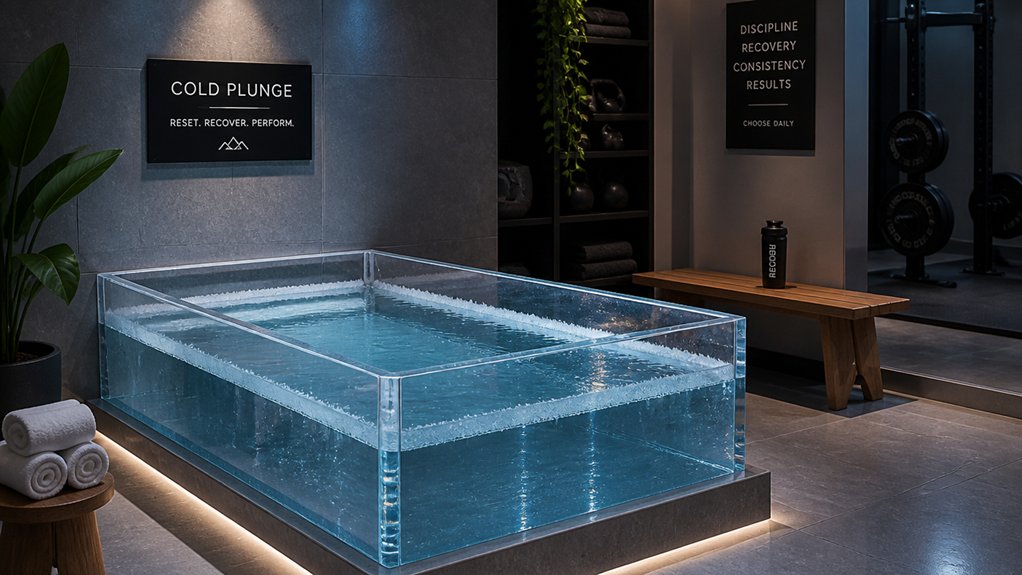
Wondering how to structure your weekly cold plunge routine for ideal recovery? To maximize recovery benefits, aim for 3-5 sessions of cold water immersion per week, with daily immersion being safe for healthy individuals. Each session should last 10-15 minutes at an optimal temperature of 10-15°C (50-59°F) to effectively reduce inflammation. Incorporate insulation efficiency considerations to maintain water temperature and extend the duration of cold therapy. Schedule your cold plunges within 1-2 hours post-exercise for best results, but consider delaying sessions 4-6 hours after resistance training if hypertrophy is your goal. Start with shorter immersion times of 5-8 minutes during preseason to build cold tolerance, then maintain consistent sessions during the season. Incorporate other recovery methods like active recovery and proper nutrition to enhance your overall recovery routine.
How Does Training Intensity Impact Cold Water Immersion Frequency?
How does training intensity influence your cold water immersion (CWI) routine? When your training involves high load or resistance work, you’ll generally need more frequent cold water immersion to reduce inflammation and muscle soreness.
Here are some key points:
- High-Intensity Days: Aim for 3-5 sessions weekly post-workout to support recovery and optimize inflammation reduction.
- Hypertrophy Phases: Be cautious; daily CWI may blunt muscle growth, so consider delaying sessions 4-6 hours or reducing frequency.
- Performance Cycles: Athletes in-season frequently benefit from daily or near-daily immersion, while lower-intensity phases need less frequent sessions.
- Incorporating adaptogens into your recovery routine can enhance resilience and reduce stress hormones during rigorous training periods adaptogen blends.
Training intensity directly impacts recovery needs, meaning tailoring CWI frequency helps balance recovery, performance, and muscle growth objectives.
How Can You Personalize Your Cold Plunge Routine for Best Results?
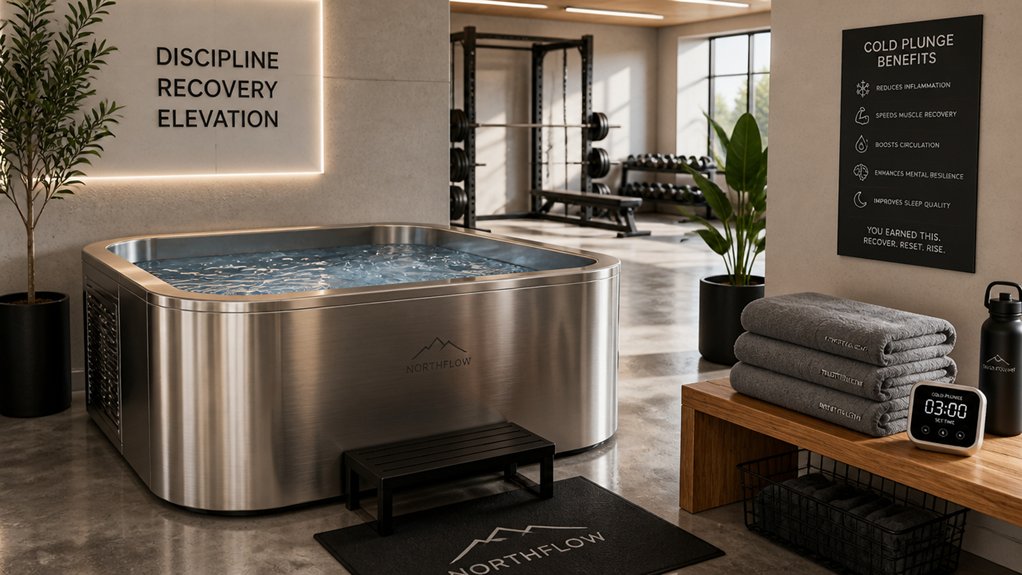
To personalize your cold plunge routine, start by evaluating how your body responds to different temperatures and durations. Adjust your immersion time gradually and monitor how your recovery feels afterward, tailoring it to your comfort and goals. Keep track of your progress to fine-tune your routine for ideal results. Incorporate water treatment solutions to maintain water quality and comfort during your sessions.
Assess Personal Tolerance Levels
Determining your personal tolerance for cold water immersion involves paying close attention to how your body responds during and after each session. Your subjective factors—such as cold discomfort, muscle soreness, and recovery quality—inform your adjustments.
Start with shorter immersion times (5-8 minutes) at 10-15°C, observing how you feel. Gradually increase duration as you gauge your body’s response.
Consider these points:
- Evaluate muscle soreness and recovery quality after each session.
- Note any discomfort or psychological ease during immersion.
- Adjust water temperature and duration based on your body’s cooling rate and felt recovery benefits.
Adjust Duration and Temperature
Personalizing your cold plunge routine involves fine-tuning both the duration and water temperature to suit your body’s responses and comfort levels.
For cold water immersion, start with a duration of 5-8 minutes as a beginner, gradually increasing to 10-15 minutes for ideal recovery benefits. Keep the water temperature within 10-15°C (50-59°F) to balance effectiveness and comfort—colder isn’t always better.
Adjust this based on how your body responds; some might prefer slightly warmer or shorter immersions depending on training load and recovery needs. Properly personalized duration and temperature can enhance muscle repair, reduce muscle soreness, and support the recovery process without causing unnecessary discomfort.
Always listen to your body and make gradual adjustments for the best results.
Monitor Recovery Response
Monitoring how your body responds to cold water immersion is essential for optimizing recovery and tailoring your routine. By tracking key indicators, you can better monitor recovery and adjust immersion frequency:
- Check physiological markers like creatine kinase levels to assess muscle inflammation and soreness, indicating recovery progress.
- Observe subjective feelings of soreness and fatigue ratings to understand how your body responds to different training loads and immersion durations.
- Track heart rate variability post-immersion to gauge your nervous system’s recovery status, helping personalize session timing and duration.
Adjust your cold plunge routine based on these responses, considering factors like training load, soreness, and inflammation. This personalized approach guarantees immersion aids recovery effectively without overdoing it.
When Is the Best Time to Do Cold Water Immersion in Your Recovery?
When is the best time to do cold water immersion (CWI) during your recovery? Ideally, you should perform cold water immersion within 1-2 hours post-exercise. This timing maximizes the reduction of inflammation and muscle soreness, aiding recovery without hindering hypertrophic adaptations.
Keeping immersion duration between 10-15 minutes at 10-15°C (50-59°F) is ideal. Doing CWI too early or for excessively long periods can impair muscle protein synthesis and slow recovery.
If muscle growth is your goal, consider delaying cold water immersion by 4-6 hours after training. Regular sessions timed appropriately, about 3-5 times weekly, can promote ongoing recovery benefits. Personalizing timing and immersion duration helps balance recovery enhancement with long-term muscle adaptation.
What Are Common Mistakes to Avoid When Using Cold Water Therapy?
Are you aware of the common pitfalls that can undermine your cold water therapy efforts?
First, avoid immersing immediately after workouts aimed at muscle hypertrophy, as cold water immersion can blunt muscle protein synthesis and delay growth. Second, don’t exceed 15 minutes at 15°C, since longer durations lead to metabolic slowdown and discomfort. Third, don’t overuse cold water immersion without building tolerance, as frequent sessions may hamper strength gains and increase adverse effects.
Additionally, neglectting proper hydration and nutrition around cold therapy can impair recovery, muscle repair, and overall progress. Always monitor the immersion temperature carefully—temperatures below 10°C heighten risks without extra benefits.
Being mindful of these mistakes helps optimize cold water immersion for better recovery, soreness reduction, and strength gains.
How Do You Track Progress and Know When to Adjust Cold Plunge Frequency?
To effectively tailor your cold plunge routine, it’s important to track your recovery progress and recognize signs that timing or frequency may need adjustment. Use physiological markers like heart rate variability, creatine kinase, and inflammation indicators such as C-reactive protein to objectively assess how well your body recovers from cold water immersion.
Additionally, pay attention to subjective feedback—monitor delayed onset muscle soreness (DOMS), perceived fatigue, and psychological readiness through scales like the Rating-of-Fatigue or Recovery-Stress Questionnaires. Adjust your cold plunge frequency based on training intensity and goals; for instance, reduce sessions or delay immersion after resistance workouts focused on hypertrophy. Regular reassessments every 2-4 weeks help optimize recovery and prevent negative effects, ensuring cold water immersion remains beneficial.
How Can You Balance Cold Water Immersion With Other Recovery Methods?
Balancing cold water immersion with other recovery methods requires a strategic approach to maximize benefits while minimizing potential interference with training adaptations.
First, integrate cold water immersion gradually after focusing on heat therapies like hot water immersion during pre-season, then increase cryotherapy during the season.
Second, combine CWI with contrast water therapy (alternating hot and cold), massage, or active recovery sessions to boost circulation and inflammation reduction.
Third, schedule CWI sessions 10-15 minutes at 10-15°C post-exercise, 3-5 times weekly, while supporting recovery with proper nutrition, hydration, and sleep.
Frequently Asked Questions
Is Cold Water Immersion Good for Muscle Recovery?
Cold water immersion is good for muscle recovery because it reduces inflammation and soreness, helping you recover faster. Just remember to time it right, especially if you’re aiming for muscle growth, and personalize it to your needs.
How Often Should You Take a Recovery Week From Working Out?
You should take a recovery week every 4 to 8 weeks, depending on your training intensity and fatigue. During this time, reduce your workload by 30-50% and focus on low-intensity activities to promote muscle repair and prevent overtraining.
How to Maximize Recovery After a Workout?
To maximize recovery, you should use cold water immersion 3-5 times weekly, starting with shorter durations, and timing sessions 1-2 hours post-workout, combining it with activity or hot water immersion for better circulation and muscle repair.
Is It Better to Take a Hot or Cold Shower After Workout for Muscle Growth?
You should prefer hot showers after your workout to promote blood flow and tissue repair without hindering muscle growth. Save cold showers for less intense sessions or delay cold immersion for 4-6 hours to avoid impairing hypertrophy.