To reduce inflammation, aim for cold water immersion sessions 2 to 4 times weekly, starting with 30 seconds to 2 minutes at 39°F-50°F (4°C-10°C). Gradually increase duration to 5-10 minutes as your body adapts, ideally within 30-60 minutes post-exercise. Schedule rest days and alternate water temperatures to prevent cold stress. Pay attention to your body’s responses, and you’ll discover more ways to optimize your recovery plans below.
What Is Cold Water Immersion and How Does It Reduce Inflammation?
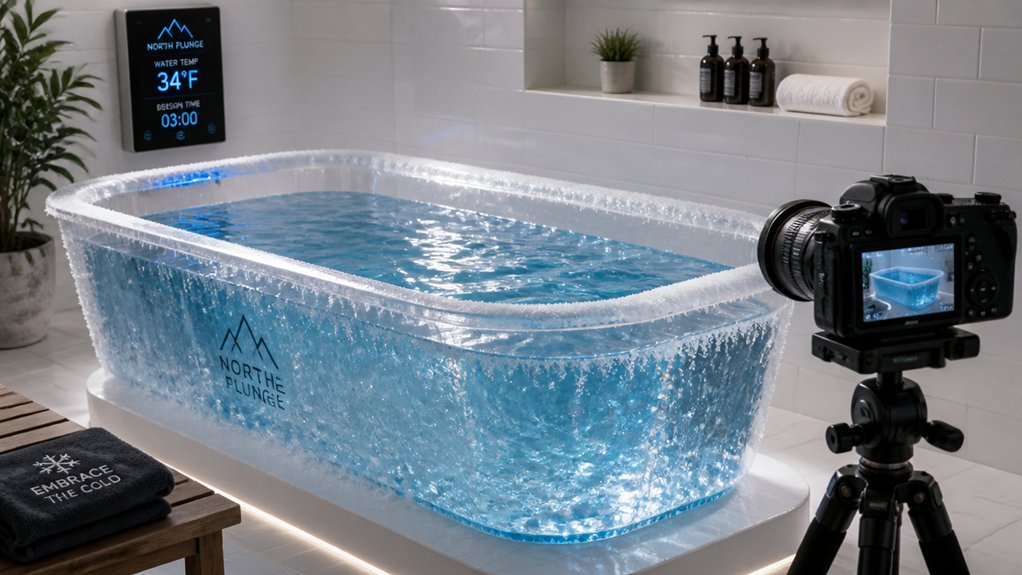
Have you wondered how cold water immersion helps reduce inflammation? When you submerge in cold water at or below 59°F (15°C) for 2 to 5 minutes, it triggers key physiological responses.
Cold water immersion causes vasoconstriction, decreasing blood flow and swelling, which lowers pro-inflammatory cytokines like TNF-α and IL-6. It also stimulates the release of norepinephrine, a hormone that has anti-inflammatory effects and promotes lymphatic drainage, helping your body remove metabolic waste.
Additionally, cold exposure activates the vagus nerve, which helps regulate your immune system and fosters an anti-inflammatory state. These physiological responses collectively reduce muscle soreness and inflammation, speeding up recovery after intense physical activity. Utilizing commercial-grade cold plunge tubs ensures consistent water temperature and sanitation, making your recovery routine more effective and hygienic.
That’s why many athletes incorporate cold water immersion into their recovery routines.
What Are the Best Temperatures and Duration for Cold Plunges?
What’re the ideal temperatures and durations for cold plunges to effectively reduce inflammation?
For cold water immersion, aim for water temperatures between 39°F and 59°F (4°C to 15°C) to optimize reducing inflammation. Immersion should last between 2 to 5 minutes, depending on your tolerance and experience.
Beginners should start with shorter sessions of 1-2 minutes and gradually increase to 3-5 minutes as your body adapts. It’s important not to exceed 10-15 minutes per session, as longer exposure can risk hypothermia and reduce the benefits.
This balanced approach enhances your recovery process while minimizing health risks, helping you get the most out of cold plunges for inflammation reduction. Additionally, maintaining proper water quality and circulation ensures your skin stays healthy and free from irritants during each session with water treatment solutions.
How Often Should You Ice Bathe for Optimal Recovery?
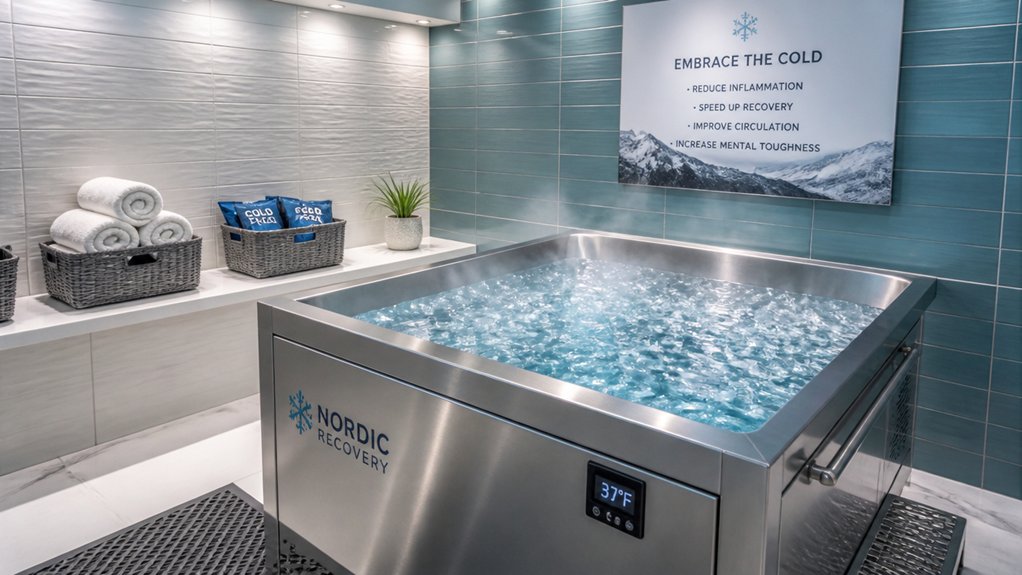
To maximize the benefits of cold immersion for recovery, it’s important to find the right frequency. Cold water immersion 2 to 4 times per week strikes a good balance, reducing inflammation and muscle soreness without overexposure.
Sessions lasting 2 to 5 minutes at temperatures between 39°F and 59°F are effective for controlling inflammation and improving recovery. Daily cold-water immersion might be suitable for trained athletes, but doing it immediately after workouts too often could impair long-term training gains.
Start with shorter sessions of 30 seconds to 1 minute, gradually increasing to 5-10 minutes as your tolerance builds. Consistently scheduling ice baths within 30-60 minutes post-exercise enhances recovery, helping you recover faster and feel better sooner. Proper water treatment solutions and insulation can maintain water quality and temperature, making your sessions safer and more effective.
How to Build Your Cold Plunge Routine for Progression
Building your cold plunge routine gradually is key to safely increasing your tolerance and maximizing benefits. Start with short sessions of 30 seconds to 1 minute at temperatures between 39°F and 50°F (4°C to 10°C). This allows your body to adapt gradually to cold water immersion. A variety of tubs with different temperature control options can help maintain precise temperatures during your sessions. Over time, extend your sessions every few days or weeks to 3 to 5 minutes, maintaining safe temperatures up to 59°F (15°C). Begin with 2 to 4 cold plunges per week, increasing frequency only if tolerated well and if reducing inflammation or muscle soreness (DOMS) is your goal. Schedule these sessions within 30 to 60 minutes post-exercise for peak recovery. Always guarantee proper rewarming afterward to preserve benefits and prevent stress.
When Is the Best Time to Cold Plunge After Exercise?
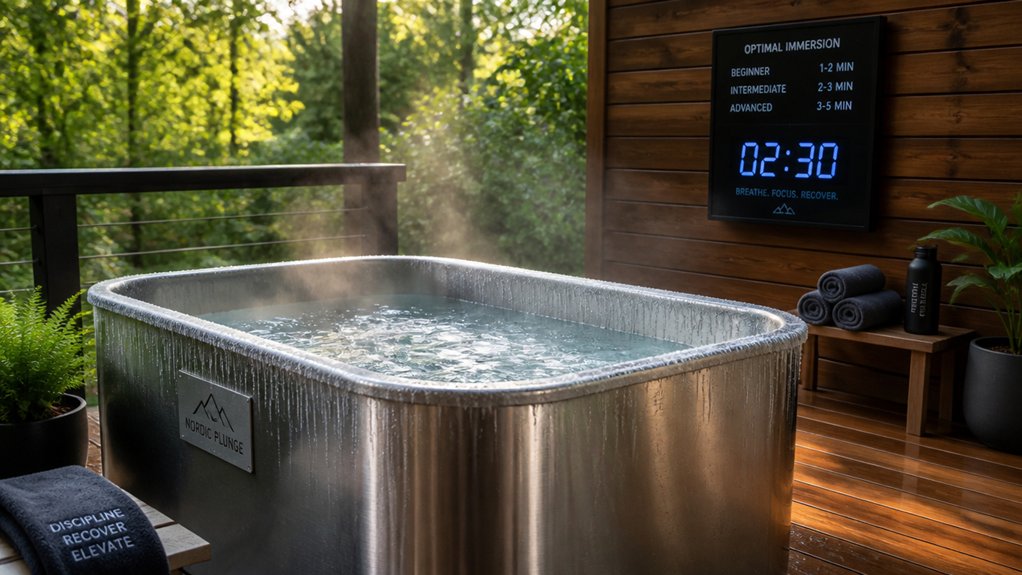
The best time to cold plunge after exercise is within 30 to 60 minutes to optimize recovery. Taking this step soon after workout helps reduce inflammation by constricting blood vessels and calming pro-inflammatory signals. Additionally, being mindful of pressure levels during cold immersion can enhance comfort and safety. Waiting too long or plunging immediately post-exercise, especially during resistance training, can lessen benefits or hinder muscle growth.
Optimal Post-Workout Timing
Timing is essential when it comes to cold plunges after exercise; for best recovery, you should immerse within 30 to 60 minutes post-workout. This window optimizes cold water immersion’s ability to reduce inflammation and muscle soreness effectively. Delaying beyond this period may diminish the anti-inflammatory benefits and lessen soreness relief. To envision this, consider the following:
| Post-Workout Timing | Effectiveness |
|---|---|
| Immediately (within 30 min) | Maximal inflammation reduction |
| 30-60 minutes | Ideal recovery benefits |
| After 1 hour | Less effective for reducing inflammation |
Additionally, selecting a tub with high insulation efficiency helps maintain the desired water temperature during this critical window. Stick to this timing for targeted post-workout recovery and better results.
Waiting Period Recommendations
Since the goal is to optimize inflammation reduction and recovery, you’ll want to schedule your cold plunge within a specific window after exercise—ideally within 30 to 60 minutes. Cold water immersion during this period effectively reduces inflammation by inhibiting pro-inflammatory cytokines like TNF-α and IL-6, helping minimize muscle soreness. Incorporating magnesium-based recovery creams after the cold plunge can enhance muscle relaxation and aid in faster recovery. Waiting longer than this window diminishes the benefits of cold plunges, so timely immersion is key. However, avoid cold plunges immediately before resistance training, as they can blunt muscle growth signals.
After your cold water immersion, gradual rewarming supports vascular recovery without negating inflammation reduction. Sticking to this timing guarantees you get the maximum muscle recovery benefits while reducing soreness efficiently.
How to Safely Incorporate Rest Days and Variations
Incorporating rest days and variations into your cold water immersion routine is essential for safe, effective inflammation reduction. Schedule 1-2 rest days per week to prevent impairing your long-term training adaptations, especially after resistance workouts.
Keep your immersion frequency between 2 to 4 times weekly, adjusting based on how your body responds and recovers. Make sure to place cold plunge sessions on non-consecutive days so your body has enough time to rewarm and adapt, reducing risks like hypothermia or overexposure.
On rest days, opt for passive or gentle active recovery methods instead of cold water immersion to support muscle repair. Additionally, gradually vary water temperatures and immersion durations—alternating between 4°C and 15°C, for 2-5 minutes—to boost anti-inflammatory benefits safely. Monitoring your electricity consumption and ensuring proper setup can also help optimize your routine without overexertion.
How to Adjust Your Cold Therapy Schedule Based on Your Response
Pay close attention to how your body responds during and after cold therapy sessions—notice soreness, inflammation, or discomfort.
If you experience excessive pain or dizziness, shorten the immersion time or warm the water slightly.
Adjust your schedule gradually, tracking your symptoms to find the right balance for peak inflammation reduction.
Monitoring Body Responses
How do you know if your cold therapy schedule is working safely and effectively? Pay attention to how your body responds during cold water immersion. If you experience dizziness, excessive shivering, or discomfort, it’s a sign to shorten your sessions and reduce the temperature.
Starting with 30 seconds to 1 minute and gradually increasing to 5 minutes helps balance benefits like reducing inflammation and improving blood flow.
Track changes in muscle soreness (DOMS) and recovery quality; if soreness persists or worsens, consider decreasing immersion time or increasing rest periods. Monitoring these responses guarantees you’re maximizing benefits safely.
Always consult a healthcare professional if cardiovascular symptoms or unusual responses arise before adjusting your cold therapy schedule further.
Adjusting Exposure Duration
Adjusting your cold therapy exposure duration is essential to achieving safe and effective results. Start with shorter sessions, like 30 seconds to 1 minute, and gradually extend to 5–10 minutes as your body responds.
Monitor signs of discomfort, such as excessive shivering or numbness, and reduce the duration if these occur to prevent hypothermia or frostbite. For reducing inflammation, aim for sessions lasting 2 to 5 minutes at temperatures between 39°F and 59°F.
If you notice improved inflammation symptoms and increased cold tolerance, you can increase cold water immersion sessions to 2–4 times weekly or daily, especially for athletes. Avoid prolonged or overly frequent cold exposure, as longer sessions don’t necessarily improve benefits and may pose risks.
Frequently Asked Questions
What Is the Best Exercise to Reduce Inflammation?
You should prioritize moderate-intensity aerobic exercises like walking, cycling, or swimming for at least 150 minutes weekly, as they effectively lower inflammation markers while being sustainable, safe, and boosting your body’s natural anti-inflammatory responses.
What Is the #1 Habit You Should Break if You Have Inflammation?
You should break the habit of staying inactive for long periods, as sedentary behavior worsens inflammation. Moving regularly, especially around your exercise sessions, helps reduce inflammation and promotes better recovery and overall health.
Are Cold Plunges Good for Inflammation?
Yes, cold plunges help reduce inflammation by constricting blood vessels, lowering cytokine levels, and activating anti-inflammatory pathways. Regular sessions, about 2-4 times weekly at 39-59°F for 2-5 minutes, support faster recovery and immune health.
How to Flush Inflammation Out of Your Body Fast?
You can flush inflammation fast by immediately immersing in cold water within 30 to 60 minutes after intense exercise, doing so 2 to 4 times weekly, for 2 to 5 minutes, then gradually rewarming to maintain benefits.