
To optimize your recovery, aim for cold water immersion 3-5 times per week, especially after intense sessions. Adjust the frequency based on your training load and how your body responds, reducing sessions during lighter phases. Incorporate active recovery on off days, and avoid cold plunges right before workouts. Personalize your routine by monitoring soreness, HRV, and energy levels, and you’ll reveal even better results as you explore more tips below.
What Are the Benefits of Cold Water Immersion for Recovery?
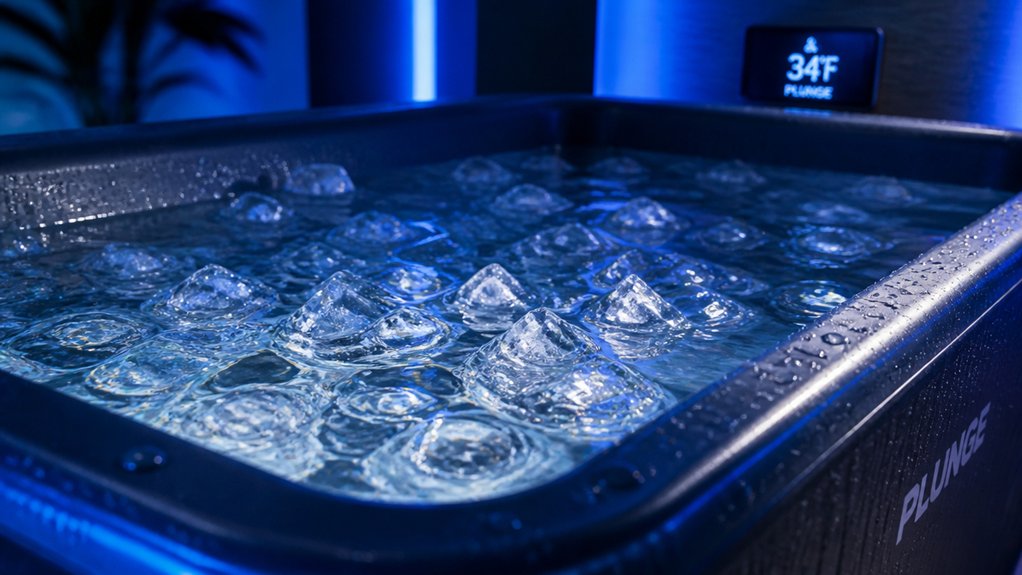
Curious about how Cold Water Immersion (CWI) accelerates muscle recovery? When you dip into cold water, vasoconstriction occurs, reducing blood flow and inflammation, which helps lower muscle soreness and decreases creatine kinase levels by about 24%. A therapeutic water temperature range of 37°F to 42°F is optimal for achieving these benefits. After immersion, vasodilation promotes waste removal and helps repair muscles quickly. CWI also triggers a 2-3 fold increase in plasma norepinephrine, boosting anti-inflammatory responses and supporting mental focus. Regular use enhances heart rate variability by 10–20%, encouraging parasympathetic activation that promotes relaxation and recovery. When done at 10–15°C for 10–15 minutes within 1–2 hours after exercise, cold water immersion effectively speeds up recovery, reduces delayed onset muscle soreness, and minimizes muscle fatigue for your next workout.
How Often Should You Cold Plunge Weekly?
Determining how often to cold plunge each week depends on your training goals and experience level. Cold water immersion (CWI) frequency should balance recovery and adaptation.
Athletes typically perform CWI 3-5 times weekly, adjusting based on training phases. During base-building, limit sessions to 1-2 per week to prevent impairing muscle growth and adaptation, especially with higher water temperatures. During peak training or competition, increasing immersion to 4-6 times can help manage fatigue and muscle soreness.
Post-intense sessions within 1-2 hours maximize recovery benefits when frequency aligns with elevated training load. Beginners should start with fewer sessions, gradually increasing as tolerance develops.
How to Adjust Cold Plunge Frequency Based on Your Training Load
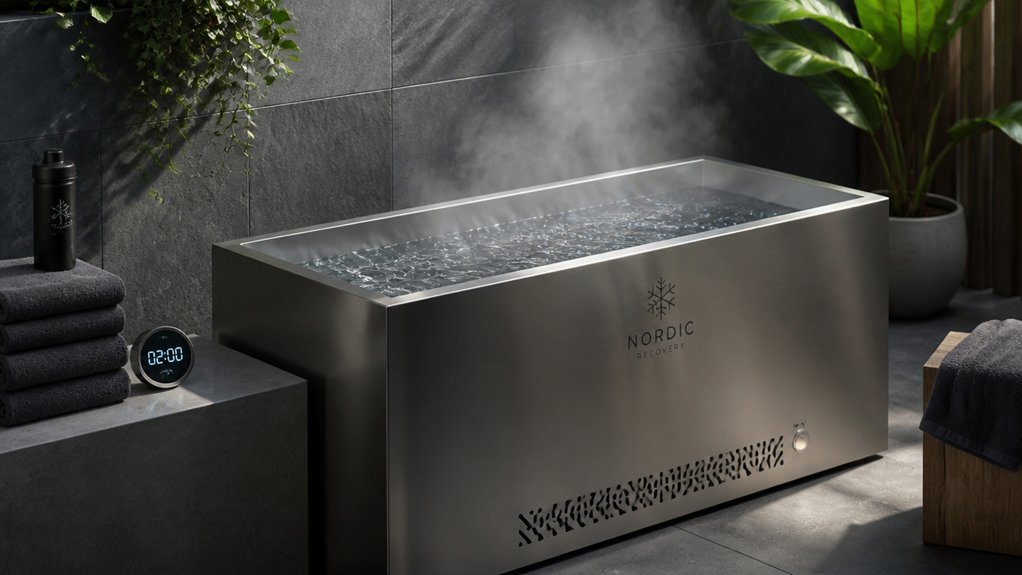
Your training load influences how often you should cold plunge: higher intensity or competition days call for more frequent sessions, while lighter phases need less. A recovery tracking app can help you monitor your responses and optimize your schedule effectively. Pay attention to how your body responds, as recovery needs vary individually, and adjust the frequency accordingly.
Training Intensity Considerations
Adjusting cold plunge frequency according to training intensity is essential for maximizing recovery without hindering progress. High-intensity or competition phases benefit from increasing cold water immersion to 4-6 times per week, enhancing fatigue management and performance. Conversely, during base-building or adaptation stages, limiting sessions to 1-2 per week prevents blunting muscle growth and inflammatory signaling. Post-heavy endurance training, 3-4 cold plunges help reduce oxidative stress without impairing aerobic adaptations. Strength and power athletes often use cold plunges 2-3 times weekly after demanding sessions, avoiding immediate post-hypertrophy sessions. Incorporating water treatment solutions can help keep water quality optimal during frequent use. – Tailor frequency to training load to optimize the recovery response – Use more frequent cold plunges during intense phases for better fatigue control – Avoid excessive sessions when training load is lighter to prevent performance impairment
Recovery Needs Variability
How often you should enjoy a cold plunge depends heavily on your training load and recovery needs. Cold water immersion can help reduce muscle soreness and support recovery, but adjusting the frequency is key.
During high-intensity training or heavy workload periods, you might need more frequent cold plunges—up to 4-6 sessions weekly—to manage fatigue and optimize performance. Conversely, in lighter training or adaptation phases, limiting sessions to 1-2 per week prevents blunting muscle growth and training adaptations.
Your individual response also matters; monitor soreness, energy levels, and HRV to personalize your cold plunge routine. Remember, starting with shorter, warmer sessions during lighter phases helps build tolerance before increasing frequency as your recovery needs and training load evolve. Additionally, choosing tubs with effective water treatment solutions can maintain water quality and safety, supporting consistent recovery routines.
Acute vs. Chronic Use
When managing cold plunge frequency, it’s important to take into account whether you’re using cold water immersion for acute recovery or as part of your chronic training adaptation.
For acute recovery after intense sessions or competitions, aim for 3-5 cold water immersion sessions per week to reduce inflammation and alleviate soreness effectively. Conversely, during phases focused on muscular adaptation, reduce frequency to 1-2 sessions weekly to prevent dampening hypertrophy and strength gains caused by inflammation suppression. In-season athletes might increase sessions to 4-6 times weekly for fatigue management.
Beginners should start with 1-2 sessions and gradually increase over 6-8 weeks, monitoring their recovery and performance response.
- Tailor frequency based on training load and adaptation goals.
- Higher frequency aids immediate recovery but may hinder muscular gains.
- Adjustments depend on individual response and overall periodization plan.
- Using compression boots can enhance circulation and recovery, supporting your cold plunge routine effectively.
How Can You Balance Cold Water Immersion With Active Recovery Days?
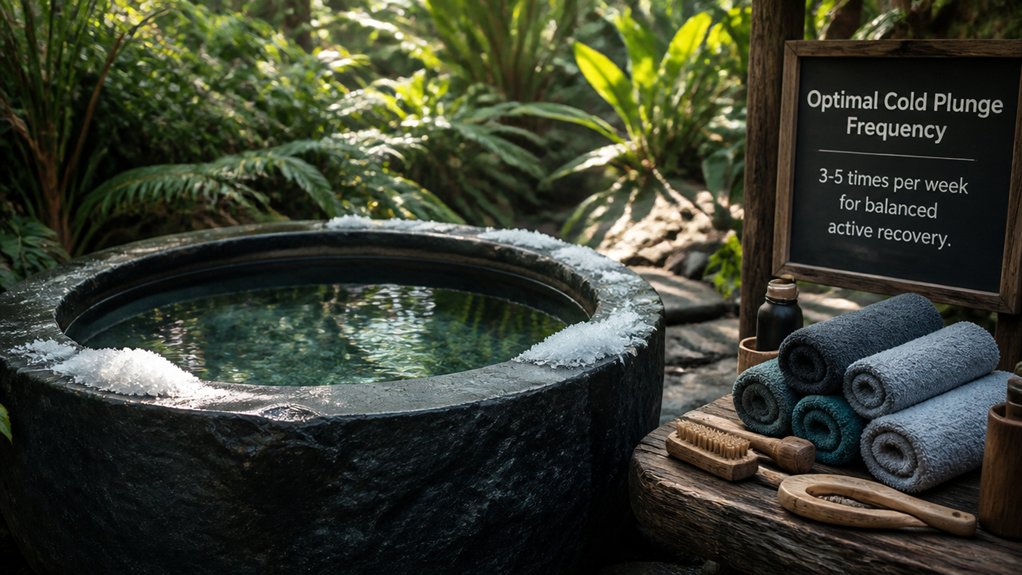
To balance cold water immersion with active recovery, you need to carefully time and alternate these modalities to maximize benefits. Scheduling CWI 2-3 times a week after intense sessions while focusing on light activity on recovery days helps promote circulation and adaptation. Incorporating temperature control options such as adjustable chillers can help modify immersion intensity based on your recovery needs. Monitoring your soreness, fatigue, and HRV can guide you in adjusting timing, duration, and frequency to optimize overall recovery.
Timing Balance Strategies
Balancing cold water immersion (CWI) with active recovery days requires strategic planning to maximize recovery benefits without hindering training adaptations. You should schedule CWI primarily after high-intensity or competition days to boost recovery without impairing muscle protein synthesis.
On days following CWI, engage in active recovery modalities like light swimming or mobility exercises to promote circulation and waste clearance while avoiding cold stress. Limit CWI to 2-3 times weekly during training phases and increase to 4-6 times in competition periods for ideal fatigue management.
Avoid CWI immediately after strength-focused workouts. To optimize timing and frequency, consider these strategies:
- Prioritize active recovery after strength sessions
- Use CWI after intense or competitive days
- Periodize CWI to match your training cycle
- Ensuring proper sensor accuracy during cold immersion can help monitor your recovery effectively.
Alternating Modalities Effectively
Alternating cold water immersion (CWI) with active recovery exercises creates a strategic approach to optimizing muscle recovery and performance. Schedule CWI primarily after high-intensity or competition days to leverage inflammation reduction and muscle soreness relief, limiting sessions to 10-15 minutes at 10-15°C.
On easier training days, incorporate active recovery with light aerobic exercises like swimming, jogging, or cycling, combined with mobility drills and dynamic stretching to improve blood flow and flexibility. Consider contrast water therapy or heat modalities on active recovery days to enhance circulation and muscular relaxation.
Combining these recovery protocols helps balance recovery and training adaptation, preventing excessive fatigue. Personalize your routine by monitoring soreness and heart rate variability, adjusting the frequency of cold water immersion and active recovery to optimize overall performance without impairing hypertrophy. Additionally, choosing a high-quality ice bath chiller with quiet operation features can ensure a peaceful environment during recovery sessions.
Monitoring Recovery Responses
Monitoring your recovery responses is essential to find the right balance between cold water immersion (CWI) and active recovery days. Pay attention to subjective signs like muscle soreness, fatigue, and energy levels, alongside objective data like heart rate variability (HRV). This helps you tailor your CWI frequency and intensity to support recovery and training adaptation.
Limit CWI after intense sessions and use shorter, warmer sessions or contrast therapy on active recovery days to promote circulation without hindering inflammation.
Incorporate active recovery methods such as light aerobic activity, mobility exercises, or foam rolling to enhance blood flow and waste removal. Adjust your protocol based on your phase—1-2 sessions weekly for base training or up to 6 during competition—to optimize recovery without delaying muscle repair.
Should You Cold Plunge Before or After Your Workouts?
Is it better to cold plunge before or after your workout? Cold water immersion, specifically a cold plunge, is most effective when used post-exercise. Performing cold water therapy within 1-2 hours after your workout helps reduce muscle soreness and inflammation, optimizing recovery after intense training.
However, plunging beforehand isn’t ideal, as it can lower muscle temperature and impair strength and power output during training sessions. An ideal protocol involves a 10-15 minute cold plunge at 10–15°C (50–59°F) after exercising high-intensity or competition days. This approach supports recovery without hindering training adaptations, reserving cold immersion for post-exercise recovery phases rather than pre-workout, ensuring you gain maximum benefits without compromising performance.
What Are the Signs You’re Overdoing Cold Water Immersion?
While cold water immersion can greatly aid recovery when used appropriately after workouts, overdoing it can backfire. Signs you’re overusing cold water immersion include persistent fatigue, decreased performance, and limited muscle strength gains, indicating impaired adaptation.
Overusing cold water immersion can hinder recovery, reduce performance, and impair muscle adaptation.
If you experience excessive shivering, numbness, or prolonged skin discoloration, your body is under undue cold stress. Monitoring heart rate variability helps; a decline of over 10% suggests autonomic imbalance caused by overuse. Additionally, increased muscle soreness, reduced motivation, or elevated cortisol levels point to overstimulation of your nervous system. Poor sleep patterns also signal stress from frequent sessions.
Be alert to these signs to prevent hindering your recovery and avoid long-term setbacks in training progress.
- Persistent fatigue and reduced performance signal overuse
- Excessive shivering and skin discoloration indicate cold stress
- Changes in heart rate variability and cortisol levels reveal autonomic imbalance
How to Personalize Your Cold Plunge Routine for Your Body’s Response
Your body responds uniquely to cold plunges, so pay close attention to how you feel during and after each session. Adjust the temperature, duration, and frequency based on your comfort and recovery signals, such as soreness, energy, and sleep quality.
Recognize Individual Variability
Recognizing individual variability is essential for enhancing your cold plunge routine, as responses to cold water immersion differ widely based on factors like body composition and recovery goals.
Some may benefit from shorter immersion durations, while others need more extended periods or different temperatures for peak recovery. Monitoring subjective feedback—such as muscle soreness, fatigue levels, and energy—helps guide personalized adjustments. Objective markers, like heart rate variability improvements, also inform evolving protocols.
Importantly, body composition influences cooling rates; individuals with higher subcutaneous fat or surface area-to-mass ratios may require tailored temperature settings and immersion times.
By understanding these differences, you can fine-tune your routine for better results and minimize adverse effects, ensuring your recovery approach aligns with your unique physiology and goals.
- Recognize how body composition influences cooling and recovery
- Use subjective feedback to guide adjustments
- Tailor immersion duration, temperature, and frequency for better outcomes
Adjust Based on Feelings
Listening to how your body feels during and after cold water immersion (CWI) is key to personalizing your routine effectively. Pay attention to subjective feelings of muscle soreness, fatigue, and energy levels to adjust your session frequency.
If you notice persistent fatigue or a decline in performance, consider reducing CWI sessions or increasing water temperatures. Tracking heart rate variability (HRV) and sleep quality helps gauge your recovery, guiding changes in frequency.
During adaptation, avoid daily or excessive cold plunges to prevent dampening muscle growth; instead, increase sessions during heavy training or competitions.
If you experience adverse effects like excessive shivering, numbness, or mood drops, shorten your immersion time or raise water temperatures. Personalizing based on feelings guarantees safe, effective recovery without overstressing your body.
How to Create a Weekly Cold Water Immersion Schedule for Optimal Recovery
Creating an effective weekly cold water immersion (CWI) schedule involves balancing recovery needs with training demands to maximize benefits without hindering adaptations. For athletes, aim for 3-5 sessions per week, especially after high-intensity or competition days, to improve recovery and reduce muscle soreness.
Start with 5-6 minutes at 59-64°F (15-18°C) early on, and gradually increase to 10-15 minutes at 50-55°F (10-13°C) over 6-8 weeks to build tolerance. Prioritize CWI within 1-2 hours post-exercise to enhance recovery effects.
Consider lowering frequency during base phases and increasing during competition periods. Adjust your schedule based on how your body responds, reducing sessions if fatigue persists or performance declines.
- Optimize timing and temperature for maximum recovery benefits
- Balance immersion frequency to prevent impairing muscle adaptation
- Personalize schedule based on individual response
How to Combine Cold Water Immersion With Other Recovery Techniques
Combining cold water immersion (CWI) with other recovery techniques can amplify your overall recovery strategy if done thoughtfully. Pair CWI (10-15 minutes at 10-15°C) with active recovery like light swimming or jogging to boost circulation and help remove metabolic waste.
Combine cold water immersion with active recovery to enhance circulation and accelerate metabolic waste removal.
Contrast water therapy, alternating 1-2 minutes cold with 3-4 minutes warm, promotes vasodilation and vasoconstriction, aiding muscle repair and reducing inflammation.
After CWI, integrating hot water immersion or sauna sessions can support muscular and cardiovascular adaptation, balancing recovery benefits.
Following CWI with protein intake within 30 minutes encourages muscle protein synthesis.
Additionally, personalized use of massage, stretching, or compression therapies can optimize recovery and minimize injury risk, aligning with sport demands and recovery phases.
How Can You Track and Improve Your Cold Plunge Routine Over Time?
To effectively track and improve your cold plunge routine, paying attention to both subjective and objective indicators is essential. Monitor muscle soreness, energy levels, and sleep quality daily to gauge recovery over 2-3 weeks.
Track objective measures like morning heart rate variability (HRV), aiming for 10-20% improvements indicating better autonomic recovery. Gradually progress your sessions by starting with 5-6 minutes at 59-64°F, then extending duration and lowering temperature every few weeks to optimize adaptation.
Use performance metrics—strength, endurance, sprint times—before and after cold water immersion to assess functional recovery. Adjust frequency and temperature if you notice persistent fatigue or declining performance, aligning cold plunge sessions with your training phases for ideal recovery.
- Recognize subtle changes to fine-tune your routine
- Use HRV and performance data for evidence-based adjustments
- Progress gradually to maximize adaptation and recovery
Frequently Asked Questions
How Long Is It Recommended to Stay in Water Immersion for Recovery?
You should stay in water immersion for recovery between 10 and 15 minutes to maximize benefits and reduce risks. Adjust the time based on your temperature tolerance and exercise intensity, but avoid exceeding 20 minutes for safety.
Does Cold Water Immersion Help Recovery?
Yes, cold water immersion helps your recovery by reducing soreness, lowering inflammation, and speeding up muscle repair. It’s most effective within a few hours post-exercise and can be used 3-5 times weekly for best results.
How Often Should You Take Ice Baths?
You should take ice baths 2-4 times a week during in-season training, especially after intense workouts or matches. Beginners should start with fewer sessions and increase gradually to avoid overuse and impairing muscle growth.
Is Swimming a Good Recovery Workout?
Yes, swimming is an excellent recovery workout. It promotes blood flow, reduces soreness, and improves mobility with low-impact resistance. Plus, it boosts mood and mental well-being while helping you stay active without overtaxing your muscles.