To optimize your nighttime thermoregulation, keep your bedroom cool around 60-70°F using breathable bedding like cotton or linen. Take a warm bath or foot soak 1-2 hours before bed to promote peripheral blood flow and heat loss. Avoid exercise and heavy meals close to sleep, and limit bright lights and caffeine at night. Choosing the right mattress and layered bedding helps maintain your ideal temperature. Staying mindful of these tips can lead to better sleep—discover more ways to stay comfortably cool and warm through the night.
How Your Body Manages Temperature During Sleep
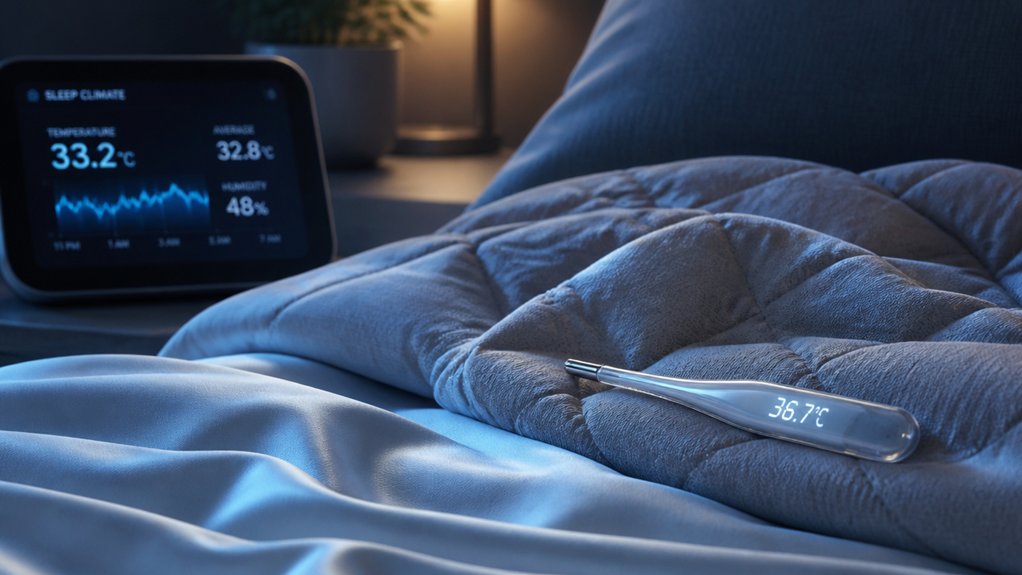
Your body actively regulates its temperature during sleep to promote rest and recovery. As evening approaches, your core body temperature naturally drops by about 1°C, signaling your body to prepare for sleep.
Your body lowers its core temperature by about 1°C each evening to signal sleep readiness and promote restful recovery.
This decline is aided by blood vessels in your extremities—your hands and feet—dilating to facilitate peripheral heat loss. Melatonin secretion ramps up during the night, triggering nocturnal vasodilation that accelerates heat transfer away from your core.
Thermoregulation mechanisms, including vasodilation and the distal–proximal skin temperature gradient, help smooth sleep shifts by supporting deep, restorative N3 sleep. During different sleep stages, your temperature fluctuates, with cooling during NREM and slight increases during REM. Utilizing precise digital thermometers can help monitor and optimize these temperature changes. These processes work together to maintain ideal conditions for quality sleep and recovery.
Why Your Body’s Temperature Changes at Night
Why does your body’s temperature fluctuate at night? Your core temperature naturally drops about 1°C, reaching its lowest point around 2-4 am. This decline signals your body to prepare for sleep. As melatonin releases in the evening, blood vessels dilate, especially in your distal skin—hands and feet—promoting heat loss. This process increases the distal skin temperature and sharpens the distal–proximal skin temperature gradient (DPG), which helps you fall asleep faster and sleep more deeply. When heat loss is impaired or your core temperature stays elevated, sleep quality suffers, and both NREM and REM sleep decrease. Using appropriate heat pads can assist in regulating your nighttime body temperature to improve sleep quality.
How to Create an Ideal Sleep Environment for Thermoregulation
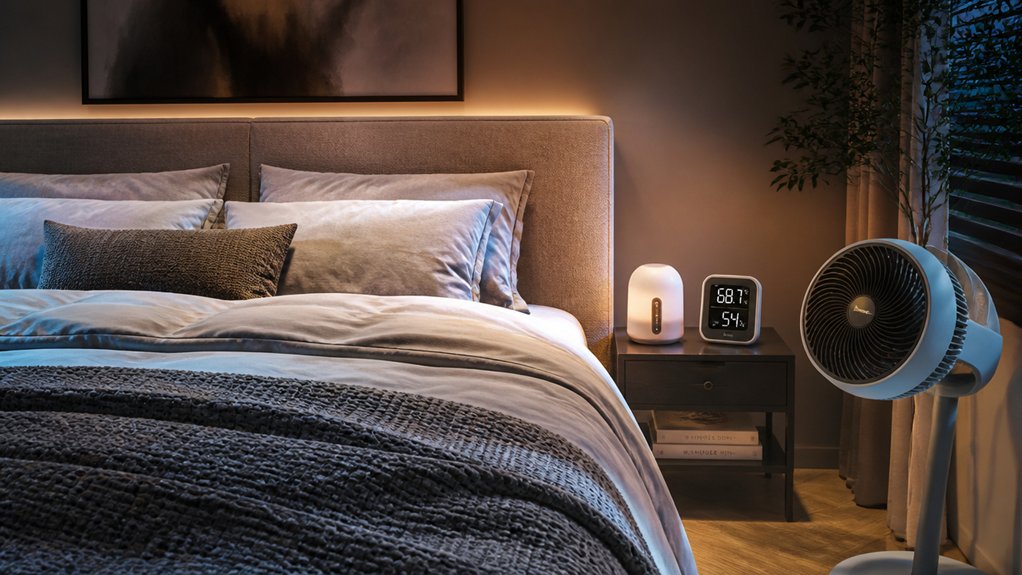
Creating the right sleep environment helps your body regulate temperature more effectively. Keep your bedroom between 15.5-21°C (60-70°F), use breathable bedding, and maintain good airflow to stay comfortable overnight. A pH-balanced environment can also support your skin’s natural barrier and reduce irritation during sleep. Small adjustments like warming your hands and feet before bed can also help promote quicker sleep onset.
Optimal Room Temperature
Have you ever wondered why a cooler room can help you fall asleep faster? It’s because a comfortable room temperature supports your body’s natural thermoregulation. The ideal room temperature for sleep is between 15.5–21°C (60–70°F), with about 18.3°C (65°F) often recommended.
When the environment is cooler, it encourages your body to shed heat, helping your core body temperature naturally drop—a key step for sleep onset and quality. Maintaining this temperature range creates the best micro-climate for your sleep cycle. Using filtration media such as activated carbon or KDF in your air or water can also improve overall air quality and comfort, further supporting better sleep.
Using breathable bedding materials like cotton, linen, or bamboo, along with light blankets, helps keep your body temperature stable without overheating. Good ventilation, via fans or open windows, further prevents excess heat that could disrupt thermoregulation and sleep.
Breathable Bedding Options
Choosing breathable bedding options plays a vital role in maintaining a comfortable sleep environment that supports your body’s thermoregulation. Natural fibers like cotton and linen offer excellent breathability and moisture-wicking properties that help regulate temperature during sleep.
Light, breathable bedding creates an ideal bed climate by reducing heat retention, unlike synthetic materials that trap body heat, causing sweating and restlessness. Layering lightweight bedding allows you to easily adjust your temperature throughout the night, helping you stay within the ideal body temperature range of 27-31°C.
Using separate or dual tog duvets can also accommodate different thermal needs of sleep partners, enhancing overall thermoregulation. Proper breathable bedding keeps your body heat in check, encouraging restful, uninterrupted sleep. Incorporating microfiber towels for quick-drying and softness can further aid in maintaining a comfortable sleep environment by preventing excess moisture buildup.
Adequate Ventilation Strategies
Maintaining proper ventilation in your room is essential for supporting your body’s natural thermoregulation process. Adequate ventilation helps keep the temperature best suited for sleep, usually between 15.5-21°C (60-70°F). Use fans, portable air conditioning, or open windows when outdoor air is cooler to support thermoregulation. Blocking daytime sunlight with curtains prevents heat buildup, promoting cooler overnight temperatures. Proper airflow circulation reduces humidity, which can disrupt deep sleep and increase wakefulness. Consider adjustable ventilation sources if sharing a room to accommodate individual preferences and maintain balanced thermal comfort. Well-ventilated spaces that are free from drafts help stabilize the ambient temperature, facilitating your body’s natural nocturnal cooling and ensuring better sleep quality. Incorporating advanced cooling systems can further optimize the environment for thermoregulation and enhance sleep comfort.
Cooling Tips to Fall Asleep Faster
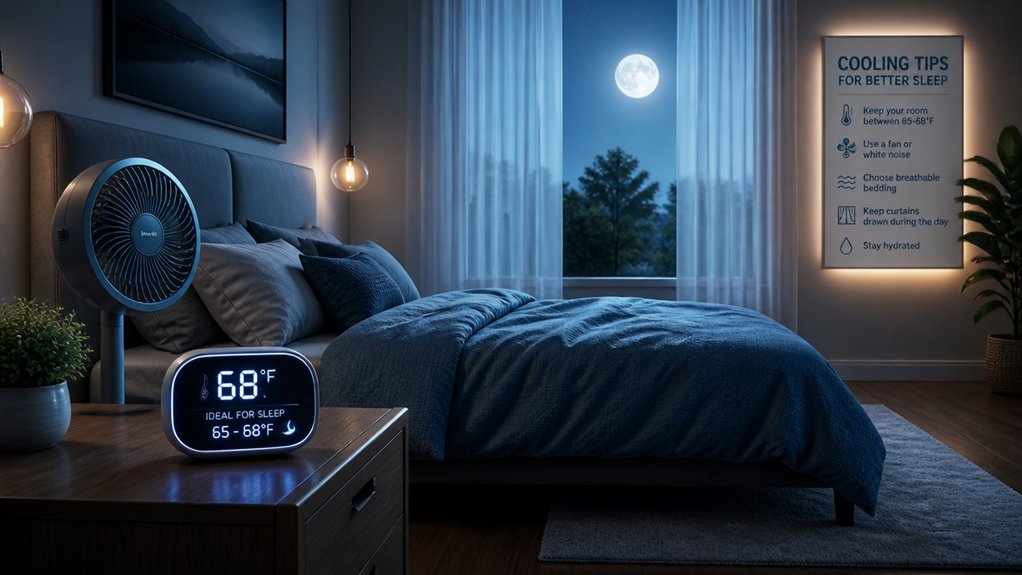
Cooling down your body’s core temperature is key to falling asleep faster. To help your body shed heat and promote sleep, try these tips:
- Take a warm bath or shower 1-2 hours before bed: It increases blood flow to your extremities, accelerating heat loss from your core and reducing sleep latency.
- Keep your bedroom cool: Maintain a temperature around 18.3°C (65°F) to support effective body cooling.
- Wear breathable, natural fiber sleepwear: Layer your bedding to keep your skin temperature ideal for cooling.
- Consider using thermal regulation fabrics like breathable flannel and lightweight faux fur robes, which can help facilitate your body’s natural cooling process during sleep.
These steps help reduce heat in your body, aiding quicker sleep onset by encouraging your core temperature to drop naturally.
Pre-Sleep Warmth and Cool-Down Rituals That Help
Have you ever wondered how a simple routine can greatly improve your sleep? Taking a bath about two hours before bed is an effective pre-sleep preparation for sleep. It raises peripheral skin temperature, warming the extremities and promoting a drop in core body temperature, which supports the body’s natural sleep cycle.
This warming increases blood vessel dilation in the skin, aiding heat dissipation and creating a healthy temperature gradient between your core and surroundings. Scheduling a foot bath or warm sock routine around 60 to 90 minutes before bedtime exploits this cooldown phase, boosting melatonin-driven vasodilation.
Avoid exercise within two hours of sleep to prevent raising your core temperature. These rituals help you initiate sleep faster, deepen initial sleep phases, and maintain sleep quality by supporting natural thermoregulation processes. Incorporating heated towel racks into your routine can also assist in maintaining optimal pre-sleep warmth efficiently.
How Mattress and Bedding Choices Affect Your Body’s Temperature
Your choice of mattress and bedding greatly impacts your body’s temperature during sleep. Foam mattresses can trap heat, while cooling features or breathable fabrics like cotton and silk help regulate warmth.
Using layered, lightweight bedding and temperature-controlled covers allows you to customize comfort and stay in the ideal thermal zone all night.
Mattress Material and Heat
Choosing the right mattress material can greatly influence how well you regulate your body temperature during sleep. Foam mattresses tend to trap heat from body contact, causing increased sweating and restlessness.
To enhance your sleep, consider these key points:
- Foam mattresses often cause temperature starts to rise, making nights uncomfortable without proper airflow.
- Beds equipped with cooling systems or built-in cooling features help lower heat, creating a more comfortable microclimate.
- Maintaining an ideal room temperature, combined with breathable bedding, supports better heat dissipation.
Bedding Layering Strategies
Layering bedding effectively can greatly influence how your body manages heat during sleep. By using multiple lightweight layers instead of heavy blankets, you can easily adjust warmth, aiding temperature control.
Natural, breathable fabrics like cotton, linen, or bamboo wick moisture and allow air to circulate, helping dissipate heat and maintain a comfortable micro-climate.
Your choice of mattress type also affects heat retention—foam mattresses tend to trap heat, causing night sweats, whereas mattresses with built-in cooling features support better thermoregulation.
Matching bedding tog ratings to the season and your personal heat preference prevents overheating.
Dual or separate bedding arrangements, like half-and-half duvets, can accommodate different temperature needs, reducing disturbances and promoting uninterrupted, restful sleep.
Temperature Regulation Devices
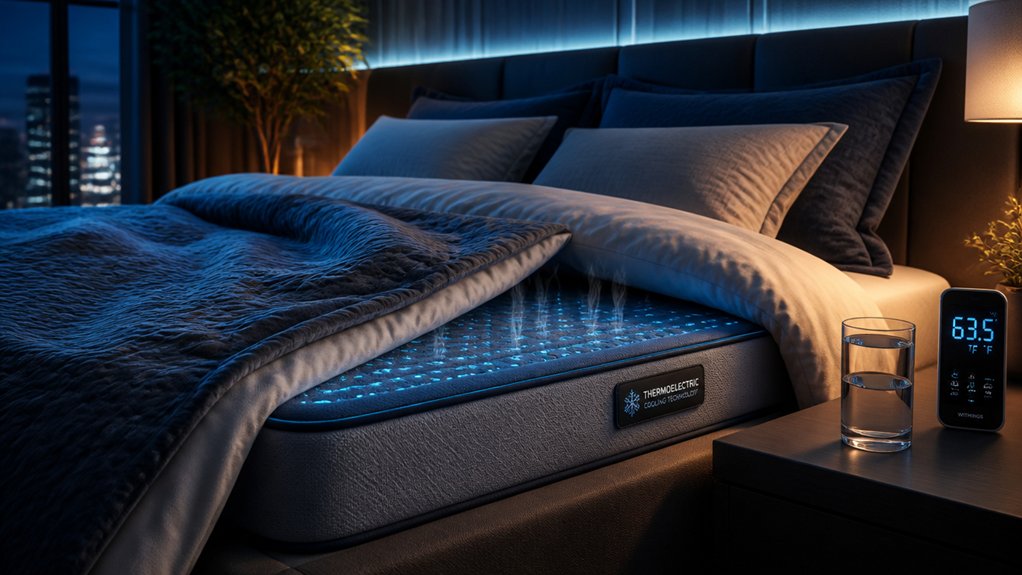
Mattresses equipped with built-in cooling technology can considerably influence your body’s ability to dissipate heat, thereby extending the duration of deep, restorative sleep stages like slow-wave (N3) and REM sleep.
Temperature-controlled mattress covers, for example, actively promote thermoregulation, keeping your body temperature within the ideal range. Consider these points:
- Dual cooling and warming features help shift your micro-climate, supporting body temperature regulation all night.
- Natural fiber bedding layers like cotton, linen, or bamboo assist breathability and moisture wicking, preventing overheating.
- Adjustable bedding options, such as lightweight layers and dual-toggle duvets, cater to individual preferences, reducing heat disturbance and promoting longer N3 sleep.
These devices enhance sleep quality by maintaining peak body temperature, especially with the right combination of mattress technology and bedding layers.
Factors That Disrupt Your Natural Thermoregulation
Several common habits and environmental factors can interfere with your body’s ability to regulate temperature naturally at night. Eating large or fatty meals close to bedtime raises your metabolic rate and core temperature, making it harder to fall asleep.
Exercising right before bed elevates your core temperature and delays the post-exercise cooling needed for sleep onset. Consuming caffeine or alcohol in the evening disrupts melatonin-driven vasodilation, which normally helps lower your core temperature to facilitate falling asleep.
Exposure to bright lights at night interferes with melatonin production and the natural circadian temperature decline. These factors hinder your body’s ability to cool down properly, disrupting the thermoregulation process essential for restful sleep. Avoiding these habits can support better nighttime temperature regulation.
What Night Sweats Say About Your Health and Sleep Issues?
Night sweats can be more than just a bothersome inconvenience; they often signal underlying health or sleep issues that require attention.
If you experience persistent night sweats, consider these clues:
- Hormonal fluctuations from menopause, thyroid disorders, or diabetes can trigger night sweats, disrupting your sleep and causing difficulty falling asleep.
- Sleep disorders like Obstructive Sleep Apnea are linked with night sweats, snoring, and daytime fatigue, signaling potential breathing difficulties during sleep.
- Medical conditions such as infections, cancer, or GERD may cause abnormal physiological responses and excessive sweating at night.
If your night sweats change in pattern or intensity, it’s time to consult a Sleep Doctor for proper diagnosis and treatment, improving your sleep quality and overall health.
Practical Tips and Products for Nighttime Thermoregulation
Creating a comfortable sleep environment is essential for effective nighttime thermoregulation, and there are practical steps you can take to achieve this.
If your room is too hot, use fans, air conditioning, or open windows at night with blackout curtains to keep the space cool and dark. Consider breathable bedding made of natural fibers like cotton or linen, and adjust tog ratings or layer your covers to maintain ideal temperature regulation—aiming for a surface of 27-31°C under the covers.
Taking a warm bath or foot bath 1-2 hours before bed promotes peripheral skin warming, which triggers heat loss and speeds up sleep onset.
Finally, if hands and feet are cold, techniques to boost circulation can help you stay comfortably thermoregulated throughout the night.
Frequently Asked Questions
What Is the 3 3 3 Rule for Sleep?
The 3 3 3 rule for sleep guides you to adjust your environment and body temperature with timing: avoid heavy exercise 3 hours before bed, take a short warm bath 3 minutes prior, and do quick breathing exercises 3 seconds before sleeping.
What Is the 1/4 Hour Rule for Insomnia?
If you can’t fall asleep within 15 minutes, get out of bed and do a relaxing activity until you’re sleepy. This reduces frustration, helps your body associate bed with sleep, and supports your body’s temperature regulation, promoting better sleep.
What Temperature Do Japanese People Sleep In?
You sleep in Japanese rooms maintained around 16-20°C (60.8-68°F), utilizing lightweight cotton futons, minimal heating, and natural fiber bedding. This cooler environment helps regulate your body temperature, promoting better sleep and deeper relaxation throughout the night.
Why Do Older People Wake up at 3:00 Am?
You wake up around 3:00 am because your body’s core temperature drops to its lowest, but age-related changes impair heat dissipation. This causes thermal discomfort, disrupting sleep and leading to frequent awakenings during those early morning hours.